

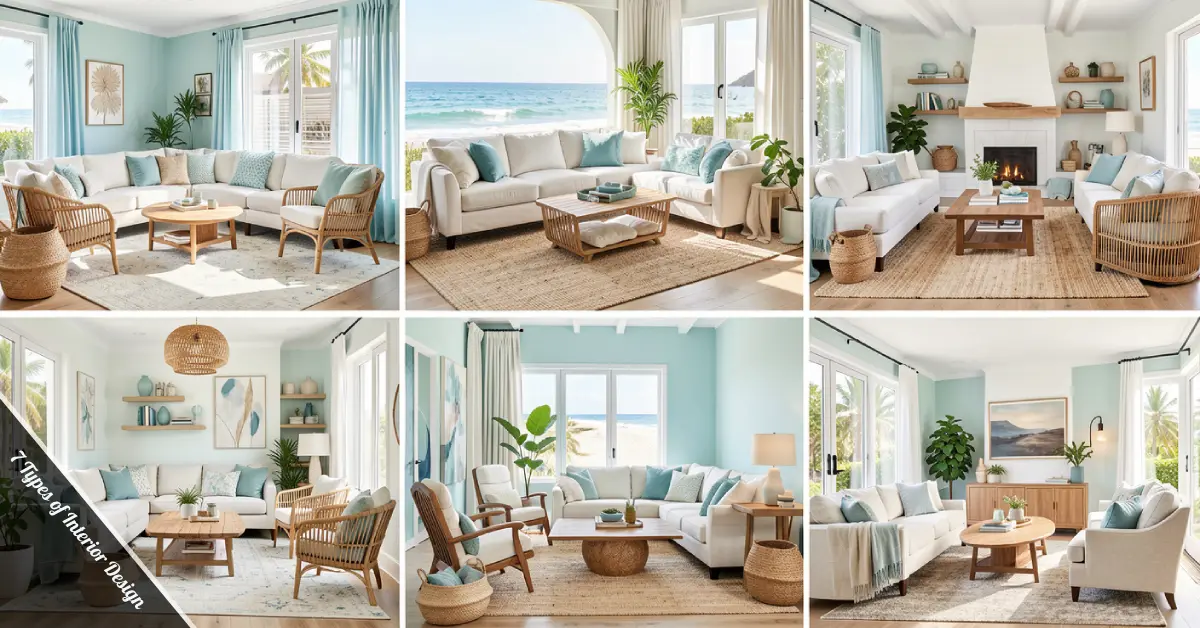
The 7 main types of interior design are Modern, Contemporary, Traditional, Transitional, Minimalist, Bohemian, and Coastal. Each style has distinct characteristics that define furniture choices, color palettes, and overall room aesthetics. Modern focuses on clean lines and functionality, while Traditional emphasizes ornate details and symmetry. Contemporary adapts to current trends, Transitional blends old with new, Minimalist strips away excess, Bohemian celebrates eclectic patterns, and Coastal brings beach-inspired tranquility indoors.
Understanding these 7 types of interior design helps you create spaces that match your lifestyle and personality.
Your home should reflect who you are. The furniture you choose, the colors on your walls, the way you arrange your space—these decisions tell your story. But knowing which direction to take can feel overwhelming when you’re staring at blank walls or outdated rooms.
Seven distinct interior design styles dominate homes in 2026. Each brings its own language of shapes, textures, and moods. Some whisper elegance through curved silhouettes. Others shout energy with bold patterns. The right style makes your space work better while looking exactly how you want it to.
Why Interior Design Style Matters
Walking into a well-designed room changes how you feel. Colors affect your mood. Furniture placement impacts how you move through your day. Lighting shifts your energy levels.
Design style creates this effect. A Traditional living room with deep mahogany and velvet upholstery makes you sit differently than a Minimalist space with white walls and clean-lined furniture. One invites lingering conversations over tea. The other encourages quick, efficient meetings.
Your design choices also affect property value. Homes with clear, cohesive styles sell faster and for higher prices than spaces with mismatched furniture and conflicting aesthetics. Buyers respond to rooms that look intentional.
More practically, understanding design styles helps you shop smarter. When you know you want Contemporary design, you skip the ornate Traditional pieces that won’t fit your vision. You save time, money, and the headache of returns.
1. Modern Interior Design
Modern design emerged in the early 1900s and remains one of the most popular types of interior design today. The style strips away decoration and focuses on what furniture actually does.
Clean lines define Modern spaces. Sofas sit low to the ground with straight edges. Tables feature sleek surfaces without carved details. Windows stay bare or use simple treatments that don’t compete for attention.
Materials matter in Modern design. Chrome, glass, and steel appear throughout Modern rooms. Wood gets polished to a high shine rather than distressed. Fabrics stay smooth—leather, microfiber, simple cotton—without ruffles or heavy patterns.
Colors follow a neutral base. White, black, gray, and beige create the foundation. Then one or two bold accent colors add punch. A red chair against white walls. Cobalt blue pillows on a gray sofa.
Open floor plans work naturally with the Modern style. Rooms flow into each other without heavy dividers. Spaces feel larger because furniture doesn’t block sightlines.
To create Modern design in your home, start with your largest furniture pieces. Choose sofas and tables with geometric shapes and exposed legs. Remove window treatments or replace heavy curtains with clean roller shades. Replace any ornate light fixtures with simple pendant lamps or recessed lighting. Add one statement art piece in a bold color rather than filling walls with multiple frames.
2. Contemporary Interior Design
Many people confuse Contemporary with Modern, but Contemporary means “of the moment.” The style shifts as trends change. What looked Contemporary in 2020 differs from what looks contemporary in 2026.
Right now, Contemporary design combines curves with straight lines. Sofas have rounded arms. Chairs feature organic shapes. This softness balances the clean lines that dominated earlier Contemporary styles.
Natural materials define current Contemporary spaces. Raw wood, stone, concrete, and metals appear in their unfinished states. Texture creates interest without patterns.
Colors lean warm and earthy. Terracotta, sage green, warm grays, and cream replace the stark black and white of earlier Contemporary design. These tones make rooms feel grounded.
Contemporary spaces embrace asymmetry. Rather than matching pairs of furniture flanking a fireplace, Contemporary design uses odd numbers and varied heights. Three different-sized vases on a mantel. A sectional sofa paired with a single accent chair.
Technology integrates seamlessly into Contemporary homes. Smart lighting, hidden charging stations, and concealed speakers maintain clean aesthetics while adding function.
Create a contemporary style by updating your color palette first. Paint walls in warm neutrals. Replace heavy drapes with sheer panels or leave windows bare. Choose organic-shaped accessories like round mirrors or curved vases. Mix materials—pair a concrete coffee table with a velvet sofa.
3. Traditional Interior Design
Traditional design draws from 18th and 19th-century European homes. The style values craftsmanship, symmetry, and rich materials that announce quality the moment you enter a room.
Furniture in Traditional spaces features ornate details. Chair legs curve. Table edges include carved molding. Sofas show tufted backs and rolled arms. These pieces take time to make, which signals permanence and investment.
Dark woods dominate Traditional interiors. Cherry, mahogany, and walnut provide deep, lustrous surfaces. Wood appears everywhere—floors, furniture, trim, mantels.
Fabrics are layered throughout Traditional rooms. Silk curtains hang next to velvet pillows on damask-upholstered chairs. Patterns mix freely—florals, stripes, plaids, and paisleys share space without clashing because they pull from a cohesive color story.
Colors run rich and saturated. Deep reds, hunter greens, navy blues, and burgundy create drama. Gold accents add warmth through picture frames, lamp bases, and decorative objects.
Symmetry rules Traditional design. Two matching table lamps flank a sofa. A pair of chairs sits opposite each other. This balance creates a formal, composed feeling.
Architectural details complete Traditional spaces. Crown molding, wainscoting, coffered ceilings, and elaborate mantels add depth to walls and ceilings.
Build the traditional style gradually. Start with one quality wood piece—a dining table or dresser in cherry or mahogany. Add fabric layers through patterned curtains and pillows. Install crown molding if your budget allows. Choose table lamps with traditional shapes rather than modern designs. Paint walls in deeper, richer tones than typical neutrals.
4. Transitional Interior Design
Transitional design bridges Traditional and Contemporary styles. The result feels current without looking trendy, classic without seeming dated.
Furniture in Transitional spaces shows simplified versions of Traditional pieces. A sofa might have the curved arm of Traditional design, but with cleaner lines and less tufting. Tables feature minimal carving—perhaps one subtle detail rather than elaborate patterns.
Colors stay neutral. White, cream, beige, gray, and taupe create calm backgrounds. Unlike stark Contemporary whites, Transitional neutrals are warm and inviting.
Fabrics mix smooth and textured materials. Linen pairs with velvet. Cotton blends with silk. Patterns appear sparingly—a single patterned pillow on a solid sofa, or textured wallpaper on one accent wall.
Symmetry and asymmetry balance each other in Transitional design. A sofa might center under a window (symmetrical) while side tables come in different shapes (asymmetrical).
Accessories stay minimal but meaningful. Three decorative objects on a coffee table rather than ten. One large mirror rather than a gallery wall of smaller frames.
This style works especially well for people who inherited Traditional furniture but want a more current look, or those who like Contemporary style but find it too cold.
Create a transitional design by simplifying what you already have. Remove half your decorative objects. Replace heavy patterned curtains with solid linen panels. Paint ornate furniture in a soft white or gray to tone down elaborate details. Choose new pieces with simple silhouettes that complement your existing furniture.
5. Minimalist Interior Design
Minimalist design follows one rule: keep only what serves a purpose. Every item in the room either functions or brings genuine joy. Nothing exists just to fill space.
Furniture stays low and simple. Platform beds sit close to the floor. Sofas show straight lines with thin cushions. Tables feature basic geometric shapes—rectangles, circles, and squares.
Colors follow a strict palette. White walls paired with black, gray, or one neutral accent color. Some Minimalist spaces add a single bold color—red, yellow, or blue—but use it sparingly.
Storage hides everything. Cabinets conceal dishes. Drawers swallow clothes. Counters stay empty except for items currently in use.
Space matters as much as filled space in Minimalist design. Rooms need breathing room around furniture. Walls stay mostly bare with perhaps one large-scale art piece.
Materials appear in their purest forms. Untreated wood, concrete floors, bare windows. Finishes stay matte rather than glossy.
This style requires discipline. You can’t buy new decorative objects on impulse. Every addition needs careful consideration.
Build a minimalist style through subtraction. Start by removing half the objects from each room. Store them for a month. Notice what you actually miss and return only those items. Replace bulky storage furniture with streamlined pieces that hide contents. Remove window treatments. Paint walls white. Replace patterned textiles with solid colors.
6. Bohemian Interior Design
Bohemian design celebrates personal history through objects collected over time. The style rejects rules about matching and coordination in favor of layered, artistic expression.
Colors explode in Bohemian spaces. Jewel tones mix with earth tones. Patterns clash purposefully—florals meet geometric prints. Ikat sits next to paisley. This riot of color creates energy and warmth.
Textiles layer everywhere. Rugs are stacked onthe floors. Pillows pile on beds and sofas. Curtains hang in multiple layers. Wall hangings made from macrame, tapestries, or fabric create texture.
Furniture comes from different eras and origins. A mid-century modern chair pairs with a Moroccan pouf. Vintage finds mix with handmade pieces from travels.
Natural materials appear throughout. Rattan, jute, wicker, and unfinished wood bring organic texture. Plants—lots of plants—add life and greenery.
Personal objects make Bohemian spaces unique. Collections of vintage cameras, stacks of books, artwork propped against walls, shells from beach vacations. These items tell your story.
Light comes from varied sources at different heights. Floor lamps, string lights, lanterns, and candles create warm, layered lighting.
Create a Bohemian style gradually. Start with textiles—add patterned pillows and throws in colors you love. Hang tapestries or macrame on walls. Layer rugs. Shop vintage stores for one-of-a-kind furniture pieces. Bring in plants. Display your collections openly rather than hiding them in drawers.
7. Coastal Interior Design
Coastal design brings beach atmosphere inland. The style works anywhere, not just in seaside homes, by creating light, airy spaces that feel relaxed and breezy.
Colors mimic the beach environment. White, cream, sand, and driftwood gray form the base. Blue appears in varying shades—from pale sky blue to deep navy. These colors reflect sun-bleached wood and ocean tones.
Natural materials dominate Coastal interiors. Weathered wood furniture looks sun-faded and salt-worn. Rattan, jute, sisal, and seagrass add texture through furniture, rugs, and baskets.
Fabrics stay light and casual. Linen and cotton replace heavy velvets. Slipcovers protect furniture while maintaining a relaxed feel. Stripes—especially blue and white—appear frequently.
Light maximizes in Coastal design. Sheer curtains or no window treatments let sunlight flood rooms. Mirrors reflect light around spaces. White or light-colored walls bounce light rather than absorbing it.
Accessories reference the sea without becoming themed. A bowl of shells, blue glass vases, rope-wrapped mirrors, or artwork featuring seascapes adds beach elements subtly.
Furniture sits low and casual. Sofas have thick cushions that invite lounging. Coffee tables made from driftwood or painted white wood stay informal.
Open floor plans enhance Coastal style. Removing barriers between rooms increases light flow and creates the spacious feeling of beach houses.
Build Coastal design by lightening your color palette. Paint walls white or soft blue. Replace heavy curtains with sheer panels or remove them entirely. Choose furniture with a casual, worn look. Add natural fiber rugs. Incorporate blue through pillows, throws, or artwork. Display beach finds like shells or coral in clear glass containers.
Choosing Your Interior Design Style
Most homes don’t follow one style purely. You might love Minimalist clean lines but want Bohemian textiles. Contemporary furniture could pair beautifully with Traditional architectural details.
Start by identifying which elements from each style resonate with you. Do you prefer open spaces or cozy corners? Bold colors or neutral palettes? Ornate details or simple lines?
Consider how you live in your space. Families with young children might find the minimalist design impractical. People who entertain formally may prefer a traditional structure. Those who work from home need a contemporary function.
Your existing architecture guides style choices too. Victorian homes with ornate molding fight against pure Minimalism. Modern condos with clean lines resist heavy traditional decoration.
Test styles gradually. Paint one room before committing to your whole house. Buy pillows in a new color scheme before replacing furniture. Living with changes helps you understand what works for your daily life.
The best interior design type for your home combines elements you love with practical function for how you actually live. Your space should make sense for your daily routines while looking exactly how you want it to.