

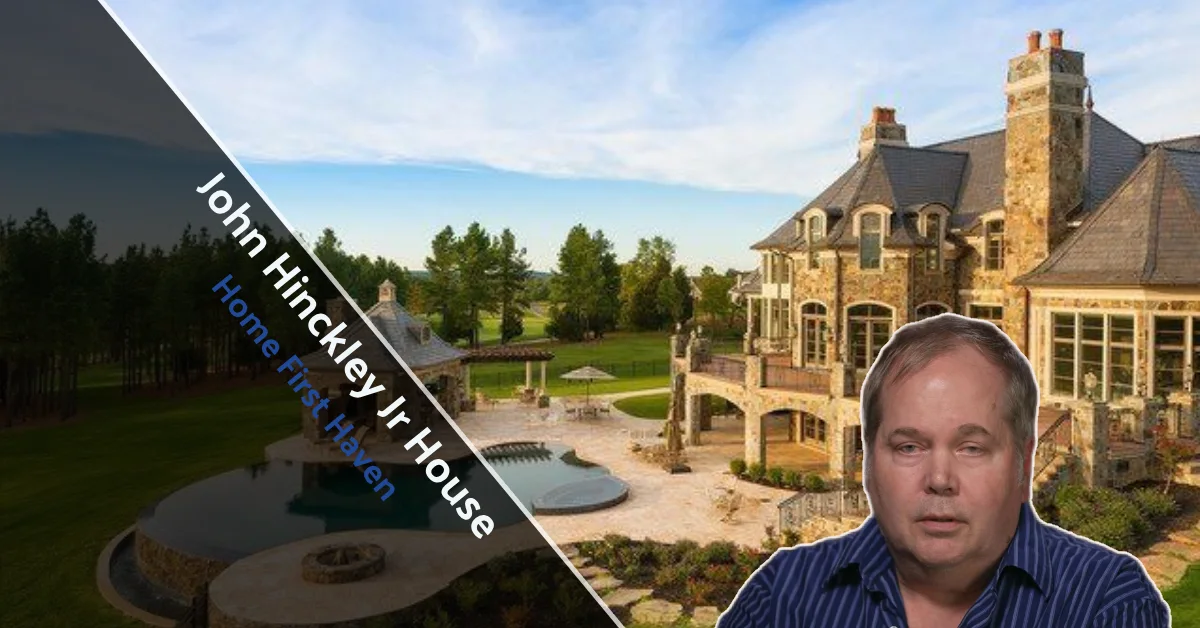
You may have heard of John Hinckley Jr. before. Most people recognize him from one of the darkest days in American presidential history. But here’s what fewer people know: after decades in psychiatric facilities, he now lives a surprisingly ordinary life in Virginia. The John Hinckley Jr house sits in a peaceful neighborhood where history and everyday normalcy collide most suddenly.
This isn’t your typical celebrity mansion story. There’s no sprawling estate, no fortress walls, no paparazzi camping outside. Instead, you’ll find a modest suburban home that tells a much deeper story about mental health, justice, and second chances. Whether you’re curious about where one of America’s most infamous figures ended up or you’re interested in the intersection of crime, rehabilitation, and real estate, this piece breaks it all down.
Who John Hinckley Jr. Is and Why His House Matters
March 30, 1981. That’s the date that changed everything. John Hinckley Jr. fired six shots outside the Washington Hilton Hotel. His target was President Ronald Reagan, and his twisted motivation was to impress actress Jodie Foster. The shooting wounded four people, including Reagan himself, Press Secretary James Brady, Secret Service agent Timothy McCarthy, and police officer Thomas Delahanty.
The trial that followed became a national spectacle. Hinckley was found not guilty by reason of insanity in 1982. That verdict sparked outrage and led to major changes in insanity defense laws across the United States. Instead of prison, Hinckley spent 34 years at St. Elizabeth’s Hospital in Washington, D.C., receiving psychiatric treatment.
Fast forward to today. The man who once dominated headlines now lives quietly in Williamsburg, Virginia. His entire net worth sits around $225,000, mostly from family inheritance. No luxury cars, no yacht, no private island getaway. Just one house that once belonged to his mother.
The John Hinckley Jr house represents more than real estate. It’s a physical marker of rehabilitation, controversy, and the complex questions Americans still wrestle with about mental illness and justice. For some, it symbolizes successful treatment. For others, especially those affected by his 1981 actions, it’s a painful reminder of lives forever changed.
The Path From Psychiatric Hospital to Williamsburg Home
After more than three decades at St. Elizabeth’s Hospital, things started changing for Hinckley. In 2016, he received conditional release, meaning he could leave the facility under strict supervision. Mental health professionals determined he no longer posed a danger to himself or others. The court allowed him to live at his mother’s home in Williamsburg, Virginia.
Those early days weren’t exactly freedom. Hinckley faced severe restrictions on internet use, travel, and contact with certain individuals. He couldn’t leave the area without permission, had to attend regular psychiatric evaluations, and lived under constant monitoring. His mother, Jo Ann Hinckley, provided the support system he needed during this transition.
The restrictions gradually loosened as he demonstrated continued stability. Then came June 15, 2022. A federal judge granted Hinckley unconditional release, ending all court oversight. That decision marked the official end of one of the longest supervised releases in American legal history.
Today, he lives independently in that same Williamsburg property. He spends time creating art, playing guitar, writing songs, and occasionally performing concerts. His social media presence shows a guy trying to build something resembling a normal life after extraordinary circumstances.
Breaking Down the Williamsburg Property
The John Hinckley Jr house sits in a residential neighborhood that blends perfectly with dozens of similar homes. It’s a single-family property that his mother purchased to support his recovery. When Jo Ann Hinckley died in July 2021 at age 95, John inherited the house, giving him full ownership.
Property records estimate the home’s value at around $225,000. That’s standard for middle-class suburban homes in this part of Virginia. The house measures approximately 2,000 to 2,500 square feet, featuring multiple bedrooms and bathrooms typical of family homes built decades ago.
The architectural style follows traditional American suburban design. You’d find vinyl or wood siding, a pitched roof, a small front yard, and a driveway. Nothing fancy, nothing that screams “look at me.” One bedroom serves as his art studio, where he creates paintings he sells online. Another space holds his musical instruments.
There’s no gated entrance, no special security modifications, no fortress mentality. The house sits on a standard suburban lot with a backyard that provides privacy. Neighbors have noted he maintains the yard well and keeps the property in good condition, showing respect for community standards.
What makes this house significant isn’t marble countertops or square footage. It’s what the property represents in Hinckley’s long journey from attempted assassin to someone trying to live quietly and contribute creatively to society.
Inside Williamsburg: The City Context
Williamsburg offers Hinckley something valuable: relative anonymity despite his infamous past. This historic Virginia city sits between Richmond and Norfolk in the Hampton Roads region. With a population of around 15,000 residents, it’s not a major metro where recognition might come more frequently.
The city is famous for Colonial Williamsburg, a living history museum attracting millions of tourists yearly. The College of William & Mary, America’s second-oldest university, also calls Williamsburg home. These features create a unique blend of historical significance and college-town energy.
The neighborhood where the John Hinckley Jr house is located features tree-lined streets and single-family homes typical of middle-class American suburbs. Local reports suggest neighbors initially had concerns when they learned of his presence. Over time, most have accepted his quiet lifestyle since he doesn’t cause disturbances or problems.
The exact street address hasn’t been publicly disclosed. That makes sense given his history and the strong emotions his case still generates. Privacy and security considerations protect both Hinckley and the community from potential conflicts or unwanted attention.
Living here allows him to walk to nearby shops and services, promoting independence while maintaining a low profile. It’s not seclusion, but it’s not the spotlight either. Just a regular American neighborhood where history happens to reside quietly.
His Complete Real Estate Portfolio
Here’s where Hinckley’s story differs dramatically from actual celebrities. He owns exactly one property: the Williamsburg house. That’s it. No vacation homes in the Hamptons, no investment properties generating passive income, no beachfront condos or mountain retreats.
Before his conditional release in 2016, Hinckley didn’t own any property because he lived in psychiatric hospitals for over three decades. He grew up in various locations as his father’s oil executive career moved the family around comfortable middle-class neighborhoods.
His mother’s Williamsburg house became his residence when courts allowed him to live outside the hospital under supervision. Jo Ann Hinckley purchased this property specifically to provide her son with a stable place to continue recovery and eventually reintegrate into society.
When she died in 2021, the house was transferred to John through inheritance. That $225,000 property value roughly matches estimates of his total net worth. This suggests the house represents nearly all his financial assets, with maybe some small savings or income from artwork and music sales.
There’s no indication he plans to buy additional properties or build a real estate empire. His income from creative pursuits doesn’t generate the wealth needed for multiple property investments. He lives within his means, focusing on mental health stability and creative expression rather than wealth accumulation.
The contrast with actual celebrity real estate portfolios is stark. While public figures own mansions, vacation properties, and investments worth millions, Hinckley’s holdings consist of one suburban Virginia house inherited from his supportive mother.
What This House Represents Beyond Bricks and Mortar
The John Hinckley Jr house tells a story that extends far beyond real estate transactions. This modest suburban home represents the final chapter in one of America’s most controversial legal and mental health cases. It’s where decades of psychiatric treatment, court battles, and rehabilitation efforts ultimately led.
For Hinckley himself, the house symbolizes hard-won freedom and a chance to live independently. It’s his art studio, music room, and sanctuary from a past that still defines how many people see him. The property gives him stability and space to pursue creative interests.
For mental health advocates, this house represents hope. It demonstrates that even in extreme cases involving violence, treatment and recovery remain possible. Hinckley’s successful reintegration shows that psychiatric care can work when properly applied and sustained over time.
For victims’ families, especially those of James Brady, the house represents ongoing pain and controversy. No amount of rehabilitation erases what happened on March 30, 1981. The fact that Hinckley lives freely while their loved ones suffered permanent consequences remains a source of justified anger.
The property also raises broader questions about justice, punishment, and mental illness that American society continues debating. Where’s the line between accountability and compassion? How do we balance public safety with treatment opportunities? Can someone who committed such a serious crime ever truly reintegrate?
These aren’t easy questions, and the John Hinckley Jr house in Williamsburg stands as a physical reminder that we’re still working through the answers.
The Bottom Line on Hinckley’s Current Life
John Hinckley Jr. now lives as independently as anyone can after spending 34 years in psychiatric hospitals. His days include painting, playing music, maintaining his property, and interacting with neighbors who’ve mostly accepted his quiet presence. He posts on social media, sells artwork online, and occasionally performs concerts.
The modest $225,000 house in Williamsburg represents his entire real estate holdings and nearly all his financial assets. It’s not glamorous, but it’s his. The home provides stability, privacy, and a base for pursuing creative interests that give his post-hospital life meaning and purpose.
Whether this ending feels like justice or controversy depends entirely on your perspective. What’s undeniable is that the John Hinckley Jr house serves as a tangible marker in American history. In this place, questions about mental illness, crime, treatment, and redemption continue to intersect in complex, uncomfortable ways.