

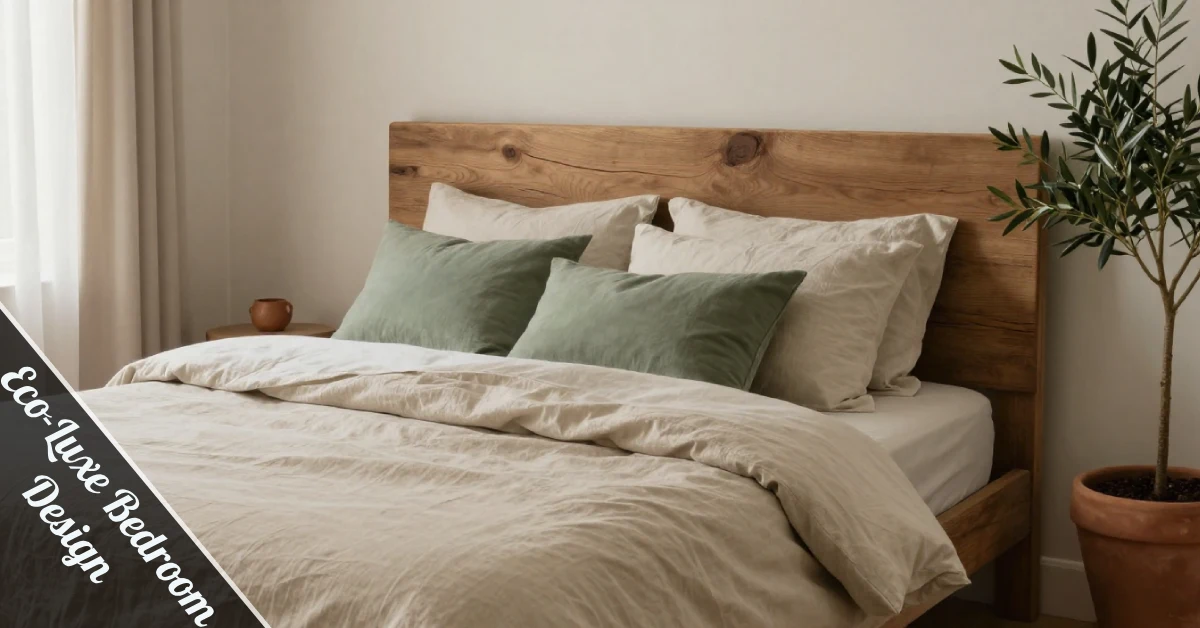
Your bedroom should feel like a retreat—not a guilt trip. That’s the whole vibe behind eco-luxe bedroom design. It’s where high-end aesthetics meet planet-friendly choices, and honestly? It’s not as hard as you think. You don’t need to sacrifice style for sustainability or blow your budget on overpriced “green” furniture that looks like it belongs in a yoga studio.
This is about creating a space that feels expensive, calming, and thoughtfully curated. Think organic cotton sheets that actually breathe, reclaimed wood headboards with character, and lighting that sets the mood without torching your electric bill. The best part? Materials built to last mean fewer replacements, less waste, and more money in your pocket down the line.
Whether you’re starting from scratch or upgrading what you’ve got, this guide breaks down exactly how to nail eco-luxe bedroom design without the fluff.
What Actually Makes a Bedroom “Eco-Luxe”?
Eco-luxe isn’t just slapping bamboo everything in your room and calling it sustainable. It’s a design philosophy that prioritizes natural materials, ethical production, and timeless aesthetics. You’re choosing furniture made from responsibly sourced wood, bedding free from synthetic chemicals, and décor that won’t look dated in two years. The “luxe” part comes from quality—pieces that feel expensive because they’re built right, not because they’re flashy.
This approach leans into textures: raw linen, smooth untreated wood, soft organic cotton. Colors stay neutral—think warm beiges, muted greens, soft grays—pulling directly from nature instead of trending Pinterest boards. And here’s the kicker: minimalism plays a huge role. Fewer pieces mean each one gets to shine, and clutter doesn’t stand a chance.
The real luxury? Knowing your bedroom isn’t off-gassing chemicals while you sleep. Standard mattresses and furniture often contain flame retardants, formaldehyde, and VOCs that slowly seep into your air. Switching to certified organic and low-emission materials keeps your indoor air cleaner, which matters when you’re spending a third of your life in that room.
Why Your Mattress and Pillows Are the Foundation
Let’s start where it matters most: what you’re actually sleeping on. Your mattress is the MVP of eco-luxe bedroom design, and it’s worth getting right. Organic cotton mattresses skip the synthetic foams and chemical treatments, giving you a surface that breathes naturally and doesn’t trap heat like memory foam tends to do.
Look for GOTS certification—it’s the gold standard for organic textiles. This means the cotton was grown without toxic pesticides, processed without harsh chemicals, and produced under fair labor conditions. It’s not just a label; it’s a traceable supply chain from field to finished product.
Pillows matter just as much. GOTS-certified pillows use natural fills—organic cotton, kapok, or wool—that mold to your head without collapsing after six months. They regulate temperature better than synthetic alternatives, so you’re not flipping your pillow to the cool side all night. Plus, they’re hypoallergenic, which is a win if you’ve got sensitivities.
Here’s the reality check: investing in quality sleep support pays off. Cheap pillows flatten fast, forcing you to replace them annually. Natural fills last for years, maintain their loft, and don’t end up in a landfill nearly as quickly.
The Fabrics That Actually Feel Luxury (And Happen to Be Sustainable)
Bedding sets the tone—literally and visually. Organic cotton is your go-to for sheets because it’s soft, breathable, and gets better with every wash. Unlike conventional cotton, which uses pesticides that wreck soil and water, organic versions keep farming sustainable and your skin irritant-free.
Linen is where eco-luxe bedroom design gets that lived-in elegance. Made from flax, it requires minimal water and pesticides to grow. The fabric drapes beautifully, regulates temperature like a boss, and those natural wrinkles? They’re part of the charm. Don’t over-iron—it’s supposed to look relaxed.
Hemp is the underdog you should know about. It’s incredibly durable, softens over time, and grows without needing much intervention. Mix hemp throws or pillowcases into your setup for texture contrast. Layering different natural fabrics—cotton base, linen duvet, hemp accent—creates depth without relying on patterns or loud colors.
Avoid synthetic blends marketed as “easy care.” Polyester bedding traps heat, doesn’t breathe, and sheds microplastics into your washing machine (and eventually, waterways). Natural fibers might need a little more attention, but they’re worth it for comfort and environmental impact.
Furniture That Brings the Wow Without Wrecking the Planet
Your bed frame, nightstands, and dresser are the anchors of the room. Go for wood certified by the Forest Stewardship Council—it guarantees the timber came from responsibly managed forests. Reclaimed wood is even better: it’s salvaged from old buildings or structures, so no new trees get cut down.
Reclaimed pieces have personality. Knots, weathering, and grain variation tell a story that new, mass-produced furniture just can’t match. A headboard made from reclaimed barn wood instantly becomes a focal point, adding warmth and character without needing extra décor.
Avoid particleboard and MDF furniture held together with formaldehyde-based glues. They’re cheap upfront, but off-gas for years and fall apart fast. Solid wood costs more initially, but it’ll outlast three generations of IKEA dressers. That’s the real luxury: buying once instead of replacing every time you move.
For upholstered pieces like benches or chairs, look for natural latex foam and organic fabric covers. Conventional foam cushions are petroleum-based and treated with flame retardants. Natural latex offers the same comfort without the chemical baggage, plus it’s biodegradable at end-of-life.
Color Palettes That Ground the Space (Without Boring You to Death)
Neutral doesn’t mean beige overload. Eco-luxe bedroom design thrives on nature-inspired tones: soft whites, warm taupes, muted sage greens, dusty terracottas, and gentle grays. These colors create a calm backdrop that lets your materials and textures do the talking.
Paint matters more than you’d think. Most conventional paints release VOCs as they dry and even after. Zero-VOC or low-VOC paints keep your air cleaner and perform just as well without making you lightheaded while rolling them on.
Layering shades adds dimension. Pair a warm cream wall with deeper taupe bedding and sage green accents in pillows or throws. The key is staying within the same tonal family so everything feels cohesive, not matchy-matchy. Let natural wood finishes and raw linen introduce variation through texture instead of color.
Accent walls work if you keep them subtle. A wall in soft terracotta behind your bed adds warmth without overwhelming the space. Steer clear of trendy bold colors—they date fast and require repainting sooner, which means more paint waste.
Lighting That Sets the Mood (And Doesn’t Waste Energy)
Good lighting is non-negotiable in eco-luxe bedroom design. You want multiple sources: overhead for functionality, bedside lamps for reading, and maybe accent lighting to highlight architectural features or artwork. LED bulbs are the move—they use 75% less energy than incandescent and last years longer.
Dimmer switches let you control ambiance. Bright for getting ready, low and warm for winding down. It’s a small upgrade that makes a massive difference in how the room feels. Pair dimmers with warm-toned LEDs (2700K-3000K) to avoid that harsh, clinical light.
Fixtures themselves should be made from natural or recycled materials. Wood pendant lights, metal sconces with aged brass finishes, or ceramic table lamps all fit the aesthetic. Skip plastic bases and synthetic shades—they cheapen the look and don’t align with the sustainability angle.
Natural light is your best friend. Keep window treatments light and layered: sheer linen curtains for daytime privacy, heavier organic cotton drapes for blackout when you need it. Maximizing daylight reduces reliance on artificial lighting and makes the space feel more expansive.
Minimalism That Feels Intentional, Not Empty
Less is more, but only if “less” is thoughtfully chosen. Eco-luxe bedroom design thrives on intentional minimalism: fewer pieces, better quality, each one serving a purpose. This isn’t about stark white rooms with nothing in them—it’s about breathing room and letting your materials shine.
Start by decluttering. If it doesn’t serve a function or bring you joy, it’s out. Open surfaces and clean lines make the room feel larger and more luxurious. A well-made bed, one killer nightstand, and a solid dresser beat a room stuffed with cheap furniture any day.
Storage matters. Built-in closets or under-bed storage keep things out of sight without adding visual noise. Choose storage solutions in natural materials—woven baskets, wood crates, linen bins—so even functional pieces contribute to the aesthetic.
Décor should be minimal and meaningful. A single piece of art, a ceramic vase with dried grasses, or a vintage mirror adds personality without clutter. If you’re adding greenery, keep it simple: a snake plant or potted olive tree in a terracotta pot beats five random succulents scattered around.
The Long Game: Why Eco-Luxe Actually Saves You Money
Here’s the part nobody talks about enough: eco-luxe bedroom design isn’t just better for the planet—it’s better for your wallet long-term. Durable materials mean you’re not replacing your mattress every five years or buying new sheets twice a season. Quality lasts, and that longevity translates to fewer purchases over time.
Energy-efficient lighting cuts your electric bill. LEDs cost more upfront but pay for themselves within a year through lower energy use and longer lifespan. Same logic applies to smart thermostats and energy-efficient window treatments that regulate temperature naturally.
Organic bedding holds up better. Conventional cotton breaks down faster from chemical processing and frequent washing. Organic fibers maintain their integrity, so your investment in high-quality sheets stretches across years, not months. You’re buying fewer things less often.
Solid wood furniture retains value. If you ever move or redecorate, well-made pieces can be resold or repurposed. Cheap particleboard ends up curbside. Investing in furniture that lasts isn’t just eco-conscious—it’s financially smart.
Pulling It All Together Without Overthinking It
Building an eco-luxe bedroom isn’t about perfection—it’s about progress. Start with the big stuff: mattress, bedding, and key furniture pieces. Swap out lighting as bulbs burn out. Replace décor gradually as you find pieces that fit the vibe.
Mix high and low. You don’t need every single item to be certified organic or reclaimed. Pair a splurge-worthy organic mattress with affordable organic cotton sheets. Balance investment pieces with budget-friendly finds that still meet your sustainability standards.
Trust your instincts on what feels right. If a material, color, or piece doesn’t align with the calm, grounded aesthetic you’re going for, skip it. Eco-luxe bedroom design works because it’s honest—no faking, no shortcuts, just intentional choices that age well.
Your bedroom should be the place you actually want to spend time. Make it feel like a five-star hotel that just happens to respect the planet. No guilt, no compromises—just seriously good design.