

You’re staring at your woodworking project, and something feels off. The shelves wobble, the cabinet lacks that pro-level sturdiness, and you’re wondering what separates DIY attempts from furniture that actually lasts.
Enter the dado à—your secret weapon for shelving systems, bookcases, and cabinets that don’t just look good but stay locked in place. It’s not flashy, but this groove-style joint is what professional carpenters reach for when they need clean strength.
Whether you’re building your first bookshelf or upgrading to custom cabinetry, understanding the dado joint transforms how you approach woodworking. Let’s break down what makes it essential, how it compares to other joints, and why your next project needs it.
What Exactly Is a Dado Joint?
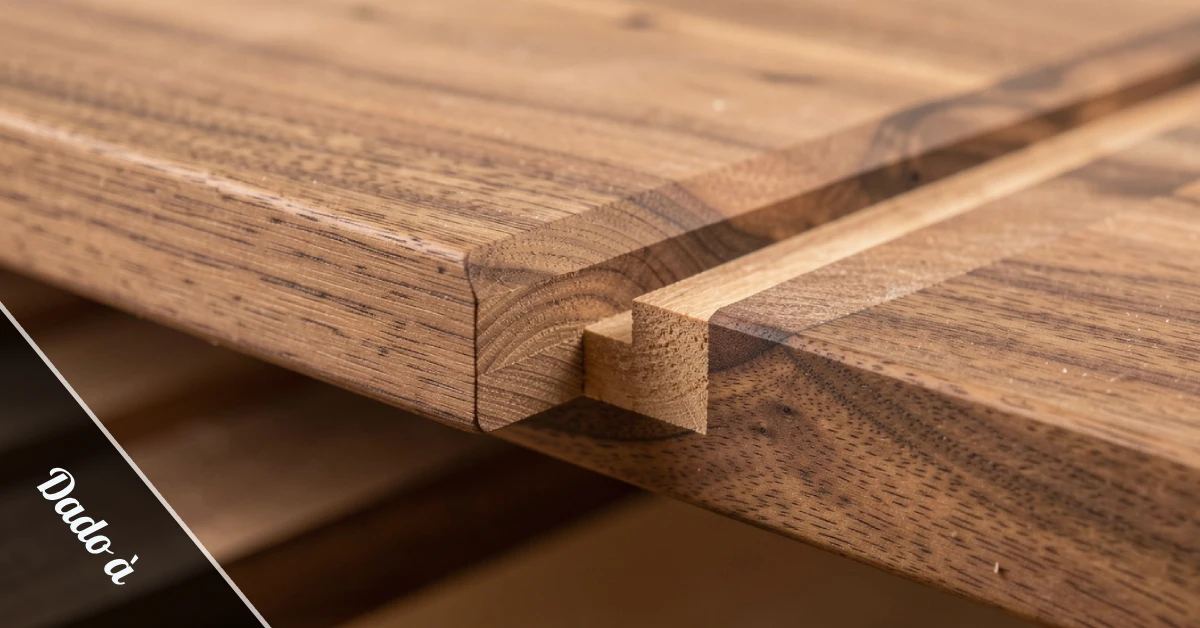
A dado à is a rectangular groove cut across the grain of wood. Think of it like carving a channel that another piece slots perfectly into.
Unlike surface joints that rely purely on glue or screws, the dado wraps around the inserted piece. This creates mechanical locking—wood physically holds wood, not just adhesive, doing all the heavy lifting. That’s why shelves stay level under weight.
You’ll cut dado joints using a table saw, router, or dado blade stack. The groove width matches your shelf or panel thickness exactly. No gaps, no wobbling—just a snug fit that distributes weight evenly across the entire joint surface.
Precision matters here more than almost anywhere else in woodworking. A dado à that’s too wide leaves visible gaps; too narrow and you’re fighting to force pieces together, risking splits.
Dado vs Groove vs Rabbet: Know Your Cuts
Woodworking joints get confusing fast because terminology overlaps. Here’s the breakdown that actually sticks: dado cuts go across the grain, grooves run with it, and rabbets sit on edges.
A groove follows the wood’s natural grain direction, like the channel on a drawer bottom panel. Dado à cuts perpendicular to the grain, creating that cross-grain slot for shelves. Rabbets are L-shaped notches along board edges for backs or lids.
Why does direction matter? Grain orientation affects strength and wood movement. Dado joints handle vertical loads better because they cut across growth rings, preventing shelf sag. Grooves work for sliding panels that need to expand and contract seasonally.
Master these three cuts, and you’ve unlocked 90% of furniture joinery. Most cabinet projects use all three—dado à for shelves, grooves for backs, and rabbets for side panels.
Joint Comparison Table:
| Joint Type | Grain Direction | Best Use |
|---|---|---|
| Dado | Across grain | Shelves, cabinet dividers |
| Groove | With grain | Drawer bottoms, sliding panels |
| Rabbet | Edge cut | Cabinet backs, picture frames |
Why Dado Joints Actually Work Better Than Screws
Screws pull out. Glue dries brittle. Dado à joints lock pieces together mechanically, spreading stress across the entire groove surface instead of concentrating force on a few fastener points.
When you load a shelf, the weight pushes down. A dado’s side walls resist that downward force directly. Screws only hold through their threads—eventually, wood fibers compress and loosen. The dado distributes that load, preventing the shelf from sagging over time under book weight.
Add glue to a dado joint, and you multiply the contact area by hundreds. Instead of a thin bead alongthe edges, adhesive coats the entire groove. More surface contact equals a stronger bond, simple physics.
Pro tip: cut dados about one-third the board thickness deep. Deeper weakens the main panel; shallower sacrifices holding power. That one-third ratio balances strength on both sides of the joint.
Where You’ll Actually Use Dado Joints
Bookshelves and Display Units
Every shelf that holds weight needs support. Dado joints cut into vertical side panels give horizontal shelves something solid to rest on. No visible hardware, no metal brackets breaking your design aesthetic—just clean lines and functional strength.
You can space dado à slots precisely where you want shelves, no guessing with adjustable pegs. Measure once, cut accurately, and those shelves stay exactly where you planned. Perfect for display units where shelf height matters for showcasing specific items.
Kitchen and Bathroom Cabinets
Cabinet construction relies heavily on dado joints. Face frames attach to side panels using dados. Interior dividers slot into dado cuts on the cabinet floor and ceiling, creating compartments that don’t shift or twist when you load them with dishes.
Drawer boxes use dados too—front, back, and side panels all interlock through precisely cut grooves. That’s why quality drawer boxes feel solid when you close them, versus cheap ones that wobble and eventually fall apart at glued corners.
Entertainment Centers and Media Consoles
Media furniture takes serious weight—TVs, receivers, game consoles, vinyl collections. Dado à joints create compartments that won’t sag under electronics. Vertical dividers lock into horizontal shelves, forming a grid structure that stays square even when fully loaded.
Cable management gets easier, too. You can route wires through the backs of dado-joined panels, keeping everything organized without exposed holes weakening the structure. It’sa functional design that actually works.
How to Cut Perfect Dados Every Time
Three main tools cut dado joints: table saws with dado blade stacks, routers with straight bits, and circular saws with guide rails. Each method works, but precision comes down to setup and measurement, not the tool itself.
Start by measuring your shelf material thickness with calipers, not a tape measure. A quarter-inch plywood might actually measure 0.23 inches. Cut your dado à to match that exact thickness. Test fits prevent frustration—cut a practice dado in scrap first.
Depth consistency matters more than you’d think. Set your blade or router bit height once, then cut all matching dados without adjusting. Uneven depths create shelves that tilt or don’t sit flush against the back panel.
Mark dado locations clearly on both panel edges. Align your fence or guide to those marks, and double-check before cutting. Mistakes here aren’t fixable—you’re either starting over with new material or living with visible gaps.
Use backer boards when routing to prevent tear-out where the bit exits. Clean cuts look professional; ragged edges scream amateur work. Sharp blades and bits are non-negotiable for dado quality.
Common Mistakes That Ruin Dado Joints
Cutting dados too wide ranks as mistake number one. You’re chasing a snug fit, not a loose slide. If the shelf drops in without resistance, the joint won’t hold properly even with glue.
Going too deep weakens your main panel. Remember that one-third thickness rule. Dado à cuts deeper than halfway through compromise structural integrity, especially in plywood, where you’re removing multiple layers of the core.
Skipping test cuts costs time and material. Five minutes of testing on scrap saves hours of rework. Cut one test dado, fit your actual shelf piece, adjust if needed, then commit to your good wood.
Not accounting for wood movement in solid lumber leads to splits. Plywood and MDF stay stable, but solid wood expands and contracts seasonally. Size dado joints in solid wood slightly looser to allow movement without cracking.
Dado Joint Variations Worth Knowing
The through dado runs completely across a board, visible on both edges. Simple to cut but shows on the front if you’re working with exposed sides. Great for shop projects where function beats appearance.
Stopped dados end before reaching the front edge, hiding the joint when viewing the cabinet from the side. Requires more precision—you’ll stop your cut at a specific point, then square the corner with a chisel.
Sliding dovetail dados angle the groove walls, creating a wedge-shaped slot. The matching piece tapers to fit, locking mechanically even without glue. Furniture-grade joinery that impresses when people look closely at your craftsmanship.
Gluing and Finishing Dado Joints Right
Apply glue to both the dado groove and the inserted piece edges. Don’t flood it—excess glue squeezes out, creating cleanup headaches. A thin, even coat on all mating surfaces bonds stronger than thick globs.
Clamp assemblies square while the glue dries. Dado à joints can still shift slightly during assembly. Use corner clamps or measure diagonals to confirm everything’s aligned before the glue sets. You’ve got maybe 15 minutes of working time with standard wood glue.
Wipe away the squeeze-out immediately with a damp cloth. Dried glue blocks stain absorption, leaving light spots on your finished piece. Fresh glue wipes clean easily; hardened glue requires sanding, which might remove surrounding wood and create depressions.
Let joints cure fully before stressing them. Most wood glues reach handling strength in an hour but need 24 hours for maximum bond. Don’t load shelves or move cabinets until the glue’s completely set.
The Dado Joint Advantage
Dado à joints separate furniture that lasts from projects that fall apart. They’re not complicated—just precise grooves that interlock pieces mechanically. But that simplicity delivers strength that screws and glue alone can’t match.
Whether you’re building your first bookshelf or tackling custom kitchen cabinets, dado joints give you professional-grade results. The learning curve is minimal compared to the structural improvement. Master the basics—accurate measurements, proper depth, clean cuts—and you’ll build furniture you’re proud to show off.
Start with simple bookshelf projects to practice dado techniques. Once you nail the fundamentals, scale up to complex cabinetry, knowing your joints won’t fail. That’s the dado à difference—solid joinery that holds everything together, literally.