

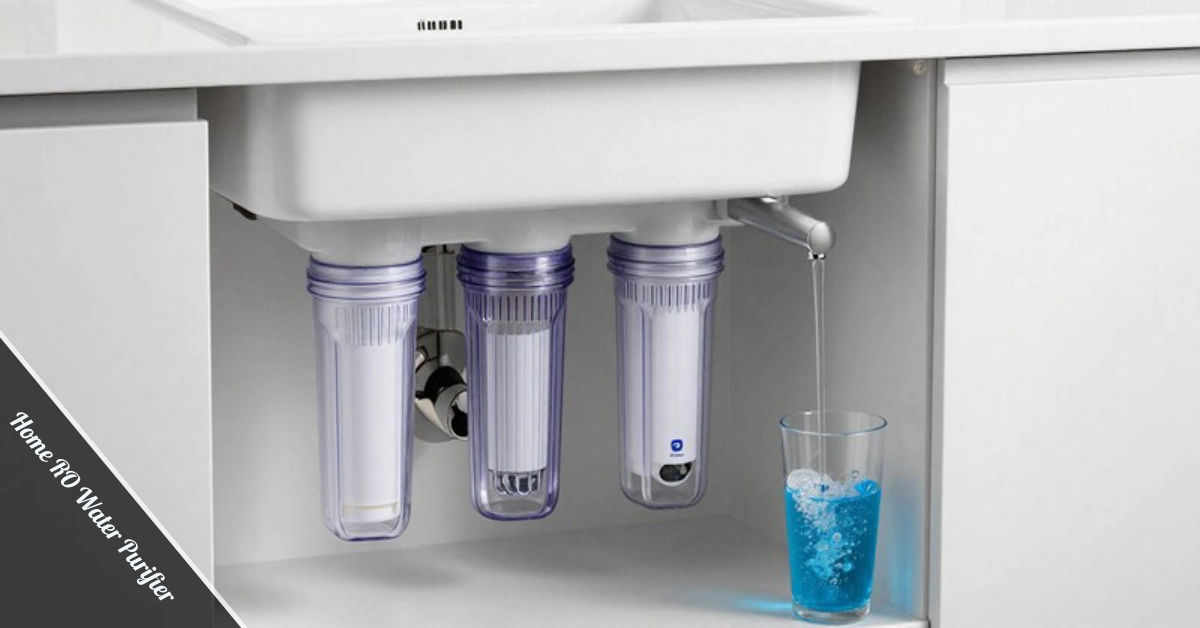
A home RO water purifier removes up to 99% of contaminants from tap water using a semipermeable membrane that filters out bacteria, heavy metals, chemicals, and dissolved solids. These systems provide safe, great-tasting drinking water directly from your kitchen faucet while reducing plastic bottle waste and long-term costs.
Your tap water travels through miles of pipes before reaching your glass. Along the way, it picks up sediment, bacteria, heavy metals, and chemical residues. Even water that meets safety standards can contain unwanted substances that affect taste and health.
A home RO water purifier addresses these concerns head-on. This guide explains how these systems work, what they remove from your water, and how to choose the right one for your household. You’ll learn about different types, installation requirements, and maintenance needs.
How RO Water Purifiers Work
A reverse osmosis system uses water pressure to push tap water through a semipermeable membrane. This membrane contains microscopic pores measuring approximately 0.0001 microns. Only water molecules pass through these tiny openings. Larger particles like bacteria, viruses, and dissolved minerals cannot penetrate the barrier.
The process happens in stages. First, pre-filters remove larger particles like sediment and chlorine. These protect the delicate RO membrane from damage. Next, water passes through the membrane, where the main filtration occurs. Finally, post-filters polish the water before it reaches your faucet.
The system creates two water streams. Clean water collects in a storage tank or flows directly to your tap. Rejected water containing concentrated contaminants goes down the drain. Modern systems achieve waste ratios as low as 1:1, meaning one gallon of waste for every gallon of clean water produced.
Contaminants Removed by Home RO Systems
RO filtration targets a wide range of water contaminants. Understanding what these systems remove helps you evaluate their value for your household.
The semipermeable membrane blocks bacteria and viruses, including E. coli, cholera, and other disease-causing microorganisms. Heavy metals like lead, arsenic, mercury, and chromium cannot pass through. These metals can cause serious health problems with long-term exposure.
Chemical contaminants also get filtered out. This includes chlorine, fluoride, pesticides, and pharmaceutical residues. According to a 2024 EPA specification, certified RO systems must remove PFAS compounds. These “forever chemicals” have been linked to health concerns and appear in water supplies nationwide.
Dissolved solids like calcium, magnesium, sodium, and sulfates are reduced significantly. While some minerals benefit health, excess amounts create hard water problems and unpleasant tastes. RO systems typically reduce total dissolved solids (TDS) by 90-99%.
Types of Home RO Water Purifiers
Three main types serve different household needs. Each has distinct advantages depending on your space, budget, and water consumption.
Under-sink systems connect to your cold water line and are installed beneath the kitchen sink. These require drilling a hole for a dedicated faucet. Tank-based models store 3-4 gallons of filtered water for immediate use. Tankless versions produce water on demand, saving space but requiring electrical power. Under-sink systems work well for families who cook and drink filtered water regularly.
Countertop systems sit on your kitchen counter and don’t require permanent installation. You fill a reservoir manually or connect it to your faucet. These portable units suit renters or anyone wanting flexibility. Many include hot water dispensing features for tea and instant meals. Production capacity runs lower than under-sink models, making them better for smaller households.
Whole-house systems filter water at the main supply line before it enters your plumbing. These large-capacity units provide filtered water to every tap, shower, and appliance. Installation requires professional plumbing work and significant upfront investment. Whole-house RO makes sense if you have well water with high contamination levels or want filtered water throughout your home.
Benefits of Installing an RO System
Home RO water purifiers deliver multiple advantages beyond clean drinking water.
Health protection ranks first. Removing bacteria, viruses, and toxic chemicals reduces your risk of waterborne illnesses. A 2024 study found elevated heavy metal levels in major water sources across several states. RO filtration provides a reliable defense against these threats.
Taste and odor improve dramatically. Chlorine gives municipal water a chemical flavor. Dissolved minerals create metallic or bitter notes. RO water tastes neutral and clean, making beverages like coffee and tea taste better. Ice cubes come out crystal clear instead of cloudy.
Cost savings add up over time. The average American family spends $500-800 yearly on bottled water. An RO system costs $200-600 installed, with annual filter replacements around $50-150. The system pays for itself within the first year or two.
Environmental impact decreases substantially. Americans discard 38 billion plastic water bottles annually. Most end up in landfills or oceans. An RO system eliminates this waste stream from your household.
Choosing the Right System for Your Home
Several factors determine which RO system works best for your situation.
Water quality testing reveals what contaminants you need to remove. Test kits cost $20-50 and show TDS levels plus specific contaminants. High TDS readings (above 500 ppm) indicate you need robust filtration. Municipal water reports also detail what’s in your supply.
Daily water consumption matters for sizing. Count how many people live in your home and estimate the gallons used for drinking and cooking. A family of four typically needs 5-10 gallons daily. Under-sink systems produce 50-100 gallons per day (GPD). Larger families may need 150+ GPD models.
Available space affects your options. Measure under your sink to verify clearance for tanks and filters. Tight spaces call for tankless or countertop models. Check if you have a nearby electrical outlet for tankless units.
Certification ensures performance and safety. Look for NSF/ANSI certification or WQA Gold Seal approval. These independent organizations test that systems perform as claimed. As of November 2024, EPA’s WaterSense label identifies efficient models that waste less than 2.3 gallons per gallon of treated water.
Budget considerations extend beyond purchase price. Factor in installation costs ($100-300 for professional work), annual filter replacements, and occasional membrane changes every 2-5 years. Calculate the total five-year ownership costs when comparing systems.
Installation and Maintenance Requirements
Most under-sink RO systems suit DIY installation if you have basic plumbing skills. The process takes 2-4 hours for first-timers.
You’ll drill a hole in your sink or countertop for the dedicated faucet. Then connect the system to your cold water line using the included fittings. A drain saddle attaches to your sink drain pipe for wastewater. Many systems arrive pre-assembled, requiring only connection to your plumbing.
Professional installation costs $100-300 but ensures proper setup. Plumbers handle drilling, leak testing, and optimizing water pressure. This option makes sense if you lack tools or confidence in DIY work.
Maintenance stays simple with regular filter changes. Sediment and carbon pre-filters need replacement every 6-12 months. The RO membrane lasts 2-5 years, depending on water quality and usage. Post-filters change annually. Most systems use color-coded, twist-on filters that swap out in seconds.
Sanitizing the system annually prevents bacterial growth in tanks and lines. You’ll run a cleaning solution through the system following manufacturer instructions. This takes about 30 minutes once per year.
Watch for signs that maintenance is due. Reduced flow rate, bad taste, or cloudy water indicate filter exhaustion. Many newer systems include indicator lights or digital displays showing filter life remaining.
Understanding Water Waste and Efficiency
Traditional RO systems waste significant water during filtration. Older models produced 5-10 gallons of wastewater per gallon of clean water. This inefficiency raised concerns about resource conservation.
Modern systems achieve much better ratios. Tankless models often reach 1:1 or even 1.5:1 efficiency. Some use permeate pumps that recover reject water and boost efficiency. Wastewater recovery can cut your drain output by 75% compared to old-style systems.
EPA’s November 2024 WaterSense specification addresses this issue. Certified systems must not exceed 2.3 gallons of waste per gallon produced. If every household switched to WaterSense-labeled units, Americans would save over 3.1 billion gallons annually.
You can reuse wastewater in certain applications. Collect it for watering plants, washing cars, or mopping floors. This practice maximizes your system’s efficiency and reduces total household water consumption.
Common Concerns About RO Water
Some people worry that RO water lacks beneficial minerals. The membrane does remove calcium and magnesium along with contaminants. However, you obtain most essential minerals from food, not water. A balanced diet provides adequate nutrition regardless of water mineral content.
If mineral intake concerns you, several solutions exist. Some systems include remineralization filters that add back calcium and magnesium. These raise pH levels slightly and improve taste for those who prefer it. You can also eat mineral-rich foods or take supplements.
Water pH becomes more acidic after RO filtration. Typical RO water measures 5.5-6.5 pH compared to tap water’s 7-8 range. Alkaline filters address this by raising pH to 8-9 if desired. Most people notice no health difference from slightly acidic water.
Slow production rates frustrate some users. Traditional tank systems need time to refill after heavy use. Tankless models produce water faster but still work more slowly than turning on a regular tap. Planning for large water needs (filling pots, pitchers) prevents this from becoming an issue.
Installation space requirements limit options in small kitchens. Countertop units solve this problem, though they offer less convenience than dedicated faucets. Compact under-sink models designed for tight spaces are also available.
Cost Analysis Over Time
Understanding total ownership costs helps you make informed decisions.
Initial purchase prices range from $150 for basic countertop units to $500+ for premium under-sink systems. Whole-house RO starts around $2,000. Add installation if you hire professionals.
Annual operating costs include replacement filters ($50-150) and increased water bills from waste output. A typical system adds $5-15 monthly to water costs. Electricity for tankless models runs $2-5 per month.
Compare this to bottled water expenses. At $5 per case, a family buying two cases weekly spends $520 yearly. RO filtered water costs roughly $0.10-0.20 per gallon after accounting for equipment and consumables. Your payback period typically runs 1-2 years.
An extended lifespan means greater savings. RO systems last 10-15 years with proper maintenance. Over a decade, you’ll spend $1,500-2,500 total versus $5,000+ on bottled water.
Final Thoughts
Clean drinking water is not a luxury. A home RO water purifier provides reliable protection against contaminants while saving money and reducing plastic waste. These systems have evolved to become more efficient, affordable, and easier to maintain than ever before.
Start by testing your water to understand what you need to remove. Consider your household size, available space, and budget. Choose a certified system from a reputable manufacturer. Follow the maintenance schedule to keep your system performing at its best.
The investment in an RO water purifier pays dividends in health, taste, convenience, and environmental impact. Your family deserves the cleanest water possible, and modern RO technology makes that goal achievable for any household.
FAQs
How often should I replace RO filters?
Pre-filters need changing every 6-12 months. The RO membrane lasts 2-5 years, depending on your water quality and usage volume. Post-filters require annual replacement. Your system manual provides specific intervals, and many units include indicator lights to remind you.
Does RO remove fluoride from water?
Yes, RO membranes remove 85-95% of fluoride from tap water. If your area adds fluoride to municipal water and you want to retain it for dental health, consider a different filtration method or consult with a dentist about fluoride supplementation.
Can I install an RO system myself?
Most under-sink systems work for DIY installation if you’re comfortable with basic plumbing. You’ll need a drill, an adjustable wrench, and 2-4 hours. The manufacturer’s instructions guide you through each step. Professional installation costs $100-300 and ensures proper setup.
Is RO water safe for drinking long-term?
Yes, RO water is safe for long-term consumption. While it lacks some minerals found in tap water, you obtain essential nutrients primarily from food. Billions of people worldwide drink RO water daily without health issues. Adding a remineralization filter addresses any mineral concerns.
How much does an RO system cost to operate?
Annual operating costs run $70-180 for filter replacements. Water waste adds $5-15 monthly to your water bill. Electricity for tankless models costs $2-5 monthly. Total yearly operating expenses typically range from $100-250, far less than buying bottled water.