

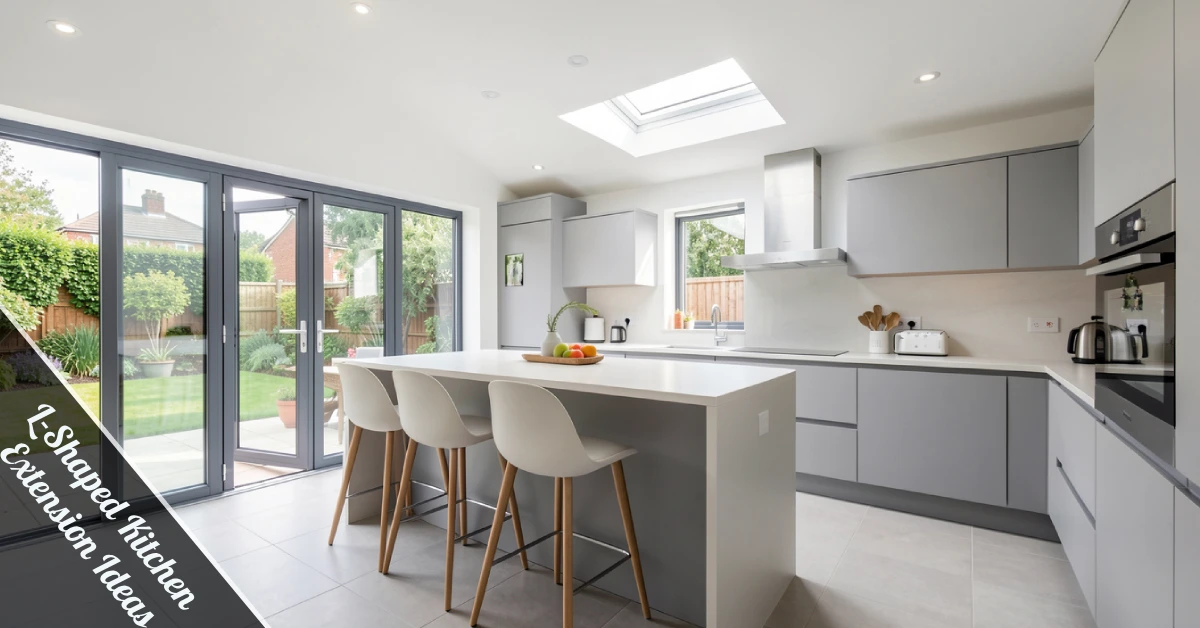
Want a kitchen that doesn’t feel cramped? L-shaped kitchen extension ideas are your answer. They add serious square footage without sacrificing garden space. Think wrap-around layouts creating zones for cooking, eating, and hanging with your crew. No more bumping elbows while chopping.
These aren’t just about extra space. They create kitchen-diners that work for how you actually live. Whether eyeing a Victorian terrace makeover or planning a ground-floor glow-up, L-shaped designs deliver. Natural light floods from multiple angles, garden access flows seamlessly, and breathing room becomes reality.
1. Zone It Like a Pro
L-shaped layouts naturally create distinct spaces without walls. You cook while friends chill at the dining table—nobody’s stuck in kitchen jail anymore. Put your cooking zone in the side return where plumbing’s easier. Then let the rear section serve as your dining area, with big windows.
Architects designing these extensions swear by this setup. L-shaped additions allow “distinct zones for cooking, dining, and relaxing, all sitting comfortably within one connected space.” Your kitchen-diner becomes the place everyone naturally gravitates to. No awkward layouts where guests can’t see each other.
The projecting section sticking into your garden is prime real estate for a kitchen island. You’re already soaking up natural light out there. Add bar stools on one side, prep space on the other—function meets flow. Just ensure your island doesn’t block zone pathways.
Smart zoning means thinking about sight lines. Can you see kids doing homework from the stove? Do seated guests face your garden or a blank wall? These details separate good extensions from great ones.
2. Glazing That Makes Sense
Windows and doors aren’t just light sources—they’re view selectors. With L-shaped kitchen extension ideas, you’ve got walls facing different directions. Mix fixed glazing where ventilation isn’t needed with sliding or bi-fold doors for garden access.
Here’s what works: tall, narrow glazed panels in the kitchen section. They bring light without eating up wall space needed for cabinets. Save full-width sliding doors for dining areas where patio access matters. Victorian terrace renovations use this trick—functional kitchens meet indoor-outdoor dining zones.
Bi-fold windows over window seats take things to the next level. Imagine opening those windows on summer evenings while enjoying coffee. Wrap-around glazing connects you to gardens from multiple angles. Just avoid huge windows where the afternoon sun creates a sauna.
Rooflights are secret weapons for north-facing properties. When side walls don’t get direct sun, bring it from above. Position them over prep areas or dining tables—anywhere needing soft, even light. Pair rooflights with side glazing for spaces that never feel cramped.
3. Material Choices That Work
Your extension shouldn’t look like it crashed-landed from another building. But it shouldn’t disappear trying too hard to blend either. The sweet spot? Materials that complement without copying. Modern zinc cladding plays nice with old brick—reducing overall massing without creating blobs.
Brickwork gives options. Instead of matching the existing brick exactly, go a shade different. Blue-grey brick against red Victorian brick creates a subtle contrast, saying “I’m new but belong here.” Planners dig this approach—it respects originals while being honest about additions.
Corten steel is a wild card. Rusty-red metal cladding might sound crazy next to traditional brickwork. But when done right, it echoes earthy brick tones. Horizontal metal panels balance vertical brick patterns. You’re creating dialogue between old and new.
Timber cladding brings warmth with smart placement. Use it on projecting sections facing gardens. This creates a visual hierarchy: original house in brick, extension in timber, garden as backdrop. Just ensure your timber handles weather exposure properly.
4. Kitchen Islands That Work
Not every kitchen needs islands, but in an L-shaped kitchen extension, ideas? Practically mandatory. You’ve got space—make it count. This isn’t about any rectangle in the middle. Create pieces working as hard as you do. Think storage underneath, seating on sides, maybe second sinks.
Size matters, but bigger isn’t always better. Islands should leave 1.2 meters of clearance on working sides. Any less means awkward sideways shuffles when grabbing from fridges. Any more makes kitchens feel like airport terminals. Projecting sections are perfect spots where natural light pools anyway.
Materials need practicality, not just looks. Quartz looks sharp and laughs at red wine spills. Granite brings natural variation that everyone loves. Whatever you pick, it takes beatings. This is your daily command center for meal prep, homework sessions, and random pasta-making Tuesdays.
Pull-out drawers beat cabinets for island storage every time. You see everything without gymnastics, reaching back. Add open shelving on dining sides for cookbooks or fancy olive oils. Islands become both workhorses and conversation starters.
5. Lighting Strategy
One overhead light doing everything? Amateur hour. L-shaped extensions give room for different lighting types—use them. Start with task lighting over prep areas—under-cabinet LEDs are cheap and make chopping safer. Add pendant lights over islands or tables to define zones visually.
Ambient lighting sets moods without creating operating room vibes. Recessed ceiling lights work, but don’t overdo it. Spread them, avoiding harsh shadows. Added rooflights to handle daytime ambient needs mostly. Natural light stays MVP here.
Accent lighting is where fun happens. LED strips along island bases create floating effects. Spotlights highlight architectural features like corbelled brickwork or interesting ceilings. These touches separate decent extensions from show-stoppers.
Dimmer switches are non-negotiable. Lighting needs change from breakfast chaos to Friday night dinners. Dialing up or down means spaces work for every situation. Smart bulbs add control from phones, schedules, whatever. Just don’t forget basics: good light where and when needed.
6. Storage That Actually Stores
Extra space means nothing if it becomes clutter central. Plan storage from day one. Floor-to-ceiling cabinets along walls? Pantry sorted. Pull-out larders keep everything visible and reachable. No more losing coconut milk cans in back corners for years.
Walk-in pantries change games if layouts allow. Tuck them into kitchen sections—right there when cooking, but not interrupting open-plan flow. Add counter space inside for small appliances used less often. Coffee makers, toasters, juicers—all off main counters.
Think vertical with storage planning. Wall space between counters and ceilings isn’t wasted—it’s prime real estate. Tall cabinets for baking sheets and cutting boards. Open shelving for dishes actually used. Maybe wine storage if that’s your thing. Just avoid filling every inch—breathing room is a luxury.
Utility spaces matter too. If extensions allow separate utility areas and WCs, take them. Moving washing machines and dryers out keeps noise and clutter contained. Plus, guests don’t walk through the main kitchens for bathrooms. These practical touches make daily life smoother.
7. Indoor-Outdoor Flow
The whole point of L-shaped kitchen extension ideas wrapping around gardens is the outdoor connection. Make it seamless. Align kitchen floor levels with patios—no awkward steps breaking flow. When sliding doors open, it feels like one continuous space, not two zones awkwardly meeting.
Material continuity helps sell illusions. Using large-format tiles inside? Consider running them outside onto patios for a few feet. Eyes don’t see hard stops—they see one space flowing into another. Same for color palettes: neutral interiors plus neutral paving equals smooth transitions.
Landscaping does heavy lifting here. Well-designed patios or decks right outside dining areas become extensions of extensions. Add greenery, outdoor seating, maybe pergolas for shade. Suddenly, you’ve got usable space from spring through fall. Winter? You’re still enjoying garden views from warm, bright kitchens.
Lighting extends outdoors, too. String lights, pathway lighting, or tree spotlights create ambiance, pulling gazes outside after dark. You’re not staring at black glass once the sun sets—you’re looking at carefully lit outdoor scenes. This separates the basics from elevated design.
8. The Practical Stuff
Let’s talk about what pretty pictures skip: budget, planning permission, and construction reality. L-shaped extensions typically cost more than simple rear extensions because you’re building two sections. But you’re getting more space and potentially more property value. Math usually works out, especially where space is premium.
Planning permission depends on location and house type. Some areas allow L-shaped extensions under permitted development rights. Others require full planning applications, especially for terraced houses or conservation areas. Talk to local architects before committing to specific designs. They know the rules and how to work within them.
Construction sequencing matters. Most builds start with side sections, then move to rears. This minimizes the time when kitchens are completely unusable. You might cook in temporary setups for months—meal planning becomes necessary. Factor contingency budgets too, because walls always hide surprises. Fifteen percent extra isn’t pessimism; it’s wisdom.
Choosing teams makes or breaks projects. Find architects who actually listen to how you live, not just what looks cool. Get builders with extension experience—someone who’s connected new structures to old buildings. Check insurance, references, and ensure contracts cover everything. This isn’t where you cut corners hunting the cheapest quotes.
Wrap It Up
L-shaped kitchen extension ideas deliver because they solve real problems. You get space for actual living—not cooking in isolation while everyone’s elsewhere. Natural zoning, multiple light sources, and garden connections create rooms that adapt to whatever days throw at you.
Focus on layouts making sense for your family’s flow. Pick materials that complement without competing. Invest in good glazing because natural light isn’t negotiable. Don’t forget practical stuff like storage and utility spaces—they’re not glamorous, but they make spaces actually work long-term. This is the heart of your home where life happens.