

Nobody wants soggy firewood. If you’ve got a wood-burning stove or fireplace, you know wet logs are basically useless—more smoke than heat, zero efficiency. Proper storage keeps your fuel dry, organized, and ready to burn when temperatures drop. But here’s the bonus: the right setup doesn’t just protect your wood; it actually makes your garden or living space look intentional.
Whether you’re dealing with a compact patio or sprawling backyard, smart log store ideas blend function with style. We’re talking weatherproof outdoor units, space-saving indoor options, and DIY builds that won’t wreck your budget. No fluff here—just practical solutions that homeowners actually use to keep firewood in prime condition year-round.
Why Log Storage Actually Matters
Moisture ruins firewood fast. When logs sit directly on wet ground or get pummeled by rain, their moisture content skyrockets above the safe burning threshold. Wet wood creates excessive smoke, minimal heat, and dangerous creosote buildup in your chimney that can trigger fires.
Proper storage solves this by elevating logs off the ground and shielding them from the weather while allowing airflow. Ventilation is non-negotiable—it prevents mold, speeds up drying, and keeps your fuel burning clean. Think of it like aging whiskey: controlled conditions make all the difference between quality and disaster.
Outdoor Log Store Ideas for Maximum Weather Protection
1. Triangular Log Stores for Tight Corners
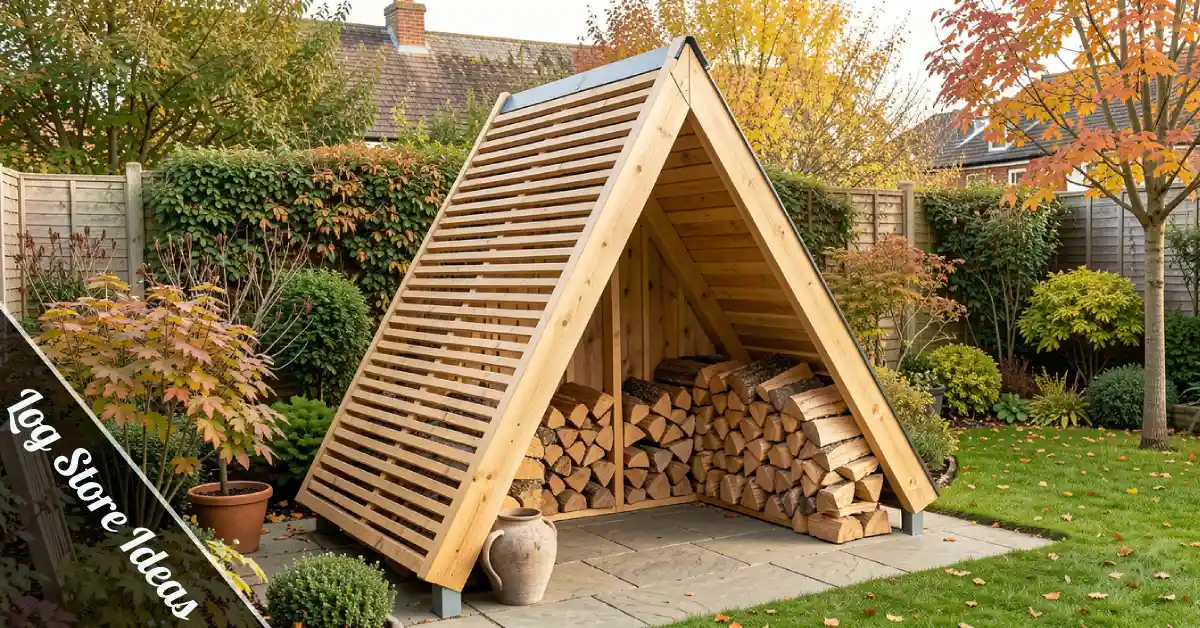
Triangular designs are your secret weapon for awkward garden corners. These angled units nestle against fences or walls, turning dead space into functional storage without hogging your entire patio.
Most triangular stores feature slatted sides for constant airflow and peaked roofs that shed rain like champions. Pressure-treated timber models handle UK weather without rotting, making them solid long-term investments. Look for units with multiple shelves to separate kindling from full-sized logs.
Brands like Shire offer compact triangular stores starting around £80, holding enough wood for regular winter use. The footprint stays small—usually under two meters wide—so you’re not sacrificing precious garden real estate for firewood storage.
2. Shed and Log Store Combos
Why choose between tool storage and firewood space when combo units handle both? These dual-purpose structures feature a lockable shed compartment for equipment alongside an open log storage section with slatted walls for ventilation.
The shed portion typically includes windows and weatherproof doors, protecting everything from lawnmowers to power tools. Meanwhile, the attached log store keeps your fuel dry and accessible without requiring separate outdoor structures. Its efficiency meets smart garden planning in one build.
Forest Garden makes popular combo models with tongue-and-groove construction. Prices hover around £300-£500, depending on size, but you’re getting two storage solutions that would cost more if purchased separately. Plus, the unified design looks cleaner than random sheds scattered across your garden.
3. Wall-Mounted Log Stores for Small Gardens
Limited ground space? Go vertical with wall-mounted log stores that attach directly to exterior walls or sturdy fencing. These narrow units maximize storage capacity without eating up valuable patio or lawn area.
Wall stores typically measure 30-40cm deep but stretch upward to hold surprising amounts of firewood when stacked properly. Slatted backs ensure airflow prevents moisture buildup against the wall. Most models come with weatherproof roofs that angle slightly to drain rainwater away from logs.
Installation requires solid walls or fence posts capable of supporting the loaded weight—usually around 100kg when fully stacked. Properly anchored wall stores handle harsh weather while keeping firewood bone-dry and within arm’s reach of your door.
4. Timber Log Boxes with Hinged Lids
Log boxes offer complete weather protection with hinged lids that keep rain and snow off your firewood entirely. These enclosed designs work brilliantly in exposed gardens where open stores would leave wood vulnerable to driving wind and precipitation.
Quality timber boxes feature slatted sides beneath the solid lid, balancing protection with necessary ventilation. The hinged top makes accessing logs effortless—no wrestling with covers or tarps when you need fuel for tonight’s fire. Many homeowners appreciate using the flat lid surface for displaying plants or garden ornaments.
Expect to pay £100-£200 for durable pressure-treated log boxes holding around 0.5 cubic meters of wood. The enclosed design also deters curious pets and reduces insect access compared to fully open storage options.
5. DIY Pallet Log Stores
Got spare pallets lying around? Build a functional log store for under £50 using reclaimed materials and basic tools. Pallet stores deliver excellent ventilation naturally—those gaps between slats are features, not bugs.
Stack three pallets vertically for the back and sides, securing them with exterior-grade screws. Add a fourth pallet as the base to elevate logs off wet ground. Top it with corrugated roofing sheets angled for drainage, and you’ve got weatherproof storage without breaking the bank.
Treat exposed wood with preservative to extend lifespan, especially if using untreated pallets. This DIY approach lets you customize dimensions to fit available space while keeping costs minimal. Just ensure pallets weren’t used for chemicals before repurposing them near your home.
Indoor Log Store Ideas for Convenience and Style
6. Built-In Alcove Storage
Renovating or building new? Design recessed log storage directly into walls near your fireplace or wood-burning stove. Built-in alcoves save floor space while creating architectural features that blend seamlessly with room aesthetics.
Ideal alcove dimensions run around 80cm deep and 150-250cm wide, depending on available wall space. Line the recess with non-combustible materials and maintain at least 50cm distance from active heat sources to prevent accidental ignition. These permanent installations add property value while solving storage problems.
Indoor Log Store Ideas (Continued)
7. Wicker and Metal Firewood Baskets
Portable baskets combine storage with easy transport from outdoor stacks to indoor fires. Wicker options add rustic charm to living rooms, while metal buckets deliver an industrial-style appeal that complements modern interiors.
Keep baskets at least one meter away from active flames to prevent fire hazards. Quality wicker withstands daily use but needs distance from heat to avoid drying out and becoming flammable. Metal baskets handle proximity better, but can get scorching hot—leather handles solve this problem elegantly.
Prices range from £30 for basic wicker to £80 for designer metal baskets with reinforced construction. Buy baskets large enough to hold several logs but light enough to carry when full—around 40cm diameter hits the sweet spot for most users.
8. Under-Bench Log Storage
Built-in seating near fireplaces often wastes potential storage space underneath. Custom benches with open bases turn wasted gaps into smart log storage that keeps fuel hidden yet accessible.
Ensure adequate ventilation beneath benches to prevent moisture accumulation and mold growth on stored wood. Slatted bench bases work perfectly, allowing air circulation while supporting seating weight. This approach particularly suits rustic or farmhouse interior styles where exposed wood storage enhances the overall aesthetic.
Keep stored logs dry by only placing properly seasoned or kiln-dried wood indoors. Green wood releases moisture that promotes mold—always season outdoor wood first before bringing logs inside for decorative storage.
Smart Storage Tips for Long-Term Success
9- Elevation Prevents Ground Moisture
Always keep firewood raised off ground level using pallets, concrete blocks, or purpose-built log store bases. Direct ground contact accelerates moisture absorption and rot, even with weatherproof covering overhead.
Six-inch elevation provides sufficient clearance for airflow underneath log stacks. This simple step dramatically extends firewood quality, preventing soggy bottoms that refuse to catch fire when you need heat most. Ground moisture creeps upward faster than most homeowners expect.
10- Airflow Beats Waterproof Tarps
Resist sealing firewood under plastic tarps or completely enclosed boxes without ventilation. Trapped moisture causes more damage than occasional rain exposure when proper airflow exists.
Slatted sides and open fronts allow wind to circulate through log stacks, naturally drying wood over time. Roofs should protect from direct rainfall while sides remain open or slatted—think barn design rather than sealed shipping container.
11- Separate Green Wood from Seasoned Logs
Never mix freshly cut “green” wood with seasoned logs ready for burning. Green wood requires 12-24 months of outdoor seasoning before achieving safe moisture levels below 20 percent.
Store green wood in separate outdoor locations with maximum sun exposure and airflow. Only move fully seasoned logs to indoor storage or covered areas near your home. This prevents bringing excess moisture, insects, or mold into living spaces.
Quick Comparison: Storage Types at a Glance
| Storage Type | Best For | Price Range | Weather Protection |
|---|---|---|---|
| Triangular Store | Corner spaces | £80-£150 | Excellent |
| Shed Combo | Multi-purpose storage | £300-£500 | Superior |
| Wall-Mounted | Small gardens | £100-£200 | Very good |
| Log Box | Full weather sealing | £100-£200 | Maximum |
| DIY Pallet | Budget builds | Under £50 | Good |
| Indoor Basket | Convenience | £30-£80 | Indoor only |
Final Thoughts on Smart Log Storage
The right log store ideas protect your firewood investment while improving your property’s appearance. Outdoor solutions prioritize weather resistance and ventilation, while indoor options balance aesthetics with safety considerations.
Choose storage that matches your actual firewood consumption—oversized stores waste garden space, while undersized units force messy overflow piles. Measure your seasonal wood usage, then select capacity accordingly for organized, efficient storage.
Remember: dry wood burns hotter, cleaner, and safer than damp alternatives. Proper storage isn’t just about tidiness—it’s about maximizing your heating efficiency and protecting your home from chimney hazards. Invest in quality storage now, and you’ll appreciate the difference every time you light that fire.