

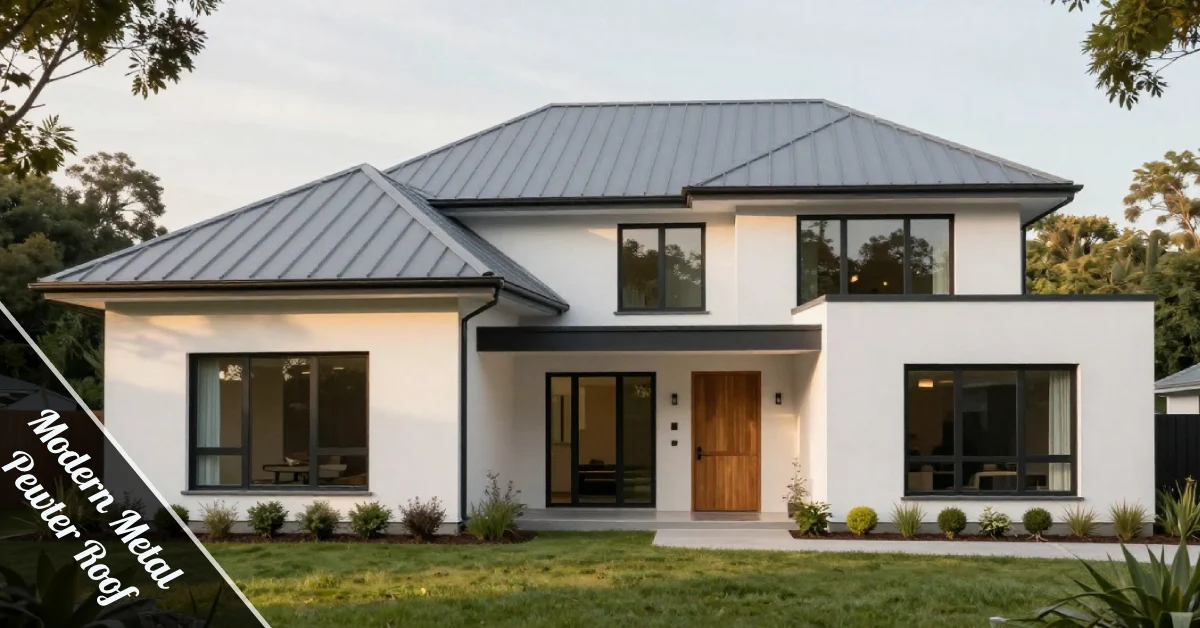
Let’s be real — your roof does more work than it gets credit for. And if you’re building new or upgrading, the modern metal pewter roof is the color-and-material combo that keeps popping up everywhere.
Pewter isn’t too dark, isn’t too light. It’s that cool neutral gray sweet spot that plays nice with almost any exterior style. Think of it as your home’s quiet confidence — the color that says, “yeah, we’ve got it together.”
This guide breaks down everything you need to know — styles, cost, performance, and design pairing — without the technical jargon. Let’s get into it.
What Actually Is a Modern Metal Pewter Roof?
Here’s the thing that trips people up: Pewter is the color, not the metal. Your roof isn’t made of pewter alloy — that’s decorative tableware stuff. The actual material is steel or aluminum, finished in a soft gray pewter tone.
That pewter gray sits right between silver and charcoal. It’s cool-toned, subtle, and balanced. It won’t scream for attention, but it absolutely gets noticed.
The modern metal pewter roof has become the go-to choice in modern architecture because it pairs clean lines with long-term practicality. No drama, just performance.
Minimalist homes, farmhouses, coastal builds, and industrial projects — Pewter gray adapts without forcing you to redesign everything around it.
Quick Reference: Modern Metal Pewter Roof at a Glance
| Feature | What You Get |
| Color Tone | Soft neutral gray — between silver and charcoal |
| Best Metal | Steel (Galvalume) or aluminum for coastal climates |
| Lifespan | 40 to 60 years with proper installation and care |
| Heat Performance | Reflects heat better than darker roof colors |
| Style Match | Modern, farmhouse, industrial, transitional homes |
| Maintenance | Low — rinse, inspect fasteners, clear gutters |
| Cost Factor | Higher upfront, lower long-term total cost |
Roof Profile Options — Which Style Fits Your Build?
Not every metal roof looks the same. The profile you pick — whether standing seam, corrugated, or shingle-style — changes the whole vibe of your exterior.
Standing Seam — The Premium Pick
Standing seam panels are the gold standard for modern homes. Long vertical panels with raised seams and hidden fasteners give you that sleek, uninterrupted surface that looks genuinely premium.
If your home has clean architectural lines, a standing seam is your cheat code for looking intentional and high-end without overdoing it.
Corrugated Panels — The Textured Option
Those wave-like panels add texture and visual interest. They’re also more affordable, which makes them a smart move for sheds, barns, or budget-conscious builds that still want modern appeal.
Corrugated panels hide minor surface waviness better, too — practically invisible once installed and painted in pewter gray.
R-Panels and Metal Shingles
R-panels work great in industrial-style projects and garages. Metal shingles bridge the gap — traditional look, metal durability. Both carry pewter finishes well and offer serious longevity.
| Profile Type | Look & Feel | Best For |
| Standing Seam | Sleek, minimalist, premium | Contemporary & modern homes |
| Corrugated Panels | Textured, casual, industrial | Budget builds, sheds, farmhouses |
| R-Panels | Structural, clean | Garages, workshops, industrial |
| Metal Shingles | Traditional meets durable | Classic homes want metal perks |
Why Pewter Gray Beats Most Roof Colors
Darker roofs absorb more heat. Lighter roofs can look washed out fast. Pewter gray hits that middle ground — medium reflectivity means better heat performance without going all-white.
In hot climates, a pewter gray metal roof keeps things noticeably cooler. That translates to lower AC bills and more comfortable rooms — especially in rooms directly under the roof.
The color also hides dirt, dust, and weather staining better than bright or very dark shades. Less cleaning, less maintenance headache. That’s a quiet win that most people don’t talk about.
And unlike trendy roof colors that look dated in five years, pewter stays current. It doesn’t date itself. It’s the kind of choice that holds up aesthetically and structurally.
Material and Gauge — What’s Under the Finish?
Two materials dominate the modern metal roofing world: steel and aluminum. Steel — especially Galvalume — is the most common. It’s strong, affordable, and handles most climates with ease.
Aluminum is the move for coastal or high-humidity environments where corrosion is a real concern. It costs slightly more but holds up much better near salt air.
Gauge thickness matters more than people realize. Lower gauge = thicker metal. Residential roofs typically run 26 or 28-gauge. Go 26-gauge if longevity is a priority. Choose 28-gauge if you want a lighter, more budget-friendly option on simpler builds.
Finish Options: Matte, Glossy, or Smokey Pewter?
Matte pewter is the most popular for modern homes — it looks sophisticated, reduces glare, and ages gracefully without showing every smudge.
Glossy pewter has a brighter, slightly more dramatic look in direct sun. It works well on contemporary builds where you want the roof to make a statement.
Smokey pewter is a softer variation that pairs beautifully with natural stone and cedar wood accents. If your home leans rustic or cottage-style, smoky pewter is the one.
Baked-on coatings are what separate a quality finish from a cheap one. High-grade products use coatings that resist chalking and fading for decades. Always ask about coating quality before you commit.
Design Pairing — What Goes With a Pewter Metal Roof?
Pewter’s versatility is its superpower. It doesn’t compete with your exterior — it completes it. Here are combinations that genuinely work:
White or off-white walls create that clean modern farmhouse look. Beige or greige siding gives a warmer, softer feel. Red brick with pewter gray is a timeless classic. Natural stone plus wood accents for an upscale, organic vibe.
For trim and accents, charcoal or black framing pops beautifully against pewter. White trim softens it. And a natural wood front door under a pewter roof? That warm-cool contrast is genuinely hard to beat.
Modern features like large windows, simple rooflines, and minimal detailing all complement a pewter metal roof without competing with it.
Cost Reality Check — What Are You Actually Paying For?
Metal roofing costs more upfront than asphalt shingles. There’s no sugarcoating that. But when you factor in a 40-60 year lifespan, minimal maintenance, and improved energy performance, the numbers look different.
Panel type, gauge, and installation complexity drive the price. Standing seam installs cost more than corrugated or R-panel jobs due to precision fitting and hidden fastener work.
The pewter color finish itself doesn’t add high cost unless you’re going for a premium specialty coating. Compare at least three installer quotes, confirm gauge thickness, and verify the anti-corrosion coating quality. Don’t skip that step.
Energy savings over time can offset part of the initial investment. A reflective pewter finish reduces cooling load — especially valuable in hot climates where AC runs hard for months.
Installation and Maintenance — What Pros Actually Say
Getting Installation Right
A quality metal roof installed poorly is worse than an average roof installed correctly. Proper fastening, flashing, and ventilation are non-negotiable. Always hire an experienced contractor who specializes in metal roofing specifically.
Ask them upfront about underlayment type, gauge confirmation, and warranty details. A pro will walk you through sample panels and break down costs clearly.
Can you install a new metal roof over an existing one? Sometimes, yes — if the structure is sound and local codes allow it. But if the old roof has structural damage, rust, or major leaks, a full tear-off gives you a cleaner, safer result long-term.
Maintenance Is Easy
The modern metal pewter roof is a low-drama roofing choice. Rinse it off occasionally, inspect fasteners once a year, and keep gutters clear of leaves and debris.
Check flashing and sealant after severe weather. That’s about it. No re-shingles, no rot, no constant patching. The maintenance load is genuinely light compared to traditional roofing materials.
FAQs
Does a pewter metal roof fade?
Quality baked-on coatings resist fading for decades. Medium gray shades like pewter are especially stable because they don’t show UV wear as dramatically as lighter or darker options.
Is a metal roof noisy in the rain?
No, not when properly installed over solid decking and insulation. Noise is largely a myth tied to old, uninsulated barn-style metal roofs.
How long does it actually last?
Most properly installed metal roofs reach 40 to 60 years. Some go longer. That’s two to three times the lifespan of standard asphalt shingles with far less maintenance work.
Is this roof suitable for hot climates?
Yes. Pewter gray reflects sunlight better than darker shades. Pair it with proper attic ventilation and insulation, and your home stays noticeably cooler during peak heat months.
Bottom Line — Is the Modern Metal Pewter Roof Worth It?
If you want a roof that looks sharp, ages well, handles rough weather, and keeps your energy bills in check — the answer is yes.
A modern metal pewter roof isn’t just a design choice. It’s a long-term structural and financial decision that pays off over time. The neutral gray tone gives you design flexibility, the metal gives you durability, and the finish gives you low-maintenance longevity.
Pick the right profile for your home style, confirm your metal gauge and coating quality, hire a specialist installer, and you’re set. Your roof is one of your home’s biggest assets — make it one you’re actually proud of.