

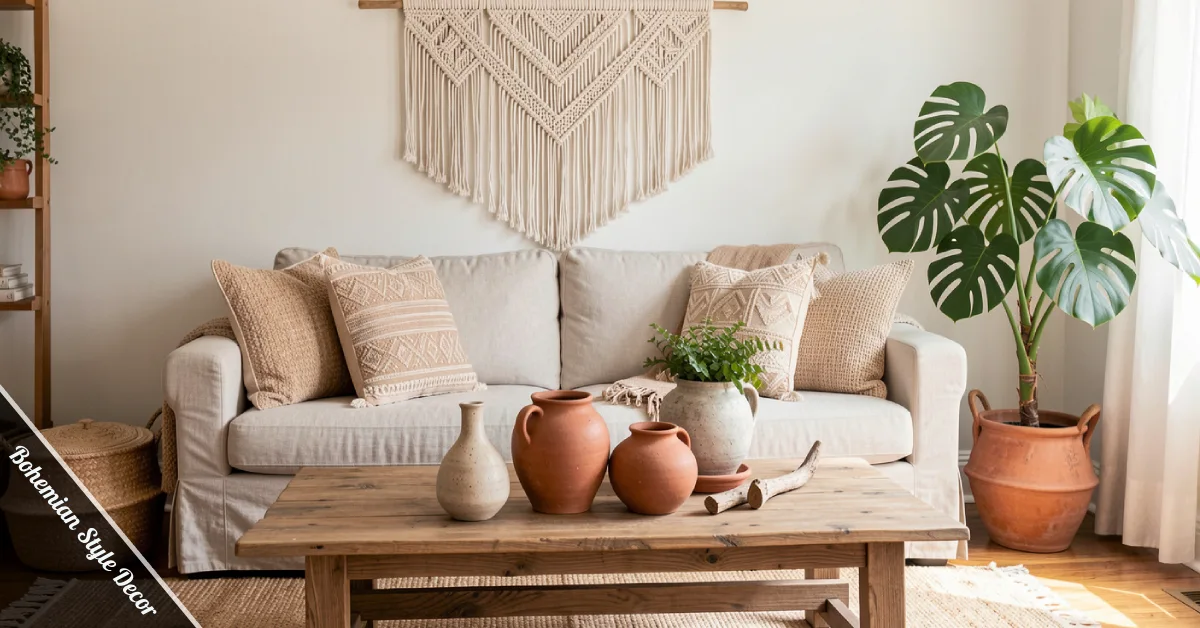
Bohemian style decor is an eclectic approach to interior design that mixes textures, patterns, and global influences to create a layered, personal space. Key elements include handmade items, natural materials, rich earthy tones, abundant plants, and patterned rugs. Unlike rigid design styles, boho thrives on self-expression. The goal is not perfection. It is a space that feels collected, warm, and genuinely yours.
Are you drawn to rooms that feel warm, collected, and full of character? Bohemian style decor might be what you are looking for. It is one of the most searched home design styles in 2026, and for good reason. It has no fixed rules, costs less than many other styles to achieve, and works in spaces of any size.
This guide covers what bohemian style decor actually is, how to build the look room by room, what the biggest mistakes are, and how the style is shifting right now.
What Bohemian Style Decor Actually Means
The word “bohemian” comes from the French expression “La Bohème,” historically linked to free-spirited artists and travelers who lived outside mainstream convention. By the 19th century, the term described a lifestyle built around creativity, cultural exchange, and individuality. That same spirit shapes the decor style today.
Bohemian interior design is not about following a formula. It is about layering pieces that carry meaning. A hand-thrown ceramic bowl, a vintage kilim rug picked up at a flea market, and a woven wall hanging. Each piece tells part of a larger story. The result is a space that looks curated without feeling staged.
This is what separates boho from maximalism. Maximalism fills every surface. Bohemian style fills every surface with intention.
The Colors and Textures That Define Bohemian Style Decor
Color is where most people get stuck. Bohemian style has a wide palette, but there are two main approaches.
The first is earthy and grounded. Think terracotta, warm sand, muted olive, rust, and cream. These tones work well together and are easy to build on over time.
The second is bold and saturated. Jewel tones like emerald, deep teal, mustard yellow, and burnt orange, alongside rich jewel-toned purples. This approach takes more confidence but makes a strong visual statement.
You do not have to commit to one or the other. Many bohemian spaces layer both, using earthy neutrals as the base and jewel tones as accent colors on pillows, art, or a single piece of furniture.
Texture is just as important as color. A flat room with great color still feels empty in the boho world. You need tactile contrast. That means combining:
- Woven jute or sisal rugs under plush throws
- Smooth ceramic vases next to rough rattan baskets
- Linen or cotton upholstery layered with velvet cushions
- Natural wood furniture alongside soft macramé wall hangings
The more varied your textures, the more depth the room has.
Must-Have Elements for a Boho Home
You do not need everything at once. Start with these core categories and build from there.
Plants. No bohemian space feels complete without greenery. Trailing pothos, large monsteras, fiddle-leaf figs, and clusters of smaller succulents all work well. Plants add life, soften hard edges, and pull the natural world into your home.
Layered rugs. A single rug is a start. Two rugs layered over each other is very boho. Kilims, Moroccan Beni Ourain rugs, and flat-woven dhurries all carry the patterned, artisanal quality that the style calls for.
Handmade and vintage pieces. Mass-produced items have their place, but bohemian decor gets its character from one-of-a-kind finds. Thrift shops, estate sales, and artisan markets are your best sources. Look for hand-thrown pottery, carved wooden objects, or global textiles.
Soft lighting. Overhead lighting tends to flatten a boho room. Swap it out or supplement it with floor lamps, string lights, woven pendant shades, and candles. The goal is warm, layered light.
Wall hangings and gallery arrangements. Macramé pieces, woven tapestries, framed botanicals, mirrors with ornate frames, and clusters of small artworks all add vertical interest. A well-built gallery wall can anchor an entire room.
How to Layer Without Making It Look Messy
This is the question competitors rarely answer well. Boho decor is supposed to feel abundant, but “abundant” and “cluttered” are different things. Here is how to stay on the right side of that line.
Start with one anchor piece per room. This could be a large area rug, a statement sofa, or an oversized piece of wall art. Everything else you add should respond to that anchor in some way, either by picking up a color from it or contrasting its texture.
Keep your largest surfaces calm. Bohemian rooms often have busy walls and floors, so furniture should be relatively simple in form. A low-profile sofa in a solid linen tone lets your patterns and textures speak without competing.
Use the rule of three for groupings. When displaying objects on a shelf or side table, group items in odd numbers. Three objects at varying heights create a visual rhythm. Five objects scattered at the same height create noise.
Edit regularly. The beauty of bohemian style is that it grows over time. But as you add pieces, remove others. If a shelf feels crowded, that is usually a sign to take something away, not rearrange what is there.
How Bohemian Style Is Evolving in 2026
Boho decor is not standing still. Two shifts are worth knowing about right now.
The first is the rise of Afrohemian design. Pinterest named it one of their top predicted trends for 2026, describing it as a fusion of African design traditions and bohemian sensibility. Searches for “African boho living room” and “afro chic home decor” are trending up on Pinterest, with colorful Nigerian textiles and Ethiopian wall art being incorporated alongside handwoven baskets and natural fiber rugs. This direction is a natural fit for boho lovers because it deepens the style’s already global, craft-focused roots.
The second is a shift toward darker, richer tones within the traditional boho palette. Where earlier versions of the style leaned heavily on white walls and warm beige, 2025 and 2026 are giving the boho look a darker twist, with deep-colored accent walls and jewel tones peppered throughout the home. Think a deep forest green accent wall behind a rattan bed frame, or a moody terracotta-painted kitchen with hand-painted tile.
The boho trends of 2025 and 2026 are also leaning into sustainability, with eco-friendly materials like bamboo, rattan, cane, and recycled fabrics taking a more prominent role. Sourcing handmade pieces from small artisans rather than fast furniture retailers aligns with both the aesthetic and the ethics that bohemian style has always carried.
How to Start with Boho Decor on a Budget
Bohemian style is genuinely one of the most budget-friendly design styles you can pursue. Here is why: it actively rewards second-hand and imperfect pieces. A scratched wooden side table reads as “character” in a boho room. A mismatch of throw pillows is a feature, not a flaw.
To build the look without overspending, prioritize in this order.
First, get a rug. It is the single biggest visual change you can make to a room. A patterned kilim or a faded Moroccan rug sets the tone for everything that follows. You can find quality options at estate sales, Facebook Marketplace, or discount rug retailers.
Second, add plants. Even a few inexpensive pothos cuttings rooted in glass jars and placed on a windowsill will shift the feel of a space. Plants are returnable to soil, so this is also a low-commitment starting point.
Third, thrift for textiles. Throw pillows, blankets, and curtains add enormous warmth and visual texture. Buying these second-hand keeps the cost low and adds the layered-over-time quality that makes boho rooms look genuinely lived in rather than styled.
Fourth, shop small. Look for ceramic artists, weavers, or woodworkers on Etsy or at local markets. Buying one or two pieces directly from makers gives you genuine artisan quality and a story to go with each piece. That is the heart of the style.
FAQs
What is the difference between bohemian and boho chic?
The terms are often used interchangeably, but “boho chic” usually refers to a more refined, slightly more polished version of the look. It tends to have fewer objects, cleaner lines in furniture, and a more edited color palette. Traditional bohemian style is more maximalist and globally eclectic.
Can the bohemian style work in a small apartment?
Yes. Use vertical space with hanging plants and wall art. Choose low-profile furniture to keep the room feeling open. Layer a few textiles and let plants do the visual heavy lifting. The result can feel full without being cramped.
What floors work best with bohemian style decor?
Worn hardwood, concrete, and terracotta tile all pair well. The key is to layer rugs over whatever flooring you have. Boho rugs are usually patterned and textured enough to anchor the room on their own.
How many patterns can I mix in one room?
There is no hard limit, but a practical approach is to vary the scale. If one pattern is large and bold (like a geometric rug), pair it with a smaller-scale pattern (like a floral pillow) and one that is very subtle (like a linen weave). A varying scale prevents patterns from fighting each other.
Is the bohemian style still relevant in 2026?
Yes, and it is growing. The Afrohemian fusion trend is bringing new energy to the style, while sustainable sourcing and handmade materials keep it aligned with where consumer values are heading. It remains one of the most searched and most loved home design styles globally.