

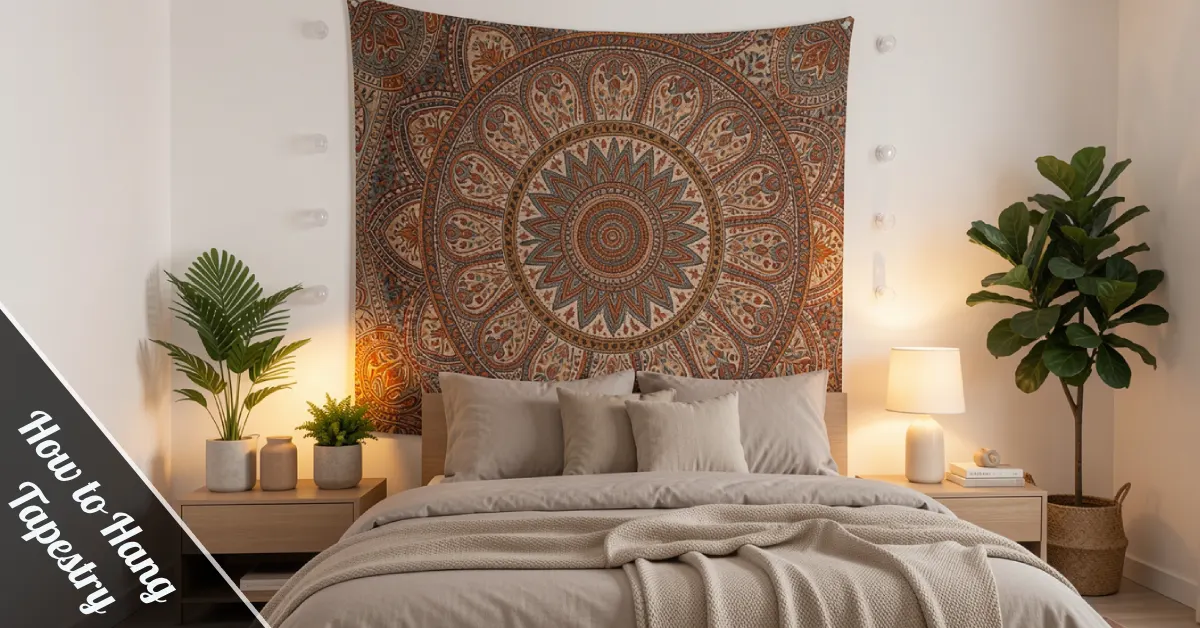
So you bought the tapestry. It’s bold, it’s beautiful, and it’s currently sitting in a crumpled heap on your floor. Classic move. Don’t worry—we’ve all been there. Hanging it up shouldn’t feel like a DIY disaster waiting to happen. Whether you’re in a rental with strict wall rules or you just want to avoid turning your walls into Swiss cheese, we’ve got the blueprint. Let’s break down exactly how to hang a tapestry without the stress, the holes, or the regret.
Damage-Free Methods: Your Walls Will Thank You
Renting has its perks, but the “no holes” clause isn’t one of them. You want personality, not a fight with your landlord. These methods let you flex your style without losing your security deposit.
Adhesive Hooks
This is the cheat code for renters. Adhesive hooks give you a solid hold without committing to a hammer and nail. For a truly damage-free method that protects both your walls and the fabric, adhesive hooks are the easy button.
Grab a pack of hooks rated for the weight of your tapestry. Tie loops of rope or string to the top corners, then hang them on the hooks. If you’re feeling crafty, attach grommets to the corners to prevent fraying—some tapestries actually come with these already. For a touch of easy glam, curtain rings work just as well and slide on in seconds.
Velcro Strips
If you want a cleaner look with zero visible hardware, Velcro strips are the move. No hooks, no clips, no nails in sight. This method keeps your tapestry flush against the wall like it was meant to be there.
Measure your tapestry and mark the wall first. Attach the adhesive side to the tapestry and the matching side to the wall. Let them sit for a bit before hanging. You can put Velcro on all four corners, but for larger pieces, add an extra strip or two along the top middle for extra security. It’s sleek, simple, and surprisingly strong.
Traditional Methods: When You Want a Classic Hold
Sometimes the old ways are the best. If you own your space or don’t mind a small hole, these options give you a clean and reliable hold.
Nails or Pushpins
This is the go-to method for a reason. If your tapestry has a large enough weave to hide the hardware and isn’t too heavy, nails or pushpins get the job done fast.
Place a pin or nail in each top corner for an elegant drape. For a neater look, use a row across the top. Want to keep it extra secure? Add a few pins on the bottom corners, too. This works especially well if your tapestry has corner tassels that can hide the hardware. Quick, easy, and effective.
Poster Hanger
This strategy keeps your tapestry even and flush with the wall. It gives you that framed look without the weight or cost of an actual frame.
Opt for a larger poster hanger to secure as much of the top as possible. If needed, use two smaller ones side by side. If you only have hangers for the top, add a pin or two at the bottom to keep the fabric close to the wall. It’s elegant, simple, and makes swapping out art a breeze.
Creative Alternatives: Beyond the Wall
Why limit yourself to just a wall? Tapestries can do so much more. These ideas turn your fabric into a functional piece of art.
From the Ceiling
Got limited wall space or a college dorm with ceiling tiles? Take it to the ceiling. This method is perfect for shared rooms or when you want to divide a space without building a wall.
Tuck the ends under ceiling tiles for a seamless look. Or attach adhesive hooks to the ceiling and suspend the corners using grommets or curtain rings. If your ceiling is drywall, nails, or pushpins work fine—just add a few extras to fight gravity. Bonus: You can drape it over a harsh light fixture to soften the glow and create a billowed effect.
Tapestry Rod
If your tapestry has a designated slot for a rod, this method is pure elegance. It prevents damage to the fabric and makes it easy to swap out designs when the mood strikes.
Choose a dowel or rod that fits the width of your tapestry. Attach it to wall hooks or hang it from the ceiling. Some tapestries even come with rods built in, so they’re ready to hang from a single nail. It’s clean, polished, and feels more like a curtain than a college dorm staple.
Window Covering
Let’s be real—blinds are boring. A tapestry can serve as a unique window treatment that adds instant personality. Go bold with a distinct pattern or choose something light and sheer for an airy feel.
Hang it on a curtain rod to cover blinds and create a flowy, billowed effect. Or secure it with pushpins directly over the window for an illuminated look. Either way, you get privacy with a whole lot more style.
Next-Level Styling: When You Want to Stand Out
These methods take your tapestry game to the next level. They’re creative, functional, and guaranteed to make your space feel unique.
Rope or Cable System
If you’re a little crafty, this one’s for you. Sew a small pocket along the top edge of your tapestry, just big enough to hold a rope. Run the rope through, then hang it from hooks or nails.
Not into sewing? A cable system lets you clip the tapestry right on. This works best for lighter panels that look good when they can flow. It’s also ideal for covering up a work area or adding privacy under a loft bed.
Bed Canopy
Time to improvise. That tapestry you bought for the wall? It can double as a bed canopy. Instant cozy vibes.
Attach two corners to your headboard and use ceiling hooks to suspend the other end. Add a small hook or piece of rope to the middle to help it hang in a canopy-like fashion. It’s moody, dreamy, and way cheaper than a real canopy bed.
Frame It
This one takes a little more effort, but the payoff is worth it. Framing your tapestry gives it a sleek, gallery-ready look that works perfectly in a curated gallery wall.
Pick a frame large enough to hold your tapestry. Iron the fabric first or toss it in the dryer on gentle to remove wrinkles. Add small adhesives to the back to prevent bunching inside the frame. It’s a polished, timeless way to display your art.
Choosing the Right Method for Your Space
Not all tapestries are created equal. Before you pick a method, consider a few key factors. The weight of your tapestry matters—heavier pieces need stronger hooks or nails. Lighter ones can hang with Velcro or pushpins.
Also, check your wall condition. Damaged or unstable walls won’t hold nails well. And gather your tools ahead of time. Knowing how to hang a tapestry starts with matching the method to your specific situation.
| Tapestry Type | Best Hanging Method | Difficulty Level |
|---|---|---|
| Lightweight & Thin | Adhesive Hooks, Pushpins, Velcro | Easy |
| Medium Weight | Nails, Poster Hanger, Tapestry Rod | Moderate |
| Heavy or Large | Velcro (full perimeter), Nails (multiple points), Rod System | Moderate |
| Dorm Room Friendly | Ceiling Tiles, Adhesive Hooks, Bed Canopy | Easy |
| Rental Safe | Velcro, Adhesive Hooks, Poster Hanger | Easy |
Final Thoughts
Tapestries are one of the easiest ways to make a space feel like yours. Whether you go damage-free with Velcro or go all out with a ceiling drape, there’s a method that fits your style and your situation. The right approach makes all the difference.
Now that you know how to hang a tapestry, it’s time to put it to work. Grab your hooks, your Velcro, or your rod, and turn that pile of fabric into a statement piece. Your walls are ready.
Looking for more decor tips? Check out other wall accessories to complete your look and make your space truly yours.