

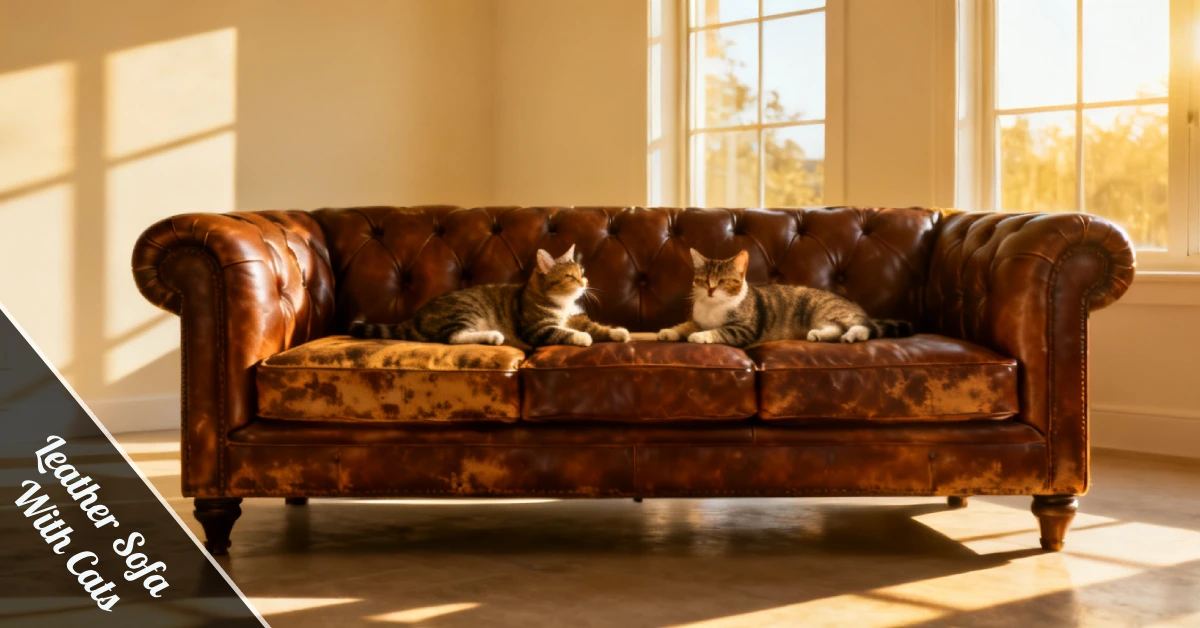
You love your cat. You also love your sofa. Here’s how to keep both looking good without losing your mind.
Let’s be real — sharing a home with cats means your furniture is always one bad day away from looking like a scratching post exhibit. But here’s the thing: a leather sofa with cats isn’t the disaster most people think it is. In fact, it might be your smartest move yet.
Leather doesn’t trap fur, laugh at odors, or hold onto pet dander as fabric does. If you’re a cat owner who still wants a living room that looks intentional — not like a rescue shelter waiting room — this guide has everything you need to know.
WHY LEATHER ACTUALLY MAKES SENSE FOR CAT OWNERS
Here’s the cheat code most people miss: leather is low-maintenance in ways fabric never is. Cat hair sits on top instead of weaving itself into every fiber, and a quick wipe-down is genuinely enough for most messes.
Fabric sofas absorb smells over time — wet cat, litter dust, general pet chaos. Leather doesn’t.
Good leather also ages better than people expect. A few surface marks from your cat’s claws can actually blend into the natural character of the material over time, especially with distressed or waxed finishes. It’s not damage — it’s patina.
High-quality leather, when properly maintained, can genuinely outlast most fabric sofas in a pet home. You’re playing the long game here, and leather is built for it.
THE LEATHER TYPES THAT HOLD UP (AND THE ONES THAT DON’T)
Not all leather is built the same, and choosing wrong means you’ll be replacing furniture before your cat’s next vet visit.
Top-Grain Distressed Leather: This is the MVP pick when you’re dealing with a leather sofa with cats at home. It already has a worn, textured look, so new scratches blend right in. Cats could go to town on the corners, and honestly, it might look better for it.
Pigmented / Finished Leather: It has a protective top coat that resists moisture and minor scratching. It’s practical, durable, and easy to clean — exactly what you need in a house with an unpredictable animal.
Waxed Leather Waxed leather develops a unique patina over time, and light scratches kind of melt into the surface. It’s not completely scratch-proof, but it ages with serious style.
Faux Leather — Proceed With Caution. Yes, cats scratch faux leather. And unlike real leather, faux starts peeling and cracking once punctured — there’s no graceful aging here, just gradual disintegration that’s hard to fix.
LEATHER TYPE COMPARISON TABLE
| Leather Type | Scratch Resistance | Best For | Durability |
|---|---|---|---|
| Top-Grain Distressed | Excellent — hides marks | Active cat households | ★★★★★ |
| Pigmented/Finished | Very Good — coated surface | Easy-clean priority | ★★★★★ |
| Waxed Leather | Good — patina covers scuffs | Style-forward owners | ★★★★ |
| Genuine Leather | Moderate — shows marks | Light-use spaces | ★★★ |
| Faux Leather | Poor — peels when scratched | Temporary / budget only | ★★ |
UNDERSTANDING WHY YOUR CAT SCRATCHES (AND HOW TO WORK WITH IT)
Your cat isn’t trying to ruin your furniture — scratching is how they stretch muscles, mark territory, and keep their claws healthy. It’s instinct, not rebellion.
The key is redirection, not elimination. You can’t stop a cat from scratching, but you can absolutely control where they do it.
Placing a sisal scratching post directly next to your sofa is one of the most effective things you can do. Cats scratch in familiar spots — give them a better option right there, and they’ll usually take it.
Training works too. Gently guide them toward the post, reward the behavior consistently, and you’ll see results faster than you’d think. Cats are more trainable than their reputation suggests.
Pro Move: Corner guards and self-adhesive protectors on sofa arms and legs cost next to nothing and protect the spots cats love most. Clear ones are basically invisible — your sofa still looks great.
HOW TO PROTECT YOUR LEATHER SOFA WITHOUT MAKING IT LOOK LIKE A CRIME SCENE
You don’t have to wrap your sofa in plastic. There are clean, minimal ways to protect your leather sofa with cats around that actually look intentional.
Self-adhesive furniture protectors go on the corners and sides — the high-traffic scratch zones. They’re transparent, durable, and genuinely effective at stopping claw damage.
Throws and pet-friendly covers are another smart move for seats and armrests. They’re removable, washable, and easy to swap when guests come over. Style doesn’t have to die just because you own a cat.
Corner guards and scratch shields give targeted protection exactly where it’s needed. Combined with a nearby scratching post, you’ve basically cut your risk of damage down significantly without making your living room look like a cat-proofing tutorial.
DAILY CARE THAT KEEPS LEATHER LOOKING SHARP
Consistent upkeep is what separates a sofa that lasts a decade from one that looks rough after two years. It doesn’t need to be complicated.
Wipe it down with a soft cloth regularly to lift fur and dust before it builds up. That’s it — two minutes, done.
Using a leather conditioner every few months keeps the material flexible and reduces the appearance of minor surface scratches. Dry leather cracks and weakens; conditioned leather stays strong, supple, and resistant to everyday wear from claws.
Address small scuffs early. A bit of gentle buffing or a leather-specific repair product can handle most minor marks before they become something more visible and harder to fix.
COMMON MISTAKES CAT OWNERS MAKE (SO YOU DON’T HAVE TO)
Ignoring scratching behavior early on is the biggest one. Once a cat decides your sofa is the spot, breaking that habit becomes a whole project. Address it from day one.
Choosing soft, untreated leather because it looks beautiful is another trap. It’s vulnerable and shows every mark — save that for a cat-free room.
Skipping protective measures entirely and just hoping for the best? That strategy has a 100% failure rate. A scratching post and some corner guards cost very little compared to sofa replacement.
BOTTOM LINE
A leather sofa with cats isn’t a gamble — it’s a smart play when you know what you’re doing. Pick the right leather type, redirect your cat’s scratching habits, and keep up with basic maintenance.
Your living room can be both pet-friendly and genuinely stylish. You don’t have to choose between loving your cat and loving your home. With the right setup, both can coexist — and look good doing it.
Got a go-to protection trick that actually works? Drop it in the comments — real answers from real pet owners beat any guide.
FAQS
Is a leather sofa a good idea if you have cats?
Yes — leather is easier to clean, doesn’t trap fur or odors, and certain types hide scratches naturally. The right leather type and a few protective habits make it very manageable.
What type of leather is best for homes with cats?
Top-grain distressed leather and pigmented leather are your best bets. Both are durable, resistant to minor damage, and age well, even with active cats in the house.
Do cats damage faux leather more than real leather?
Yes. Faux leather starts peeling and cracking once a claw punctures it. Real leather is far more durable and ages with character instead of falling apart.
How do I stop my cat from scratching the sofa?
You can’t fully stop it, but you can redirect it. Place a scratching post right next to the sofa, use corner guards on vulnerable spots, and reward your cat for using the post consistently.
How often should I condition my leather sofa?
Every two to three months is a solid routine. It keeps the leather flexible, reduces scuff visibility, and extends the life of the sofa significantly in a pet-friendly home.