

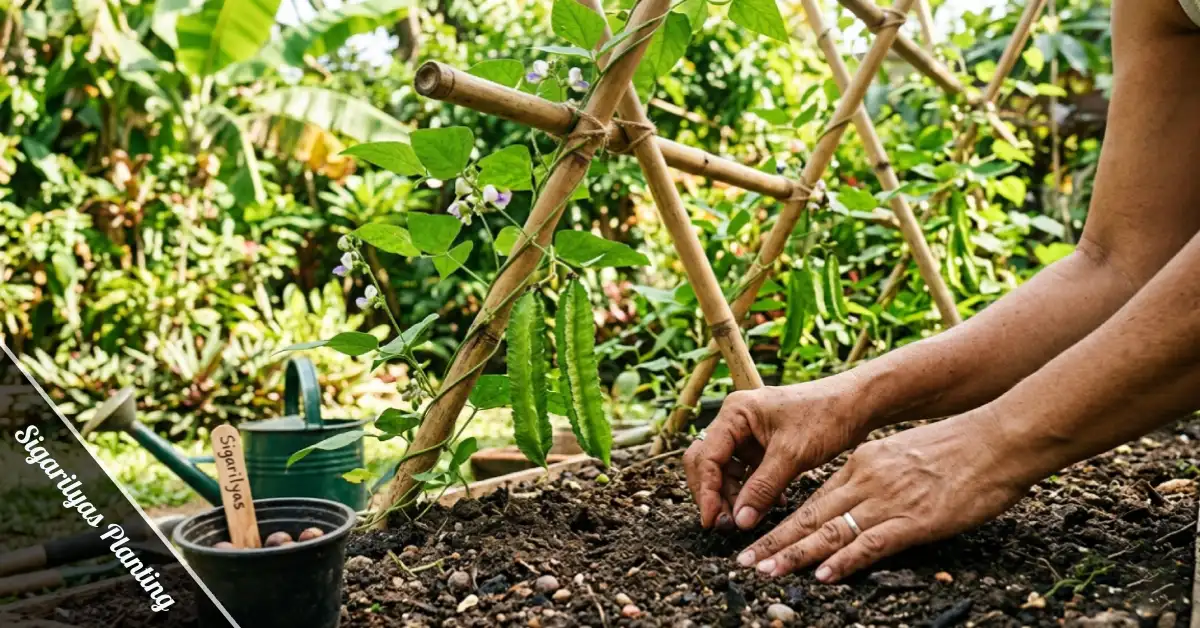
Sigarilyas planting means growing winged beans (Psophocarpus tetragonolobus) from seed in warm, well-draining soil with full sun and a sturdy trellis. Soak seeds overnight before planting. Sow 1–2 inches deep, space plants 2 feet apart, and keep soil moist but never waterlogged. Pods are ready to harvest 75–90 days after planting.
Most people who fail at sigarilyas planting make the same three mistakes: planting into cold soil, skipping the trellis, and overwatering. Fix those three things, and you are already most of the way there.
Sigarilyas is one of the most productive vegetables you can grow in a tropical or subtropical garden. Almost every part of the plant is edible: the young pods, leaves, flowers, and even the underground tubers. It is a staple in Filipino cooking, showing up in dishes like ginisang sigarilyas and gising gising, and it is gaining attention beyond Southeast Asia for good reason.
In this guide, you will learn exactly how to prepare your soil, treat your seeds, plant, support, feed, and harvest sigarilyas from start to finish. The advice here draws from field-tested methods used by Filipino growers, as well as recent nutritional and agricultural research.
What Is Sigarilyas and Why Grow It?
Sigarilyas is the Filipino name for winged bean, a tropical climbing legume in the family Fabaceae. Its scientific name is Psophocarpus tetragonolobus. Other names include four-angled bean, Goa bean, dragon bean, and princess bean.
The plant grows as a vine, reaching 3 to 4 meters in height when properly supported. Its pods are easy to recognise: four frilly “wings” run lengthwise along each pod. When harvested young, the pods are crisp, mild, and slightly sweet, with a flavour often compared to asparagus.
Scientists and food researchers have called the winged bean a “one-species supermarket” because almost all of its parts are edible: seeds, young pods, leaves, flowers, and tuberous roots.
The nutritional profile is exceptional. A comprehensive review of 138 winged bean genotypes found that the seeds contain an average protein content of nearly 35%, along with significant levels of fat, fibre, and essential vitamins. That puts sigarilyas in the same league as soybeans for protein, making it one of the most nutrient-dense vegetables available to home growers.
Beyond food, sigarilyas improves your garden. Like other legumes, it fixes nitrogen in the soil through root nodules. This reduces your need for synthetic fertilisers and leaves the soil healthier for the next crop. [See also: companion planting ideas for your vegetable garden.]
Best Climate and Season for Sigarilyas Planting
Sigarilyas is a warm-weather plant. It does not tolerate frost, and it slows down significantly when temperatures drop below 18°C (64°F).
The ideal temperature range for steady growth is 18°C to 32°C (64°F to 90°F). In the Philippines and most of Southeast Asia, this means you can grow sigarilyas for much of the year. Many growers in Nueva Ecija and Pampanga plant at the start of the cooler months after the rainy season, when conditions are stable, and the soil is moist.
If you are in a subtropical or cooler temperate area, treat sigarilyas as a summer crop. Wait until your nighttime temperatures stay consistently above 18°C before planting outdoors. Cold soil causes seeds to rot or sprout unevenly.
There is one important factor that surprises many first-time growers: day-length sensitivity. Some varieties of sigarilyas are photoperiod-sensitive, meaning they will grow lots of vine but delay flowering if the day length does not match what the variety expects. If your plant looks healthy but produces no pods, photoperiod could be the issue. Choosing a day-neutral variety solves this problem, especially in areas outside the tropics.
Sigarilyas also needs plenty of sunlight. Aim for at least 6 to 8 hours of direct sun per day. Shaded plants produce fewer flowers and pods.
Sigarilyas Planting at a Glance
| Factor | Recommended Condition |
|---|---|
| Ideal Temperature | 18°C – 32°C |
| Sunlight | 6–8 hours of direct sun daily |
| Soil Type | Sandy loam or clay-loam, well-draining |
| Soil pH | 6.0 – 7.0 |
| Planting Depth | 1–2 inches (2.5–5 cm) |
| Plant Spacing | 2 feet between plants, 4 feet between rows |
| Trellis Height | 1.5–2 meters |
| Days to Pod Harvest | 75–90 days |
| Tuber Harvest | 4–8 months after sowing |
Soil Preparation Before You Plant
Good soil preparation is the single step most gardeners skip, and it costs them the whole season.
Sigarilyas needs soil that drains well but holds enough moisture for steady root development. Sandy loam or clay-loam soil is ideal. Heavy clay soils that hold standing water will cause root rot. If your soil is heavy, raised beds or mounded rows improve drainage significantly.
The target soil pH is 6.0 to 7.0. Slightly acidic to neutral soil allows the plant to absorb nutrients freely. If you are unsure of your soil pH, a basic soil test kit from any garden supply store will give you a quick reading.
Before planting, loosen the soil to at least 20–25 cm deep. Remove weeds, rocks, and debris. Then mix in well-composted organic matter or aged manure. This improves both soil structure and fertility without pushing too much nitrogen into the ground early.
Avoid high-nitrogen fertilisers at the planting stage. Because sigarilyas fixes its own nitrogen, excess nitrogen in the soil early on encourages leafy vine growth at the expense of pod production.
How to Prepare Sigarilyas Seeds
Sigarilyas seeds have a tough outer coat. If you plant them dry and directly into the soil, germination can be slow and uneven.
The standard fix is simple: soak the seeds in clean water for 12 to 24 hours before planting. The seeds will swell slightly. This tells you the seed coat has softened, and the embryo is ready to sprout. After soaking, plant the seeds right away. Do not leave wet seeds sitting out, as they can mould quickly.
If your seeds feel very hard or you have had poor germination results before, try light scarification. Use a nail file or nail clippers to create a tiny nick on the seed coat. The goal is to let water reach the inside more easily, not to damage the seed itself. Be conservative: one small nick is enough.
Seeds that have been soaked or scarified typically germinate within 7 to 14 days in warm soil. Untreated seeds in the same conditions may take two to three weeks or fail.
Buy fresh seeds from a reputable source and check the packaging for variety details. Look for notes on whether the variety is day-neutral, the expected days to maturity, and whether it is suited to your region.
Step-by-Step Sigarilyas Planting Guide
Follow these steps in order. Skipping early steps creates problems that are hard to fix later.
- Choose your location. Pick a spot that gets full sun for at least 6 hours a day. Make sure the area drains well after rain.
- Install your trellis before planting. Set it up now so you do not disturb the roots later. Sigarilyas vines start climbing quickly once they establish.
- Prepare the soil. Loosen the soil, work in compost, and check drainage. If water puddles after watering, add more organic matter or build raised rows.
- Treat your seeds. Soak overnight in clean water. If seeds are very hard, nick the coat lightly.
- Sow the seeds. Plant each seed 1 to 2 inches deep. In hot, dry soil, 2 inches helps protect moisture. In cooler or wetter conditions, 1 inch is enough.
- Space correctly. Leave 2 feet between individual plants and 4 feet between rows. This gives each vine room to spread without competing for light or airflow.
- Water gently after planting. Moisten the soil without washing seeds out. Keep the soil consistently moist until sprouts appear.
- Train young vines onto the support. Once seedlings reach 10–15 cm, guide them toward the trellis. Light ties or clips help at first.
Setting Up the Right Trellis Support
Sigarilyas will not perform well without support. Vines left on the ground tangle, get less light, and become much harder to harvest. They are also more prone to disease from poor airflow and soil contact.
A trellis of 1.5 to 2 meters tall gives the vines enough vertical space while keeping pods within easy reach. You can build one from bamboo poles, wooden stakes, or metal posts connected with twine, wire, or netting.
A-frame bamboo structures are popular in Philippine backyard gardens. Space the uprights every 1 meter, connect them at the top, and string horizontal lines across every 20–30 cm. The vines will wrap around the twine as they grow.
Good airflow through the trellis matters. Vines packed too tightly stay humid, which creates conditions that favour fungal disease. Proper spacing between plants and regular training of new growth keep the canopy open.
Watering, Fertilising, and Feeding
Water significantly, but consistently and carefully. The soil should stay moist at a depth of about 5–10 cm without becoming waterlogged. A simple test: press your finger into the soil. If it feels dry 2–3 cm down, it is time to water. If it feels wet, wait.
During the rainy season, natural rainfall usually provides enough moisture. In dry periods, water every 2 to 3 days, more often in sandy soils that drain quickly. Always water at the base of the plant, not overhead, to keep foliage dry and reduce disease pressure.
For fertiliser, apply a balanced organic fertiliser or compost tea once during soil preparation and again about 3 to 4 weeks after germination. After that, let the plant’s natural nitrogen fixation do most of the work. Sigarilyas has nitrogen-fixing bacteria in its root nodules, which means it can reduce the need for synthetic fertilisers while improving overall soil health.
Avoid high-nitrogen fertilisers once the plant is established. Excess nitrogen promotes dense leafy growth and delays pod production. If your plants are producing lots of vines but few flowers, nitrogen overload is often the cause.
As the plant begins flowering, a light application of phosphorus-rich fertiliser (like rock phosphate or bone meal) can support stronger pod development.
Common Pests and Diseases to Watch For
Sigarilyas is relatively resistant to serious pests, especially when grown in a mixed garden or intercropped with plants like sweet potatoes, taro, or bananas. Still, a few problems do come up.
Common pests:
- Caterpillars: Chew leaves and pods. Remove by hand or use neem oil spray.
- Leaf miners: Leave visible tunnels in leaves. Remove affected leaves and apply neem oil.
- Grasshoppers: Cause irregular leaf damage. Physical barriers and sticky traps help.
- Spider mites: Create fine webbing on leaves, especially in dry conditions. Keep plants well-watered and mist leaves in severe heat.
- Aphids: Cluster on new shoots. A gentle spray of diluted neem oil or water usually controls aphids on sigarilyas without chemical intervention.
Diseases to watch:
- False rust (caused by Synchytrium psophocarpi): This is the most serious disease affecting sigarilyas across the Philippines, Malaysia, and Papua New Guinea. It produces raised, rust-colored spots on pods and leaves. Copper-based fungicides can control early infections.
- Cercospora leaf spot: Brown or grey spots on leaves. Usually manageable with good airflow and avoiding overhead watering.
The best protection against both pests and disease is prevention: proper spacing, good drainage, regular inspection twice a week, and prompt removal of damaged plant material.
When and How to Harvest Sigarilyas
Pods are ready for harvest 75 to 90 days after planting, though this varies depending on your variety and climate. Fresh, young winged bean pods are tender, crisp, and slightly sweet, with a flavour profile similar to asparagus, making them ideal for stir-fries, soups, and vegetable dishes.
The best harvest window is when pods reach 15 to 22 cm in length and still feel firm and crisp. At this stage, the wings are prominent, and the seeds inside are not yet bulging against the pod wall. Pods left too long become tough and fibrous.
Pick pods every 2 to 3 days once production starts. Regular harvesting signals the plant to keep producing new flowers and pods. Leaving mature pods on the vine tells the plant it has completed its cycle, which slows production.
You can also harvest:
- Young leaves and tender shoot tips for stir-frying or blanching
- Flowers for use as garnish or in salads
- Mature dried seeds for replanting or cooking
- Tubers (tuberous roots) after 4 to 8 months, once the plant has matured
The tubers of sigarilyas contain roughly 8–15% protein, making them a nutritious secondary harvest from a plant that many gardeners only think of for its pods.
FAQs
How long does sigarilyas take to grow from seed to first harvest?
In warm tropical conditions, expect your first pod harvest around 75 to 90 days after planting. Germination typically takes 7 to 14 days when seeds are pre-soaked, and soil is warm (25–30°C). Once the plant begins flowering, pods develop quickly.
Why is my sigarilyas producing lots of vines but no pods?
Two common causes. First, nitrogen overload: too much nitrogen fertiliser promotes foliage at the expense of flowers. Cut back on feeding and wait. Second, photoperiod sensitivity: some varieties only flower when the day length is right for their genetics. If this is a recurring problem, switch to a day-neutral variety next season.
Can I grow sigarilyas in containers or pots?
Yes, but the container needs to be large, at least 30–40 cm deep and wide, to support the root system. Use a well-draining potting mix with added compost. You still need to install a trellis or stake. Container growing works best in warm, sunny spots.
How often should I water sigarilyas?
Water every 2 to 3 days in dry weather, or whenever the soil feels dry 2–3 cm below the surface. The key is consistent moisture without waterlogging. Overwatering is one of the most common causes of root problems and poor pod production.
Do I need to fertilise sigarilyas heavily?
No. As a legume, sigarilyas fixes nitrogen from the air through root bacteria. Incorporate compost before planting and apply a light balanced fertiliser at 3 to 4 weeks. After that, a phosphorus boost during flowering is enough. Heavy nitrogen feeding after establishment does more harm than good.