

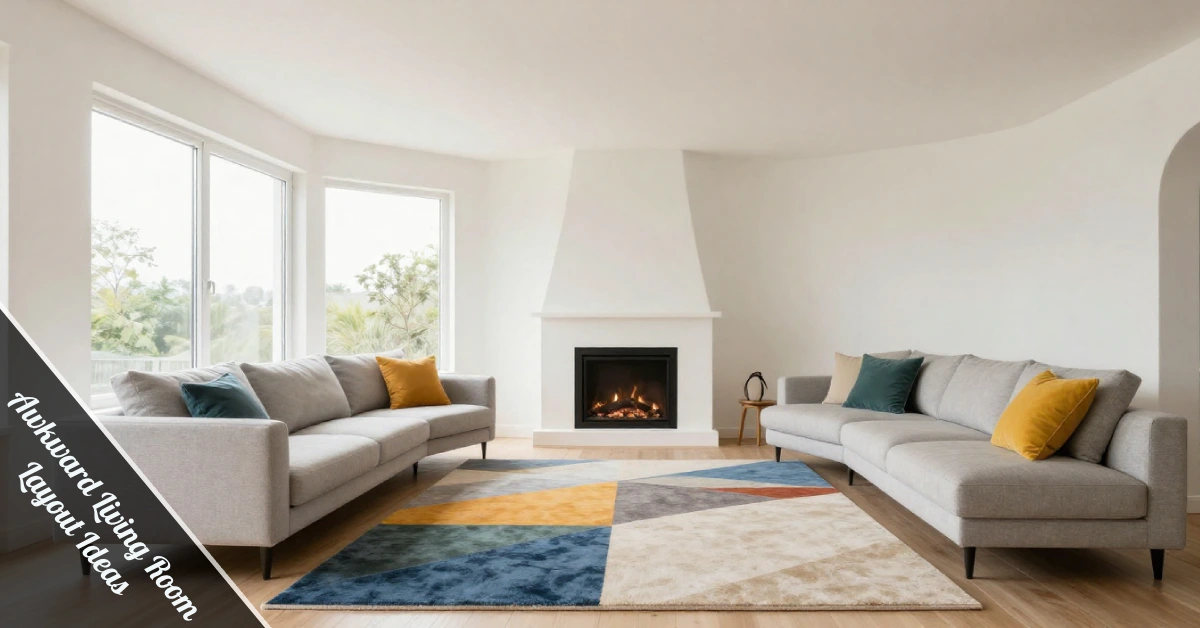
You walk into your living room and immediately feel it—something’s off. Maybe the fireplace sits weirdly to one side, or you’ve got windows everywhere with nowhere to put your couch. Perhaps your room stretches like a bowling alley, or you’re stuck with a corner that swallows furniture whole.
Here’s the thing: awkward living room layout ideas aren’t about hiding problems. They’re about turning weird architectural quirks into features that actually work. No matter how strange your space feels right now, there’s a layout fix that’ll make it click.
Let’s break down the real solutions that transform tricky living rooms into spaces you’ll actually want to hang out in.
Use Curved Furniture When Your Walls Aren’t Straight
Rooms with curved or angled walls throw everyone off. You buy a standard sofa, shove it against the wall, and suddenly there’s this awkward gap that collects dust and makes everything look unfinished.
The fix? Stop fighting the curve and lean into it instead. A curved sectional follows the wall’s natural arc, creating a cozy conversation zone that feels intentional. Round accent tables prevent sharp corners from clashing with soft architectural lines. Arc floor lamps mirror the wall’s shape while lighting up dead zones perfectly.
That weird gap between your straight furniture and curved wall isn’t useless—it’s prime real estate. Custom shelving or floating units transform that space into functional storage that looks like it belongs there. The result is a room that flows naturally instead of fighting itself at every turn.
Zone Out Large Living Rooms With Area Rugs
Big living rooms sound great until you realize they feel empty and disconnected. Without clear zones, your furniture floats aimlessly, and the whole space lacks purpose or warmth.
Area rugs are your secret weapon here. They anchor different zones—one rug defines your TV-watching area, another creates a reading nook. Pull your sofa away from the walls to form intimate conversation areas that feel cozy despite the room’s size.
Strategic furniture groupings matter too. A sofa facing two accent chairs with a coffee table between them naturally invites conversation. A slim console table behind your sofa adds function without blocking sightlines across the room.
Don’t forget lighting. Table lamps on side tables create warm pools of light that further define each zone. This approach gives you more room to work with while maintaining that open, airy feel that makes large spaces so appealing.
Angle Your Sofa to Fix Narrow Living Rooms
Long, narrow living rooms are layout nightmares. Lining furniture along the walls just stretches the space even more and wastes the entire center. You end up with a tunnel instead of a living room.
Try this instead: angle your sofa slightly away from the wall. This diagonal furniture placement breaks up the linear flow and creates visual interest. A slim console table tucked behind the sofa adds surface space without hogging square footage.
Choose sofas and chairs with visible legs. This lets light flow underneath, making the room feel less cramped. Paint one long wall in a lighter shade to visually push it backward, creating the illusion of width.
Hang large mirrors strategically to reflect natural light and double your visual space. These tricks combined transform a narrow hallway-like room into a space that actually feels livable and balanced.
Float Your Seating Away From Window Walls
Floor-to-ceiling windows look amazing, but they steal wall space fast. You’re left wondering where to put furniture without blocking natural light or creating awkward traffic patterns through the room.
The solution is floating your seating a few feet away from the glass. This opens up a natural walking path while keeping your view clear. A storage bench offers extra seating when friends come over.
Low bookcases hold books and baskets without blocking light. Custom shelving that fits exactly under the window sill maximizes storage while working with your architectural limitations. Plants on low stands bring texture and height without creating visual barriers.
With all that daylight pouring in, skip harsh ceiling lights. Layer in floor lamps and table lamps for warm, soft lighting after dark that complements your space perfectly.
Align Main Furniture With Straight Walls, Not Diagonal Ones
Diagonal or slanted walls in attics and unique homes make standard furniture placement nearly impossible. Your instinct might be to match the angles, but that usually makes things worse.
Position your largest pieces parallel to the main walls instead. Ignore the angles for primary placement—this creates visual stability. Then get creative with the awkward spaces those angles create.
A custom banquette following a diagonal wall provides extra seating while using otherwise dead space. Built-in storage tucked under slanted walls turns challenging architecture into a functional design that actually adds value.
Pick one wall as your visual anchor. Add artwork, shelves, or a bold paint color to guide the eye and give the room a clear focal point that everyone notices first.
Swap Coffee Tables for Storage Ottomans in Tight Spaces
Small living rooms demand furniture that works overtime. Single-purpose pieces waste precious square footage you can’t afford to lose. Every choice matters when space is limited.
Storage ottomans replace coffee tables and triple your function. They provide surface space, hidden storage, and extra seating when needed. Wall-mounted shelves keep the floor clear and make rooms feel more spacious.
Nesting tables expand when friends visit and disappear when they don’t. One streamlined sofa beats multiple small chairs that clutter sightlines. Acrylic or glass tables visually disappear while staying functional and useful.
Keep seating light with narrow arms and lower backs. This opens the view across the room, making small living areas feel significantly more spacious than they actually are.
Turn Dead Corners Into Reading Nooks or Mini Bars
Those odd corners that seem impossible to furnish are actually opportunities in disguise. An awkward alcove becomes the perfect home bar with minimal effort. A protruding corner softens with a tall plant or sculpture.
Deep alcoves transform into reading nooks with just a comfortable chair and focused lighting. Custom touches really shine here—built-in shelving fits odd angles and creates personal libraries.
Triangular tables slide into spaces where regular ones don’t work. Add a picture light above a corner frame, or use bold color to make alcoves stand out positively.
Stop seeing corners as problems. With the right approach, they become the most interesting features in your entire living room layout.
Position Your Sofa Back-to-Back With Your Dining Table
When your living room flows directly into the dining area, creating boundaries gets tricky. You need separation without walls or heavy dividers that block natural light and sightlines.
Use the back of your sofa as a visual boundary. Add a console table behind it for extra surface space and to reinforce the division between spaces.
Pick dining furniture that lines up well with your sofa and chair heights. Use a dining table with clean, open legs to keep sightlines clear across both areas. Lay down rugs in each space that feel connected but distinct—same color family, different patterns.
Choose furniture pieces that echo each other in shape or material. Use similar lighting styles across both rooms for visual flow. This arrangement clearly separates areas while maintaining the open floor plan that makes your home feel spacious and inviting.
Install Floor-to-Ceiling Shelves in Low-Ceiling Rooms
Low ceilings don’t have to limit your living room layout options. Shelves stretching from floor to ceiling draw eyes upward, making rooms feel taller than they actually are.
Use shelving with open backs to avoid closing in the space too much. Paint the ceiling one shade lighter than the walls to lift visual height without major renovation costs.
Skip pendant lights that hang down into the room. Go for wall-mounted lights or uplighting that reflects off the ceiling instead. This brightens the space without drawing attention to the actual ceiling height.
Arrange books and objects in different sizes to create movement. This keeps the shelving from feeling static and adds visual interest that makes the room more dynamic and engaging.
Balance Off-Center Fireplaces With Strategic Placement
An off-center fireplace throws off your entire room’s balance. Your instinct might be to place furniture directly across from it, but that usually creates more problems than it solves.
Shift your seating at an angle instead. This opens up the room and gives you better traffic flow. Balance the visual weight by creating a gallery wall on the opposite side of the room.
Place a tall bookshelf or entertainment center to counterbalance the fireplace’s position. The key is acknowledging the asymmetry and working with it rather than pretending it doesn’t exist or hoping nobody notices.
Consider adding built-in shelving on one side of the fireplace. This creates a more intentional, designed look that makes the off-center placement feel deliberate instead of accidental or poorly planned.
Create Zones With Room Dividers Without Blocking Light
Large open living rooms need separation without sacrificing their open feel. Room dividers break up space while keeping areas visually connected—they’re perfect for creating a home office corner or separating dining from TV zones.
Portable screens offer the flexibility you can move around. Bookcases provide storage while dividing space naturally. For small living rooms, use dividers that don’t block light—think minimalist screens made from natural materials instead of solid walls.
House plants work beautifully as living dividers. They add greenery while creating subtle boundaries that feel organic. In large rooms, consider custom floor-to-ceiling installations or art pieces that make a statement.
The goal is separation with connection. You want distinct zones for different purposes while maintaining that spacious, airy feel that makes open floor plans so appealing in the first place.
Work With Multiple Doorways Instead of Against Them
Living rooms with three or four doorways create traffic flow nightmares. You can’t block pathways, but you also need functional seating arrangements that actually work for daily life and entertaining guests.
Start by mapping traffic patterns. Identify the most-used paths and keep them clear. Float furniture in the center to create conversation areas that don’t interfere with foot traffic moving through the space.
Use low-profile furniture near doorways so movement doesn’t feel restricted. L-shaped sectionals can work in corners, keeping pathways open while maximizing seating. Area rugs help define zones even when furniture can’t form traditional groupings.
Consider furniture on casters that you can easily move when hosting larger gatherings. This flexibility lets you adapt the room to different needs without permanent commitment to awkward living room layout ideas that limit functionality daily.
Awkward living room layouts aren’t design fails—they’re opportunities to get creative. Whether you’re dealing with weird corners, off-center fireplaces, or rooms that stretch forever, the right furniture placement and zoning strategies make everything click.
The best layouts work with your space’s quirks instead of fighting them. Embrace those curves, float that furniture, and turn dead zones into features. Your living room might not follow traditional rules, but that just means you get to create something more interesting than a cookie-cutter setup.
Ready to make your tricky space work? Start with one awkward living room layout idea from this list and build from there. Your room will thank you.