

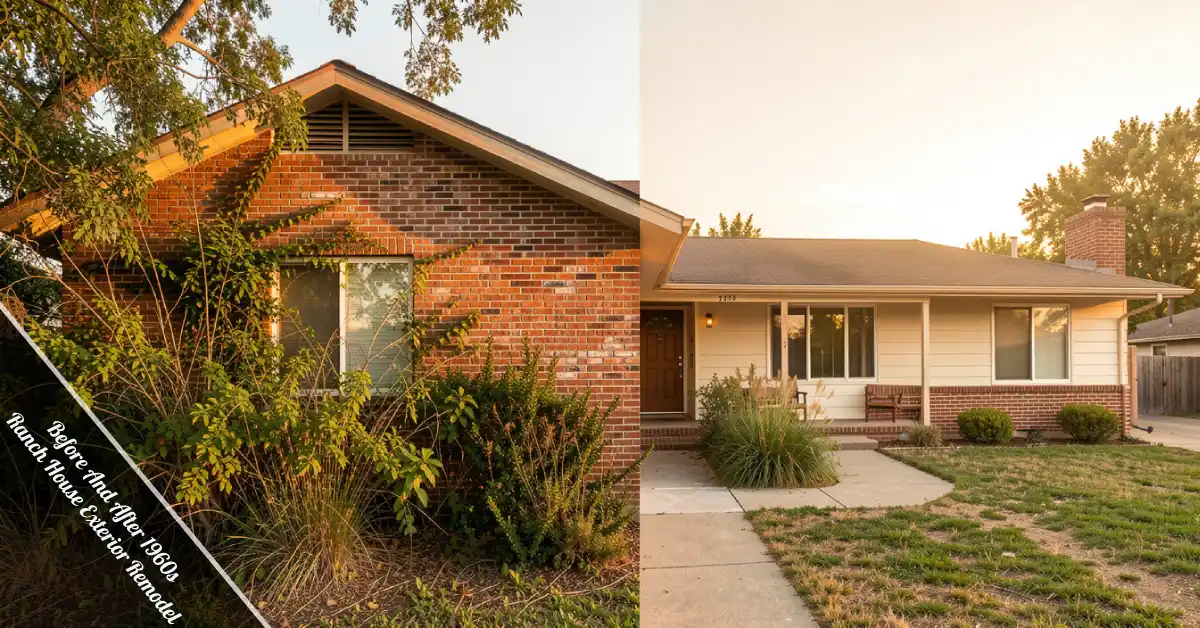
Most 1960s ranch homes look like they never left that decade. Flat rooflines, faded brick, zero curb appeal. But here’s the thing: that’s fixable.
A Before And After 1960s Ranch House Exterior Remodel isn’t about erasing history. It’s about upgrading what’s there without making your home look like a flipped spec house. The structure is solid. The bones are great. You just need the right moves.
This guide walks you through every high-impact upgrade, in the right order, so your money actually shows. No fluff. Just results
What a 1960s Ranch House Actually Looks Like Before
These homes were built for practicality. Long, low, and horizontal. Simple trim. Minimal detail. At the time, that was fresh. Today, without intentional upgrades, it reads as flat and forgettable.
Common issues you’ll spot right away: original brick that looks dingy, shutters that weigh down the facade, narrow trim, and mismatched siding from past patches. Windows often look dated and undersized. The garage door? Usually dominating the whole front view.
Landscaping tends to be the quiet villain. Overgrown shrubs hide the architecture completely. What was once a charming, grounded look gets buried under decades of untrimmed growth.
Before you spend a dollar, walk across the street and photograph your home in morning and afternoon light. Different angles reveal shadow problems, color issues, and texture clashes you’d miss up close
The Before And After 1960s Ranch House Exterior Remodel Formula
Every successful ranch house exterior remodel follows the same three-step formula: simplify, unify, then highlight.
Step one is cleaning and removing clutter. Pull out anything that feels random, cut back overgrown plants, and power wash every surface. This single step, done before any spending, often reveals how much good structure you already have.
Step two is unifying your materials and colors. Ranch homes get patched and painted over decades, leaving a mess of competing textures. Choose one palette and stick with it. Nothing needs to match perfectly; it just needs to feel related.
Step three is building intentional focal points. A bold entry, updated lighting, and a clear walkway tell the eye where to go. Instead of decorating everything, focus on a few spots that create that strong “after” feeling.
Exterior Colors That Work on Ranch Homes
Color is where most remodels go wrong. Homeowners pick trendy shades that clash with fixed elements like the roof, concrete, or stone. Always start with the undertones already present in permanent materials.
Warm neutrals and earthy tones tend to work best on 1960s ranch exteriors. They complement the original brick and blend naturally with mature landscaping. Brands like Sherwin-Williams and Benjamin Moore both offer dedicated exterior palettes for period homes.
Use contrast carefully. High contrast belongs around the front door or light fixtures only. Spreading bold accent colors across shutters, trim, and siding creates chaos. Ranch homes need a calm, controlled palette that supports their horizontal design.
Always test large swatches in actual light before committing. Colors shift dramatically between full sun and shade. Testing first saves you from an expensive repaint later.
Materials That Modernize Without Killing Ranch Character
Material choices define whether your remodel looks timeless or trendy. Ranch homes have strong horizontal proportions. Every material you pick should support that, not fight it.
Board-and-batten accents add smart vertical interest when used in small zones. Lap siding works well to create subtle variation without visual noise. One hero texture, whether brick, siding, or stone, should lead. Everything else supports it.
Original brick is worth saving in most cases. Limewashing refreshes it dramatically without full replacement. It softens the color, adds depth, and keeps the authentic character that makes ranch homes feel grounded and real.
If you do cover brick, make sure the replacement material respects the home’s scale. Heavy stone cladding or oversized panels can make a low-slung facade feel top-heavy and awkward.
Renovation Priority vs. Visual Impact
| Upgrade | Cost Level | Visual Impact | Best For |
|---|---|---|---|
| Front door + trim | Low | Very High | Immediate curb appeal |
| Exterior paint | Medium | High | Full facade refresh |
| Garage door update | Medium | High | Balancing a long facade |
| Window replacement | High | High | Modern look + efficiency |
| Siding replacement | High | Very High | Full material change |
| Landscaping | Low–Medium | Very High | Framing and softening |
Entry and Porch Upgrades With the Biggest After Photo Impact
The front entry is small on most ranch homes, but it carries most of the emotional weight. Get this right and the whole house changes.
Wider trim around the door makes the entry feel larger without construction. Updated hardware, a bold but grounded door color, and a statement porch light create a clear focal point. These upgrades cost relatively little but photograph like a full remodel.
Porch columns are another quick win. Thin or decorative columns make the facade look weak. Replacing them with cleaner, sturdier shapes better matches the ranch’s proportions and gives the exterior more presence.
Finish with one welcoming touch: matching planters, updated house numbers, or a simple bench. These details add personality without adding visual noise
Windows, Garage Doors, and the Long Facade Problem
The long horizontal facade is the defining challenge of every 1960s ranch house remodel. Without intentional design, it reads as endless and flat.
Window consistency is key. Mixing grid patterns or different frame colors creates confusion across the facade. Keep window styles unified. If you’re replacing them, Energy Star-certified windows improve both appearance and efficiency at the same time.
The garage door is a major design asset that most homeowners ignore. It takes up serious space on the facade. Fresh panels, subtle hardware, or coordinated paint help it blend rather than dominate.
Breaking up long walls with trim bands, subtle material zone changes, or strategic landscaping creates visual rhythm. These moves guide the eye across the home and make the exterior feel considered, not accidental.
Budget Breakdown by Project Phase
| Phase | Projects Included | Approx. Cost Range |
|---|---|---|
| Weekend wins | Power wash, door paint, new hardware, mulch | $100 – $500 |
| Mid-range upgrades | Exterior paint, new front door, landscaping refresh | $1,500 – $6,000 |
| Full investment | Siding, windows, porch rebuild, roofline updates | $15,000 – $40,000+ |
Landscaping, Walkways, and Lighting: The Hidden Difference Makers
Ask any photographer what makes a before-and-after look dramatic, and they’ll say landscaping every time. It frames the house, adds texture, and softens hard edges.
Foundation planting should soften the base without hiding windows or blocking architecture. Low to medium-height plants work best on ranch homes. They maintain visibility while adding layers of texture and color.
Walkways deserve more thought than most homeowners give them. If the current path feels narrow or awkward, a slight redesign changes the whole approach. Curved or widened paths make arrivals feel intentional and warm.
Lighting adds depth that only shows at night, but matters enormously for photos and real-world impressions. Combine a clear entry light, path lighting, and subtle uplighting on plants or textures for a layered look that extends curb appeal past sunset.
Mistakes That Wreck a 1960s Ranch Exterior Remodel
Too many colors and materials at once is mistake number one. When everything competes for attention, nothing wins. Keep the palette simple and let one feature lead.
Oversized modern features are another trap. Big decorative columns, extreme contemporary cladding, or out-of-scale fixtures fight against the low horizontal shape of the ranch. Updating should feel like evolution, not a personality transplant.
Skipping the roofline is a mistake that haunts finished projects. New paint and landscaping look great until you notice worn fascia or damaged soffit trim. These details signal “unfinished” to every buyer and visitor.
Finally, not testing paint swatches before committing causes more expensive repaints than any other single decision. Test large samples in real light before you commit to any color
Before And After 1960s Ranch House Exterior Remodel: Start Here
If you’re overwhelmed, start with one visible upgrade. The front door. The porch light. A landscaping cleanup. Something you can finish in a weekend.
A complete before-and-after 1960s ranch house exterior remodel doesn’t have to happen all at once. Most successful ones happen in smart phases, prioritizing weatherproofing and structural work first, then cosmetic upgrades as budget allows.
Document every step with photos. Progress is motivating, and a clear before-and-after record adds real value when it’s time to sell.
The ranch house you’re working with already has great bones. With the right plan, even modest upgrades can produce dramatic transformations that feel natural, timeless, and completely yours
FAQs
How much does a 1960s ranch house exterior remodel cost?
Costs range from a few hundred dollars for cosmetic weekend upgrades to $40,000 or more for full exterior renovations, including siding, windows, and porch work. Most homeowners see the best return by starting with paint, landscaping, and entry upgrades
Should I keep or paint the original brick?
If the brick is structurally sound, keep it and refresh it with cleaning or limewash. Painting brick is permanent and limits future options. Covering it entirely should only happen if it’s damaged or severely mismatched with the updated design
What exterior colors work best on a ranch home
Warm neutrals with natural undertones tend to work best, especially when matched to existing roof tones and fixed materials. Test large swatches at different times of day before committing to any color
Can I do a ranch house remodel in stages?
Yes. Most successful remodels happen gradually. Start with visible, high-impact upgrades like the front door, lighting, and landscaping. Move to larger projects like siding or windows when the budget allows. Prioritize weatherproofing before purely cosmetic changes.


