

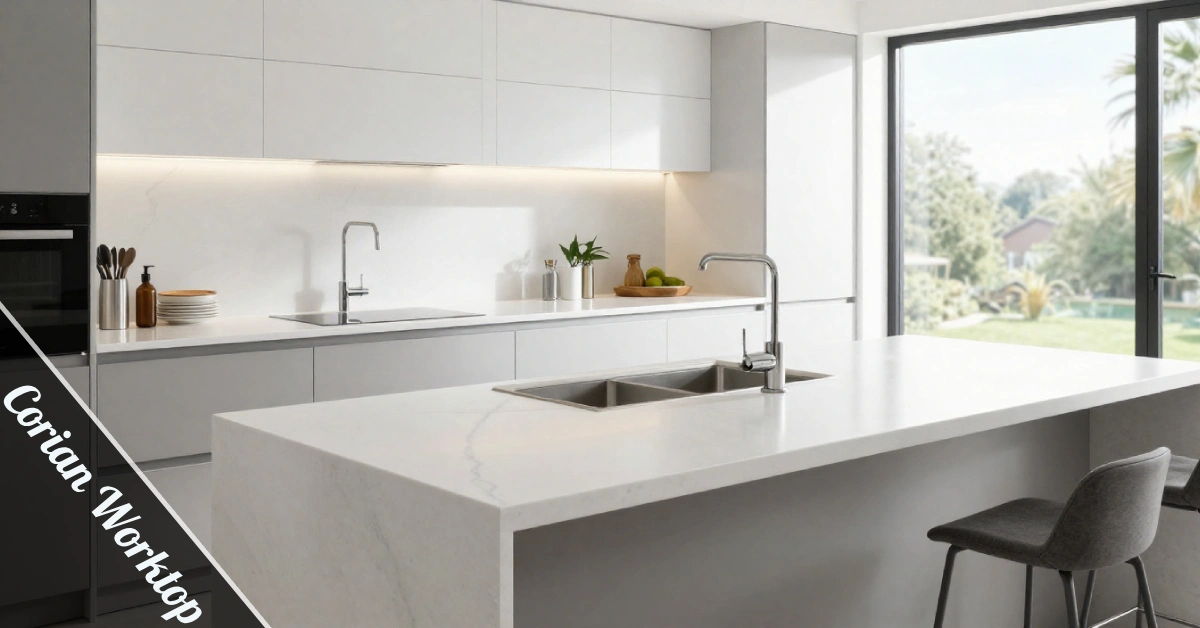
You’re standing in your kitchen, coffee in hand, eyeing that dated countertop. Time for an upgrade? Let’s talk Corian worktops—the seamless surface that’s been turning heads since the ’60s. This isn’t your average kitchen material. It’s the sweet spot between practicality and style, without the eye-watering price tag of marble. Whether you’re a homeowner planning a full renovation or a designer hunting for the perfect client solution, this guide breaks down everything you need to know.
What Exactly Is a Corian Worktop?
Here’s the deal: Corian is a solid surface material created by DuPont back in 1967. It’s made from acrylic polymer and alumina trihydrate—fancy words for a durable, moldable surface that doesn’t play by stone’s rules. Unlike granite or quartz, this stuff can be thermoformed into custom shapes, creating those sleek integrated sinks and curved edges you see in high-end kitchens.
Think of it as the chameleon of kitchen surfaces. It adapts to your space, not the other way around. You want a waterfall edge on your island? Done. That’s what makes Corian stand out—it’s flexible where stone is rigid.
The Major Benefits That Actually Matter
Non-Porous Surface for Real Hygiene
This is where a Corian worktop earns its reputation. The non-porous surface doesn’t let liquids or bacteria sneak in, making it genuinely hygienic. No more worrying about red wine stains hiding in microscopic cracks or bacteria setting up camp in your prep area.
For families with kids or anyone who takes food safety seriously, this matters more than aesthetics. Your kitchen stays cleaner with less effort, which is the kind of practical win you actually notice daily.
That Seamless Look Everyone Wants
Walk into a modern kitchen, and you’ll spot the difference instantly. Corian creates uninterrupted lines that make your space look twice as expensive. Those invisible joins aren’t just marketing talk—they’re real, and they change how your kitchen feels.
This seamless aesthetic is why architects and interior designers keep specifying Corian for high-end residential projects. It delivers that luxury vibe without requiring a luxury budget.
Repairable When Life Happens
Here’s something most materials can’t claim: when you scratch or chip a Corian worktop, it’s fixable. Light scratches? Buff them out with fine sandpaper. Deeper damage? Call a professional who can repair it without replacing the entire surface. That’s a massive advantage over laminate, which stays damaged, or even some natural stones.
This repairability extends the lifespan significantly, turning your initial investment into long-term value. You’re not locked into “live with it or replace it”—there’s actually a middle ground.
The Downsides You Should Know About
Heat Sensitivity Needs Respect
Let’s be real: a Corian worktop isn’t heatproof, just heat-resistant. Plop a scorching pan directly from the hob, and you’re risking scorch marks or permanent damage. This means keeping trivets handy and developing the habit of using them. For busy kitchens where multiple pots are going simultaneously, this requires adjustment.
It’s not a dealbreaker, but it’s definitely something to factor into your cooking style. If you’re the type who constantly moves hot pans around, you’ll need to change that habit.
Scratches Show More Than You’d Think
While Corian can be repaired, deep scratches are more visible than on darker granite or textured quartz. This doesn’t mean it scratches easily—it’s actually quite durable—but when damage happens, it’s noticeable. Using cutting boards becomes non-negotiable. Dragging heavy pots without lifting them? That’s a scratch waiting to happen. The good news is that many homeowners find the occasional light scratch develops character over time, creating a lived-in patina.
Chemical Sensitivity Requires Gentle Care
Harsh chemicals like bleach or ammonia can damage the finish. You’ll need to stick with gentle, pH-neutral cleaners specifically designed for solid surfaces. Most homeowners find this easy enough—just skip the aggressive stuff you might use on stone. A non-scratch cream cleaner handles most messes without drama. For tougher stains, diluted bleach works if you rinse thoroughly and don’t leave it sitting.
What You’ll Actually Pay for a Corian Worktop
Money talk: prices typically start around £600 to £700 per linear metre for basic installations with standard colors. Mid-range projects with color upgrades, coved upstands, and undermount sinks land between £700 and £900 per linear metre. Premium installations featuring integrated sinks, thick edge build-ups, and complex island designs run £900 to £1,200+ per linear metre.
Compare that to granite or marble, and Corian sits comfortably in the middle. It’s pricier than laminate but significantly cheaper than high-end natural stone. The durability often offsets the initial cost over the worktop’s lifespan.
Installation and Long-Term Maintenance
Professional installation isn’t optional—this requires templating, precise cutting, and expert joining techniques to achieve those seamless results. The adhesive used is basically liquid Corian, which means properly installed joints become invisible and totally smooth to the touch.
Daily maintenance is refreshingly simple. Wipe spills promptly with a damp cloth and mild cleaner. For most messes, that’s genuinely enough. Tougher stains might need a non-scratch cream cleaner and a bit of elbow grease.
The beauty is that consistent, simple cleaning prevents long-term staining. No special treatments, no regular sealing like natural stone requires. Just wipe, rinse, dry.
Corian vs Granite and Quartz: The Real Comparison
Granite brings natural stone prestige and exceptional heat resistance, but requires regular sealing and can harbor bacteria in its porous surface. Quartz offers incredible durability and a huge range of patterns, but costs more and can’t be thermoformed into custom shapes. A Corian worktop sits between them—less heat-resistant than granite, softer than quartz, but offering design flexibility neither can match.
If your priority is unique custom shapes, integrated features, and a seamless modern aesthetic, Corian wins. If you need a surface that handles direct heat without flinching, granite’s your choice. Want the hardest, most stain-resistant option and don’t mind visible seams? Quartz delivers.
Design Possibilities That Actually Inspire
The color range spans classic whites and neutrals to bold contemporary hues and even convincing stone-effect patterns. You’re not limited to flat slabs either—think curved breakfast bars, integrated sinks molded from the same material, coved splashbacks that flow seamlessly.
Modern kitchens increasingly feature split-level islands, waterfall edges, and continuous surfaces wrapping multiple planes. Corian makes these ambitious designs achievable without astronomical costs.
Is a Corian Worktop Right for Your Kitchen?
If you value modern aesthetics, seamless design, easy maintenance, and don’t mind using trivets for hot pans, absolutely. It’s particularly strong for families prioritizing hygiene, designers creating contemporary spaces, and renovators seeking that luxury look on a realistic budget. The repairability offers peace of mind that cheaper materials can’t provide.
However, if your cooking style involves constantly moving scorching pots around, or you want a surface that tolerates abuse without visible scratches, you might prefer quartz or granite. Budget constraints pushing you below £600 per metre? Laminate or solid wood might fit better.
The decision ultimately comes down to your specific priorities. Corian delivers genuine value when its strengths align with your needs—and falls short when heat resistance or extreme durability top your list. Know what you need, and this choice becomes straightforward.