

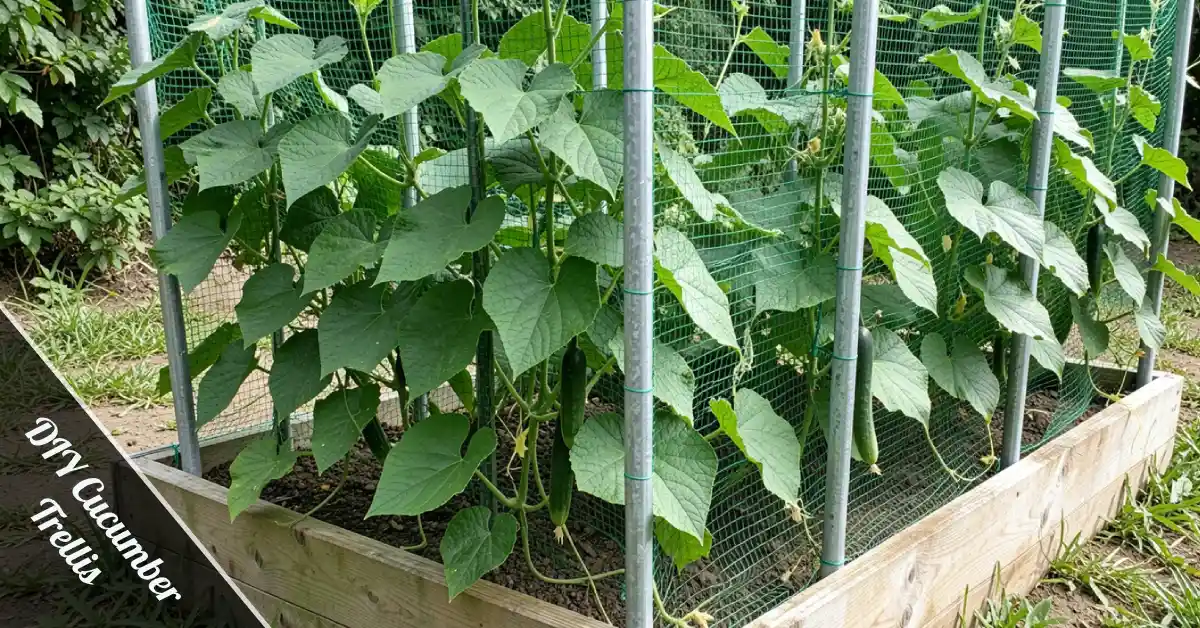
Here’s the truth: most gardeners are leaving serious cucumber yield on the table. Why? Because they’re growing their plants flat on the ground like it’s 1985.
Cucumbers are natural climbers. They’ve got tendrils, they’ve got ambition — all they need is something to grab onto. A DIY cucumber trellis is the cheat code that turns a cramped patch into a vertical jungle of fresh cucumbers.
You don’t need a big budget. You don’t need fancy tools. You need a plan, about an afternoon, and this guide.
Why Your Cucumbers Desperately Need a Trellis
Growing cucumbers on the ground sounds fine — until powdery mildew shows up and ruins your whole row.
A trellis changes everything. It lifts the plant off the soil, opens up airflow, and lets sunlight reach every leaf. Fewer diseases. Fewer pests. Cleaner, straighter cucumbers that are way easier to spot and pick.
Here’s a quick list of why vertical growing wins:
- Saves up to 70% more garden space compared to ground sprawl
- Improves airflow — the number one way to fight fungal disease naturally
- Makes harvesting a five-second job instead of a treasure hunt
- Keeps cucumbers straight, clean, and off the dirt
- Let’s you plant shade-loving crops like lettuce and spinach underneath
Pro tip from MIgardener: if you let cucumbers go too long without harvesting, the plant literally stops producing. A trellis makes it nearly impossible to miss a fruit.
Pick the Right Cucumber First
Not every cucumber variety wants to climb. There are two types: bush and vining.
Bush cucumbers are compact and stay low — great for containers and small spaces, but they don’t trellis well. Vining varieties are the ones you want. They grow 4 to 8 feet long, produce more fruit over a longer season, and genuinely love climbing.
Some solid vining picks according to Homestead and Chill: Tasty Green, Telegraph, and Manny — all thin-skinned, burpless, and trellis-ready. Classic slicers and pickling types like Wisconsin SMR and Marketmore 76 are also vining.
How Tall and Wide Should Your Trellis Be?
Size matters here. Get this wrong, and you’ll have vines flopping over the top with nowhere to go.
Aim for at least 5 to 6 feet tall — most vining cucumbers need that room. If you’re growing a long-vine variety, build to 8 feet, and you’ll thank yourself in August.
Width-wise, give each cucumber plant about 12 inches of horizontal space on the trellis. A 4-foot-wide trellis can comfortably support up to four plants growing side by side.
One more thing: make sure the openings in your trellis netting are big enough to get your hand through. You need to reach in there and grab cucumbers — don’t build yourself a frustrating puzzle.
6 DIY Cucumber Trellis Styles Worth Building
Here’s the good stuff. Six proven designs, from simplest to most creative:
| Trellis Type | Best For | Materials Needed |
| A-Frame | Double-sided growing, raised beds | Cattle panel, T-posts, wire |
| Vertical / Flat | Small gardens, fence-side planting | Remesh, stakes, netting |
| Arch / Arbor | Walk-through, decorative gardens | 16-ft cattle panel, 4 T-posts |
| Pallet | Budget builds, upcycling | Free pallet, twine, cinderblocks |
| Cage / Teepee | Containers, single plants | Bamboo stakes, twine |
| String / Netting | Minimal budget, quick setup | T-posts, nylon trellis netting |
A-Frame Trellis
The A-frame is shaped like the letter “A” — two panels leaning together at the top. You can plant cucumbers on both sides, doubling your growing surface in the same floor space.
Build it from cattle panel bent in half, or use 2×2 wood sides with concrete remesh on each face. The cattle panel version from Homestead and Chill is especially sturdy — it can handle squash and melons too.
Vertical / Flat Trellis
The simplest build. Two T-posts were hammered into the ground, and netting was stretched between them. Done.
Run it along the north side of your garden bed so it doesn’t shade your other plants. For something more permanent, frame it with 2×4 wood and staple remesh to the inside.
Arched Trellis
This one’s the showstopper. Bend a 16-foot cattle panel into an arch and secure it with four T-posts. Space the base about 5 to 6 feet apart, and you’ve got a walk-under tunnel; your cucumbers will absolutely dominate.
Pallet Trellis
Free pallets from Craigslist or Facebook Marketplace are trellis gold. Lean one against a support at a 45-degree angle, add vertical twine for easy climbing, and you’re growing.
Critical detail: only use pallets stamped with “HT” — that means heat-treated, not chemically treated. You don’t want mystery chemicals near your food. Lovely Greens has a solid pallet trellis tutorial worth checking out.
Cage or Teepee
Perfect for containers or growing a single plant in a tight spot. Tie three or four bamboo stakes together at the top with twine, spread the bases in a circle, and wrap horizontal twine rows every 6 inches up.
String or Netting Trellis
The most budget-friendly option. Hammer in T-posts, hang nylon trellis netting between them using zip ties. The MIgardener T-post and netting build costs under $20 and handles up to 60 pounds of plant weight.
Choosing the Right Materials
You’ve got options. Here’s how the most common materials stack up:
| Material | Durability | Cost |
| T-posts + Netting | ⭐⭐⭐⭐⭐ | $10–$20 |
| Bamboo Stakes + Twine | ⭐⭐⭐ | Free – $5 |
| Cattle Panel | ⭐⭐⭐⭐⭐ | $25–$40 |
| Wood Pallet | ⭐⭐⭐ | Free |
| Rebar | ⭐⭐⭐⭐ | $10–$15 |
| PVC Pipe | ⭐⭐⭐⭐ | $15–$25 |
T-posts and nylon netting are the combo most experienced growers come back to year after year. Metal T-posts won’t rot, won’t snap, and cost under $5 each at any farm supply store.
Bamboo is a great-looking and totally legit option — just know it won’t last as long as metal in wet soil conditions.
How to Build a Simple DIY Cucumber Trellis (Step-by-Step)
This is the core T-post and netting build — fast, cheap, and it works every season.
What you need:
- Two to five 6-foot metal T-posts (depending on trellis length)
- One roll of 5×15 ft heavy-duty nylon trellis netting
- 12–15 medium zip ties
- A mallet or post driver
- Measuring tape, scissors (optional)
- C-clips for securing vines (optional but highly recommended)
- Choose your location. Run the trellis east-to-west along your cucumber row so vines don’t shade each other.
- Measure and mark post positions. Space T-posts every 3 to 5 feet — don’t exceed 5 feet or the netting will sag under plant weight.
- Drive posts into the ground about 1 foot deep using your mallet. Start at one end and work your way across.
- Unroll the netting along the base of your posts — don’t tangle it.
- Secure the top corner of the netting to the first post with a zip tie. Work from top to bottom, keeping it taut.
- Pull the netting tight to the next post and repeat — top first, then middle, then bottom.
- Trim any excess netting with scissors if needed.
- When plants are tall enough, guide vines onto the netting and secure with C-clips just below a leaf joint.
Pro tip: place C-clips at leaf joints — that’s the strongest anchor point on the vine. The plant handles the rest on its own.
Training and Maintaining Your Cucumber Vines
Cucumber tendrils will start grabbing the trellis on their own, but modern varieties sometimes need a nudge.
Weave the main stem through the netting as it grows, or just let it climb freely and secure it with C-clips every foot or so. If the vine grows taller than your trellis? Just let it flop over the top — it’ll be fine.
Prune off any extra side shoots that aren’t producing. All that excess growth is sapping energy the plant could put into fruit. Trim it and watch your yields jump.
Check your trellis once a week during peak season. Tighten any loose netting, replace broken zip ties, and harvest any cucumbers you see — because the second you leave a mature cucumber on the vine, the plant thinks it’s done and slows way down.
FAQs
How tall should a cucumber trellis be?
At least 5 to 6 feet for most vining varieties. Build to 8 feet if you’re growing long-vine types.
What angle should the trellis be?
Vertical works great, but a 45-degree lean-to angle improves harvesting access and slightly boosts yield.
What’s the easiest trellis to build?
Two T-posts and a piece of nylon netting. Thirty minutes, under $20, and it lasts for years.
Can I reuse my trellis every season?
Absolutely. T-posts and cattle panels last basically forever. Nylon netting holds up 3 to 5 seasons if you store it indoors during winter. Check for broken zip ties each spring and replace them — takes five minutes.
Wrap It Up: Trellis Up, Yields Up
Building a DIY cucumber trellis isn’t complicated. Pick your style — A-frame, vertical flat, arch, pallet, teepee, or string netting. Grab your materials. Build it in an afternoon.
Your cucumbers will grow cleaner, straighter, and more abundantly than they ever did on the ground. Your back will thank you at harvest time. And your garden will look like you actually know what you’re doing — because now you do.