

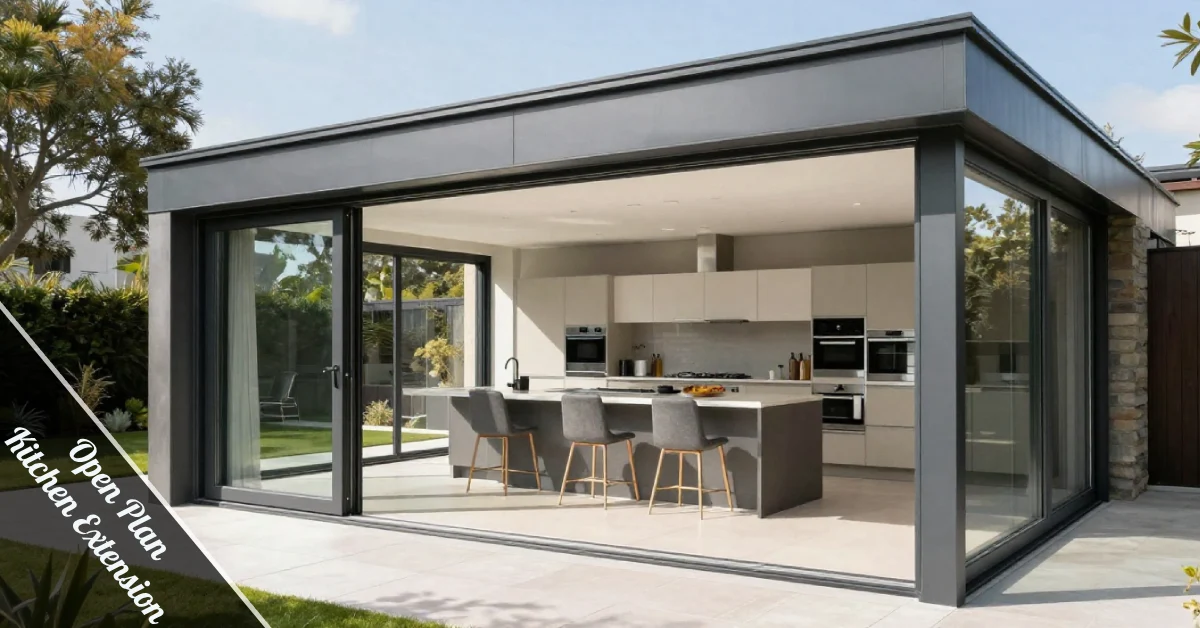
You’re tired of your cramped kitchen. The walls feel like they’re closing in, and forget about having friends over—there’s barely room for you and your coffee mug. An open plan kitchen extension might be exactly what you need to flip that script.
Here’s the thing: tearing down walls and extending your space isn’t just about square footage. It’s about creating a home that actually works for how you live. Whether you’re juggling kids’ homework while prepping dinner or hosting Saturday night gatherings, an open layout gives you breathing room—literally and figuratively.
This guide breaks down everything from design ideas to budget realities. No fluff, just straight talk about transforming your kitchen into the space you’ve been dreaming about.
What Exactly Is an Open Plan Kitchen Extension?
An open plan kitchen extension merges your kitchen with dining or living areas by removing internal walls and adding extra space. Think fewer barriers, more flow. You’re creating one large, multifunctional zone instead of separate, boxed-in rooms that feel dated and disconnected from reality.
The extension part typically adds square footage to your home’s footprint. Whether it’s a single-storey addition stretching into your garden or a wraparound design, you’re physically expanding your property. The open plan element removes divisions between rooms, so your new kitchen blends seamlessly with adjacent living spaces without awkward transitions.
Most homeowners combine both: extend outward for space and open inward by removing walls. The result? A light-filled area where cooking, eating, and relaxing happen in one cohesive zone. It’s practical, stylish, and way more social than traditional closed-off kitchens.
Why This Layout Actually Makes Sense
Maximizing your home’s potential starts with smart space planning. Open layouts eliminate wasted hallways and cramped separate rooms that nobody really uses anyway. You’re consolidating your living areas into one functional powerhouse that serves multiple purposes throughout the day without feeling like a maze.
Natural light becomes your best friend. Fewer walls mean sunlight floods through from multiple angles, making everything feel bigger. Add bifold doors or floor-to-ceiling windows, and you’ve got a space that glows all day long.
Family life gets easier when everyone’s in the same space. You can watch the kids while chopping vegetables, chat with your partner while they’re on the sofa, and keep conversations flowing during meal prep. It’s the difference between shouting through walls and actually being present with the people you care about most.
Property value? Yeah, it goes up. Buyers love open plan layouts because they’re flexible, modern, and feel spacious. Your investment pays dividends when it’s time to sell, and you get to enjoy the upgraded lifestyle in the meantime. Win-win.
Design Ideas That Actually Work
The modern minimalist approach strips everything back to clean lines and neutral tones. White or light grey cabinetry, handleless drawers, and sleek countertops create that Instagram-worthy aesthetic without trying too hard. This style works brilliantly in terraced homes or smaller properties where visual clutter makes spaces feel even tighter than they are.
Keep your color palette simple—whites, greys, maybe one accent color. Flat-panel cabinets maintain smooth surfaces, and integrated appliances disappear into the design. When every element has purpose, your open plan kitchen extension feels spacious rather than chaotic.
Rustic charm brings warmth through exposed wooden beams, natural stone, and earthy materials. If you’re extending a period property or just love that cozy countryside vibe, this direction adds character. Reclaimed wood for kitchen islands, aged metals for fixtures, and textured finishes create depth without clashing with modern open plan functionality.
Bifold doors connecting your kitchen to the garden change everything about indoor-outdoor living. These accordion-style glass panels stack neatly to one side, essentially removing the wall between inside and outside. Summer barbecues, garden parties, or just fresh air flowing through—it’s like gaining an extra room.
Consider a kitchen island as your centerpiece and functional divider. It provides extra prep space, seating for casual meals, and subtle zoning without actual walls. Islands work hard—storage underneath, a breakfast bar on one side, and a cooking surface on top. They’re the Swiss Army knife of open plan design.
Planning Your Extension Like a Pro
Start by defining what you actually need from this space. Are you a serious cook who needs professional-grade equipment and tons of counter space? Do you need a homework zone for kids? Maybe you want a dining table that seats ten for those legendary dinner parties you keep talking about hosting?
Write down your non-negotiables before talking to designers or builders. This list becomes your guide when decisions get tough or budgets get tight. Boot room? Large pantry? Breakfast bar? Get specific about your lifestyle requirements.
Structural considerations matter more than you think. Load-bearing walls can’t just disappear—they need steel beams or alternative support solutions. Floor levels might differ between your existing home and the extension, requiring careful planning for smooth transitions. These aren’t deal-breakers; they’re just realities that affect timelines and costs, so factor them in early.
Zoning your open space prevents it from feeling like one giant echo chamber. Rugs define dining areas, pendant lighting marks the kitchen zone, and furniture placement creates natural boundaries. You want openness with purpose, not just a big empty room where everything blends confusingly.
Budget and Timeline Real Talk
Kitchen extensions aren’t cheap—let’s just put that out there. You’re looking at anywhere from £25,000 to £60,000+, depending on size, finishes, and complexity. That’s a serious chunk of change, but it’s also adding significant value and livability to your biggest asset. Just don’t go in thinking you’ll do this on a shoestring budget.
Materials drive costs more than labor in most cases. High-end quartz countertops, premium bifold doors, and designer fixtures add up fast. Want to save money? Choose laminate counters over stone, opt for aluminum-framed doors instead of frameless glass, and source fixtures from mid-range suppliers rather than showroom-exclusive brands.
Timeline expectations: plan for 8 to 12 weeks from breaking ground to completion. That includes permit approvals, which can take weeks depending on your local planning authority. Weather delays, material shortages, or unexpected structural issues can push that timeline further. Build in buffer time so you’re not stressed when reality hits your schedule.
Permits and regulations aren’t optional—they’re mandatory. Most single-storey extensions fall under permitted development rights, but you’ll still need building regulations approval. Check with your local council before doing anything. Getting caught without proper permissions creates expensive problems that make your initial investment look like pocket change by comparison.
Common Mistakes You’ll Want to Avoid
Skimping on natural light is design suicide in open plan spaces. If you’re extending, maximize glazing—bigger windows, glass doors, roof lights, whatever works. Dark, cave-like extensions defeat the entire purpose of creating an open, airy environment. Light should flood in from multiple directions, transforming the space throughout the day.
Ignoring storage needs because you’re focused on aesthetics? Rookie move. Open plan doesn’t mean everything’s on display. You need clever storage solutions—deep drawers, tall cabinets, hidden pantries—to keep clutter from ruining your beautiful new space. Functionality beats pretty pictures every single time.
Underestimating heating and cooling challenges in large open areas leads to comfort issues. You’ll need proper HVAC planning to maintain consistent temperatures without skyrocketing energy bills. Underfloor heating works brilliantly in extensions, distributing warmth evenly without radiators eating wall space. Zone your heating so you’re not warming space unnecessarily.
Forgetting about acoustics turns your open plan into an echo chamber. Hard surfaces—tile, glass, stone—bounce sound around like a basketball. Add soft furnishings, area rugs, acoustic panels, or sound-absorbing materials to prevent conversations from becoming shouting matches. Your ears will thank you.
Making Indoor-Outdoor Flow Actually Flow
Consistent flooring from inside to outside creates seamless transitions. If your extension opens to a patio, use the same tiles or similar materials so there’s no visual break. Level thresholds matter too—nobody wants to trip over a step every time they walk outside with drinks in hand.
Sliding or bifold doors are your secret weapon here. They literally remove the barrier between inside and outside, expanding your usable space by about 30% when the weather cooperates. Position your kitchen island or dining table near these doors so you’re always connected to the garden, even when doors are closed.
Covered outdoor areas extend functionality beyond fair-weather days. A pergola, awning, or even a simple overhang means you can use your outdoor space during light rain or intense sun. It’s not just about summer—it’s about maximizing your investment year-round.
Trends Worth Considering Right Now
Industrial-style kitchens with exposed brick, metal fixtures, and concrete elements bring edgy sophistication. This aesthetic pairs surprisingly well with open plan layouts because the rawness balances the openness. Think loft vibes meets family home—it’s cooler than it sounds.
Smart home integration isn’t just gadget flex anymore. Voice-controlled lighting, automated blinds, and smart appliances make daily life genuinely easier. When you’re juggling multiple tasks in an open space, hands-free control becomes practical rather than just flashy technology.
Sustainable materials and energy-efficient design aren’t trends—they’re necessities. Solar-ready roofs, recycled materials, and energy-efficient windows reduce your carbon footprint and utility bills. Future buyers care about this stuff, so you’re adding value while doing something good for the planet.
Your Next Steps
Start with a clear vision, but stay flexible. Your dream kitchen might need adjustments based on budget, structural realities, or planning restrictions. That’s normal—it doesn’t mean compromising quality, just being smart about priorities and trade-offs.
Get multiple quotes from reputable builders who specialize in extensions. Check their previous work, read reviews, and don’t automatically go with the cheapest option. This is a major investment in your home, and quality matters more than saving a few thousand pounds upfront.
An open plan kitchen extension transforms how you live, not just how your house looks. It’s about creating space that adapts to your life—whether that’s chaotic family dinners, quiet morning coffee, or weekend gatherings with friends. Done right, it’s the upgrade you’ll wonder how you ever lived without.
Ready to make this happen? Start planning, set your budget, and prepare for your home to level up in ways that actually matter to your daily life.