

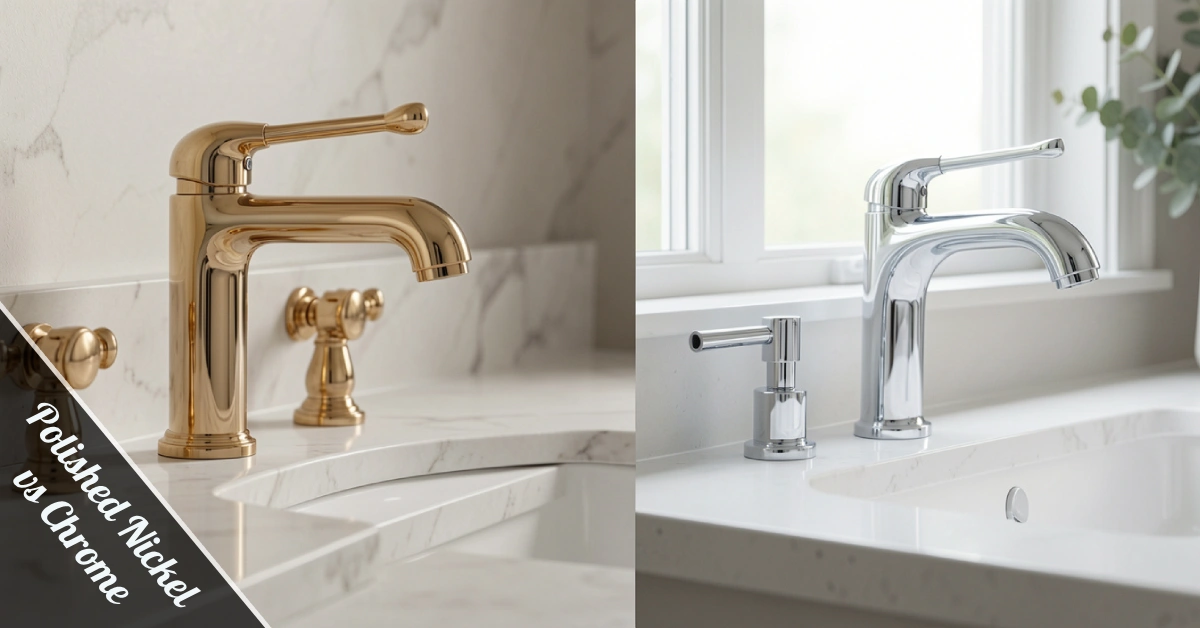
You’re standing in the hardware aisle. Two finishes stare back at you — both silver, both shiny, both convincing. Picking the wrong one? That’s a costly mistake nobody wants to make at home.
This guide cuts through the noise on polished nickel vs chrome. Whether you’re renovating a bathroom, upgrading kitchen cabinet pulls, or sourcing fixtures for a full-home build, knowing the real differences between these two finishes helps you shop smarter, faster, and with zero regrets. There’s more to this decision than just aesthetics — we’re talking durability, maintenance, cost, and long-term design compatibility.
How Each Finish Is Actually Made
The story starts before the finish ever hits the light. Both polished nickel and chrome use an electroplating process to bond a metallic layer onto a base metal — but that’s roughly where the similarities end.
Polished nickel starts with a solid brass or zinc base. Artisans apply nickel through electroplating, then hand-polish the surface to pull out that warm, golden-toned glow everybody loves. That extra polishing step isn’t just cosmetic — it deepens the finish and gives it a richness that machine-made finishes struggle to replicate. A protective topcoat goes on last, sealing the shine while still allowing subtle aging over time.
Chrome takes a different path. A thin chromium layer gets electroplated onto the base metal, creating that ice-cold, mirror-bright look that screams modern and clean. The chromium coating is denser and harder than nickel, which is exactly why chrome performs so well in high-traffic, high-humidity spaces. A transparent topcoat finishes it off, locking out fingerprints and watermarks.
The manufacturing gap matters more than you’d think. Polished nickel is labor-intensive — that extra hand-polishing step adds both cost and character to the piece. Chrome’s process is streamlined and wide-scale, which is why it’s everywhere, affordable, and surprisingly consistent across different brands and product lines.
The Look: Warm Glow vs Cool Mirror
Here’s where your gut instinct actually matters. The polished nickel vs chrome debate gets most interesting when you hold both finishes under the same light — they look deceptively similar in photos but read very differently on the wall. Visual tone is everything in interior design, and these two finishes live at opposite ends of the spectrum.
Polished nickel carries golden undertones that soften a room — pairing beautifully with creamy whites, warm taupes, natural wood, olive-tinged greens, and linen textures. It doesn’t glare; it glows. Under warm lighting, polished nickel deepens rather than flattens, adding dimension that more reflective finishes can’t match.
Chrome reads completely differently. Its cool blue-leaning tone amplifies contrast and sharpens edges, making it a natural match for charcoal, navy, matte black, and crisp whites. It mirrors its surroundings with almost unsettling accuracy, which is exactly the point — chrome is built for spaces that prize precision over warmth.
Think of polished nickel like warm candlelight — cozy, layered, sophisticated. Chrome is more like a photographer’s studio light: clear, bright, and brutally honest about every line in the room. Neither is better. They’re just designed for different emotional outcomes.
One more thing worth knowing: polished nickel develops a gentle patina over time. Some homeowners love that living-finish quality — the idea that hardware grows more interesting with age rather than just wearing out. Others prefer Chrome’s “looks the same forever” energy. Neither preference is wrong. It’s just a different kind of relationship with your space.
Durability: Which One Holds Up?
Chrome — The Low-Maintenance Workhorse
Chrome’s chromium coating is dense and hard. It resists scratches, tarnish, and water spots with almost zero effort on your end. Wipe it down with a damp cloth, and it looks brand new every single time. No drama, no special products, no weekly ritual.
For kitchens, mudrooms, or any space with heavy daily traffic, chrome is the obvious cheat code. It simply doesn’t quit. Hard water areas are where chrome really earns its reputation — mineral buildup wipes off easily, and the finish doesn’t discolor under prolonged humidity exposure. If your home sees a lot of action, Chrome is built for it.
One more edge: Chrome looks identical regardless of which manufacturer made it. Matching pieces across rooms or sourcing replacement hardware years later? Rarely a problem. That consistency is genuinely valuable in large-scale renovation projects.
Polished Nickel — Beautiful but Needier
Polished nickel is softer than chrome at the surface level. Light scratches happen faster, especially in high-touch zones like drawer pulls or door knobs. Over time, those surface marks can blend into a natural patina — which is either charming or annoying, depending entirely on your personality.
It also shows water spots and fingerprint oils more readily than chrome does. A quick buff with a soft microfiber cloth keeps it looking sharp, but you do have to stay on top of it. For hard water areas specifically, a post-use towel dry habit will save you a lot of frustration in the long run.
That said, polished nickel isn’t fragile. It’s a fully durable, high-quality finish — it just asks for a little more attention in return for that warm, sophisticated look it delivers.
Quick Comparison Table
| Feature | Polished Nickel | Chrome |
|---|---|---|
| Undertone | Warm golden | Cool blue |
| Shine Level | Radiant, soft glow | Mirror-bright |
| Scratch Resistance | Moderate | High |
| Tarnish Resistance | Moderate | High |
| Fingerprints | Shows more | Wipes clean easily |
| Hard Water Performance | Needs maintenance | More resilient |
| Price | Higher | More affordable |
| Best Style Match | Traditional, transitional | Modern, contemporary |
| Patina Over Time | Yes — develops character | No — stays consistent |
| Manufacturing Process | Hand-polished, labor-intensive | Streamlined, scalable |
Cost: What Are You Actually Paying For?
Chrome is the budget-friendly flex. Widespread production, simple electroplating, and high availability keep prices accessible — great news for full-home builds or large cabinetry upgrades where you need dozens of matching pieces without blowing the renovation budget. When you’re comparing polished nickel vs chrome on price alone, chrome wins every time — but price isn’t the whole story.
Polished nickel costs more, and there’s a real reason for it. The hand-polishing stage, the extra labor time, and the quality of the base metal all factor into the final price tag. You’re not just paying for how it looks — you’re paying for how it was made.
Here’s the thing, though: that premium often shows up in how the piece feels in your hand. There’s a weight and richness to well-made, polished nickel that chrome rarely matches. When you open a cabinet door, and the pull has that solid, warm heft to it — that’s the polished nickel difference.
If budget is tight, Chrome gives you genuine style and solid performance without compromise. If you’re going for a statement moment in one or two key rooms — the primary bathroom, the kitchen island, the entryway — polished nickel is worth every extra dollar. A smart renovation strategy means using each finish where it makes the most impact.
Where to Use Each Finish
Polished Nickel: Where It Thrives
Polished nickel is at home in bathrooms, kitchens, and transitional or traditional spaces with warm color palettes. Think marble countertops, shaker-style cabinets, warm stone floors, and earthy paint tones in the taupe-to-green family.
It pairs brilliantly with unlacquered brass lighting, tan-veined stone, and warm wood cabinetry. If your space already has rich materials and golden ambient light, polished nickel anchors everything with quiet elegance — adding depth without fighting for attention. It’s the kind of finish that makes a room feel curated rather than just decorated.
Art Deco-inspired rooms, Regency-style interiors, and transitional spaces that blend classic and contemporary elements all benefit from polished nickel’s timeless glow.
Chrome: Where It Dominates
Chrome belongs in modern and contemporary bathrooms and kitchens — spaces built around sleek lines, neutral tones, and high contrast. Pair it with matte black fixtures, polished quartz, or glass tile backsplashes for a look that’s intentional and sharp.
It also works brilliantly in mixed-metal layouts. Chrome’s cool neutrality allows other finishes to take the lead without clashing — making it a surprisingly versatile team player in layered design schemes.
Bauhaus-inspired interiors, minimalist kitchens, and any space that prizes function-forward design over decorative richness will feel right at home with chrome.
Maintenance: Keeping Both Finishes Sharp
The baseline rules are simple and apply to both finishes from the start. Always use a soft, lint-free cloth with warm water for everyday cleaning — and dry the surface immediately after to prevent water spots from forming.
Skip the harsh stuff entirely. Ammonia, bleach, and acidic cleaners strip both finishes over time, killing the shine you paid good money for. Non-abrasive cloths and pH-neutral products are your friends here — mild dish soap and warm water handle most situations perfectly.
For Chrome specifically: avoid wax or oil-based polishes. They dull that mirror-bright surface that defines the finish in the first place. Soap and water, a quick dry — done. Chrome is genuinely that low-maintenance.
For polished nickel: buff it gently once a week with a dry microfiber cloth. A quick 60-second routine keeps the patina controlled and the finish luminous without buildup. If you’re in a hard water zone, make towel-drying after every use a non-negotiable habit — it makes a visible difference over months and years.
One practical tip worth stealing from experienced designers: designate separate cloths for each finish when you’re using both in the same space. Cross-contamination from residues or debris can scratch surfaces in ways that are subtle but cumulative.
Final Call: Which One’s Right for You?
This whole polished nickel vs chrome conversation really comes down to three things: your design vibe, your maintenance tolerance, and your budget.
Choose polished nickel if you want warmth, character, and a finish that tells a story over time. It’s the move for traditional, transitional, and layered interiors where texture, richness, and a sense of history matter. It costs more and asks for more upkeep — but it delivers a level of sophistication that chrome rarely reaches.
Choose chrome if you want a low-maintenance, budget-smart, modern finish that stays consistent and crisp for years with almost zero effort. It’s the workhorse of hardware finishes — dependable, sleek, and perfectly at home in contemporary spaces built for real life.
Your hardware is the punctuation mark of your design. Both finishes are classics. Both will hold their own for years. The only wrong choice is picking one without knowing what you’re signing up for — and now you do. Choose intentionally, and the room will feel it.