

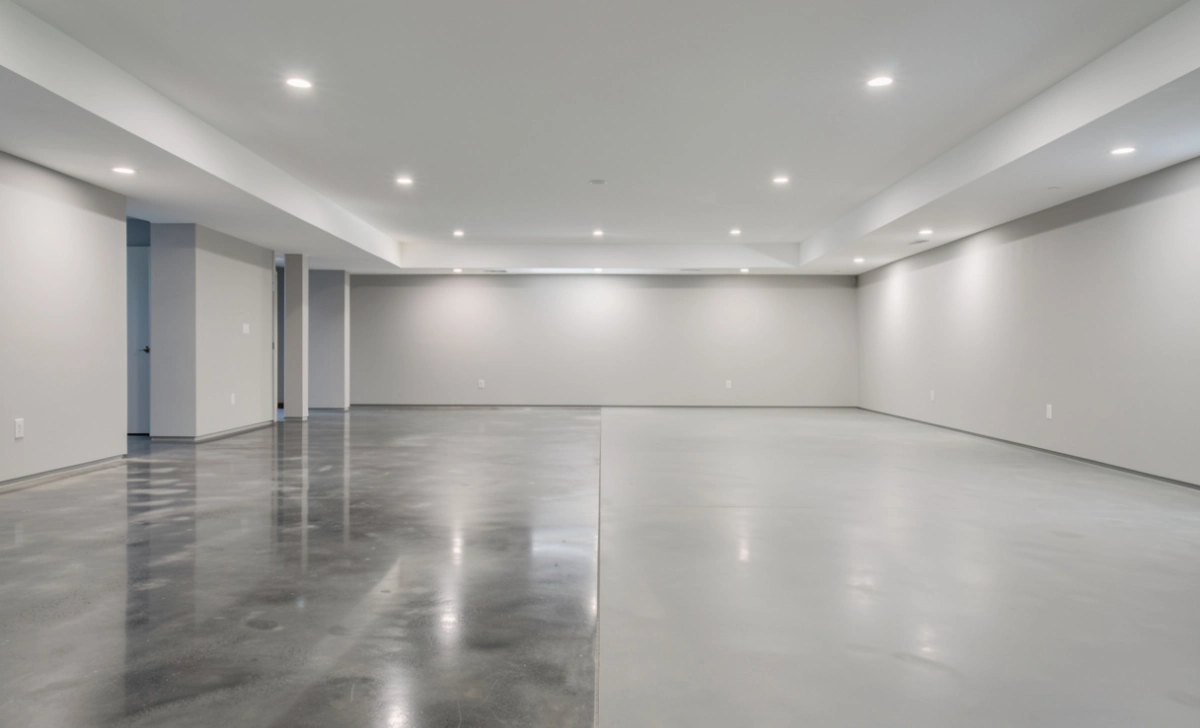
When comparing polished vs sealed concrete, the core difference comes down to process and longevity. Polished concrete uses diamond grinding tools to mechanically refine and densify the slab itself, creating a surface that lasts decades with almost no upkeep. Sealed concrete applies a protective coating on top, which costs less upfront but needs recoating over time, especially in moisture-prone spaces like basements.
For most homeowners, the right choice depends on how you use the space, your budget, and how much maintenance you want to deal with long-term. A polished concrete basement floor is a strong choice if you want a low-maintenance, durable finish that handles everyday wear without much thought. If you want more design flexibility or need to work within a tighter budget now, sealed concrete can still deliver good results, as long as you go in with realistic expectations.
What Polished Concrete Actually Means
Polished concrete is a mechanical process, not just a surface treatment. A contractor uses diamond grinding disks, starting coarse and working progressively finer, to grind down the slab surface. Think of it like sanding wood from rough to smooth, but with heavy industrial equipment.
As the concrete gets ground down, its pores close up. The surface becomes denser and less absorbent. Contractors then apply a chemical hardener to lock in that density, and sometimes a light topical sealer to finish. The result is a smooth, reflective floor that comes from the concrete itself, not from something sitting on top of it.
In basements, especially, a polished concrete basement floor can brighten a dim space. The sheen bounces light around the room and makes it feel less like a utility space. It also virtually eliminates dusting, since the dense surface doesn’t shed particles the way raw concrete does.
One honest trade-off: polished concrete can be slippery when wet. Slip-resistant treatments are available, so ask your contractor about this upfront if your basement sees any moisture or foot traffic.
What Sealed Concrete Actually Means
Sealed concrete starts with a lighter grind, just enough to open the pores and clean the surface. Then a protective coating goes on top, typically acrylic, polyurethane, or epoxy. This coating acts as a shield against stains, moisture, and wear.
Some concrete floor sealers are clear, letting the natural slab show through. Others come in colors or can be mixed with flakes and aggregates for a custom look. That flexibility is one of sealed concrete’s real advantages.
The catch is that a sealer is a coating, not a transformed slab. It sits on top of the concrete and can wear down, scratch, or peel over time. In high-traffic areas or in basements where humidity fluctuates, a failing sealer becomes obvious quickly, and not in a good way.
How They Compare on Durability
Polished concrete holds up better over time. Because the process changes the concrete itself rather than adding a layer on top, there is nothing to peel, crack, or wear off. The gloss may soften slightly over many years, but the floor stays structurally sound. In commercial spaces, polished floors handle thousands of footsteps daily and still look good a decade later.
Sealed concrete depends entirely on the quality of the coating and how well it was applied. A well-done epoxy system can last 10 to 15 years. A standard acrylic sealer may need refreshing every two to three years in a basement used as a living space or gym. The gap in long-term durability between the two options is significant.
Moisture Matters Most in a Basement
This is the section most articles gloss over, and it is the most important factor for basement floors.
Concrete slabs wick moisture up from the ground. Polished concrete handles this reasonably well because the densification process makes it less porous. It breathes without trapping vapor underneath.
Sealed concrete can actually make moisture problems worse if applied over a damp slab. Vapor pressure builds beneath the coating, and eventually the sealer bubbles and peels off the floor. Homeowners who skip moisture testing before sealing often end up scraping up a failed floor within two to three years.
Before choosing any basement floor coating option, test your slab’s moisture vapor emissions. This is not optional. Your contractor can do this before work starts. If vapor levels are high, you may need a mitigation barrier before any finish goes down.
Maintenance Over Time
Polished concrete is about as close to maintenance-free as a floor gets. Sweep it regularly, damp mop with a neutral cleaner occasionally, and you are done. No waxing, no stripping, no special products. Concrete floor maintenance with a polished slab is genuinely minimal.
Sealed concrete needs more attention. You need the right cleaners, since harsh chemicals can damage some coatings. You will need to watch for wear spots and eventually recoat. Factor in the cost of recoating every few years, and the price gap between polished and sealed concrete narrows considerably over a 10-year horizon.
Cost and the Long View
Upfront, polished concrete costs more. Typical installed pricing runs $5 to $12 per square foot, depending on the level of polish, aggregate exposure, and what prep work the slab needs. Sealed concrete generally runs $3 to $7 per square foot for a basic grind-and-seal finish, though epoxy systems can push higher.
Here is what most cost comparisons miss: your future self will have opinions about this floor.
In three to five years with polished concrete, you probably will not think about it at all. It will just be there.
In three to five years with sealed concrete, you may be watching it. Is the coating holding up? Does that corner need touching up? When should we recoat? Neither path is wrong, but they are different relationships with your floor, and that matters more than most people expect when they are standing in a contractor’s showroom making the initial decision.
Which One Is Right for Your Basement
Go with polished concrete if:
- Your slab is in decent shape, or you are willing to pay for repairs first
- You want a floor that needs almost no upkeep for decades
- You like a clean, modern look
- You are planning to use the basement as a living space, gym, or play area
Go with sealed concrete if:
- You want a specific color or design that polished cannot deliver
- Your concrete has visual issues you want to cover rather than expose
- Your budget is tighter right now, and you can plan for future maintenance
- You want to handle the project yourself (sealing is DIY-friendly; polishing is not)
If you have serious moisture issues, fix those first, regardless of which finish you choose. No concrete floor finishing option will solve a drainage or waterproofing problem.
Final Verdict
Both polished and sealed concrete can give you a functional, good-looking basement floor. The right choice depends on your priorities. If you want something you can set and mostly forget, polished concrete is worth the higher upfront cost. If you want more design choices now and are comfortable with some ongoing maintenance, sealed concrete works well with the right expectations.
Either way, get your slab moisture-tested before any work starts, talk to at least two or three contractors who specialize in concrete floors, and think honestly about how you plan to use the space for the next 10 years. That honest answer will point you in the right direction faster than any comparison chart.
FAQs
Can you polish concrete that has already been sealed?
Sometimes, but it is complicated. The sealer must be fully removed before any grinding starts, and that process can be messy. If the sealer has penetrated deep into the concrete, you may not get the finish you want. Always consult a contractor who can test a small area before committing.
How long does polished concrete last in a basement?
Properly done, a polished slab should last as long as the concrete itself. Floors done 20 or more years ago still look good with regular sweeping and occasional mopping. The key is making sure the initial grinding, densification, and any crack repairs are done correctly from the start.
Will sealed concrete make my basement feel less damp?
It can help with minor surface humidity, but it is not a waterproofing fix. If water is coming through your slab, sealing over it will only trap the moisture and cause the coating to fail. Address drainage and vapor issues first before doing anything to the floor surface.
What about radiant floor heating?
Both polished and sealed concrete work with radiant heat systems. Polished concrete conducts heat slightly more efficiently because there is no insulating coating layer on top. If you are planning in-floor heating, mention it to your contractor before any work starts so they can adjust the approach.
Can I do either of these myself?
Sealed concrete is the more DIY-friendly option. With careful prep, the right products, and patience, a motivated homeowner can get good results. Polished concrete needs professional equipment and experience. The grinders are heavy, expensive, and easy to misuse. A wavy or uneven DIY polished floor is a difficult and costly problem to fix.