

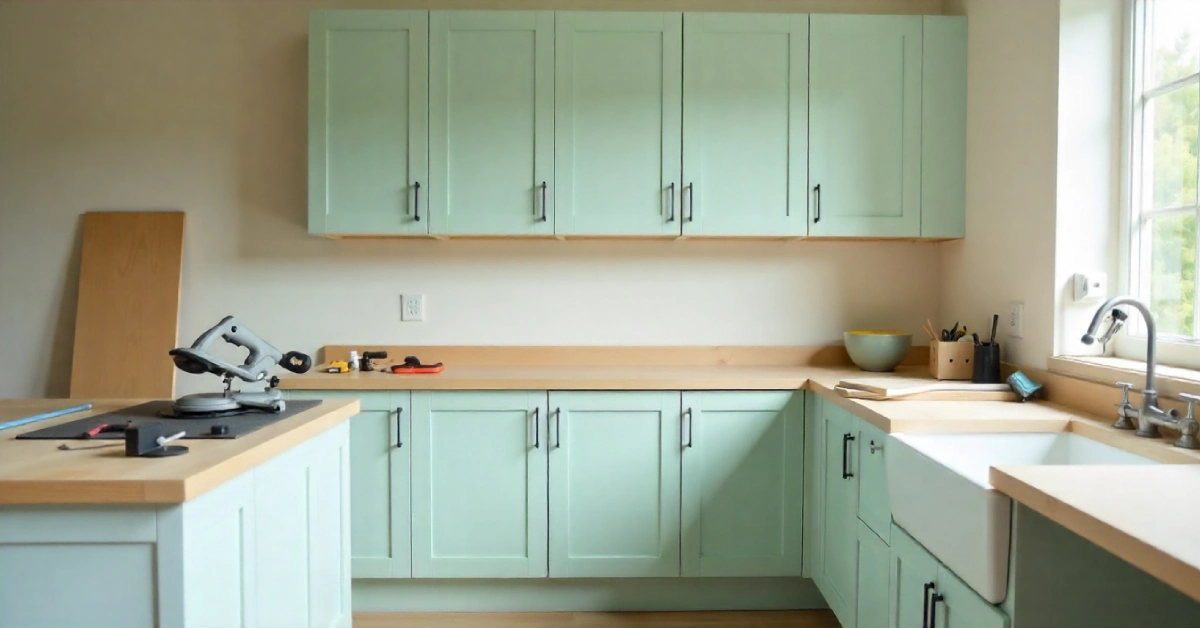
Picture this: your kitchen’s looking a bit tired, those old doors chipped and dated, but you dream of that crisp, minimalist vibe that turns heads. Enter DIY Shaker cabinet doors—the secret weapon for a fresh start without the hefty price tag. I’ve been knee-deep in home renos for years, from quick weekend flips to full gut jobs, and these doors are my cheat code for pro-level results.
Simple lines, flat panels, and a frame that screams understated elegance. In this deep dive, we’ll cover everything from picking materials to hanging the final piece, all while keeping it under budget. Whether you’re a first-timer with a circular saw or a seasoned maker, you’ll walk away ready to transform your space. Let’s roll up our sleeves and build something that lasts.
Shaker style isn’t just a trend; it’s a philosophy born from 18th-century Quakers who valued function over flash. Think clean edges, no carvings, just honest woodwork that fits any aesthetic—rustic farmhouse, sleek industrial, or coastal calm. What sets DIY Shaker cabinet doors apart? That five-piece construction: two vertical stiles, two horizontal rails, and a floating center panel. It allows for wood expansion without cracks, and the result? Doors that feel custom without the custom cost. I’ve seen folks drop $500+ per door from big-box stores, but with this method, you’re looking at $10-20 each. Plus, the satisfaction of saying, “Yeah, I made that.” It’s the kind of project that hooks you on DIY for good.
Before we jump into cuts and clamps, let’s talk about why now’s the time. Kitchens are the heart of the home, and tired cabinets drag down the whole mood. Updating doors is 80% of the visual impact for 20% of the effort. And with supply chains stabilizing post-2024, wood prices are dipping—perfect for stocking up. Target audience? Homeowners like you, juggling budgets and timelines, craving that “wow” factor. I’ve guided renters through no-drill installs and families through kid-proof finishes. No matter your setup, this guide scales. Ready? Gear up.
Essential Tools and Materials Breakdown
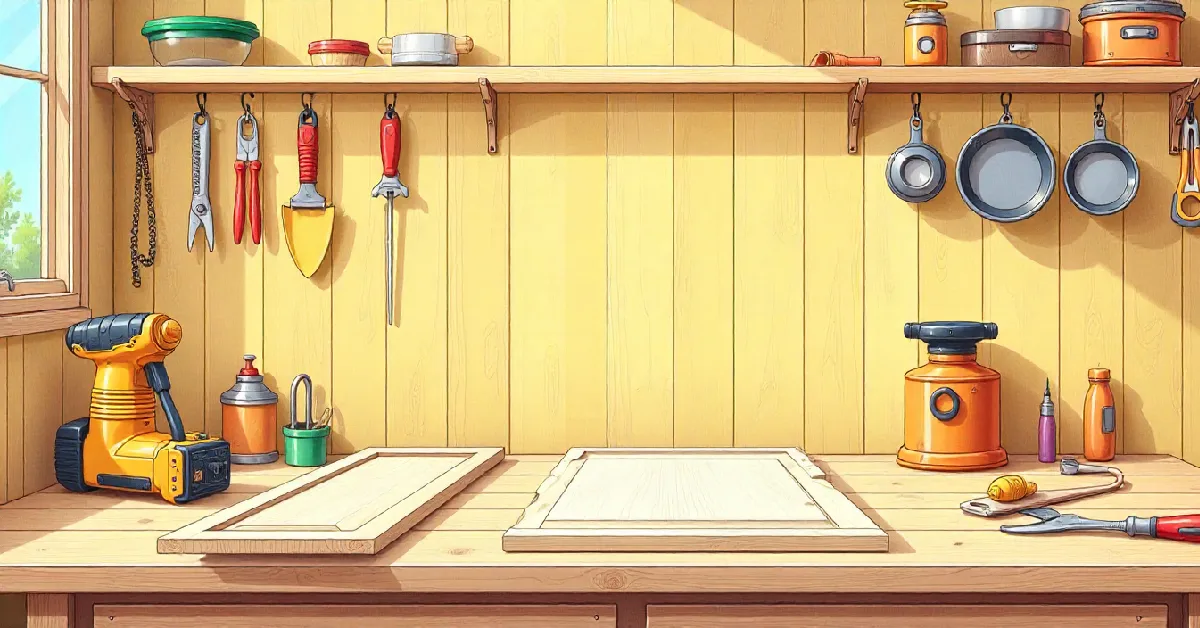
No need for a woodshop empire; start with what fits your garage or apartment corner. I’ve pared this to essentials based on dozens of builds—focusing on versatile pieces that double for other projects. First, tools: a solid circular saw paired with a rip guide is your MVP for straight rips on sheets. Add a miter saw for precise ends, an orbital sander to banish rough spots, and clamps galore for glue-ups. Don’t sleep on a drill with bits for hinges—makes installation a breeze.
Materials-wise, lean into affordability without skimping on quality. 1/4-inch MDF for strips and panels keeps things light yet sturdy; it’s paint-ready and cuts clean. For the frame, paint‑grade maple offers a smooth, hard surface that takes paint exceptionally well, while standard 1×3 spruce or whiteboard works for budget builds. For panels, Luan plywood is a cost‑effective alternative to MDF. Grab 3/4-inch plywood for backs if you’re going slab-style. Wood glue forms the backbone—opt for Titebond II for weather resistance. Then, fillers, sandpaper grits (120 for rough, 220 for fine), and a primer like KILZ to seal those porous edges. For the finish, a soft hue like Sherwin-Williams Sea Salt brings subtle depth without overwhelming.
Here’s a quick shop list to copy-paste:
| Category | Item | Why It Rocks | Approx. Cost |
|---|---|---|---|
| Cutting | Circular saw + Kreg Rip-Cut Guide | Dead-straight lines on big sheets | $40-60 |
| Precision | HART Mitre Saw | Clean crosscuts for rails | $100 |
| Joinery (Grooves) | Dado stack / FTG (flat‑top grind) rip blade | Clean, flat‑bottom grooves without “bat ears” | $50-80 |
| Joinery (Tongues) | Tenoning jig (or shop‑built) | Safe, vertical support for cutting rail tenons | $40-60 |
| Finishing | Orbital Sander | Effortless smooth surfaces | $30 |
| Assembly | Wood Glue & 4+ Clamps | Rock-solid bonds | $20 |
| Panels | 1/4″ MDF or Luan Sheets (4×8) | Budget-friendly, easy to paint | $20/sheet |
| Frames | Paint‑grade maple / 1×3 spruce | Durable, paint‑ready, or pre‑milled standard size | $15-30 |
| Hardware | 35mm Forstner bit | Exact diameter for Euro cup hinges | $10 |
| Prep | KILZ Latex Primer, Tack Cloth | Blocks stains, removes fine dust | $15 + $5 |
| Prep | Painter’s Caulk (for inner corners) | Seals micro‑gaps and stabilises the panel | $6 |
| Color | Sherwin-Williams Sea Salt Paint | Timeless, scrub-resistant | $50/gallon |
Total for 8 doors? Around $250. I’ve scavenged clamps from friends or borrowed saws—pro move for starters. Safety gear: dust mask, goggles, gloves. MDF kicks up fine particles; treat it like flour in a bake-off gone wrong. Use a HEPA‑filter shop vac for cleanup and wear a respirator when cutting MDF or sanding primer. With this kit, you’re set for success.
One insider tip: Test your local hardware store for offcuts. I’ve scored free plywood scraps that way—saves cash and reduces waste. Now, measurements.
Mastering Measurements
Measure wrong, and your doors fight the frame like mismatched puzzle pieces. I’ve learned this the hard way on a bathroom vanity job—gaps everywhere. Start by noting each cabinet opening: width and height, down to the sixteenth. For full-overlay style (common in modern setups), subtract 1/8 inch from total width, split by two for paired doors. Height? Full span minus 1/16 inch for swing clearance. Sketch a rough diagram—label stiles (verticals) as door height, rails (horizontals) as width minus twice the stile width (usually 2 inches, or the exact width of your 1×3 stock).
Size the centre panel using the standard formula: finished opening width plus 7/8 inch, and finished opening height plus 7/8 inch. This yields a precise 1/16‑inch expansion gap around all four edges—enough to prevent buckling from humidity changes while keeping the panel centred within the frame.
Account for hinges: standard concealed types need 3 inches from the edges. Taller doors? Add a middle hinge at 1/3 height. Use a laser level if you’ve got one for dead-on marks; otherwise, a trusty tape and square do fine. Pro hack: Mock up with painter’s tape on the cabinet—visualises fit before cutting.
This step takes 30 minutes but saves hours. I’ve redone entire sets for skipping it. Once locked in, you’re golden.
Cutting and Prepping
Time to make sawdust. For those starting with rough‑sawn lumber, flatten one face on a jointer and square an edge, then plane the opposite face to a final 3/4‑inch thickness. Pre‑surfaced stock (like home‑center 1x3s) skips this step.
Clamp your MDF or plywood sheet to sawhorses, set the rip guide to 2‑inch strips for rails and stiles. Run the circular saw steadily—let the tool do the work, no forcing. Cut stiles full length first, then rails to spec. For panels, use the 7/8‑inch formula to determine the exact width and height, and cut with the same saw.
For the groove, a 1/4‑inch straight router bit set to 3/8‑inch depth works well. Alternatively, a table saw with a dado stack or a flat‑top grind (FTG) rip blade cuts the groove cleanly without leaving “bat ears” in the bottom. Set the fence 1/4 inch from the blade, run both faces of each piece across the blade to centre the groove, and adjust until the panel material slides in with slight resistance.
Cutting the tongues on the rail ends sets the interlocking joint. Raise the saw blade to 1/2 inch—matching the groove depth. Using a tenoning jig to support the rail vertically, run the ends across the blade to form the 1/2‑inch tongue. Adjust the fence position incrementally until the tongue fits snugly into the grooves cut on the stiles. The shoulder of the tongue should sit flush against the stile face.
Edges raw? Hit ’em with 120‑grit sandpaper on a block—removes burrs without rounding corners. Dry-assemble: Lay stiles flat, slot rails between, insert the panel, and check squareness with a framing square. Gaps? Trim judiciously. I’ve used painter’s tape to band pieces temporarily—holds for test fits.
Visualise it: Strips laid out like a tic‑tac‑toe board, ready for glue. This phase is therapeutic—rhythm of the saw, scent of fresh cut. Breathe it in.
Assembly Techniques
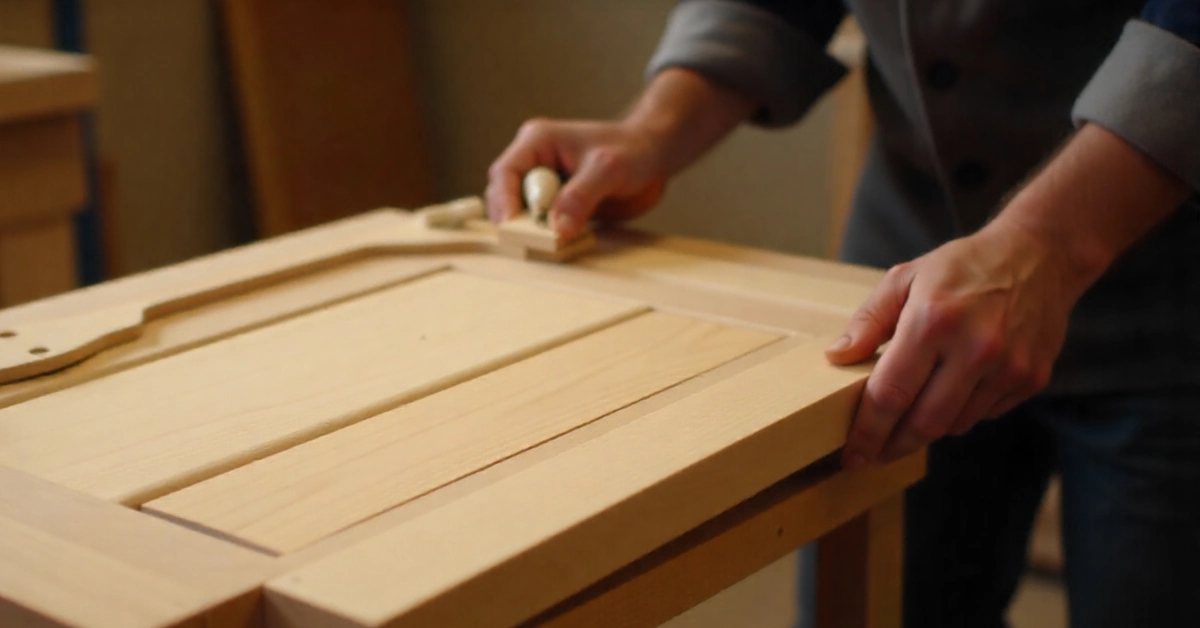
Assemblies where frames come alive. Spread glue thin on each rail tongue—too much, and it squeezes like toothpaste. Position stiles as bookends, slide the panel into the grooves (do not glue the panel—it must float freely). Rub joints for molecular bite, then clamp at 90 degrees. Weights like books or sandbags press it flat overnight.
For extra hold without visible screws, pocket holes in rail backs work wonders. Drill two per end, drive 1‑inch screws. I’ve tested both; glue‑only shines for painted doors, hiding flaws. Check squareness every 15 minutes as it sets—adjust before lock‑in.
Cure time’s your cue to plan paint. I’ve multitasked with trim sanding. Come morning, unclamp to reveal sturdy frames. Flex one gently; no creaks means victory.
Common snag: Warped MDF from humidity. Store flat, work in dry spaces. Fixed that on a humid summer build—lesson learned.
Faux Shaker Doors (No Groove Cutting Required)
For existing flat‑front cabinets, skip the full frame‑and‑panel joinery entirely. Cut 1/4‑inch MDF or plywood strips to 2 1/2 inches wide. Glue and pin‑nail these strips directly onto the face of each existing flat door, positioning them along the outer borders to mimic the stile‑and‑rail layout. Fill the outer edges and nail holes with wood filler, sand flush, and apply primer and paint over the entire surface. The raised strip borders create the visual recess of a shaker panel without cutting a single groove—a practical solution for renters or quick refreshes.
Finishing Touches
Sanding’s the great equaliser—turns rough to refined. Start with 120‑grit orbital passes; focus edges by hand. Fill any glue blobs, seams, or pocket‑hole recesses with wood putty, and sand again at 220. Wipe all dust with a tack cloth; any residue left on MDF or maple will lift the paint.
For painted fronts, apply a thin bead of paintable caulk along the inner corners where the panel meets the frame. This seals micro‑gaps, prevents the panel from shifting inside the groove, and creates a crisp paint line.
Prime coats: Two thin layers of KILZ, 4 hours apart, light sand between. It seals MDF’s thirst, preventing bleed. Then paint—sprayer for speed, brush for control. Sea Salt’s my jam: Greige with green whispers, versatile as jazz standards. Two topcoats, 24‑hour dry.
I’ve experimented with milk paint for vintage patina or polycrylic for clear coats. Test swatches on scraps—lighting tricks the eye. Result: Doors gleaming, ready for hardware.
Pro move: Vertical drying racks from PVC pipes—drip‑free perfection.
Hardware and Installation
Hinges first: Use a jig to mark consistent cup hole positions—3 inches from the top and bottom of each door. Bore a 35mm diameter hole (use a 35mm Forstner bit) to the hinge manufacturer’s recommended depth, typically 1/2 inch. Drill pilot holes for the mounting screws and attach the hinge cups to the door backs, then clip the hinge arms to the cabinet plates.
Pulls: Centre 4‑6 inches from the bottom; drill through. Brass knobs add warmth; matte black for the edge. Hang doors, adjust the hinge’s built‑in cam screws for even reveals—1/8‑inch gaps all around.
Test cycles: Open‑close 20 times. Binds? Shim the cabinet frame or plane the door edge by 1/16 inch. I’ve aligned finicky installs with shims under cabinets—stable as a rock.
Step back: Your kitchen’s reborn. That mirror reflection? Pure pride.
Troubleshooting and Pro Tips for Longevity
Hit snags? Uneven gaps mean re‑measure; heavy sag from MDF calls for lighter pine swaps. Dust overload? Shop vac with HEPA filter. For renters, 3M Command strips hold lightweight faux doors—no damage.
Extend life: Annual touch‑up paint, soft‑close hinges to ease wear. I’ve seen 5‑year‑old builds looking new—quality glue’s key.
| Issue | Fix | Prevention |
|---|---|---|
| Gappy Fit | Plane edges 1/16 inch | Double‑check math (use +7/8″ rule) |
| Glue Warps | Re‑clamp wet | Dry environment, no panel glue |
| Paint Peels | Re‑prime edges, use tack cloth | Full seal coats, dust‑free sanding |
| Hinge Squeak | Lubricate pins | Quality hardware, 35mm bit accuracy |
Watch YouTube gems like Geoff’s Joinery for visuals or Peter Millard’s MDF hacks. Erin Zubot’s no‑tool method? Gold for apartments.
Conclusion
You’ve got the blueprint: Measure smart (with that precise +7/8″ and 1/16″ gap), cut true (using dado stacks, FTG blades, and a tenoning jig where needed), assemble tight (let the panel float), and finish flawless (tack cloth, caulk, and two primer coats). DIY Shaker cabinet doors aren’t just upgrades—they’re investments in your space and skills. Saved me thousands on flips; it’ll do the same for you. Total time? 2‑3 days for 10 doors. Cost? Pennies compared to pros.
What’s your twist—bold colors or wood stain? Drop a comment with your build pics; let’s swap stories. Next project: Countertops? Hit me. Your kitchen’s waiting—go claim it.