

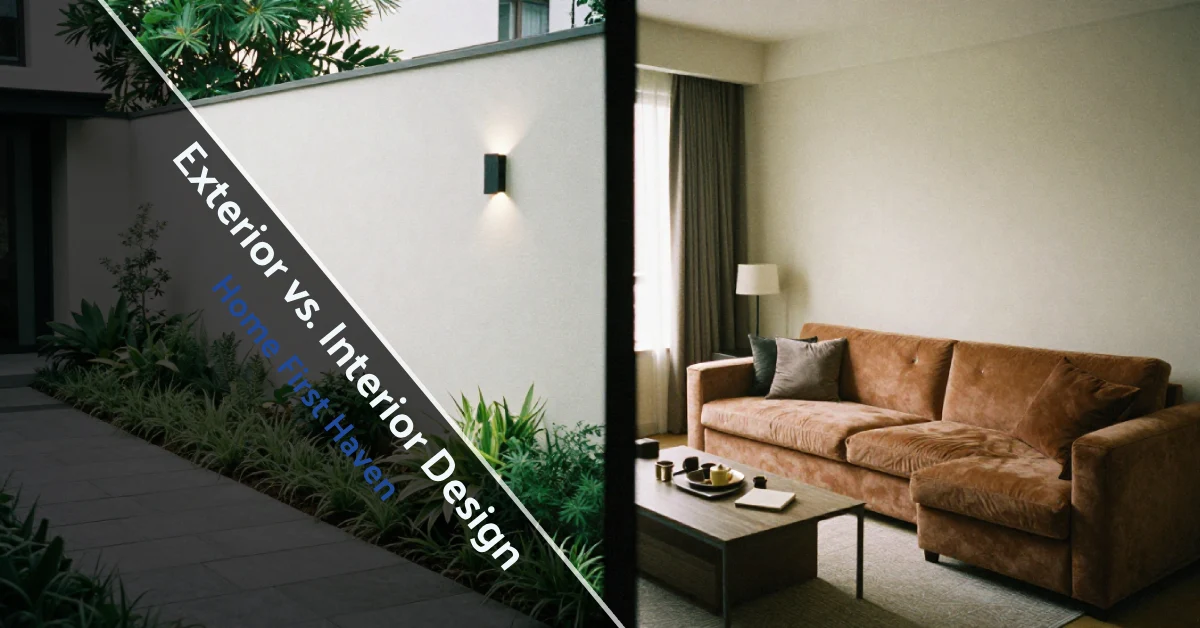
You’re standing in front of your house, coffee in hand, staring at peeling paint and overgrown hedges. Inside? The living room still has that beige couch from 2012. You know something needs fixing, but here’s the question: do you start outside or inside?
Exterior vs. Interior Design isn’t just about choosing paint colors or rearranging furniture. It’s about understanding two completely different worlds that shape how you live, how your home feels, and what it’s worth. One focuses on first impressions and weather-beating durability. The other builds comfort, function, and personality inside your walls.
This guide breaks down what each design field actually does, where they overlap, and how to decide which one your home needs right now. No fluff, just the details that matter when you’re planning your next project.
What Interior Design Actually Covers
Interior design is the art of making indoor spaces work better while looking sharp. It’s not just decorating. It’s about how you move through a room, where light hits at 3 PM, and whether your kitchen layout makes cooking feel like a chore or a breeze.
Interior designers think about flow first. They map out where furniture goes, how traffic moves, and whether you’re wasting square footage. Every choice, from flooring to lighting fixtures, affects how a space functions. It’s problem-solving dressed up as style.
Color psychology plays a bigger role than most people realize. Blues calm you down, yellows energize, grays create modern minimalism. Designers use this to set the mood in every room. They also balance textures, soft fabrics with hard surfaces, smooth walls with rough wood, so spaces feel layered and intentional.
Materials matter too. Luxury vinyl plank flooring handles high traffic better than carpet. Quartz countertops resist stains better than marble. Designers know what holds up and what doesn’t, so your investment lasts longer.
Smart space planning turns cramped apartments into functional homes. They’ll carve out a home office in a corner, add storage under stairs, or open up walls to create flow. It’s not magic, just strategic thinking about how you actually live.
What Exterior Design Brings to the Table
Exterior design is your home’s first handshake with the world. It’s curb appeal, structural protection, and long-term durability rolled into one. While interior design makes you comfortable, exterior design keeps the elements out and property values up.
Facade design defines your home’s personality from the street. Stone veneer screams rustic charm. Sleek metal panels say modern minimalist. Brick brings timeless tradition. Your exterior material choice sets the tone before anyone steps inside.
Weather resistance isn’t optional here. Rain, snow, UV rays, and wind will test every surface. Exterior designers select materials that survive your climate, whether it’s coastal humidity, desert heat, or freezing winters. That’s why cedar siding works in Oregon but stucco thrives in Arizona.
Landscaping ties everything together. Mature trees add shade and privacy. Native plants cut water bills. Strategic lighting highlights architecture at night. A well-designed yard extends your living space and boosts resale value by double-digit percentages.
Outdoor structures like decks, patios, and pergolas blur the line between inside and out. They create transition zones, places where you sip morning coffee or host summer BBQs. These spaces need both aesthetic appeal and structural integrity to handle foot traffic and weather year-round.
Key Differences Between Interior and Exterior Design
Exterior vs. Interior Design comes down to purpose, materials, and the challenges each field tackles daily. Interior designers create comfort zones. Exterior designers build protective shells that also happen to look good.
Materials diverge hard here. Interior spaces use fabrics, paint, hardwood, and decorative elements that don’t face rain or snow. Exterior work demands concrete, treated wood, metal roofing, and weather-resistant paints that won’t fade or crack under UV assault.
Cost structures shift, too. Interior projects often range from budget-friendly DIY updates to full-scale renovations. Exterior work typically costs more because you’re dealing with structural elements, heavy materials, and specialized labor like roofers or landscapers. Foundation repairs or new siding aren’t cheap.
Skillsets don’t overlap as much as you’d think. Interior designers study color theory, furniture styles, and spatial flow. Exterior designers need construction knowledge, drainage engineering, and material science to handle weather patterns. Both require creativity, but the technical demands differ.
Timeline expectations vary. You can repaint a bedroom in a weekend. Redoing your home’s facade? Plan for weeks, weather delays, and permit approvals. Exterior projects move more slowly because structural integrity and building codes don’t bend.
| Aspect | Interior Design | Exterior Design |
|---|---|---|
| Primary Focus | Comfort and function inside | Curb appeal and weather protection |
| Materials | Fabrics, wood, paint, decor | Concrete, siding, roofing, pavers |
| Cost Range | Budget to moderate | Moderate to high |
| Timeline | Days to weeks | Weeks to months |
| Weather Impact | Minimal | Critical factor |
Skills Each Designer Actually Needs
Interior designers live in CAD software and mood boards. They visualize spaces in 3D before a single piece of furniture gets ordered. Color theory isn’t optional; it’s foundational. They need to know why navy blue feels cozy in a bedroom but cold in a kitchen.
Client communication separates good designers from great ones. You’re translating vague ideas like “I want something modern but warm” into concrete plans. That requires listening skills, patience, and the ability to manage expectations when someone’s Pinterest board defies physics.
Exterior designers need construction chops. They read blueprints, understand load-bearing walls, and coordinate with architects and engineers. When they design a deck, they’re calculating weight limits, not just picking a stain color. Structural knowledge isn’t optional.
Landscape design adds another layer. Plant hardiness zones, soil composition, and drainage patterns all factor into creating outdoor spaces that thrive. Dead shrubs and flooded yards signal amateur work. Professional exterior designers think like botanists and civil engineers simultaneously.
Building codes and permits dominate exterior work. Every region has rules about setbacks, fence heights, and drainage. Miss a permit, and you’re tearing down that new porch. Interior designers deal with fewer regulations unless they’re moving walls or adding bathrooms.
How Both Fields Work Together
The best homes feel unified inside and out. When your modern farmhouse exterior opens to reveal ultra-minimalist interiors, the disconnect jars. Cohesive design means your architectural style flows naturally from curb to kitchen.
Color palettes should echo across boundaries. If your exterior features charcoal siding and white trim, pulling those tones into your interior through accents and furniture creates visual harmony. It’s not about matching everything, just maintaining a conversation between spaces.
Indoor-outdoor living spaces are where both disciplines meet. A patio with the same flooring that extends inside blurs the line. Large glass doors turn your backyard into a borrowed view. These transition zones require both interior comfort and exterior durability.
Lighting design connects day and night experiences. Exterior fixtures highlight your home’s architecture after dark while interior lighting sets the mood inside. Strategic placement makes your home feel intentional, not accidental. Landscape lighting and window treatments work together to control natural light throughout the day.
Material choices can bridge both worlds. Using similar stone on your fireplace and exterior facade creates continuity. Wood tones from your deck can inspire your interior flooring palette. These thoughtful touches make your home feel designed, not decorated room by room.
Common Mistakes Homeowners Make
Mixing design styles without a plan creates visual chaos. A Victorian exterior with industrial modern interiors can work, but only if you nail the transition spaces. Most people don’t, and the result feels like two different houses collided.
Using indoor materials outside guarantees problems. That gorgeous hardwood? It’ll warp in rain. Interior paint on exterior walls? Peeling in months. Weather-resistant materials cost more because they survive, not because contractors are upselling you.
Ignoring climate is expensive. Installing a deck in Seattle without proper drainage? Rot city. Planting water-hungry lawns in Phoenix? Hello, irrigation bills. Smart designers work with your environment, not against it. Regional considerations determine which materials and plants make sense.
Skipping permits seems like a shortcut until the city makes you tear everything down. Building codes exist for safety and property value. That unpermitted addition? It’ll haunt your home sale and potentially void insurance claims.
Budget misallocation kills projects. Homeowners pour money into interiors while their roof leaks or siding rots. Structural issues always take priority. A beautiful kitchen means nothing if your foundation is cracking. Fix the bones before you dress them up.
Which Designer Should You Hire?
Hire an interior designer when your space doesn’t function properly. If you’re tripping over furniture, rooms feel cramped, or your style screams 2008, interior help pays off. They’ll maximize every square foot and create a home that reflects how you actually live.
Go exterior when curb appeal tanks or structural issues emerge. Faded paint, cracked driveways, dead landscaping these problems hurt property value and let weather damage accelerate. Exterior renovations often recoup 50-80% of costs at resale, making them solid investments.
For full renovations or new builds, you need both. They’ll coordinate so your modern exterior doesn’t clash with traditional interiors, and vice versa. Integrated design costs more upfront, but prevents expensive fixes later when you realize nothing matches.
Consider your timeline and budget, too. Interior projects offer faster transformations with lower entry costs. Exterior work requires patience, weather cooperation, and deeper pockets. If you’re flipping a house, exterior improvements boost the sale price faster than new countertops.
DIY skills matter here. Painting rooms or rearranging furniture? Doable. Regrading your yard or installing new siding? Hire professionals unless you want costly mistakes. Know your limits, and when paying experts saves money in the long run.
Real-Life Design Combinations That Work
Coastal homes nail this balance. Weathered wood exteriors in blues and whites transition to airy interiors with nautical accents. Floor-to-ceiling windows bring ocean views inside while covered porches extend living space outdoors. Everything feels beach-ready without trying too hard.
Modern farmhouses blend rustic exteriors with clean interiors beautifully. Black metal roofing and white board-and-batten siding lead to open-concept spaces with shiplap accents. The key? Restraint. Too much farmhouse inside feels theme-park fake. Just enough creates warmth without kitsch.
Mid-century modern homes showcase how timeless design connects inside and out. Clean horizontal lines, natural materials like stone and wood, and walls of glass create seamless transitions. The architecture does the heavy lifting, so interiors stay minimal and functional.
Urban contemporary spaces often feature industrial exteriors with refined interiors. Exposed brick, metal accents, and concrete outside contrast with soft textiles, warm lighting, and curated art inside. The juxtaposition works because both sides commit fully to their aesthetic.
Tropical designs maximize indoor-outdoor flow. Open-air living rooms, sliding glass walls, and lush landscaping blur boundaries. Natural materials like bamboo and teak work both inside and out. The climate dictates the design, and smart architects embrace it instead of fighting nature.
Making Your Decision
Exterior vs. Interior Design isn’t an either-or choice for most homes, but budget and urgency force priorities. Assess what hurts your home’s function, value, or safety first. Leaking roofs beat pretty wallpaper every time.
Walk around your property with honest eyes. Does your exterior embarrass you when guests arrive? Are interiors so cramped that you avoid having people over? The space causing more daily frustration deserves attention first. Sometimes it’s obvious, sometimes you need a second opinion.
Get quotes from professionals in both fields. Understanding cost structures helps you plan realistically. A $30K exterior facelift might stretch across two years while you tackle smaller interior updates quarterly. Smart phasing prevents budget shock and keeps progress visible.
Think resale even if you’re not moving soon. Research shows exterior improvements consistently rank highest for ROI. Interior updates boost livability now but may not add dollar-for-dollar value. Balance personal enjoyment with future marketability.
Your home works best when inside and outside complement each other. Whether you start with curb appeal or indoor comfort, keep the bigger picture in mind. Great design doesn’t happen in isolation; it happens when every element supports the whole.