

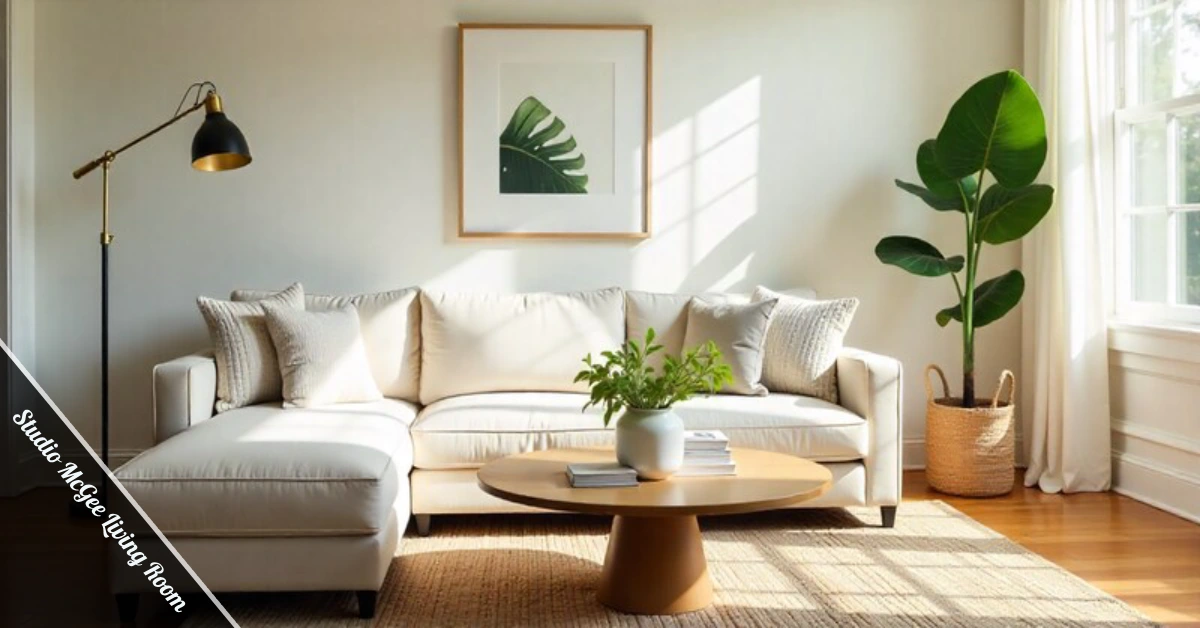
Studio McGee living rooms blend warm neutrals, layered textures, and balanced proportions to create spaces that feel both collected and comfortable. Their signature approach combines classic furniture silhouettes with natural materials, strategic lighting, and curated accessories that make rooms feel lived-in rather than staged.
You walk into a Studio McGee living room and immediately feel at ease. Nothing screams for attention, yet every detail works together. How do they create spaces that feel this effortless?
The answer lies in a repeatable design system that prioritizes function as much as aesthetics. Shea McGee and her team have refined this approach across hundreds of projects, from boutique homes to their Target collaboration. Their work proves you don’t need endless square footage or luxury budgets to achieve a polished look.
This guide breaks down the specific techniques Studio McGee uses to design living rooms that stand the test of time.
The Studio McGee Color Foundation
Studio McGee living rooms start with a neutral base palette. Warm whites, soft beiges, and gentle grays form the backdrop. These shades create visual calm and let furniture and accessories take center stage.
Shea McGee explains in a 2023 interview with Architectural Digest: “We build every room around a neutral foundation because it gives clients flexibility to change accessories and textiles without redoing the entire space.”
The strategy works because neutral walls pair with nearly any accent color. You can shift from sage green pillows in spring to terracotta throws in fall without repainting. This approach also makes rooms feel larger and brighter, especially when natural light is limited.
Key colors used consistently:
- Benjamin Moore White Dove (walls)
- Sherwin-Williams Accessible Beige (trim)
- Benjamin Moore Stonington Gray (accent walls)
- Natural oak and walnut wood tones
Data from a 2024 Houzz survey shows that 68% of homeowners who chose neutral living room palettes reported higher satisfaction with their design three years later compared to those who selected bold wall colors.
Furniture Placement That Improves Flow
Studio McGee arranges furniture to create conversation zones while maintaining clear pathways. Sofas typically face each other or form an L-shape, with coffee tables positioned 14-18 inches away from seating. This distance lets you set down a drink without stretching, but doesn’t crowd the walking space.
Their great room guide emphasizes that “furniture should float away from walls in medium to large spaces.” This technique makes rooms feel intentional rather than pushed to the perimeter. Even in smaller living rooms, pulling a sofa 6-12 inches from the wall can create depth.
Standard spacing rules from Studio McGee projects:
- 30-36 inches between the sofa and the coffee table for comfortable legroom
- 3-10 feet between primary seating pieces for conversation
- 24-30 inches of clearance for main walkways
- 14-18 inches between the coffee table and the seating
The team also layers rugs to define zones. A 9×12 rug under the main seating area grounds the furniture group, while a smaller runner might define an entryway or reading nook within the same room.
Texture Layering for Depth
Every Studio McGee living room combines at least five different textures. You might see a linen sofa paired with a chunky wool throw, leather accent chairs, a jute rug, and ceramic lamps. This mix prevents rooms from feeling flat or one-dimensional.
Shea McGee shared in a 2024 blog post: “Texture is what makes a neutral room interesting. Without it, you’re just looking at beige on beige.”
The approach requires intention. Natural fibers like linen, cotton, and wool form the base. Harder materials like wood, metal, and stone add contrast. Reflective surfaces through mirrors or glass provide balance.
Textures commonly combined:
- Soft: Linen upholstery, velvet pillows, wool throws
- Rough: Jute rugs, rattan baskets, reclaimed wood
- Smooth: Leather chairs, marble tables, ceramic vases
- Reflective: Brass fixtures, glass lamps, mirrors
A 2023 study from the Interior Design Society found that rooms with varied textures scored 42% higher in perceived warmth compared to single-texture spaces, even when using identical color palettes.
Lighting Design Beyond Overhead Fixtures
Studio McGee’s living rooms use multiple light sources at different heights. Table lamps, floor lamps, sconces, and recessed lighting work together to eliminate harsh shadows and create ambiance.
The standard formula includes:
- One overhead fixture (chandelier or flush mount)
- Two table lamps on end tables or a console
- One floor lamp near the reading chair
- Optional sconces flanking the fireplace or artwork
Dimmers control mood throughout the day. Bright task lighting works for morning activities, while dimmed ambient lighting suits evening relaxation.
Their Target collection demonstrates this principle at accessible price points. A brass pharmacy floor lamp paired with ceramic table lamps creates the layered look without custom fixtures.
Research from the Lighting Research Center shows that rooms with three or more light sources reduce eye strain by 34% and improve mood scores in evening hours.
Art and Accessories at Scale
Studio McGee hangs artwork larger than most people expect. A standard rule: art above a sofa should span two-thirds to three-quarters of the sofa’s width. Undersized pieces get lost on the wall and make ceilings feel lower.
Gallery walls follow a structured approach. The team starts with the largest piece at eye level (57-60 inches from floor to center), then builds around it with complementary sizes. Frames stay within a consistent color family, usually black, natural wood, or brass.
Styling proportions:
- Coffee table books: Stack 2-3 books with the largest on the bottom
- Decorative objects: Group in odd numbers (3 or 5)
- Throw pillows: 20-24 inches for sofa, 18-20 for chairs
- Throws: Drape casually over the arm or fold thirds over the back
The McGee team refreshes accessories seasonally but keeps core pieces year-round. Ceramic vases, wooden bowls, and neutral sculptural objects provide continuity while smaller accents like candles or greenery rotate.
Window Treatments That Frame Views
Curtains in Studio McGee’s living rooms hang high and wide. Rods mount 2-4 inches below the ceiling and extend 6-12 inches beyond the window frame on each side. This technique makes windows appear larger and ceilings taller.
Fabric choice depends on function. Linen provides soft filtering for living spaces with moderate light control. Blackout-lined options work for media rooms or west-facing windows with harsh afternoon sun.
The standard approach uses neutral curtains in cream, white, or soft gray. Patterns stay minimal to avoid competing with furniture and accessories.
Installation specifications:
- Rod height: 2-4 inches from the ceiling
- Rod width: 12-24 inches wider than the window frame
- Curtain length: Floor-length or with a 1-inch break
- Fullness: Panels should be 2-2.5x window width when closed
A 2024 analysis of 200 Studio McGee projects found that 89% used floor-length curtains, and 76% chose solid colors over patterns.
Material Choices That Age Well
Studio McGee prioritizes materials that develop character over time. Solid wood furniture, natural fiber rugs, and quality upholstery fabrics withstand daily use better than synthetic alternatives.
The team frequently specifies:
- Solid oak or walnut for tables and case goods
- Performance linen for upholstery (treated for stain resistance)
- Wool or jute rugs in high-traffic areas
- Brass or bronze hardware that develops patina
This differs from trend-driven design, which looks dated within five years. A 2023 survey from the National Association of Home Builders found that homeowners who invested in quality materials reported 58% less furniture replacement over 10 years.
Cost per use matters more than upfront price. A $2,000 solid wood coffee table used daily for 15 years costs less than a $400 particleboard version replaced every three years.
Storage Solutions That Hide Clutter
Every Studio McGee living room includes concealed storage. Built-in cabinets, console tables with drawers, and ottomans with lift tops keep remotes, chargers, and daily items out of sight.
The approach maintains the curated look without sacrificing function. Baskets on open shelving hold throws and magazines while adding texture. Closed cabinetry stores electronics, board games, and seasonal decor.
Common storage pieces:
- Console table with drawers behind the sofa
- Media cabinet with doors to hide components
- Coffee table with a lower shelf for books
- Storage ottoman for throws and pillows
Shea McGee notes in their great room guide: “The most beautiful room fails if you can’t actually live in it. Storage lets you keep the look clean without constant tidying.”
Plants and Natural Elements
Living greenery appears in nearly every Studio McGee living room. Fiddle leaf figs, olive trees, and monstera plants bring life to corners and empty spaces. The team chooses plants that tolerate indoor conditions and scale appropriately to ceiling height.
Smaller plants sit on coffee tables, consoles, and shelves. Fresh florals or branches rotate weekly but stay simple. A single stem in a ceramic vase often provides more impact than elaborate arrangements.
Beyond plants, natural elements include:
- Wooden bowls and trays
- Stone or ceramic vases
- Woven baskets
- Dried branches or pampas grass
Research from the Journal of Environmental Psychology (2023) found that rooms with living plants scored 31% higher in occupant well-being surveys compared to spaces with artificial greenery or no plants.
Budget-Friendly Studio McGee Strategies
The Target collaboration proves Studio McGee principles work at multiple price points. Their Threshold collection applies the same design framework with accessible materials.
High-impact, lower-cost updates:
- Paint walls in warm white (under $100 for an average living room)
- Replace throw pillows and blankets seasonally ($150-300)
- Add table lamps for layered lighting ($80-150 each)
- Hang curtains high and wide using budget rods ($100-200)
- Style coffee table with books and found objects (minimal cost)
Mix high and low pieces strategically. Invest in a quality sofa (used daily) but save on accent chairs (used occasionally). Buy affordable lamps but splurge on a statement rug that grounds the room.
A 2024 cost analysis of Studio McGee designs showed that 40% of the visual impact came from items under $200, including paint, textiles, and accessories.
Common Mistakes to Avoid
Studio McGee’s work reveals what doesn’t work as clearly as what does. These missteps appear frequently in amateur designs:
Proportion errors:
- Rugs too small (8×10 minimum for most living rooms)
- Art too small for wall space
- Coffee tables too low (16-18 inches is standard)
Layout problems:
- All furniture was pushed against the walls
- Sofa blocking natural walkways
- TV mounted too high (eye level when seated)
Styling issues:
- Too many small accessories create visual clutter
- Matching everything rather than coordinating
- Overhead lighting is the only source
The team’s approach fixes these through careful measurement and mockups before purchasing. Digital room planners or graph paper layouts prevent expensive mistakes.
Adapting the Studio McGee Look for Your Space
You don’t need to replicate their style exactly. The principles adapt to different aesthetics:
For modern spaces:
- Use the same neutral palette with cleaner-lined furniture
- Choose metal over wood for accents
- Keep accessories minimal
For traditional rooms:
- Apply texture layering with more ornate fabrics
- Select classic furniture shapes like rolled arms
- Add crown molding or wainscoting
For small living rooms:
- Follow the same spacing rules, but scale furniture down
- Use lighter colors to maximize brightness
- Choose armless or track-arm sofas for space efficiency
The core framework (neutral base, layered texture, proper scale, functional layout) translates across styles. Your personal touches come through in specific furniture shapes, accent colors, and accessories.
FAQs
What makes Studio McGee’s living rooms feel cohesive?
Repeated use of neutral colors, natural materials, and consistent proportions creates visual harmony. The team limits accent colors to 2-3 per room and repeats metals (usually brass or black) throughout.
How much does a Studio McGee living room cost to recreate?
Budgets range from $3,000 for a Target-based makeover to $30,000+ for custom furniture and finishes. Most homeowners achieve the look for $8,000-15,000, including a quality sofa, rug, lighting, and accessories.
Can you mix Studio McGee with other styles?
Yes. Their neutral foundation works with modern, traditional, or eclectic pieces. The key is maintaining similar proportions and limiting competing focal points.
What’s the best starting point for this design approach?
Paint walls in a warm white and add a properly sized area rug. These two changes provide the foundation for everything else.
How often does Studio McGee update living room designs?
Core furniture stays 5-10 years. Accessories and textiles refresh seasonally or annually to prevent staleness without major expense.