

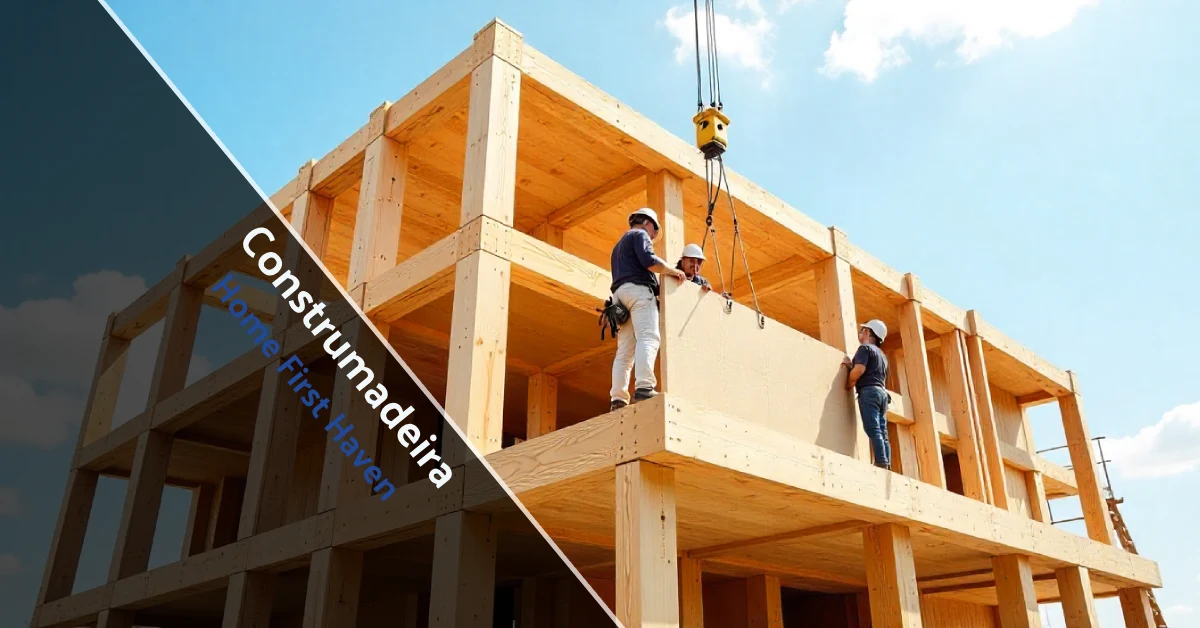
You’ve seen those sleek wooden buildings popping up across Portugal. They look sharp, they’re built fast, and contractors swear by them. That’s Construmadeira in action—modern wood construction that’s changing how we build.
This isn’t your grandfather’s cabin in the woods. We’re talking engineered systems, factory precision, and buildings that go up in weeks instead of months. If you’re weighing wood against traditional concrete, you need the real numbers, the actual timeline, and the honest drawbacks before you commit.
Let’s break down what Construmadeira really delivers, what it costs, and when it makes sense for your next project.
What Construmadeira Actually Means for Builders
Construmadeira refers to building structures using wood as the primary material. Modern systems use engineered wood products—not solid logs. Think CLT panels and Wood Frame structures built with industrial precision.
Portugal’s construction sector hit over 34 billion euros in 2023. Wood construction grabbed a bigger slice because labor shortages pushed contractors toward prefabricated solutions. Building permits jumped 21.7% in early 2024, and wood systems kept pace.
The game changed when Portugal’s Recovery and Resilience Plan started funding wood production facilities. More capacity means better pricing and shorter lead times. Contractors who adopted early locked in competitive advantages while traditional builders struggled with material delays.
Nordic countries build 90% of homes with wood structures. Portugal’s catching up fast. You’re not experimenting with unproven tech—you’re following what works across Europe. The difference? You get Mediterranean climate advantages without Nordic winter challenges.
CLT Panels vs Wood Frame Systems
CLT (Cross Laminated Timber) stacks wood layers perpendicular to each other. Each panel has 3 to 7 layers glued together, creating strength comparable to reinforced concrete. Panels reach 14.8 meters long and 4.8 meters wide—entire walls in single pieces.
Use CLT when you’re building multi-story projects up to 8 floors. Free spans exceeding 6 meters need this strength. Commercial and industrial buildings benefit from smooth surfaces without visible framing that simplifies interior finishes.
Material costs run €150-250 per square meter. Assembly adds €50-80 per square meter. Total structural investment hits €200-330 per square meter, but you slash construction time and reduce specialized labor requirements dramatically.
Wood Frame uses vertical wood profiles spaced 40-60 centimeters apart, covered with OSB or plywood panels. The space between studs holds thermal and acoustic insulation. Light Wood Frame handles homes up to 3 floors using smaller section timber.
This system costs €90-150 per square meter for the structure alone. Single-family homes and small buildings get the best value here. Future modifications stay simple because cables pass easily between studs, and walls open up without demolishing load-bearing elements.
Wood Frame gives you budget control and construction flexibility. A 150-square-meter project can be enclosed in 3 to 4 weeks after foundation work is completed. That’s half the timeline of traditional concrete construction with comparable structural performance.
Real Construction Costs and Timeline Savings
A 120-square-meter Wood Frame house costs €96,000-144,000 turnkey. Traditional construction for the same house runs €102,000-156,000. The difference shrinks when you factor in energy savings over 10 years—roughly €150 monthly on heating and cooling bills.
Basic turnkey packages start at €800-1,000 per square meter. Medium-grade finishes push costs to €1,000-1,200 per square meter. High-end builds with premium materials hit €1,200-1,500 per square meter, matching traditional construction prices while delivering superior thermal performance.
Construction speed cuts timelines by 30-50% compared to concrete builds. A 4-story CLT structure goes up in 2 to 3 months. Weather-tight enclosure happens in weeks, not months, reducing construction credit costs and allowing earlier occupancy.
Foundation costs drop because wood structures weigh 5 to 7 times less than concrete. Sites with low load capacity suddenly become viable. Remote locations benefit from lighter materials that simplify logistics and reduce transportation expenses significantly.
Break-even calculation: if the wood premium is €18,000 and energy savings hit €150 monthly, you recover costs in 10 years. Most homeowners and commercial property owners find this acceptable, especially with rising energy prices across Portugal.
Thermal Performance and Energy Efficiency
Wood has thermal conductivity 15 times lower than concrete. A Wood Frame wall with 20 centimeters of insulation achieves U-values of 0.15-0.20 W/m²K. Portugal requires exterior walls between 0.35-0.50 W/m²K—wood construction beats standards by 40-60% without extraordinary measures.
Energy savings reach 40-60% compared to traditional buildings. A properly insulated wood structure maintains comfortable temperatures year-round with minimal heating and cooling. Portuguese climate zones make this particularly valuable—mild winters and hot summers demand efficient thermal barriers.
Buildings typically achieve A or A+ energy ratings without complex systems. Superior insulation means smaller HVAC units, lower installation costs, and reduced ongoing maintenance. Commercial buildings see faster ROI through lower utility bills and higher tenant satisfaction.
Factory-produced elements maintain consistent quality. Moisture content stays at 12-16% during production. Dimensional tolerances hold within ±2-3 millimeters. This precision eliminates thermal bridges that plague site-built construction and compromise energy performance.
Fire Resistance and Safety Standards
Solid wood exceeding 80 millimeters resists fire better than unprotected steel. Surface carbonization creates an insulating layer protecting the core. CLT panels achieve REI 60 ratings—60 minutes of resistance, integrity, and insulation.
Portuguese codes require minimum fire ratings based on building height. Single-family homes need REI 30. Multi-family buildings require REI 60. Commercial structures demand REI 90. CLT and glulam meet these requirements without additional protection in most applications.
Wood burns at 0.7 millimeters per minute. This predictable rate lets engineers calculate the exact structural capacity during fire events. Concrete spalls unpredictably under heat. Steel loses strength rapidly at high temperatures without expensive fireproofing treatments.
Fire-retardant treatments applied at factories increase resistance further. Wood treated with borate salts withstands direct flame for extended periods. Building inspectors across Portugal approve these systems because testing proves performance exceeds code minimums consistently.
Moisture Protection and Durability
The waterproof barrier makes or breaks wood construction. Use membranes with vapor permeability exceeding 1,000 grams per square meter per 24 hours on exteriors. Add a vapor barrier on interiors. This combination lets walls breathe while blocking liquid water.
Keep wood at least 30 centimeters above ground level. The splash zone demands water-resistant baseboards or fiber cement panels. Annual inspection of joints and seals catches small infiltrations before they cause damage.
Wood exposed to humidity above 20% for prolonged periods develops fungi. Proper detailing during construction prevents this completely. Well-executed projects maintain wood moisture below 15%, where biological growth cannot occur. Portuguese climate actually helps—relatively low humidity compared to northern Europe.
A well-maintained wood structure lasts 100-plus years. Maintenance costs represent 0.5-1% of construction value annually, equal to or lower than traditional construction. Years 1-5 need visual inspection every 6 months. Years 5-10 require exterior treatment reapplication. Years 10-plus involve checking structural connections.
Wood Species and Material Sourcing
Maritime pine dominates Portuguese wood construction, representing 70% of the forest area. It offers a solid strength-to-weight ratio and accepts pressure treatment well. Structural grades range from C18 to C24 under EN 338 standards. Average cost hits €350-450 per cubic meter for structural grade.
Eucalyptus gains traction for engineered products. Higher density at 700 kilograms per cubic meter versus pine’s 500 kilograms delivers superior strength. Portuguese research institutes develop specific CLT applications for eucalyptus, though 20-30% price premium limits widespread adoption currently.
Imported species fill specific niches. Norway spruce works for high-grade CLT panels from Central Europe. Douglas fir brings excellent natural durability for exterior applications. Larch’s high resin content provides rot resistance without chemical treatment.
Choose FSC or PEFC certified wood. These certifications guarantee sustainable forest management and legal harvesting. Portuguese pine with FSC certification costs €30-50 per cubic meter more, but provides complete traceability and environmental credentials that clients increasingly demand.
When Wood Construction Makes Sense
Choose wood when construction speed matters. Projects with tight timelines benefit from prefabrication and rapid assembly. Weather-tight enclosure happens in weeks rather than months, protecting your schedule from weather delays and material shortages.
Energy efficiency as a long-term priority makes wood compelling. If you plan to own the property for 10-plus years, superior insulation pays dividends through reduced utility costs. Commercial properties see higher tenant retention and premium rents from lower energy bills.
Site access challenges favor lighter materials. Wood structures reduce foundation requirements dramatically. Steep locations, remote sites, or areas with weight restrictions become viable. Transportation costs drop because fewer truck trips deliver the same building volume.
Environmental impact matters to clients and regulations. Wood stores approximately 1 ton of CO₂ per cubic meter. Replacing concrete with wood in a 100-square-meter home avoids emitting 20-30 tons of CO₂—credentials that win contracts and satisfy green building requirements.
Stick with traditional construction when local regulations create barriers. Some municipalities maintain outdated codes, complicating wood construction permits. Lack of qualified builders in your area presents a real risk—poorly executed wood projects perform worse than mediocre concrete construction.
Making Your Decision
Request quotes for both wood and traditional systems. Compare total ownership costs over 20 years, including energy, maintenance, and potential resale value. Initial cost differences often disappear when you account for ongoing expenses and faster project completion.
Visit completed projects before committing. Seeing and experiencing finished wood structures overcomes misconceptions about quality and durability. Talk to owners about actual performance, maintenance requirements, and any unexpected issues that arose during construction.
Interview at least three contractors with proven wood construction portfolios. Expertise varies widely across builders. Check references, inspect previous projects, and verify they understand modern engineered wood systems versus traditional timber framing.
Construmadeira represents proven technology with thousands of successful projects across Europe. Your decision weighs concrete factors: budget, timeline, energy goals, and available expertise. Wood delivers compelling benefits when your priorities align with its strengths.