

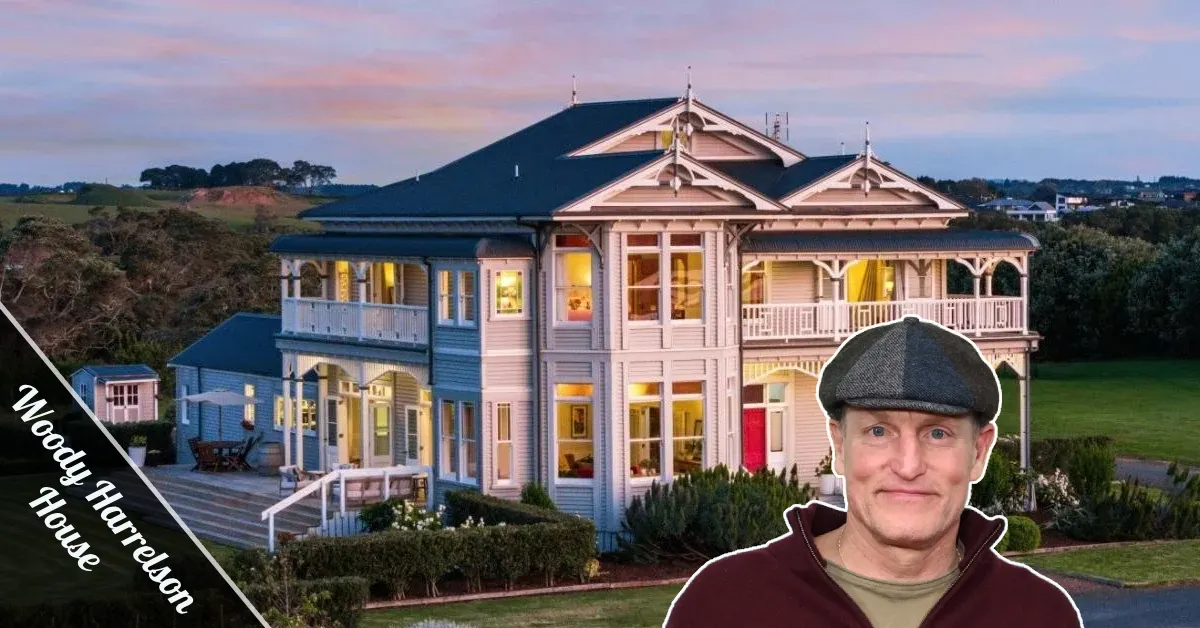
You know Woody Harrelson from Cheers, Zombieland, and those intense roles that stick with you. But his real-life plot twist? The dude traded Hollywood flash for solar panels and rainwater tanks. Woody Harrelson house isn’t your typical celebrity pad—it’s basically a masterclass in living light on the planet while still enjoying ocean views and organic kale.
Let’s tour the properties that built his $70 million net worth. From Beverly Hills glamour to Hawaii’s largest self-sustaining estate, Woody’s real estate game proves you can flex without wrecking the Earth. No mansion envy here—just smart design, killer locations, and a lifestyle most of us scroll past on Instagram.
The Beverly Hills Era: Where Luxury Got a Green Makeover
Woody bought his Beverly Hills spot in 1988 for $1.5 million—a Mediterranean stunner with terracotta roofing and white stucco walls. This wasn’t just about zip code clout. The 5,000-square-foot estate came with screening rooms, tennis courts, and wine cellars. Standard rich-guy stuff, until Woody started tinkering with solar panels and water-smart irrigation systems that actually worked.
By 2008, he’d installed one of Beverly Hills’ first celebrity-owned solar setups. It powered 60% of the home, which sounds modest now but was legit revolutionary back then. He swapped harsh pool chemicals for saltwater systems. Native California plants replaced thirsty lawns. Energy Star appliances, LED lighting—basically, he turned a classic mansion into an eco-lab without sacrificing the vibe.
When he sold it in 2017 for $11 million, that 633% appreciation wasn’t just location luck. Green upgrades added serious value. The Woody Harrelson house in Beverly Hills proved that sustainable doesn’t mean sacrifice—it means smarter investments that pay off when you cash out.
The estate’s design balanced Old Hollywood charm with modern consciousness. Floor-to-ceiling windows framed downtown LA and Pacific Ocean views. Interior spaces flowed naturally, blending stone and wood with minimal fuss. It wasn’t about showing off—it was about creating a home that respected both style and the environment around it.
Current Digs: The Maui Compound That Runs on Sunshine
Now let’s talk about Woody Harrelson house in Hawaii—the real showstopper. Perched above Hamoa Beach on 8.5 acres, this $13.5 million property is Hawaii’s largest completely off-grid residence. No utility bills. No grid dependence. Just solar arrays, rainwater systems, and enough self-sufficiency to survive a zombie apocalypse (fitting, given his filmography).
The main house features floor-to-ceiling windows capturing Pacific Ocean panoramas. Recent 2024 upgrades include an expanded solar array generating 120% of the property’s power needs—yes, it makes more energy than it uses. The rainwater system, enhanced in late 2023, stores up to 20,000 gallons. That’s enough to ride out Hawaii’s dry spells without breaking a sweat.
A high-tech greenhouse uses automated climate control powered entirely by solar. Woody grows rare Hawaiian plants alongside everyday veggies. The organic garden supplies 70% of household food—kale, tomatoes, tropical fruits, all thriving under that island sun. Walking paths made from local stone wind through native plantings that attract birds and helpful insects.
The outdoor vibe hits different here. Instead of chlorine pools, there’s a natural swimming pond using plants and beneficial bacteria to stay clean. Small fish live there—it’s basically a mini-ecosystem you can swim in. Solar-powered lanterns provide evening ambiance. Bamboo shade structures offer relief from midday heat. Everything works with nature, not against it.
Guesthouses dot the property for visitors who want privacy. Meditation zones let Woody practice the wellness habits he’s been into since the ’90s. An observation deck offers 180-degree coastline views—perfect for sunset watching or contemplating whether you should’ve bought Bitcoin earlier.
| Feature | Details |
|---|---|
| Property Size | 8.5 acres overlooking Hamoa Beach |
| Power System | Solar array producing 120% of energy needs |
| Water Supply | 20,000-gallon rainwater collection system |
| Food Production | Organic gardens supplying 70% of household produce |
| Swimming | Natural chemical-free pond with beneficial bacteria |
| Special Additions | High-tech greenhouse, observation deck, meditation zones |
Room-by-Room: Where Function Meets Island Flow
Step into Woody’s living room and you’ll immediately notice what’s not there—no flashy art, no designer furniture screaming for attention. Just bamboo pieces with natural fiber cushions, local Hawaiian art on the walls, and meditation cushions casually placed for those mindful moments. Family photos make it feel lived-in rather than staged for Architectural Digest.
The kitchen tells its plant-based story without preaching. Energy-saving appliances, bamboo cabinets sourced locally, and countertops made from recycled materials prove that eco-friendly can still look sharp. The space connects directly to an herb garden outside—grab fresh basil while your pasta water boils. Solar-powered appliances keep the carbon footprint tiny while delivering all the modern conveniences you’d expect.
His master bedroom keeps luxury understated. A handcrafted bed made from local sustainable wood, dressed in organic cotton linens. Large sliding glass doors open to a private lanai where Pacific breezes and wave sounds replace any alarm clock. A reading nook by the window holds well-worn books about environmentalism and meditation—actual books, not just decor.
The home office is modest but purposeful. Reclaimed wood furniture faces the garden. A standing desk overlooks the ocean—perfect for reading scripts or taking video calls. Film awards sit beside potted plants, and a meditation cushion occupies the corner. Work and wellness blend seamlessly here.
Bathrooms feature spa-like amenities without the waste. Low-flow fixtures conserve water. Natural light floods through strategically placed windows. Even the rugs use natural fibers, and bathroom tiles come from recycled glass. Every detail reinforces the same message: comfort doesn’t require excess.
The Green Tech Powering It All
Here’s where Woody Harrelson house gets technical without being boring. The solar system includes backup batteries storing energy for cloudy days. The design uses natural airflow to stay cool, eliminating constant AC needs. Thick walls made from natural materials provide insulation. Smart windows maximize natural light while minimizing heat gain.
Walls use local bamboo and wood certified by forest protection groups. All paints and finishes are non-toxic and plant-based, keeping indoor air clean. LED lights throughout run on stored solar energy. The rainwater capture system collects from the roof, filters it properly, and distributes it efficiently throughout the property.
The composting area turns kitchen scraps into rich soil for next season’s plants. Stone paths through the gardens use local materials that don’t need replacing. Native Hawaiian plants thrive without extra watering because they’re designed for this climate. It’s all interconnected—each system supports the others without wasting resources.
What makes this setup special isn’t just the green features. It’s how naturally they fit into daily life. You’re not constantly thinking about sustainability—you’re just living comfortably while the house handles the eco-heavy lifting behind the scenes.
The Real Estate Math: How Green Living Pays
Let’s talk numbers because they’re wild. Woody’s Beverly Hills purchase in 1988 for $1.5 million sold for $11 million in 2017. That’s 633% appreciation over 29 years. His Maui compound, bought for $8.5 million in 2011, is now valued at $13.5 million—a 59% increase in 13 years.
Environmental features drive these gains. The Maui solar system saves roughly $15,000 annually on energy costs. The rainwater collection cuts another $10,000 yearly. The organic garden producing 70% of household food? That’s thousands more in grocery savings. Over time, these “green expenses” become profit centers.
His total real estate portfolio sits around $25 million, contributing significantly to his $70 million net worth. Smart investments in properties that align with his values have paid off both financially and personally. The Beverly Hills sale alone netted nearly $10 million in profit.
Compare this to celebrities who buy, flip, and lose money on properties that don’t hold value. Woody’s approach—buying in prime locations, upgrading thoughtfully, holding long-term—demonstrates real estate intelligence. The sustainability angle isn’t just personal preference. It’s smart business.
| Property | Purchase Price | Sale/Current Value | Appreciation | Annual Savings |
|---|---|---|---|---|
| Beverly Hills Estate | $1.5M (1988) | $11M (2017) | 633% | N/A (sold) |
| Maui Compound | $8.5M (2011) | $13.5M (2024) | 59% | $25K (energy + water) |
Living the Values: Beyond Just Owning Property
The Woody Harrelson house story isn’t complete without mentioning how he uses these spaces. He hosts workshops on sustainable farming and plant-based living. Local schools use his property as a real-world classroom for teaching renewable energy and sustainable agriculture. His home became an education tool, not just a private retreat.
Raw vegan since 1987, Woody supports organic farmers and food producers across Hawaii. He helped establish organic food markets in Maui, benefiting the local community beyond his property lines. His business investments focus on environmental startups—renewable energy companies, sustainable material producers—creating jobs while supporting innovation.
Through interviews and occasional home tours, he shares his environmental message without being preachy. Other celebrities in Hawaii and California have launched similar eco-friendly projects after seeing what’s possible. His influence extends beyond the properties themselves—it’s reshaping how people think about luxury living.
The homes reflect a deliberate philosophy: wealth shouldn’t come at the planet’s expense. You can have ocean views, comfortable spaces, and modern conveniences while dramatically reducing your environmental impact. It’s about rethinking what luxury means in the first place.
What You Can Steal From Woody’s Playbook
You don’t need millions to apply these principles. Start with energy-efficient appliances—they’re everywhere now, and prices have dropped. Plant a small garden, even if it’s just herbs on a windowsill. Reduce water usage with low-flow fixtures that cost under $50 installed.
Consider solar options even for apartments—portable panels exist. Compost your kitchen scraps. Choose natural materials when you redecorate. These small steps compound over time, just like Woody’s gradual transformation of his Beverly Hills estate into an eco-showcase.
The lesson isn’t “live exactly like Woody Harrelson.” It’s “align your living space with your actual values.” If you care about the environment, your home should reflect that. If you value community, your space should welcome people in. Your house—whether owned or rented—is a daily expression of priorities.
Woody Harrelson house choices prove sustainable living isn’t about deprivation. It’s about thoughtful design, long-term thinking, and creating spaces that nourish you while respecting the planet. That’s a flex worth copying, even if your acreage is measured in square feet rather than acres.