

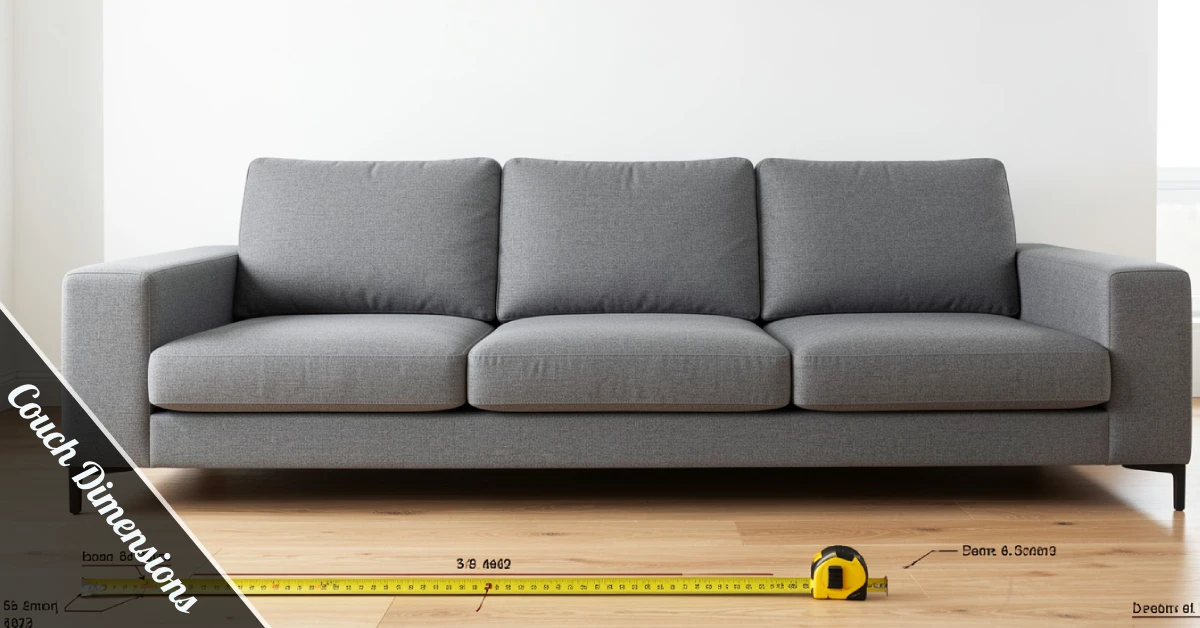
You’re scrolling through furniture sites at 2 a.m., dreaming of the perfect couch. That velvet sectional looks fire in the photo—but will it actually fit through your apartment door? Spoiler: couch dimensions aren’t just boring numbers on a spec sheet. They’re the difference between “dream setup” and “why won’t this thing fit?”
Here’s the deal: most people eyeball their living room, order a couch, and pray it works. That’s a gamble you don’t need to take. Understanding couch dimensions means you’ll nail the fit, dodge buyer’s remorse, and create a space that actually works for how you live—whether you’re binge-watching solo or hosting game night with the crew.
What Are Standard Couch Dimensions?
Standard couches typically measure 72 to 96 inches in length, 30 to 40 inches in depth, and 30 to 36 inches in height. These are your baseline numbers—the dimensions most manufacturers use for average three-seat sofas. But here’s the catch: “standard” doesn’t mean one-size-fits-all. Your living room’s layout, doorway width, and how you actually use your couch all matter more than sticking to cookie-cutter measurements.
Think of standard dimensions as your starting point, not your final answer. A 72-inch loveseat might be perfect for a studio apartment, while a 96-inch sectional dominates a spacious family room. The key is knowing what these numbers mean in your actual space—not just on paper.
| Couch Type | Length (inches) | Depth (inches) | Height (inches) |
|---|---|---|---|
| Loveseat | 48-72 | 30-36 | 30-36 |
| Standard 3-Seater | 72-96 | 35-40 | 30-36 |
| Sectional | 94-156 | 35-40 | 30-36 |
| Oversized 4-Seater | 96-120 | 36-42 | 30-36 |
Breaking Down Couch Length
Length is the first number everyone checks—it’s how much floor space your couch eats up. Most three-seaters run 72 to 84 inches, but that measurement includes armrests. The actual seating area? Usually shorter. If you’re trying to squeeze four people onto an 84-inch couch, expect some elbow-bumping action.
Pro tip: measure your entryways before you measure your room. That gorgeous 96-inch sectional won’t matter if it can’t make it past your hallway. Tip it sideways, remove the legs, take off the cushions—you’ve got options, but only if you plan.
Longer isn’t always better. A massive couch in a small room kills the vibe faster than outdated wallpaper. You want balance—enough seating without turning your living room into an obstacle course where guests shuffle sideways to reach the bathroom.
Understanding Couch Depth (aka Width)
Depth measures front-to-back: from the edge of your seat cushion to the couch’s back. Standard depth sits around 35 to 40 inches. Shallow couches (30 to 35 inches) work for upright sitting—think formal living rooms or compact spaces. Deep couches (40+ inches) are your Netflix-and-nap best friends, but they hog serious floor space.
Seat depth is where comfort lives. Too shallow, and you’ll feel like you’re perched on a bench. Too deep, and your feet dangle like a kid in a grown-up chair. The sweet spot? Around 20 to 24 inches of actual seat depth (not including the backrest).
Here’s what most people miss: depth affects how you move around your couch. A deep sectional might look luxurious, but if you can’t walk behind it without squeezing through, you’ve traded function for flex. Measure twice, regret never.
Couch Height Matters More Than You Think
Height typically ranges from 30 to 36 inches, including the backrest. This number impacts everything from room proportions to whether your grandma can stand up without help. Low-profile couches (under 32 inches) scream modern minimalist but might feel awkward if you’ve got bad knees or tall windows to balance.
Taller couches anchor a room visually—they’re like the friend who walks into a party and immediately sets the vibe. But stack a 36-inch couch against low coffee tables and short side tables, and suddenly everything feels off-kilter.
Don’t forget: couch height includes or excludes legs depending on the listing. Some legs screw off for easier moving (or to sneak through tight doorways). Always check if that height measurement is “total height” or “without legs.”
How to Measure Your Space for a Couch
Grab a tape measure and start with your room’s dimensions: wall to wall, corner to corner. Then measure every doorway, hallway, and staircase between your front door and the couch’s final destination. This isn’t overkill—it’s survival mode. One too-narrow hallway, and your couch becomes an expensive decoration for the building lobby.
Next, measure the exact spot where your couch will live. Leave at least 15 to 24 inches between your couch and coffee table so people can actually walk through without doing sideways shimmies. Mark the floor with painter’s tape to visualize the couch’s footprint—way more accurate than guessing.
Consider traffic flow: doorways, walkways, paths to the kitchen. Your couch shouldn’t turn your living room into an obstacle course. If you’re working with tight quarters, modular couches are your cheat code—they arrive in pieces you can assemble inside the room.
Choosing the Right Couch Size for Your Room
Small rooms (under 200 square feet) need loveseats or compact two-seaters. Anything bigger overwhelms the space and makes everything feel cramped. Medium rooms (200 to 400 square feet) handle standard three-seaters or small sectionals without breaking a sweat. Large rooms (400+ square feet)? Go big with oversized sofas or sprawling sectionals—they’ll anchor the space without looking lost.
Match your couch to your lifestyle, not just your room size. If you’re hosting weekly watch parties, prioritize seating over aesthetics. If your living room’s more “showpiece” than “hangout spot,” a sleek loveseat might be the move.
Room shape matters too. Long, narrow rooms suit standard linear couches. Square rooms? Sectionals create natural conversation zones without wasting corner space. L-shaped rooms are sectional territory—they define areas without needing walls.
Common Couch Measuring Mistakes to Avoid
Most people forget to measure doorways and hallways—then wonder why delivery drivers are shaking their heads. Measure height, width, and diagonal clearance for every entry point. If your couch arrives in one piece, it needs to fit through every single doorway along its route.
Another mistake: assuming your couch will fit because “it looks smaller in the store.” Showrooms are designed with massive ceilings and wide aisles. Your apartment? Not so much. Always check actual dimensions, not vibes.
Don’t forget about existing furniture. That couch might fit the room’s dimensions but clash with your oversized coffee table or wall-mounted TV height. Think about the whole setup, not just the couch in isolation. Everything works together—or it doesn’t.
Does Couch Height Include the Legs?
Usually, yes—but not always. Most manufacturers list “total height,” which includes legs, cushions, and backrests. Some listings separate “seat height” (just the cushion) from “total height.” Always double-check the product description or ask customer service before you commit.
Here’s why it matters: removable legs can save you during delivery. If your couch is 34 inches tall with legs but only 30 inches without, those four inches might be the difference between “fits through the door” and “call a handyman to remove your door frame.”
Pro move: measure your couch’s height with and without cushions. Some backrests detach, shaving off extra inches when you’re navigating tight corners. Modular couches are the ultimate hack—they ship in sections you assemble inside, bypassing doorway drama entirely.
FAQs
How long is the average couch?
Most three-seaters run 72 to 84 inches. Loveseats sit around 48 to 72 inches, while four-seaters push 90 to 120 inches.
How much space should I leave between my couch and coffee table?
Aim for 15 to 24 inches. Closer than 15 inches feels cramped; farther than 24 inches makes reaching for drinks annoying.
What’s the best couch depth for lounging?
Deep couches (40 to 45+ inches) are perfect for stretching out. Shallower options (30 to 35 inches) work better for upright sitting.
Final Word: Measure Twice, Buy Once
Couch dimensions aren’t just specs—they’re your blueprint for a living room that actually works. Measure your space, know your doorways, and match your couch size to how you live. Whether you’re squeezing a loveseat into a studio or anchoring a family room with an oversized sectional, the right dimensions make all the difference.
Skip the guesswork, trust the numbers, and you’ll land a couch that fits your space, your style, and your life. Now go make that living room work.