

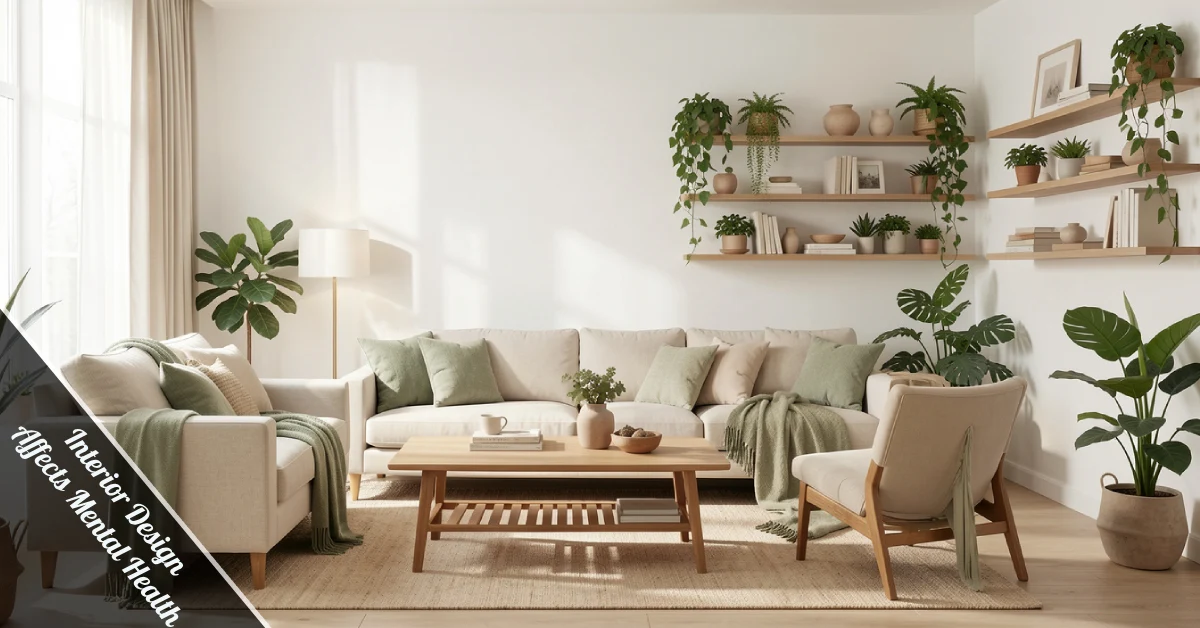
Think your apartment’s just walls and furniture? Think again. The way you design your space isn’t just about looking good on Instagram. It’s about how you feel when you walk through that door after a rough day. Here’s the thing: interior design affects mental health in ways most people don’t even realize. You spend about 90% of your time indoors, so your environment isn’t just background noise. It’s actively shaping your mood, stress levels, and overall mental clarity.
Your home should work for you, not against you. Whether you’re dealing with anxiety, burnout, or just need a mental reset, your interior choices matter more than that expensive therapy app subscription. Let’s break down how your space is either your best ally or your worst enemy.
Why Your Home’s Design Hits Different
Most people think interior design is surface-level stuff. Pretty colors, nice couch, done. But there’s actual science backing this up. Johns Hopkins University’s Brain Science Institute ran an exhibit in Milan that tracked people’s physiological responses as they walked through different room setups. The data showed how design choices trigger real biological reactions. Your brain isn’t passive when it encounters your living room. It’s constantly processing, reacting, and adjusting your mood based on what it sees.
Environmental psychology has been studying this for years. Ancient practices like Feng Shui and Vastu Shastra weren’t just cultural quirks. They recognized early on that spatial arrangement impacts how people feel. Modern neuroscience is now confirming what these traditions knew all along. Your cortisol levels, your focus, your ability to relax? All is influenced by how you’ve arranged your space.
Clutter Isn’t Just Messy, It’s Mental Chaos
Here’s a wild stat: researchers found that mothers’ stress responses to clutter matched cortisol levels seen in soldiers with PTSD. Yeah, that pile of laundry you’ve been ignoring? It’s doing more damage than you think. Clutter creates a constant low-level anxiety that drains your mental energy throughout the day.
The problem isn’t that you own stuff. It’s that your space doesn’t have systems to handle it. You can’t fight your lifestyle to fit some minimalist fantasy. Instead, design your home around how you actually live. Wall-mounted storage, hidden compartments, multi-purpose furniture. These aren’t just trendy solutions. They’re mental health tools disguised as design choices.
When your space is organized, your mind follows. You’re not constantly scanning for lost keys or wondering where you put that important document. Your brain gets to chill instead of running background stress programs all day.
Natural Light Is Your Secret Weapon
Sunlight isn’t just nice to have. It’s a mood lifter that directly impacts your serotonin levels. People working in spaces with more natural light report better focus, higher productivity, and lower anxiety. A persistent lack of sun can trigger seasonal depression or amplify existing mental health struggles.
You don’t need floor-to-ceiling windows to make this work. Strategic mirror placement bounces light into darker corners. Swap heavy drapes for sheer curtains that let brightness through while keeping privacy intact. If you’re stuck in a space with limited windows, position your desk or favorite reading spot near whatever natural light you do have.
Artificial lighting matters too. Harsh overhead fluorescents create tension. Warm, layered lighting from multiple sources mimics natural patterns and helps your brain relax. Think table lamps, floor lights, and dimmable options instead of one brutal ceiling fixture.
Color Psychology Isn’t Just Theory
Different colors trigger different emotional responses, and interior design affects mental health through strategic color choices more than most realize. Blues and greens create calm, which is why they work in bedrooms. Yellows and oranges energize spaces like kitchens or home offices. Neutral tones provide balance without overwhelming your senses.
This isn’t about painting every room a specific shade. It’s about understanding how color impacts your daily state of mind. If you’re dealing with anxiety, avoiding aggressive reds in spaces where you need to decompress makes sense. If you struggle with motivation, adding energizing accent colors to your workspace can help.
Your color scheme should reflect how you want to feel in each space. A bedroom designed for rest shouldn’t look like a nightclub. Your home office shouldn’t feel like a hospital waiting room. Match the vibe to the function, and your brain will thank you.
Spaciousness Creates Mental Breathing Room
Studies show people are more creative in rooms with higher ceilings. The sense of openness literally expands your thinking. You don’t need a mansion to achieve this. Smart furniture placement, minimal visual clutter, and open floor plans create the illusion of space even in smaller homes.
Furniture arrangement matters more than furniture quality. A well-organized studio apartment can feel more spacious than a cluttered three-bedroom house. Create clear pathways for movement. Avoid blocking natural light sources. Use vertical storage to keep floors open. These small choices add up to a space that feels breathable instead of suffocating.
According to Gestalt psychology, your brain constantly tries to simplify what it sees into recognizable patterns. When your space has visual cohesion, your mind processes it faster and more calmly. When everything’s chaotic and unrelated, your brain works overtime just to make sense of the environment. That mental effort drains you without you even noticing.
Balance Keeps Your Brain Happy
The most impactful design principle for mental well-being is balance. This doesn’t mean everything needs to match perfectly. It means your space should feel intentional, not random. When the balance is off, you feel uncomfortable even if you can’t pinpoint why.
Cohesion matters because it reduces cognitive load. Your brain doesn’t have to work as hard to process a well-designed room. Think about walking into a space that just feels right versus one that makes you uneasy. The difference often comes down to whether design elements work together or fight each other.
You achieve this through repeated textures, complementary colors, and furniture that shares a visual language. It’s not about buying everything from the same collection. It’s about creating subtle connections that tie the room together. When your environment feels unified, your mental state follows.
Biophilic Design Brings Nature Inside
Bringing natural elements indoors isn’t just trendy. It’s backed by research showing that exposure to nature reduces stress and improves focus. Biophilic design incorporates wood, stone, plants, and natural textures to create spaces that feel grounded and peaceful.
You don’t need a greenhouse in your living room. A few well-placed plants, wooden furniture, or stone accents can shift the entire energy of a space. Indoor plants improve air quality while giving your eyes something organic to focus on instead of screens and synthetic materials all day.
Natural materials create warmth that synthetic alternatives can’t match. A wooden table feels different than plastic. Stone countertops provide visual weight that laminate doesn’t. These aren’t just aesthetic preferences. They’re sensory experiences that influence how comfortable and relaxed you feel in your own home.
Your Space, Your Sanctuary
The connection between interior design and mental health isn’t some wellness trend that’ll fade next year. It’s environmental psychology backed by neuroscience and thousands of years of cultural wisdom. Your home impacts your mood, stress levels, and mental clarity every single day.
You don’t need a complete renovation or unlimited budget. Small, intentional changes create meaningful shifts. Add natural light where you can. Clear clutter with smart storage. Choose colors that match the mood you’re chasing. Bring nature inside. Create a balance that makes sense for how you actually live.


