

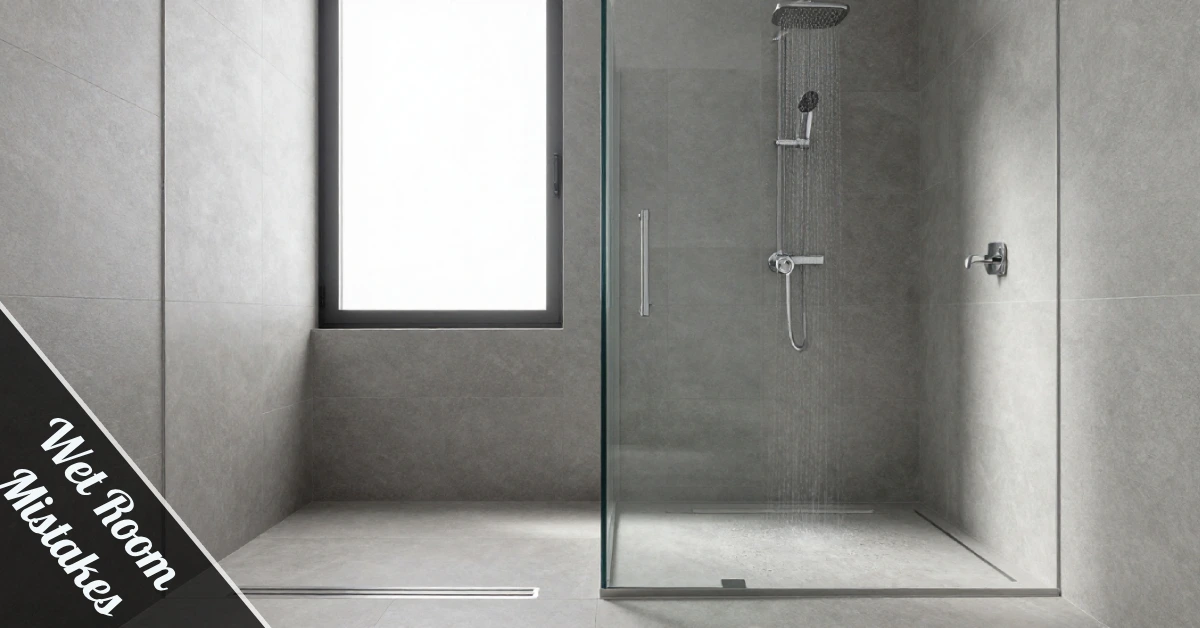
You’re ditching the shower tray. Smart move—wet rooms look clean, modern, and they’re perfect for resale value. But here’s the catch: they’re deceptively tricky to get right. One waterproofing shortcut or drainage miscalculation, and you’re looking at £5,000+ in repairs.
I’ve spent years writing about home renovations that go sideways. Wet rooms? They’re in a league of their own. The damage happens silently—hidden behind tiles, creeping through floors, rotting timber you didn’t know was vulnerable. Most homeowners don’t realize they’ve made a mistake until water’s already migrated to the room below.
This isn’t about scaring you off. It’s about showing you the seven wet room mistakes that cause 90% of failures—and how to sidestep them entirely. Let’s dive in.
1. Skipping Proper Waterproofing (The £10,000 Mistake)
Bathroom tiles aren’t waterproof. Read that again. They’re water-resistant, sure, but grout is porous. Water seeps through, and if there’s no tanking system underneath, you’re basically inviting a flood into your subfloor.
Tanking creates a watertight barrier beneath your tiles. You’ve got two options: liquid-applied membranes or sheet-based systems. Both work, but you need to apply them correctly—two coats minimum, with reinforcement tape at corners and joints. Skipping this step is the most common wet room mistake I see in homeowner forums.
Here’s where people mess up: they assume moisture-resistant plasterboard counts as waterproofing. It doesn’t. Even a “green board” absorbs moisture over time. What you need are cement-based backer boards or specialist tanking boards designed for constant water exposure.
Another rookie error? Mixing products from different manufacturers. That primer from B&Q, the membrane from Screwfix, and the sealant you grabbed on sale? They’re not designed to work together. Tanking systems are tested as complete kits—swap components, and your guarantee vanishes.
The tanking layer needs to extend beyond the obvious splash zone. Water doesn’t respect boundaries. If your waterproofing stops at the shower area, moisture will migrate sideways and downward, eventually causing wet room mistakes that ruin adjacent rooms.
2. Using the Wrong Substrate (Your Floor’s Foundation Matters)
Your tanking system is only as strong as what’s underneath it. If the substrate moves, flexes, or absorbs moisture, your waterproofing will crack. Timber joists need reinforcement. Standard spacing won’t cut it when you’re adding the weight of tiles, screed, and standing water.
Plasterboard doesn’t belong in wet rooms. Period. I don’t care if it’s labeled “moisture-resistant”—it’s not designed for direct water contact. Use cement backer boards or waterproof substrate panels instead. They’re rigid, stable, and won’t disintegrate when exposed to humidity.
The surface also needs to be clean, flat, and dry before tanking. Any dust, grease, or dampness will stop the membrane from bonding properly. This creates weak spots where water can penetrate—a classic wet room mistake that doesn’t show up until months later.
3. Botching the Floor Gradient (Puddles Are Red Flags)
Water needs to flow toward the drain. Sounds obvious, right? Yet incorrect gradients are one of the most frequent wet room mistakes. The slope should be gentle—typically 1:80 for most installations. Too steep, and your floor feels uncomfortable. Too flat, and water pools.
Getting this right manually requires great skill. That’s why pre-formed wet room trays exist. They come with the gradient built in, simplifying installation and reducing the risk of standing water. If you’re forming the gradient yourself using screed, hire someone who’s done it before. This isn’t a YouTube tutorial project.
Standing water doesn’t just look bad—it prevents the floor from drying properly. That constant dampness becomes a breeding ground for mold and damages grout over time. Fix the gradient during installation, or you’ll be ripping up tiles later.
4. Choosing the Wrong Drain (Size and Style Matter)
Linear drains look sleek. Central point drains are compact. Both work fine—until you pick one that can’t handle your shower’s flow rate. Modern rainfall showerheads deliver serious water volume. If your drain can’t keep up, water spreads faster than it escapes.
Drain positioning is equally critical. Placing it too close to a wall makes forming proper gradients impossible. The water can’t flow correctly, so it lingers in corners. That’s how you end up with damp patches that never dry—and eventually, leaks into rooms below.
Maintenance access is another overlooked detail. Hair and soap scum build up relentlessly. If your drain doesn’t have a removable trap or accessible gully, you’re setting yourself up for blockages. Choose a drain with easy-clean features, or you’ll regret it within six months.
5. Using Standard Adhesive and Grout (They’re Not Wet-Room-Friendly)
Standard cement-based adhesive and grout are porous. They absorb moisture, crack under movement, and discolor over time. In a constantly wet environment, they’re a disaster waiting to happen. You need flexible, waterproof adhesives and mold-resistant grout designed for wet zones.
Epoxy grout costs more and takes patience to apply. But it’s waterproof, stain-resistant, and inhospitable to mold. For a wet room, it’s worth the upgrade. Standard grout will look grimy within a year—no amount of scrubbing will fix that.
Internal corners, floor-to-wall junctions, and movement joints should never be grouted. Use flexible silicone sealant instead. It accommodates thermal expansion and contraction without cracking. Grout in these spots is one of the most preventable wet room mistakes.
6. Ignoring Ventilation (Moisture Kills Bathrooms)
Even a perfectly waterproofed wet room will fail without proper ventilation. Steam and humidity need somewhere to go. Without adequate extraction, moisture damages paint, ceilings, grout, and even the substrate over time.
A decent humidity-controlled extractor fan is non-negotiable. It should be sized correctly for your room’s volume and ducted directly outside—not into a loft space. Venting steam into your attic just relocates the problem and creates mold up there instead.
Underfloor heating helps, too. It gently warms the floor, speeding up evaporation and reducing drying time. Cold, wet rooms stay damp longer, which increases mold risk. If underfloor heating isn’t feasible, install a properly sized heated towel rail that actually delivers heat.
7. Picking the Wrong Tiles (Aesthetics vs. Functionality)
Natural stone looks stunning, but it’s porous. Without proper sealing, it absorbs water and stains. If you’re set on stone, budget for high-quality sealant and reapply it annually. Otherwise, porcelain is a smarter, lower-maintenance choice.
Slip resistance is critical. Highly polished tiles look sleek until someone falls. Check the slip rating—aim for R10 or higher for wet areas. Your Instagram-worthy aesthetic isn’t worth a hospital trip or a lawsuit if you’re a landlord.
Textured tiles trap dirt, soap scum, and mold. They’re harder to clean and look grubbier faster. Smooth, low-maintenance tiles with adequate grip are the sweet spot. Don’t sacrifice functionality for style—you’ll pay for it in cleaning time and replacement costs.
The Bottom Line: Hire a Specialist or Follow the System
Not every bathroom fitter understands wet rooms. Even experienced tradespeople mess them up if they skip the system-based approach. Ask potential installers about their wet room experience specifically. Request photos of completed projects and references you can contact.
Late changes during installation—adding pipe penetrations, relocating drains—compromise waterproofing integrity. Plan everything upfront. Coordinate plumbing, electrics, and tiling before tanking begins. Rushing decisions mid-project is how wet room mistakes multiply.
Maintenance matters, too. Wet rooms aren’t install-and-forget. Clean drains regularly, replace sealant when it degrades, and check grout lines annually. Catching small issues early prevents expensive disasters later.
Skip these seven mistakes, and your wet room will perform flawlessly for decades. Ignore them, and you’re gambling with water damage that’ll cost far more than doing it right the first time. Your call.


