

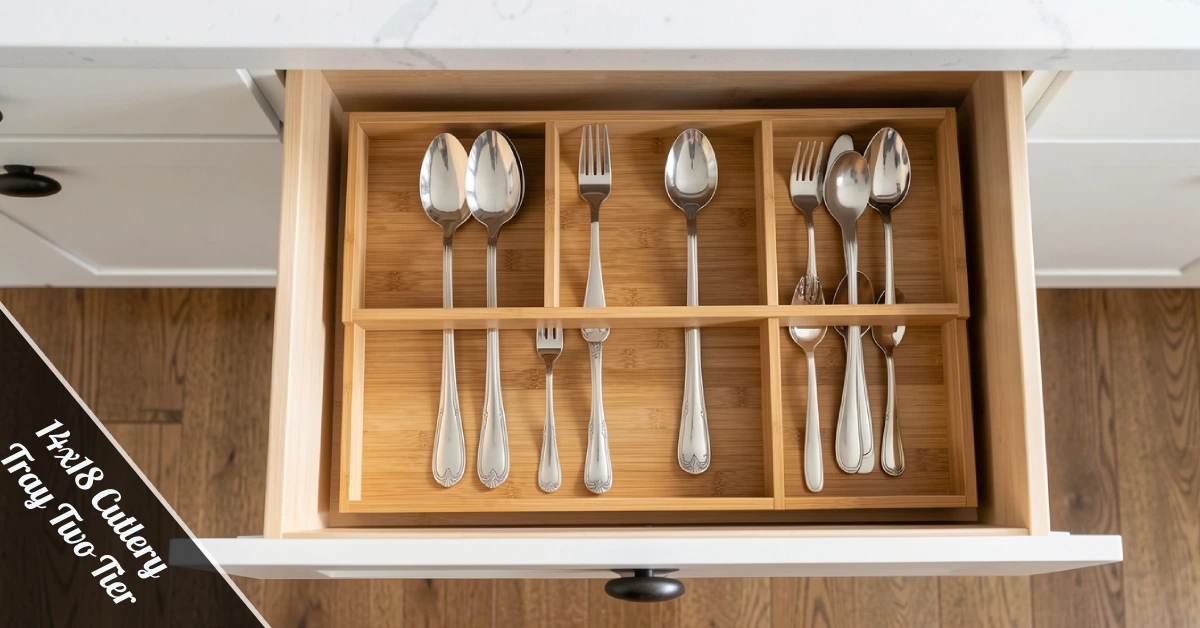
You open the kitchen drawer. Chaos. Forks stabbing spoons, a mystery sticky spot under everything, and the drawer won’t close right. Sound familiar? That drawer’s been quietly judging you — and honestly, it’s time to fix it.
Most messy drawers aren’t your fault. The setup just isn’t built right. A 14×18 cutlery tray two tier is the calm, no-drama fix that organizes everything without touching a single cabinet door.
Here’s everything you need to know — from measuring correctly to picking the right material — so your drawer stays clean long after the hype fades.
What Is a 14×18 Cutlery Tray Two Tier?
A 14×18 cutlery tray two tier is a drawer organizer with two stacked levels — a sliding top tray sitting above a deeper base layer below it.
The “14×18” refers to the approximate width and depth in inches. Most standard 18-inch base cabinets have an internal drawer width of around 14 to 14.5 inches, once drawer slides and side walls are properly accounted for.
The magic is vertical space. Instead of stacking a fork on top of a spoon, you place everyday cutlery on the upper tier and specialty items on the lower tier. One smooth slide gives you full access to both levels — no digging needed.
This simple design change makes your drawer feel bigger. It’s not a renovation. It’s a smarter setup that costs almost nothing compared to a full cabinet overhaul.
Measure First — The 60-Second Check That Prevents Returns
This is the step people skip. Then the tray arrives, jams the drawer, and the whole thing goes back in the box. Three measurements. That’s all it takes to avoid the headache.
Measure inside width from left wall to right wall — do it at two spots because some drawers aren’t perfectly square inside. Never trust the number printed on a cabinet label for this.
Measure inside depth from the back panel to the inside front edge. Cabinet labels refer to outside dimensions. Internal usable space is always smaller than whatever number is printed on the cabinet door or frame.
The third measurement — height clearance — is the real dealbreaker for any two-tier setup. Measure from the drawer bottom to whatever sits above it: the counter underside, drawer rail, or any hanging hardware underneath. Two-tier trays need at least 4.25 to 5 inches of clearance so the sliding top tier moves freely without jamming shut.
If your drawer already feels snug when closing, assume clearance is tight. Measure twice. Buy once. That simple rule saves time, money, and frustration every single time.
Fixed-Size vs. Expandable — Pick Your Player
Not all trays are built the same. Here’s a quick breakdown to help you find your match fast:
| Your Drawer Situation | Best Pick | Watch Out For |
| Drawer closely matches 14×18 | Fixed-size two-tier tray | Needs adequate height clearance |
| The drawer is wider than 14 inches | Expandable two-tier organizer | Rails collect crumbs over time |
| Mixed, odd-sized utensils | Adjustable divider system | Takes a few tries to dial in the layout |
| Knives are stored in the drawer | Tray with knife block section | Adds height — check clearance |
| Renting or want flexibility | Drop-in insert style | May shift if not snug fitting |
Fixed-size trays are the “set it and forget it” move. When your drawer closely matches 14×18 dimensions, the tray sits stably, feels built-in, and you never have to fiddle with it again. Clean. Simple. Reliable daily use.
Expandable organizers shine when your drawer runs slightly wider. Adjustable divider systems go further — letting you configure custom sections for chopsticks, steak knives, or bulky-handled flatware with zero frustration involved.
Pro cheat code: build your tray layout to match how you unload the dishwasher. If you naturally sort forks before spoons, your drawer should reflect that rhythm. Saves mental energy every single morning without thinking about it.
Key Features That Matter in Real Daily Use
A tray can look incredible in product photos. Daily kitchen use tells the real story. These three features separate the genuinely good from the forgettable options on the market.
Compartment layout is everything. Look for slots that actually fit your forks — not some imaginary slim-handled set from a catalog shoot. Check individual compartment dimensions in product listings, not just the overall tray size listed.
Slide mechanism quality makes or breaks the whole experience. The top tier should glide smoothly, not catch, scrape, or demand two hands to move it sideways. Cheap slides get sticky fast — always check reviews that specifically mention the sliding mechanism before buying anything online.
A knife block section is a worthwhile feature if you store knives in your drawer. Separated blade slots prevent dulling from friction and reduce the annoying clanging sound. Just remember: knife sections add height to the tray, so double-check your clearance measurement before committing to this specific feature.
Materials — What Holds Up vs. What Just Looks Good
Material choice affects cleaning ease, durability, and how the tray feels after six months of daily use. Here’s the breakdown without the sales pitch attached.
Bamboo is the warm, natural-looking option. It feels sturdy when well-made and looks upscale next to wood cabinetry. One catch: bamboo absorbs moisture, so dry your utensils before putting them away — especially if the drawer sits near the sink. Damp bamboo holds odors over time and becomes unpleasant.
Plastic is the practical workhorse of kitchen drawer organizers. Easy to wipe down, lightweight, and usually the most affordable option available. Good quality plastic has thick walls and a non-sticky surface that stays clean. For busy households with kids, plastic wins on pure daily convenience every single time without debate.
Solid wood — especially birch — brings a premium, high-end feel to any kitchen drawer. It pairs beautifully with traditional or renovated cabinetry. It’s heavier, costs more, and needs regular care. But for a permanent kitchen upgrade where aesthetics matter, the look is genuinely hard to beat with any other material.
Pick the material that matches your cleaning habits honestly. Quick wipe-and-go lifestyle? Go plastic every time. Want warmth and don’t mind a little regular upkeep? Bamboo is your move without question.
How to Set It Up So It Actually Stays Organized
Installing the tray takes five minutes. Setting it up the right way keeps it organized for months — no weekly resets or frustrating Sunday reorganization sessions needed.
Front of the drawer: daily-use cutlery goes here. Dinner forks, tablespoons, and butter knives belong closest to the front. These are your MVPs — keep them instantly reachable so grabbing them feels completely effortless every single day you cook.
Top tier: small, lighter items only. Teaspoons, dessert forks, and small spreaders belong here. Don’t overload it. The upper layer is built for lighter pieces — packing it with heavy utensils causes sagging and poor sliding over time, and ruins the system.
Back section: specialty and occasional pieces. Seafood forks, steak knives, chopsticks, or extra utensils you use a few times a year live back here. Out of the way but still completely reachable when you actually need them for a special dinner.
One flex zone — this is the real cheat code for long-term drawer organization. Leave one small section open for random items like straw brushes, corn holders, or tiny measuring spoons. Without a dedicated spot for odd pieces, they pile on top and quietly destroy your whole system over time without you noticing.
If kids use the kitchen regularly, move sharp knives to the back section or give them a dedicated knife block area. Safer drawer. Calmer mornings. Everyone genuinely wins with that setup change.
Drop-In Insert vs. Full Drawer Replacement System
Most people do best with a drop-in insert. It’s quick, renter-friendly, and completely swappable whenever you want a change without any tools needed at all.
Full replacement drawer systems are a different level entirely. These replace your existing drawer with a pre-assembled tiered unit and quality slides built right in. Ideal for permanent renovations or when the current drawer is damaged or poorly aligned inside the cabinet frame.
For renters, apartment dwellers, or anyone doing a single drawer upgrade, the drop-in approach wins every time without hesitation. For a full kitchen renovation where you want the drawer to feel truly built-in and premium, a replacement system delivers that result, worth the extra investment.
Cleaning and Maintenance — Keep It Fresh Without the Effort
Even clean kitchens collect crumbs and mystery stickiness in drawers over time. The trick is making cleanup fast enough that you actually follow through and do it regularly.
Once a week: quick shake-out or wipe inside the tray — takes thirty seconds flat. Once a month: pull the tray out completely, vacuum the drawer crumbs, and wipe everything down properly. For bamboo, use a damp cloth and dry it immediately after cleaning to prevent moisture absorption and odor buildup.
If the tray starts holding odors, it’s almost always trapped moisture or food residue underneath. A full, deep clean and complete air-dry fixes the problem every single time without needing any special products or cleaning tools to get the job done.
Common Buying Mistakes — And How to Dodge Them
Skipping the height clearance check is the number one mistake people make when buying any two-tier drawer organizer. Two levels need vertical space. If the top layer bumps the counter hardware, the drawer sticks every single time you try to close it.
Confusing cabinet size with internal drawer dimensions is a very close second mistake. An “18-inch cabinet” does not mean 18 inches of usable internal space inside the drawer box itself. Always measure the actual inside gap between drawer walls before buying anything.
Buying for looks over function is tempting when browsing product photos online late at night. A beautiful tray that doesn’t fit your real utensils — wide handles, bulky tools — will genuinely annoy you every single morning you open it.
Overloading the top tier is another easy and common mistake to make. The upper sliding layer is designed for lightweight, smaller items only. Packing it too heavily causes sagging and poor sliding — and slowly ruins the whole tiered system over time.
The Bottom Line
A chaotic drawer isn’t a character flaw. It’s a setup problem. The right 14×18 cutlery tray two tier turns that chaos into a drawer that works smoothly every day without a weekly reset or a personal pep talk to stay motivated about it.
Measure your inside width, depth, and clearance height before buying anything at all. Choose the material that fits your cleaning style — not just the one that looks best in a product photo on screen. Set it up with a daily-use front zone, a lightweight top tier, and one flex spot reserved for the random odd pieces.
That’s the whole system. No renovation. No expensive cabinet overhaul required at all. Just a smarter drawer that makes your kitchen genuinely easier to live in — and honestly, a little satisfying to open every single morning.
FAQs
Will a two-tier tray make my drawer stick?
It can — if you skip the clearance check before buying. Measure internal height and compare it to the tray’s height specs. That one step prevents almost every sticking issue people run into after installation at home.
What drawer height do I need for a two-tier tray?
Most two-tier designs need at least 4.25 to 5 inches of internal clearance. Check manufacturer specs and compare directly to your own measured clearance before adding anything to your cart.
Is bamboo more hygienic than plastic?
Both are hygienic when kept clean and dry. Bamboo needs more moisture attention daily. Plastic is easier to maintain for high-traffic, busy household daily use without much extra thought or effort needed.
Can I use it for utensils, not just cutlery?
Yes — but thick-handled tools or long utensils may need wider compartments or a separate utensil drawer for the best practical fit and daily function in a real kitchen setting.
Drop-in insert or full replacement drawer system — which is better?
Drop in for renters and quick upgrades every time. Replacement systems work best for permanent renovations or when your existing drawer is damaged, misaligned, or simply too old to function properly anymore.