

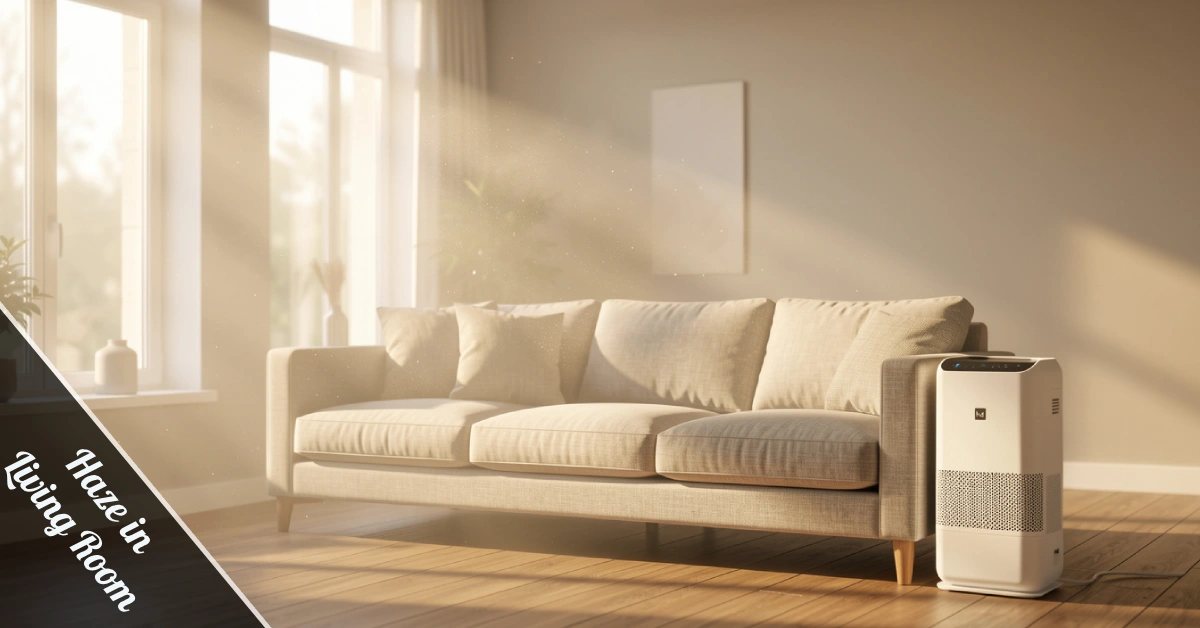
You’re chilling on the couch, sunlight cuts through — and something’s off. The air looks dull, almost cloudy. That’s haze in your living room, and it’s more common than you’d think.
Don’t sweat it. This isn’t some mystery. Once you know what’s causing that foggy vibe, fixing it is surprisingly straightforward. Let’s break it all down.
What Does ‘Haze in Living Room’ Actually Mean?
That blurry, milky look in your air? It’s usually tiny particles or moisture messing with how light travels through the room. No smoke alarm going off — just your air quality quietly waving a flag.
Here’s the sneaky part — haze can be totally odorless. You might not smell anything weird, but your eyes feel scratchy, and the room just looks… off. That’s your cue to investigate.
Think of it like this: if the haze hangs in the air and shows up in sunbeams, you’re dealing with particles or vapors. If it’s mainly on your windows, that’s condensation — a different beast entirely.
Quick Diagnosis Guide: Spot the Cause Fast
Not sure what type of haze you’re dealing with? This cheat code table maps what you see to what’s actually happening — and what fixes it.
| What You’re Seeing | Likely Cause | What Helps Most |
| Haze is visible in sunlight | Fine dust or particles | HEPA air purifier + deep cleaning |
| The room looks hazy in the morning | High overnight humidity | Ventilation + humidity control |
| White haze on furniture | Humidifier mineral dust | Distilled water + unit cleaning |
| The room looks smoky, but it’s not | Cooking oils or candle soot | Better kitchen ventilation |
| Haze worsens when the HVAC runs | Dirty filter or ducts | Filter upgrade + HVAC inspection |
Quick Safety Check — Do This First
Before you go full detective mode, do a calm 30-second safety sweep. Most haze is harmless, but a few signs need immediate action.
Get out and call for help if you notice a strong burning smell, melting plastic odor, dizziness, chest tightness, or your CO alarm going off. That’s not a DIY moment.
If it’s just a dull, hazy look with no scary symptoms? You’re good at troubleshooting. Deep breath — you’ve got this.
Why Does Your House Look Hazy Inside? The Real Culprits
Most cases of haze in living room spaces trace back to the same small lineup of suspects. Here’s who’s usually doing it.
1. Fine Dust and Airborne Particles
Dust isn’t just dirt — it’s a cocktail of skin cells, pet dander, fabric fibers, and outdoor pollen. Soft furnishings like rugs and couches are basically dust hotels.
Every time someone flops on the couch, particles launch back into the air. If your vacuum doesn’t have solid filtration, it’s actually making things worse by blowing fine dust right back out.
2. Cooking Fumes and Aerosols
An open kitchen next to your living room is basically a haze factory. High-heat cooking releases tiny oil droplets that scatter light and create that smoky-but-not-smoke effect.
Even when you can’t smell it, those microscopic aerosols are floating around, making the room look murky at certain angles.
3. Candles, Incense, and Outdoor Smoke
Candles and incense burn clean in theory — but in reality, they drop fine soot particles into your air. Fireplaces do the same, especially with a poorly opened damper.
Even a neighbor’s fire pit can sneak smoke indoors through pressure gaps. If haze is heaviest near a window or door, outdoor sources are likely the culprit.
4. High Humidity and Poor Ventilation
Waking up to a foggy-looking room? Overnight humidity is probably your guy. Closed-up homes trap moisture from breathing, plants, and laundry — making air look thick and heavy come morning.
Humidity also keeps airborne particles suspended longer, which means more visible haze for more of the day.
5. Mold and Mildew Spores
Mold doesn’t always look dramatic. Sometimes the only sign is a faint musty smell and haze that keeps coming back, no matter how much you clean. Check for past leaks and damp walls.
6. HVAC System Issues
Your heating and cooling system can be quietly recycling contaminated air all day. A clogged filter, dusty ducts, or a damp coil sends fine particles right back into the living room.
Dead giveaway: haze gets worse right after the system kicks on. That’s your HVAC basically confessing.
7. VOCs and Chemical Off-Gassing
Fresh paint, new furniture, cleaning sprays — they all release VOCs (volatile organic compounds). Some of these gases are odorless, creating an invisible chemical haze that you might only notice in certain light.
Why Is There a White Haze in My House?
White, powdery haze with a milky look? Classic sign of an ultrasonic humidifier running on tap water. The minerals in regular water get aerosolized and settle on surfaces as fine white dust.
Switch to distilled water and clean your humidifier regularly — that white film on your dark furniture should disappear within days.
How to Diagnose the Haze in Your Living Room
You don’t need fancy gear to figure this out. Three simple tests do most of the heavy lifting.
The Flashlight Test
Kill the main lights and shine a flashlight at eye level across the room. Sparkly floating particles mean airborne particulate. A uniform cloud-like look points to humidity or vapors.
The Timing Test
Ask yourself: when is it worst? Morning haze points to overnight humidity. Post-cooking haze points to aerosols. Haze after the AC kicks on points to HVAC filtration issues.
The Location Test
Walk the room and see where the haze is thickest. Near vents means airflow issues. Near windows means outdoor infiltration. Near rugs and couches means resuspended dust. That’s your starting point.
If you want a real data point, grab a hygrometer — a cheap gadget that reads indoor humidity. Anything above 60% RH, and your haze problem will keep coming back until moisture is controlled.
How to Clear Haze in the Living Room: Fixes That Actually Work
Here’s the play: combine ventilation, filtration, and source control. Do them in that order, and most homes clear up fast.
Step 1: Improve Ventilation
Fresh outdoor air helps — but only when outdoor air is cleaner than inside. Skip windows if there’s construction, traffic, or wildfire smoke nearby. Instead, open up for short bursts on clean-air days.
Run bathroom and kitchen exhaust fans during cooking and showers. These two habits alone cut a lot of the moisture and aerosol load that feeds indoor haze.
Step 2: Use a HEPA Air Purifier
A true HEPA air purifier is the MVP for fine particles — dust, pollen, pet dander, and smoke residue. Place it where air moves freely, not tucked behind a bookshelf collecting dust itself.
Pair it with an upgraded HVAC filter (MERV 8 or higher) to catch what the purifier misses at the source. Just make sure your HVAC can handle the upgrade without restricting airflow.
Step 3: Deep Clean the Right Way
Vacuum with a sealed, filtered machine — not an old one that blows dust back out. Use microfiber cloths for dusting instead of dry feather dusters that just relocate particles.
- Vacuum rugs and soft furniture surfaces regularly
- Wipe down ceiling fan blades and return vents
- Wash throw blankets and cushion covers often
- Clean behind the TV and electronics, where dust hides
Step 4: Control Indoor Humidity
Keep indoor relative humidity between 40–55%. Run the range hood while cooking, ventilate after showers, and avoid drying laundry indoors without airflow.
If the room feels muggy, a dehumidifier during the summer months is your cheat code. When humidity drops, the air clears — and it stays that way without any fragrance tricks.
Health Effects: When Haze in Your Living Room Starts Affecting You
A slightly hazy room isn’t automatically dangerous — but it can wear on you, especially if you have allergies, asthma, or sensitive sinuses. Here’s what to watch for.
| Symptom | What It Could Mean |
| Dry or itchy eyes | Airborne particles or VOCs |
| Morning headaches | Poor overnight ventilation |
| Sneezing or coughing | Dust, mold spores, or pollen |
| Fatigue in the room | High humidity or CO2 buildup |
| Symptoms ease outdoors | Indoor air quality issue confirmed |
If symptoms ease when you leave the house for a few hours, that’s your living room air quality raising its hand. Better filtration and humidity control typically fix comfort issues fast.
When Haze Is a Mold or Moisture Warning Sign
Most haze is manageable — but moisture deserves serious attention. When damp spots are involved, what’s growing there can become part of your indoor air.
Watch for: musty smells that linger, paint bubbling or staining, condensation returning daily to the same surfaces, or haze that’s worse after rain or running the AC.
Don’t mask moisture issues with air fresheners. That just delays the real fix and often makes things worse. Find the source, dry it out, and repair it properly.
HVAC Clues That Keep the Haze Coming Back
This is where most guides drop the ball — and it’s exactly where homeowners stay stuck in a loop.
Look for dust lines forming around supply vents or returns, a filter that loads up faster than usual, or a musty smell every time the system first kicks on. That’s your HVAC having a moment.
A clogged condensate drain is another sneaky culprit. If moisture can’t exit the system properly, humidity cycles back in — and the haze keeps returning no matter how much you clean.
Prevention Plan: Keep It Clear Week After Week
You don’t need a complicated routine. You just need consistent habits that stop the buildup before it starts.
Weekly Habits
- Vacuum floors, rugs, and soft furniture with filtered equipment
- Wipe down fan blades, vents, and electronics with a microfiber
- Run the range hood every single time you cook
- Check for any condensation behind furniture on exterior walls
Seasonal Habits
- Replace HVAC filters on schedule — don’t wait for visible buildup
- Clean and check your humidifier; switch to distilled water if needed
- Inspect bathroom and kitchen exhaust fans for actual airflow
- On bad outdoor air days, keep windows shut and rely on filtration
When to Call a Professional
Most haze problems are DIY-fixable. But some situations call in the pros — and recognizing those moments saves you time and money.
Call someone in if the haze returns within a day or two after cleaning, you see signs of water damage or suspect mold behind walls, or HVAC operation clearly makes things worse.
A good professional focuses on evidence — not guesswork or upsells. They’ll look at moisture conditions, filtration, airflow, and particle sources before making any calls.
FAQs
Why does my living room look hazy?
Most often, it’s fine dust, cooking aerosols, humidity, or air circulation issues making particles visible in natural or artificial light.
What would cause a haze in my house?
Common causes include poor ventilation, dirty HVAC filters, high humidity, ultrasonic humidifiers, mold spores, candle soot, or VOCs from cleaning products and furniture.
Is odorless haze in the house dangerous?
Not always — it’s often humidity or dust-related. But if it lingers or causes symptoms, identify it and fix it rather than letting it slide.
How to tell if indoor air is making you sick?
Watch for irritated eyes, headaches, sinus pressure, or fatigue that eases when you leave home. Those are real signals that your air quality needs attention.
The Bottom Line
Seeing haze in your living room? You’re not stuck with it. In most homes, it comes from a short list: fine particles, humidity, combustion byproducts, chemical off-gassing, or a recycling HVAC system.
The move is simple: observe first, then act in layers. Figure out when it appears, where it’s heaviest, and what triggers it. From there, ventilate smart, filter hard, clean properly, and control humidity.
If it keeps coming back despite all that, don’t keep guessing solo. That’s the signal for a hidden moisture issue or an HVAC problem that needs a professional eye. Handle the root cause, and your living room stays clear, bright, and actually good to breathe in.