

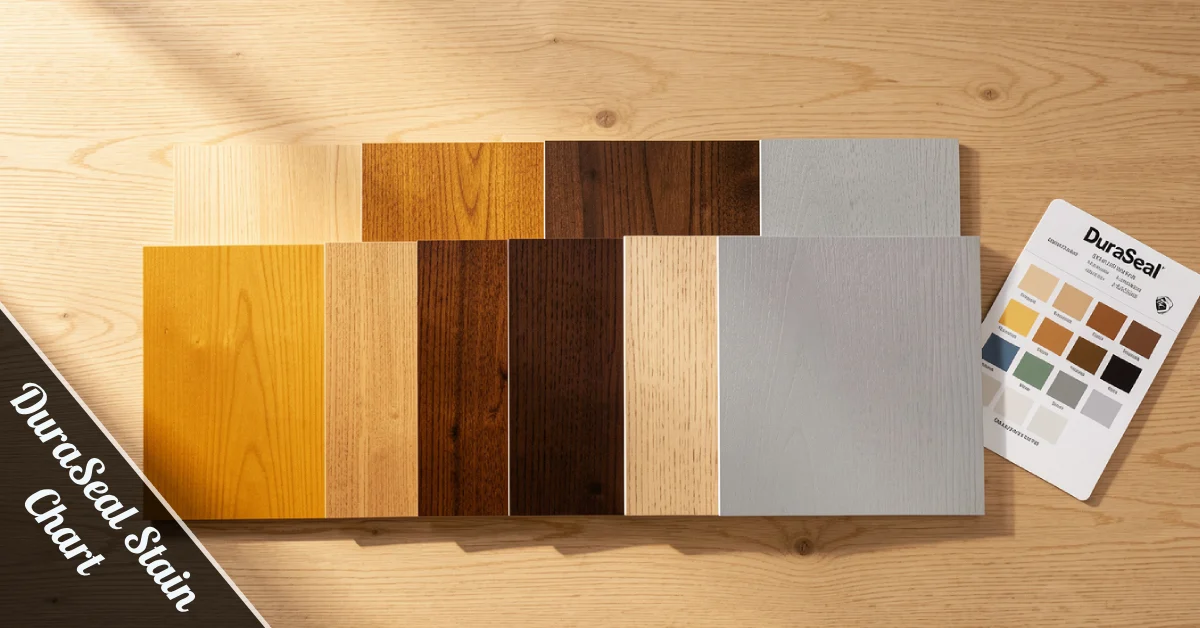
You’re staring at stain samples, and your brain’s doing backflips. That color looked perfect online — but now it’s pulling orange on your floor.
The DuraSeal Stain Chart is your starting line, not the finish line. It’s a cheat code for narrowing down 36+ colors fast — but it can’t promise what your floor will actually look like.
This guide breaks it all down: color families, red oak vs. white oak results, lighting tricks, and how to test like a flooring pro so you don’t end up with a floor you hate.
What the DuraSeal Stain Chart Actually Shows
Think of the chart as a map. It shows you direction — light vs. dark, warm vs. cool. That’s genuinely useful.
But a chart on screen can’t control your wood species, your sanding technique, or your living room lighting. Those three things quietly change the color of every stain more than most people expect.
Here’s the real talk: your wall paint, rugs, and furniture bounce color back onto the floor, too. Green-gray walls? Cool LED bulbs? That ‘perfect gray’ stain might suddenly look like it has green undertones. Use the chart to shortlist — never to finalize.
DuraSeal Stain Color Families: Pick Your Vibe Fast
DuraSeal groups its colors into design-friendly palettes — classic wood tones, modern grays, warm browns, and deep, dramatic darks. You don’t need to memorize them. Just match your home style.
Classic Wood Tones (The Safe Bet)
These are the ‘never go out of style’ picks. Provincial (111), Golden Oak (112), and Early American (130) are crowd favorites. They hide dust well, work in almost any lighting, and hold strong resale value.
Deep & Dramatic (Bold Move Energy)
Dark Walnut (171), Ebony (131), Espresso (173), and True Black (199) are all flex-worthy. They make a serious style statement but show every footprint and pet hair. If you’ve got kids or dogs, sample these extra carefully before committing.
Modern Gray & Neutral (The Designer’s Playground)
Classic Gray (172), Weathered Oak (170), and Silvered Gray (181) are having a cultural moment. They pair beautifully with minimalist décor and modern furniture. The tricky part? Gray stains interact differently on every wood species, so testing is non-negotiable here.
Quick reference for the most popular picks:
| Color Name | Number | Style | Vibe |
| Golden Oak | 112 | Classic Wood | Warm, honey natural |
| Provincial | 111 | Classic Wood | Balanced medium brown |
| Early American | 130 | Classic Wood | Rich traditional brown |
| Dark Walnut | 171 | Deep & Dark | Bold deep brown |
| Ebony | 131 | Deep & Dark | Dramatic near-black |
| Classic Gray | 172 | Modern Neutral | Soft cool gray |
| Weathered Oak | 170 | Modern Neutral | Light weathered gray |
| English Chestnut | 133 | Warm Brown | Rich reddish warmth |
DuraSeal Stain Chart on Red Oak vs. White Oak: The Difference Is Real
This is where most ‘chart disappointment’ comes from. Same stain name. Totally different results. Because wood species change everything.
Red Oak: Warmer, Bolder, More Grain
Red oak has a naturally warm base and strong grain movement. Stains on red oak tend to read slightly richer, more golden, and occasionally orange-ish if you pick the wrong tone. More ‘movement’ in the grain — beautiful in traditional spaces, sometimes busy in open-plan modern rooms.
White Oak: Cleaner, Cooler, More Predictable
White oak is the cleaner canvas. Stains land cooler and more even — which is why it’s the go-to for modern and Scandinavian-style interiors. Gray stains look cleaner gray on white oak. On red oak? That same gray might pull brown or slightly green.
| Feature | Red Oak | White Oak |
| Natural Tone | Warm, slightly reddish | Cool, neutral |
| Grain Pattern | Strong, open grain | Tighter, smoother |
| Stain Appearance | Colors read warmer | Colors read cooler |
| Gray Stain Results | May pull brown/orange | Looks clean gray |
| Best For | Traditional, rustic homes | Modern, minimal interiors |
How to Test Stains So Your Chart Matches Your Floor
If you take one thing from this guide, let it be this: the DuraSeal Stain Chart is for shortlisting. Real samples are for deciding.
Sand a test area (or grab a scrap board from the same batch of wood). Apply your stain the same way the floor will be done. Let it dry completely — judging a wet stain is like judging paint color while it’s still dripping.
Then do this: look at your sample in morning light, afternoon light, and at night with your actual bulbs. Stains shift more than you’d think between daylight and warm LED glow. If it looks good in all conditions? You’ve got your color.
- Use a sample board from the same species and sanding grit as your actual floor
- Let the stain dry fully before judging — a wet stain always looks darker
- Check samples morning, afternoon, and evening under your real lighting
- Keep samples bigger than you think — tiny swatches lie
- Remember: the topcoat changes the look, too, adding depth or sheen
DuraSeal Stain Chart PDF vs. Fan Deck: Which One to Trust
The DuraSeal Stain Chart PDF is perfect for shortlisting. Save it, screenshot it, share it with your contractor. But your phone screen and your laptop show the same color differently — so it’s a starting point only.
A physical fan deck from your flooring supply store is the closest thing to real life — especially when you can take it home and hold it under your room’s lighting. Worth asking for before you spend money on the wrong stain.
Stain Undertones: The Hidden Color That Trips Everyone Up
Undertones are the ‘secret color’ hiding inside every stain. They only show up once the stain dries in your specific room’s light.
Warm undertones read honey, amber, or slightly red. Cool undertones lean gray, taupe, or — in some rooms — a hint of blue. Neutral undertones try to split the difference.
The sneaky one? Green undertones. They appear when the stain’s pigment reacts with the wood’s natural tone AND your cool-white lighting. To avoid it: test next to a white piece of paper so the true undertone reveals itself before you commit.
Common Stain Problems and How to Fix Them
Floor Looks Too Orange
Classic red oak + warm stain combo. Try a more neutral or cooler tone in the same depth range. Testing on an actual sample first would have caught this — now you know for next time.
Stain Looks Gray and Flat
Cool stains in low-natural-light rooms can feel lifeless. A medium brown or warmer neutral usually brings the floor back to life.
Blotchy or Uneven Absorption
This is almost always a sanding problem. Inconsistent grit, leftover finish, or rush-sanding before staining causes uneven absorption. Consistent prep is the fix — not more coats of stain.
Where to Buy DuraSeal Stain
Your best bet is a dedicated flooring supply store — not a big-box hardware chain. You’ll get better guidance, consistent inventory, and often access to fan decks and sample boards. Search ‘hardwood refinishing supplies’ or ‘contractor flooring store’ near you for the best results.
Quick tip: ask whether your region has VOC restrictions before ordering a large quantity. Some states limit certain stain formulations, so confirm before you buy.
The Bottom Line on the DuraSeal Stain Chart
The DuraSeal Stain Chart is one of the best tools in the hardwood floor game — but only if you use it right. Shortlist with the chart. Confirm with real samples. Test in your actual lighting.
Classic browns are forgiving and timeless. Modern grays are sharp but species-sensitive. Dark stains are dramatic but high-maintenance. And that neutral tone you almost skipped? It might just be your floor’s secret weapon.
Pick the color that looks good at 9 am and still holds up at 9 pm. That’s the one you’ll love living with for years — not just the one that looked good on a screen.
Frequently Asked Questions
How many colors are in the DuraSeal Stain Chart?
The chart includes 36 standard stain colors, ranging from light natural tones to deep, dramatic finishes.
Do DuraSeal stains look different on red oak vs. white oak?
Yes — significantly. Red oak pulls colors warmer and richer. White oak keeps things cooler and more balanced. Always test on your actual floor species.
What are the most popular DuraSeal stain colors?
Provincial, Early American, Dark Walnut, Classic Gray, and Weathered Oak consistently top the list because they work across different styles and lighting conditions.
Can DuraSeal stains be mixed for custom colors?
Yes. Professionals often blend stains — Provincial + Special Walnut for a warm medium brown, or Weathered Oak + Classic Gray for a balanced modern finish. Always test the blend first.
Is DuraSeal owned by Sherwin-Williams?
Yes. DuraSeal is a wood finishing brand under the Sherwin-Williams umbrella, commonly used by professional flooring contractors.