

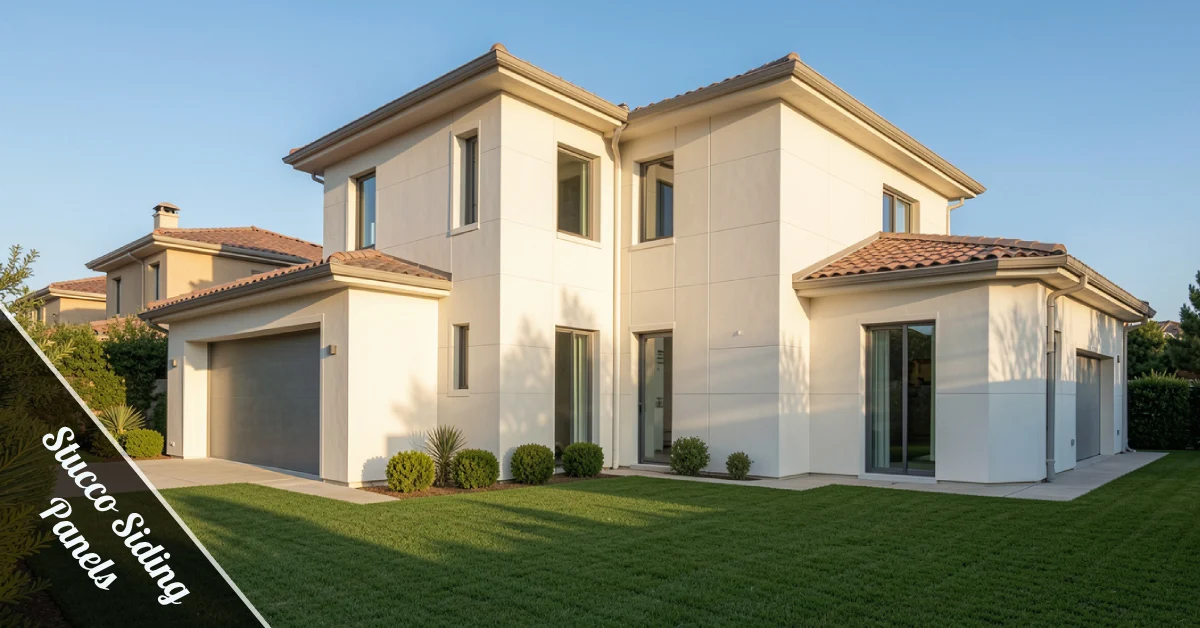
Your home’s exterior does the talking. And stucco siding panels? They’ve got a lot to say — in all the right ways.
Whether you’re upgrading a tired exterior or building from scratch, stucco remains one of the most versatile, durable, and timeless cladding choices on the market today.
This guide breaks down everything a homeowner, builder, or renovator needs to know — from material types and installation basics to real costs and long-term maintenance — so you can make a confident decision.
What Are Stucco Siding Panels?
Stucco siding panels are exterior wall cladding systems made from a mixture of cement, sand, lime, and water. Traditionally applied in three coats over a wire or wood lath base, they create a hard, textured surface that wraps your home in both style and protection.
Modern panels come pre-made in fiber cement or polymer versions — same stucco look, much easier installation. No mixing on-site, no waiting for coats to cure.
Think of them as the classic look your neighbors admire, minus the old-school headaches.
Types of Stucco Siding: Which One’s Right for You?
Not all stucco is created equal. Here are the four main types you’ll encounter when shopping for the right exterior cladding for your home or project.
1. Traditional Three-Coat Stucco
The OG. Applied in three layers — scratch coat, brown coat, and finish coat — over a metal lath. It’s incredibly durable and fully customizable in texture, but it needs skilled labor and specific weather conditions during application.
2. One-Coat Stucco
A faster alternative that combines the scratch and brown coats into a single layer, significantly reducing installation time without sacrificing too much strength.
3. Fiber Cement Stucco Panels
Fiber cement panels mimic the stucco finish but arrive ready to install, pre-primed, and pre-colored. Brands like Nichiha have turned this into an art — 15-year warranties and zero mixing required.
4. Exterior Insulation Finish System (EIFS)
Often called synthetic stucco, EIFS adds a foam insulation board beneath a polymer finish coat, giving you energy efficiency on top of aesthetics. It’s a popular pick for commercial buildings and energy-conscious homeowners alike.
Key Benefits That Make Stucco Worth It
Let’s be real — you’re not just buying siding. You’re investing in the face of your home. Here’s why stucco wins.
| Benefit | What It Means | Rating | Best For |
| Durability | Resists wind, heat, and UV — can last 50+ years with proper care | ★★★★★ | All climates |
| Fire Resistance | Cement composition gives it a natural Class A fire rating | ★★★★★ | Wildfire zones |
| Energy Efficiency | Acts as natural insulation — keeps interiors cooler in summer, warmer in winter | ★★★★☆ | Hot & cold climates |
| Aesthetic Range | Smooth, rough, swirled, sand — unlimited texture and color choices | ★★★★★ | Any style home |
| Low Maintenance | Inspect annually, seal cracks promptly — that’s basically it | ★★★★☆ | Busy homeowners |
That fire resistance perk? It could even lower your homeowner’s insurance premium — ask your provider.
Stucco Siding Cost: What to Budget
Cost is where many buyers get caught off guard. Traditional stucco runs anywhere from $6 to $12 per square foot installed, depending on the number of coats, labor rates in your area, and the texture finish you choose. That’s for a skilled crew doing it right.
Fiber cement stucco-style panels tend to come in slightly cheaper on labor because installation is faster — think $5 to $9 per square foot installed, with less weather-related downtime on the job.
EIFS panels sit in a similar range but add value through built-in insulation, making them cost-effective long-term.
Stucco isn’t the cheapest option upfront — but it rarely needs replacing.
Installation: DIY Dream or Pro-Only Territory?
Here’s the straight talk — traditional stucco application is not a weekend warrior project. It requires precise mixing ratios, knowledge of curing times, weather windows, and layering techniques that take years to master. Get it wrong, and you’re looking at cracks within months.
Fiber cement and EIFS panels? More forgiving. Experienced DIYers can handle panel installation with the right tools, prep, and patience — saving on labor costs.
Regardless of which type you choose, always prep your walls properly: check for moisture issues, ensure your lath or sheathing is secure, and use the right primers before applying any stucco-style product.
One thing nobody tells you: the cleanup on traditional stucco jobs can be brutal. Mortar mixed on-site means residue on everything nearby. Budget time for cleanup, or factor it into your contractor quote upfront — it matters more than you think.
Stucco Textures and Styles: Find Your Look
The design options are honestly one of stucco’s biggest flex points. Let’s run through them.
Smooth stucco suits modern, minimalist homes perfectly. Rough or dash textures lean traditional and hide minor surface imperfections naturally. Swirled and skip-trowel finishes add character, working well on Spanish Colonial and Mediterranean-style architecture.
Pea gravel and sand finishes bring a more natural, earthy texture — great for homes blending with landscaped surroundings or rustic neighborhood aesthetics.
Color-wise, stucco can be tinted to virtually any shade. Earthy neutrals dominate, but bold statement colors are absolutely on the table.
Maintenance Tips to Keep Your Stucco Looking Sharp
Good news — properly installed stucco siding panels don’t demand much from you year-to-year. A quick visual scan every spring, sealing any hairline cracks before they invite moisture, and a gentle power-wash every couple of years is really all the upkeep most homes need.
Watch for bubbling, discoloration, or dark water stains after heavy rain — those are signs that moisture has found a way in. Catch it early, and a simple sealant does the job; leave it too long, and you’re into repair territory.
Traditional stucco may need repainting every five to six years to maintain vibrancy, while pre-colored fiber cement panels hold their finish considerably longer, often going a decade without touching up.
Traditional vs. Modern Stucco Siding Panels: A Quick Comparison
Both options deliver the timeless stucco aesthetic, but the experience of owning and installing them is quite different. Here’s a side-by-side look to help you decide which approach fits your project, timeline, and budget best.
| Factor | Traditional Stucco | Fiber Cement / EIFS |
| Installation | Complex, 3-coat process — pro only | Panel system — faster, DIY-friendly |
| Weather Dependency | High rain/heat delays curing | Low — panels install in most conditions |
| Labor Cost | $6–$12/sq ft installed | $5–$9/sq ft installed |
| Maintenance | Moderate — cracks, repainting cycle | Low — pre-colored, moisture-resistant |
| Warranty | ~7 years typical | Up to 15 years (e.g. Nichiha) |
| Best For | Custom builds, authentic finish | Renovations, speed-critical projects |
Final Verdict: Is Stucco Siding Worth It?
Short answer? Absolutely — if you want an exterior that ages well, looks premium, and doesn’t demand constant attention, stucco delivers on every front.
Whether you go with a traditional hand-applied finish for that authentic texture or modern fiber cement stucco siding panels for speed and ease, the result is a home exterior that genuinely stands out.
The cheat code here is simple: invest in quality materials and don’t skip professional installation.
Your home is likely your biggest financial asset. The exterior is its first impression — make it count with stucco.