

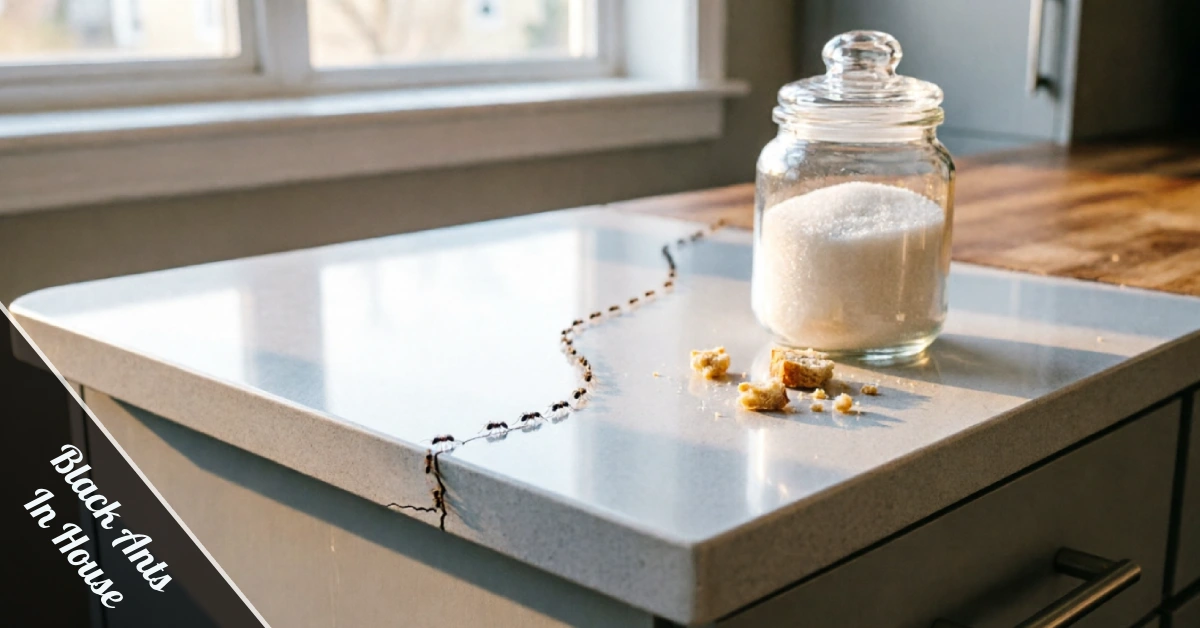
You walk into your kitchen, flip on the light, and there they are — a tiny parade of black ants in house mode, marching like they own the place. Annoying? Yes. Surprising? Not really.
Ants don’t show up randomly. They follow scent trails left by scout ants who’ve already found something worth reporting back. Food, water, shelter — your home checks at least one of those boxes, and that’s all they need.
This guide breaks down why they keep showing up, how to identify which type you’re dealing with, and the best ways to get rid of black ants in house for good — not just for today.
Why Black Ants Keep Getting Into Your Home
Black ants are wired to scout. One ant finds a crumb, leaves a chemical trail, and suddenly you’ve got a full crew. Even a tiny food residue can trigger this cycle fast.
Kitchens are their first stop — grease near the stove, sugar on the counter, a sticky spill you missed. But bathrooms are a close second. Moisture from leaking pipes or condensation gives ants the water source they need to survive.
Outdoors, ants are often drawn to honeydew — the sugary secretion produced by aphids on garden plants. Heavy aphid activity near your foundation increases the chances of wandering scouts finding a way inside, which is why trimming back vegetation matters.
Seasonal shifts matter too. Warmer months mean more activity and more colonies looking for new territory. Colder months push them indoors for warmth. That’s why black ants in house often spike without warning.
The sneaky part? Even a clean home can attract them. If you’ve got hidden moisture in the walls or a small gap near a window frame, that’s enough of an invitation.
Types of Black Ants Found Indoors
Not all black ants are the same, and the type you’re dealing with changes how you should handle them. Identifying them first saves you time and money.
Tiny Black Ants
These are the most common — often the species Monomorium minimum. Around 1.5 to 2 mm in size, they move in long single-file lines. They’re mostly harmless but will contaminate food fast. They usually nest outside and enter your home only for resources. Keep in mind that a single colony may have multiple queens, which is why baiting must be persistent to reach every reproductive individual.
Big Black Ants (Carpenter Ants)
These are a different story. Carpenter ants — belonging to the Camponotus genus — can reach up to 13 mm and don’t just want your food: they tunnel through wood to build nests. If you see big black ants in walls, floors, or ceilings, take it seriously.
Seeing sawdust-like debris near wooden structures is a red flag. That material, called frass, means carpenter ants are already nesting inside. Beyond visible frass, tapping on suspect wood and listening for a hollow sound — or hearing faint rustling within walls after dark — can help confirm their presence. They often establish satellite colonies indoors, meaning the main parent nest might actually be outdoors in a tree stump, but the workers inside have set up a secondary base to speed up foraging.
Pavement Ants
Pavement ants (Tetramorium immigrans) are another common indoor visitor. Dark brown to black and roughly 1/8 inch long, they typically nest in cracks in driveways, patios, or building foundations. They form large colonies and readily invade kitchens in search of sweets, grease, and proteins. You’ll often notice small piles of displaced soil or sand near their outdoor nesting cracks.
Quick Comparison: Tiny vs. Big Black Ants
| Feature | Tiny Black Ants | Carpenter Ants (Big) |
|---|---|---|
| Scientific Name | Monomorium minimum | Camponotus spp. |
| Size | 1.5 – 2 mm | Up to 13 mm |
| Nesting Spot | Outdoors, soil | Inside damp wood |
| Main Goal | Food/water | Shelter + nesting |
| Key Detection Signs | Scent trails only | Frass, hollow wood, rustling |
| Damage Risk | Low (food contamination) | Serious (structural damage) |
| Best Fix | Bait + clean trails | Pro treatment + moisture fix |
Best Ways to Get Rid of Black Ants In House
The best ways to get rid of black ants in the house always target the colony — not just the ants you can see. Killing surface ants doesn’t solve anything if the queen and nest are still active.
Here’s what actually works, in the right order:
| Step | Action | Why It Works |
|---|---|---|
| 1 | Wipe surfaces with vinegar + water | Breaks the chemical scent trail |
| 2 | Set borax + sugar bait | Ants carry poison back to the colony |
| 3 | Seal cracks and entry gaps | Cuts off new ants coming in |
| 4 | Fix leaks and dry damp areas | Removes the water source they rely on |
| 5 | Monitor weekly and repeat | Confirms the colony is fully gone |
The borax bait is your best weapon. Mix borax with sugar and a little water, then place it near ant trails. Ants take it back to the nest. The whole colony eats it. That’s how you kill ants at the source rather than playing whack-a-mole.
If sugar bait doesn’t get a response within a few days, the colony may be craving protein or fat. In that case, switch to a protein-based commercial bait rather than doubling down on sugar — seasonal food preferences shift, and matching their current craving is what gets the bait taken back.
Spray-based ant killers kill on contact, but they don’t reach the queen. Use sprays to block entry points, not as your main fix. The bait method always wins for long-term results.
Natural Remedies That Actually Do the Job
Not everyone wants to go straight to chemicals, and that’s completely fair. Several natural options can handle minor black ants in house without any risk to kids or pets.
- Vinegar spray: Mix equal parts white vinegar and water. Wipe down counters, trails, and entry points. It destroys the scent trail ants follow.
- Diatomaceous earth: Sprinkle this around baseboards and entry points. It works mechanically, not chemically — the fine powder cuts through the ant’s waxy outer layer, causing them to dehydrate and die. Use food-grade only indoors.
- Cinnamon and coffee grounds: Place these near gaps and cracks. Ants dislike strong scents and will avoid them.
- Peppermint oil: A few drops diluted in water, sprayed near entry points, work as a solid deterrent.
These work best for minor infestations or as a follow-up after using bait. If you’ve got a full colony inside your walls, natural remedies alone won’t cut it.
Tiny Black Ants With No Food Around? Here’s Why
It’s confusing. Your kitchen is spotless. There’s no food out. But you still see black ants in house trails. What’s going on?
Moisture is usually the hidden reason. Leaky pipes under the sink, damp walls behind the fridge, or condensation near a window all give ants the water they need. You don’t see it, but they do.
The other possibility is that they’ve already built a nest inside — in a wall void, under a floorboard, or behind a cabinet. When the colony is already inside, ants don’t need to travel far for anything. They’re home.
Even surfaces that look clean can have invisible residue — dried sticky spills, grease near the stove, or crumbs wedged in counter cracks. An ant’s sense of smell is far sharper than yours. One trail forms, and the rest follow.
How to Handle Carpenter Ants (Big Black Ants)
If you’re seeing large black ants — the ones that look like they work out — those are likely carpenter ants. They’re not coming for your food. They’re coming to move in.
Carpenter ants target damp or rotting wood. A leaking roof, a wet basement, aging window frames — any of these can become nesting spots. The best ways to get rid of black ants in house when carpenter ants are involved start with fixing the moisture first.
Look for frass — it looks like sawdust and appears near wood structures where they’re tunneling. That’s your signal. Also pay attention to hollow-sounding wood when you knock on window sills or baseboards, and listen for faint rustling sounds inside walls at night — both are strong indicators that a satellite nest is already active indoors.
At this point, a DIY bait won’t reach deep enough into the nest. For carpenter ants, professional pest control is often the smarter move. The structural risk is real, and getting ahead of it early prevents much bigger repair costs later.
Mistakes That Make the Problem Worse
Most ant problems aren’t hard to fix — they just get made worse by the wrong approach. Here are the ones I see people make constantly:
- Only killing visible ants. You’re taking out the scouts, not the colony. New ones will appear within hours.
- Using the wrong spray near the bait. Insecticide sprays near bait stations will repel ants from the bait. Keep them separate.
- Not finding the entry point. If you don’t seal the crack they’re using, cleaning is temporary.
- Ignoring moisture. Moisture is the silent invite. Fix that, and you remove a core reason ants keep returning.
- Using repellent perimeter sprays. Standard repellent sprays keep ants out temporarily, but they also push colonies to find different entry points. Professional-grade non-repellent liquids are often more effective because ants don’t detect them and continue to walk through, carrying the product back to the nest.
The best ways to get rid of black ants in the house aren’t complicated — but they require hitting all three factors: trail removal, colony targeting, and entry point sealing. Miss one, and you’re back to square one.
How to Keep Black Ants From Coming Back
Getting rid of ants is one win. Keeping them gone is the real goal. These habits take five minutes to build but save you a lot of frustration long-term.
- Store food in airtight containers — especially sugar, cereal, and pet food.
- Wipe counters and stovetops daily. Grease near burners is an ant magnet.
- Seal gaps around windows, doors, and pipe entry points with silicone-based caulk — it stays flexible and holds up better than standard acrylic fillers.
- Fix any leaking pipes or dripping faucets right away.
- Take trash out regularly and keep the bin clean inside.
- Store firewood at least 20 feet away from your home’s foundation, and keep it elevated off the ground.
- Trim back tree branches and shrubs that touch your siding — these act as natural bridges for ants to bypass your foundation treatments.
The EPA recommends sealing entry points as the single most effective long-term prevention method for household ants. University extension services consistently emphasize that proper identification and moisture correction are the foundation of any effective long-term plan. It’s boring advice, but it works.
When to Call a Professional
Sometimes DIY just isn’t enough. If you’ve tried the best ways to get rid of black ants in house and they keep coming back, the colony is likely hidden deep inside your walls or structure.
Call a professional if you see frass near wooden beams, ants appearing in multiple rooms at once, or signs of wood damage around window frames or the basement. These are signs that the problem is already inside your home’s structure.
A licensed pest control technician can locate the nest, treat it directly with non-repellent products that ants carry back to the colony, and advise on structural repairs. That’s not something a DIY bait station will reach.
Frequently Asked Questions
Why do I suddenly have black ants in my house?
Scout ants found food, water, or a warm spot and left a trail. Once one trail forms, the rest follow fast. Warmer weather speeds this up significantly.
Are black ants in house dangerous?
Most small black ants are harmless beyond contaminating food. Carpenter ants are the exception — they damage wood and can compromise your home’s structure over time.
How do I get rid of tiny black ants permanently?
Use borax bait to target the colony, wipe trails with vinegar, and seal every entry point you can find. Consistency over two to three weeks usually eliminates the problem.
Can black ants come back after treatment?
Yes, if the nest wasn’t fully eliminated or entry points weren’t sealed. That’s why monitoring and repeating treatment is one of the best ways to get rid of black ants in house long-term.
The Bottom Line on Black Ants In House
Dealing with black ants in the house isn’t complicated — it just requires hitting the right targets in the right order. Identify the type, remove the trail, bait the colony, and seal the entry.
For small ants, a borax bait and some vinegar will handle most situations within a week. For carpenter ants, fix the moisture first, then call in a professional if the problem runs deep.
Stay consistent for two to three weeks, check your entry points, and control moisture — that’s the real long-term fix. No ant army survives a home that gives them nothing to work with.