

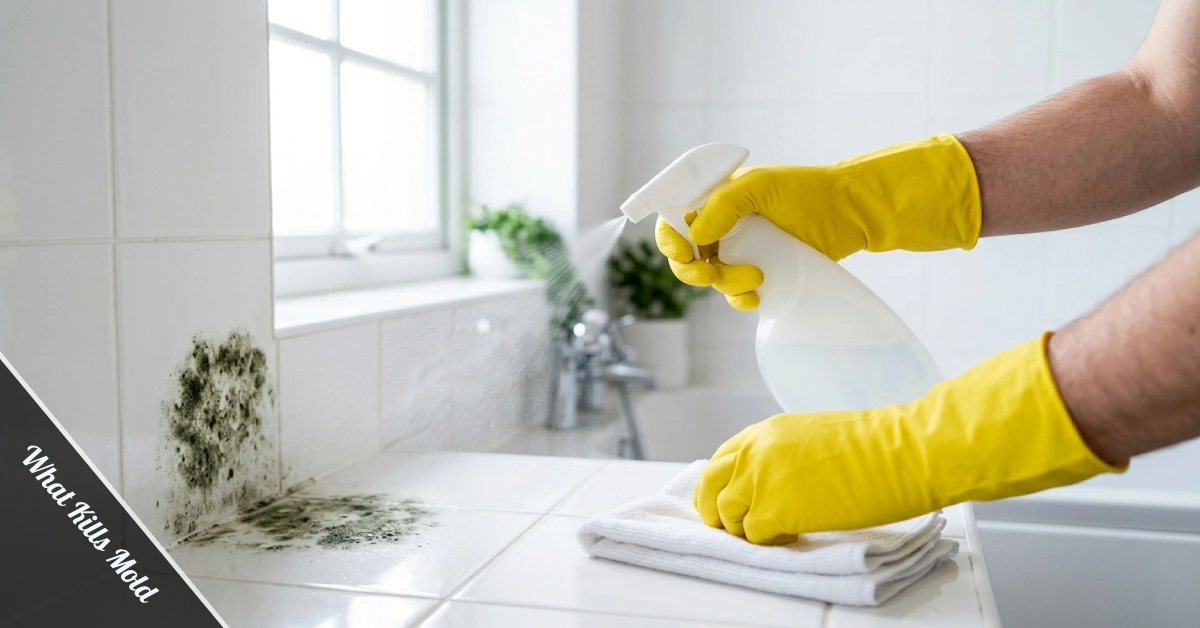
The most reliable substances that kill mould are bleach, white vinegar, hydrogen peroxide, and borax. Bleach works best on non-porous surfaces like tile and glass. Vinegar penetrates porous surfaces and kills about 82% of mould species. For any method to work long-term, you must also fix the moisture source. Dead mould still causes allergic reactions, so always scrub and remove it completely.
Mould in your home is not just an eyesore. It is a genuine health threat. <mark>According to the World Health Organisation, roughly 21% of asthma cases in the United States are linked to dampness and mould.</mark> Worse, about two-thirds of U.S. homeowners have dealt with mould at some point.
The good news: you do not need an expensive contractor for every case. You need the right product, the right technique, and a clear plan. This guide covers exactly what kills mould, how each solution works, and when to stop trying to do it yourself.
What Actually Kills Mold
Not every cleaner that removes the stain actually kills the fungus underneath. Understanding the difference saves you from a mold problem that keeps coming back.
Mold is a living organism. To truly kill it, you need a substance that breaks down its cell structure. The four most effective options are bleach, white vinegar, hydrogen peroxide, and borax. Each has different strengths depending on the surface you are treating.
Here is a quick comparison of the main mold-killing solutions:
- Bleach — Kills mold on hard, non-porous surfaces. Does not penetrate deeply into porous materials like wood or drywall.
- White vinegar — Penetrates porous surfaces. Kills approximately 82% of mold species. Safe for most surfaces.
- Hydrogen peroxide (3%) — Antifungal and antibacterial. Good for fabrics, walls, and kitchen surfaces.
- Borax — Non-toxic, does not release harmful fumes. Works well on tiles and grout.
- Ammonia — Effective on glass and tiles, but never mix it with bleach. Creates toxic gas.
“We know that living in moldy conditions can have a range of negative effects on your health. Those with respiratory conditions such as asthma can find their symptoms triggered or worsened by mold exposure.” — Dr Nazreen Morley, UK General Practitioner
Bleach: The Strongest Option for Hard Surfaces
Household bleach is one of the fastest ways to kill mold on hard, non-porous surfaces. Think bathroom tiles, sinks, tubs, and sealed countertops.
The CDC recommends a solution of no more than one cup of household laundry bleach per gallon of water. Apply it directly to the affected area and leave it. Do not rinse it off right away. Letting it sit allows the bleach to fully break down the mold’s cell structure.
Two critical safety rules when using bleach:
- Never mix bleach with ammonia or any general-purpose cleaner. The combination creates poisonous fumes.
- Always open windows and doors when using bleach. Fresh air is essential.
Bleach does have a real limitation. It works on surfaces but does not penetrate deeply into wood, drywall, or grout. If mold has taken hold in porous material, vinegar or hydrogen peroxide is a better choice.
White Vinegar for Porous Surfaces
Plain white vinegar is one of the most practical mold-killing options available. It is inexpensive, non-toxic, and works on a wider range of surfaces than bleach.
Apply undiluted white vinegar directly to the moldy area. Do not dilute it. Let it sit for at least one hour before scrubbing. The acetic acid in vinegar disrupts the mold’s structure and prevents regrowth.
Vinegar is especially useful in kitchens and bathrooms. It is safe on most tiles, grout, wood, and fabric surfaces. The smell fades within a few hours.
One important note from the EPA: killing mold is not enough on its own. Even dead mold spores can still trigger allergic reactions. You must scrub and physically remove the mold after applying your chosen solution.
Hydrogen Peroxide and Borax as Alternatives
If you want to avoid the strong fumes of bleach or the smell of vinegar, hydrogen peroxide and borax are solid alternatives.
Hydrogen peroxide (3%) works well on bathroom walls, kitchen surfaces, and clothing. Spray it directly onto the mold. Wait 10 minutes, then scrub and wipe. It is antifungal and antibacterial, making it a good all-around option.
Borax is a naturally occurring mineral that kills mold without releasing toxic fumes. Mix one cup of borax with one gallon of warm water. Apply the solution, scrub the surface, and leave the residue in place. Do not rinse it off. The remaining borax discourages mold from coming back.
Both options are gentler than bleach but still effective on the most common household mold types.
How to Protect Yourself Before You Start
Cleaning mold without protection exposes you to spores that can cause real health damage. Before you touch anything, get the right gear.
The CDC recommends the following protective equipment:
- Respirator: Wear at minimum a NIOSH-approved N95 respirator. For larger jobs, use a half-face or full-face respirator.
- Gloves: Use non-latex gloves, such as vinyl, nitrile, or rubber. Do not touch mold with your bare hands.
- Eye protection: Wear goggles that provide complete coverage. Standard safety glasses with open vents will not block mold spores.
Some people should not handle mold cleanup at all. This includes anyone with asthma, chronic obstructive pulmonary disease (COPD), immune system conditions, or mold allergies. If you fall into one of these categories, bring in a professional.
Step-by-Step Mold Removal Process
Once you are geared up, follow these steps for safe and thorough removal:
- Ventilate the space. Open windows and turn on exhaust fans before you begin. This prevents spore buildup in the air.
- Choose your solution. Use bleach for tiles and glass. Use vinegar or hydrogen peroxide for walls, wood, or grout.
- Apply and wait. Spray or brush the solution onto the mold. Let it sit for at least 10 minutes (or one hour for vinegar).
- Scrub thoroughly. Use a stiff brush or an old toothbrush for grout lines. Scrub until the surface is visibly clean.
- Wipe and dry. Remove all residue with a damp cloth. Dry the area completely. Mold cannot grow without moisture.
- Bag and discard materials. Place used rags, sponges, and any moldy debris into sealed plastic bags before throwing them away.
- Clean your gear. Wash gloves and clothing after the job. Dispose of your respirator filter if it was heavily used.
For mold covering more than 10 square feet (roughly a 3×3 foot patch), the EPA recommends calling a professional remediation service rather than attempting to handle it yourself.
How to Stop Mold From Coming Back
Killing mold once does not guarantee it will stay gone. Mold comes back when moisture stays. Prevention is the only long-term fix.
<mark>The CDC recommends keeping indoor humidity below 50% at all times.</mark> A basic hygrometer from any hardware store lets you monitor this easily. Run a dehumidifier in basements and other damp spaces.
Key prevention habits:
- Fix any leaking pipes, roofs, or windows quickly. Moisture sitting for 24 to 48 hours is enough time for mold to start growing.
- Use exhaust fans in bathrooms and kitchens that vent to the outside, not just into the attic or ceiling.
- Avoid carpeting in bathrooms, basements, or any area with frequent moisture exposure.
- Dry wet surfaces within 24 to 48 hours after any spill, flooding, or leak.
- Keep air circulating in closets and storage spaces. Stagnant, humid air is a common cause of mold on clothing and stored items.
“The mold spores will not grow if moisture is not present. Indoor mold growth can and should be prevented or controlled by controlling moisture indoors.” — U.S. Environmental Protection Agency
When to Call a Professional
Some mold problems are too large or too dangerous to handle without professional help. Knowing when to stop is just as important as knowing how to clean.
Call a licensed mold remediation contractor if:
- The affected area is larger than 10 square feet (about a 3×3 patch).
- You suspect mold inside walls, under flooring, or in your HVAC system. Do not run your air conditioner or heating system if you suspect duct contamination. It will spread spores throughout the building.
- The mold returned after two or more cleaning attempts.
- Water damage was caused by sewage or flood water.
- Anyone in your household has developed new or worsening respiratory symptoms since the mold appeared.
Professional mold remediation costs between $1,373 and $3,325 on average for most residential jobs. Severe cases can cost significantly more. Ignoring the problem usually costs more in the long run, both financially and in terms of health.
FAQs
Does bleach kill mold permanently?
Bleach kills mold on the surface of non-porous materials. It does not penetrate deeply into porous materials like wood or drywall, so mold can return from below the surface if the moisture problem is not resolved.
Is vinegar or bleach better for killing mold?
It depends on the surface. Bleach is faster on hard, non-porous surfaces like tile. Vinegar works better on porous materials and is safer to use without heavy ventilation. Neither works long-term without fixing the moisture source.
Can you leave mold-killing spray on overnight?
For most sprays, yes. Leaving the solution on longer gives it more contact time with the mold. However, always follow the specific product’s instructions. For bleach solutions, ventilate the space continuously.
Does mold die if it dries out?
Mold becomes dormant when it dries out, but it does not die. Once moisture returns, it can begin growing again. You must physically remove mold, not just dry it out.
How long does it take for mold to grow after water damage?
Mold can begin growing within 24 to 48 hours of water exposure, depending on the temperature and humidity level. Acting quickly is the single most important step after any water damage.