

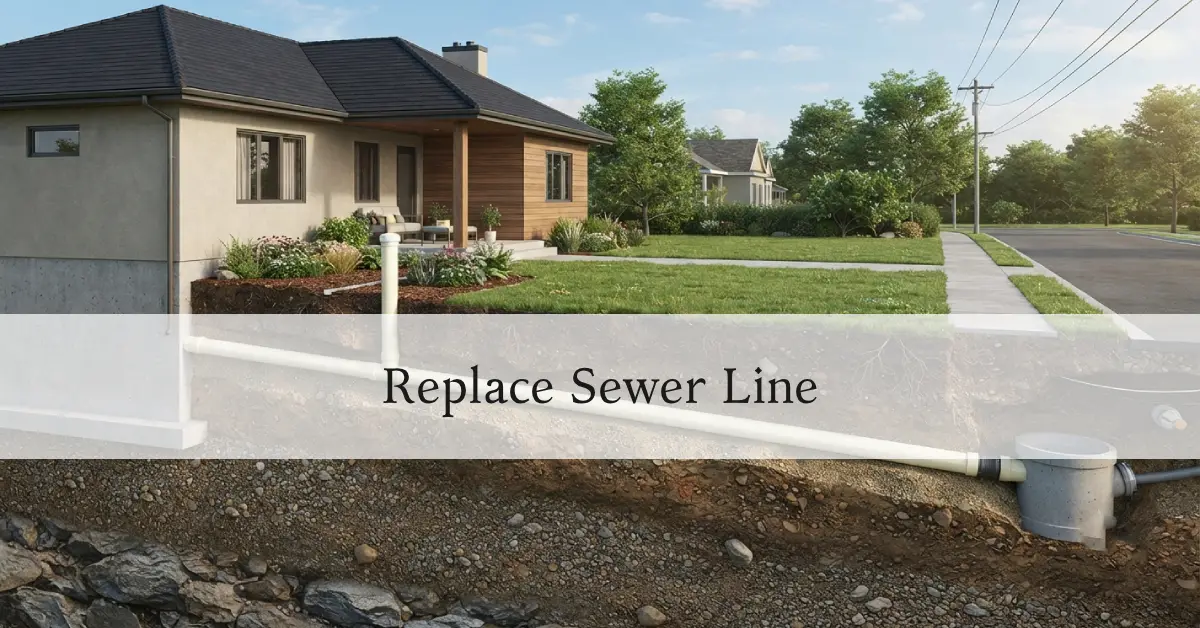
Your sewer line does one job: carry wastewater away from your home. Most people never think about it until something goes wrong, and by the time it does, the damage is often already spreading under the yard or through the foundation.
A failing sewer line rarely announces itself with a single dramatic event. It usually starts small: a slow drain here, an odd smell there, a toilet that gurgles when the washing machine runs. Homeowners often dismiss these as minor plumbing quirks until backups, standing water, or a cracked foundation force the issue.
This guide covers what actually causes sewer lines to fail, how much replacement typically costs, which methods are available (including trenchless options that skip the need to dig up your yard), and how long the whole process takes. If you’re noticing warning signs already, the earlier you get a professional inspection, the more options and the lower the bill.
What Is a Sewer Line?
A sewer line is the underground pipe that carries wastewater from your home’s plumbing system to the municipal sewer main or, in some cases, a septic tank. Every sink, toilet, shower, and appliance that uses water eventually drains into this single pipe.
How a Sewer Line Works
Wastewater flows from individual fixtures into smaller drain pipes inside your home. Those pipes converge into one main line, usually running from the basement or crawl space out to the edge of your property, then continuing to the city’s sewer system. Gravity does most of the work, which is why the pipe is installed at a slight downward slope.
Where Your Main Sewer Line Is Located
The main sewer line typically runs from your home’s foundation, under the yard, and out to either the street or a septic tank. A cleanout, a capped pipe fitting sticking up from the ground or basement floor, usually marks its path. City records or your original home inspection report can also show the exact route.
Who Is Responsible for Sewer Line Replacement?
In most municipalities, homeowners are responsible for the portion of the line running from the house to the property line or the connection point at the street, sometimes called the “lateral.” The city or utility typically owns and maintains the main line running under the street itself. Local rules vary, so it’s worth checking with your city’s public works department if you’re unsure where your responsibility ends.
When Should You Replace a Sewer Line?
Common Signs You Need a Sewer Line Replacement
- Frequent drain clogs that come back shortly after clearing them
- Sewage backups in tubs, sinks, or toilets, especially on the lowest floor
- Slow drains throughout the house, not just in one fixture
- Bad sewer odours near drains or in the yard
- Standing water in the yard, particularly over the pipe’s path
- Gurgling toilets and drains when other fixtures are used
- Mould or water damage in a basement or crawl space with no clear source
- Foundation cracks that appear alongside drainage problems
- Rodent or pest infestations, since damaged pipes can create entry points
One or two of these on their own might point to a smaller issue. Several appearing together is a strong signal that the main line itself has a problem.
How to Confirm You Need a Replacement
Sewer camera inspection. A plumber feeds a waterproof camera through the line to see cracks, root intrusion, corrosion, or collapse in real time. This is the most reliable way to know exactly what’s wrong and where.
Professional plumbing assessment. Alongside the camera inspection, a licensed plumber can evaluate pipe age, material, and overall condition to recommend repair or full replacement.
What Causes Sewer Lines to Fail?
Tree Root Intrusion
Roots seek out moisture, and even a hairline crack in a pipe can draw them in. Once inside, roots expand and eventually block or break the line entirely. This is one of the most common causes of sewer line failure in old neighbourhoods with mature trees. Ageing or Corroded Pipes
Older materials like cast iron and clay have a limited lifespan. Decades of exposure to wastewater and soil conditions cause corrosion, flaking, and structural weakening.
Ground Shifting and Soil Movement
Freeze-thaw cycles, drought, and heavy rain all cause soil to expand and contract. That movement puts pressure on buried pipes, leading to misalignment, cracks, or full breaks over time.
Pipe Collapse or Cracks
Age, poor installation, or nearby construction can cause a section of pipe to cave in or fracture. A collapsed line typically blocks flow completely and requires immediate attention.
Grease, Debris, and Foreign Object Blockages
Repeated buildup of grease, wipes, or other debris that shouldn’t go down the drain can harden inside the pipe. Over time, this narrows the passage and puts straining materials.
Poor Installation or Low-Quality Materials
Sewer lines installed with the wrong slope, weak joints, or substandard materials tend to fail well before their expected lifespan, regardless of how well they’re maintained afterwards.
Extreme Weather Conditions
Heavy storms, flooding, and rapid temperature swings can shift soil, saturate the ground, and stress pipe joints, especially in areas with older infrastructure.
Sewer Line Repair vs. Sewer Line Replacement
When a Repair Is Enough
If damage is limited to a small section, such as one localised root intrusion, or a single joint failure, a spot repair or partial pipe lining may resolve the issue without replacing the entire line.
When Full Replacement Is the Better Option
Full replacement makes more sense when the pipe shows widespread corrosion, multiple failure points, repeated backups despite past repairs, or when the material itself (like old clay or cast iron) is simply near the end of its usable life.
Cost Comparison
Repairs are almost always cheaper upfront, often ranging from a few hundred to a few thousand dollars depending on scope. Full replacement costs more initially but avoids paying for repeated repairs on a pipe that keeps failing.
Lifespan Comparison
A well-executed repair on an otherwise sound pipe can last many years. But if the underlying material is deteriorating, repairs tend to be short-term fixes, while a full replacement with modern materials can last several decades.
Pros and Cons of Each Option
Repair pros: lower cost, faster turnaround, less disruption. Repair cons: doesn’t address underlying pipe condition; other sections may fail soon after.
Replacement pros: long-term reliability, updated materials, fewer future service calls. Replacement cons: higher upfront cost, more disruption during the project.
Types of Sewer Line Replacement Methods
Traditional Excavation
How It Works
Crews dig a trench along the full length of the pipe, remove the old line, and install a new one before backfilling the trench.
Pros
Works for any pipe condition, including severely collapsed lines. Allows full visual inspection and correction of slope or alignment issues.
Cons
More disruptive to landscaping, driveways, or hardscaping. Typically takes longer and can cost more in restoration work.
Best Situations
Best suited for lines with severe structural damage, significant misalignment, or when other underground utilities need to be addressed at the same time.
Trenchless Sewer Line Replacement
Pipe Lining (CIPP)
Cured-in-place pipe lining inserts a resin-coated liner into the existing pipe, which then hardens to form a new pipe within the old one. This works well for cracks and minor structural issues but requires the existing pipe to hold its shape during installation.
Pipe Bursting
A bursting head is pulled through the old pipe, breaking it apart while simultaneously pulling a new pipe into place. This method can handle more significant damage than lining and doesn’t require the old pipe to remain intact.
Advantages
Minimal digging, faster completion, and significantly less landscape disruption compared to full excavation.
Limitations
Not ideal for severely collapsed lines, major misalignment, or situations where the pipe’s location or depth needs to change.
Which Trenchless Method Is Right for You?
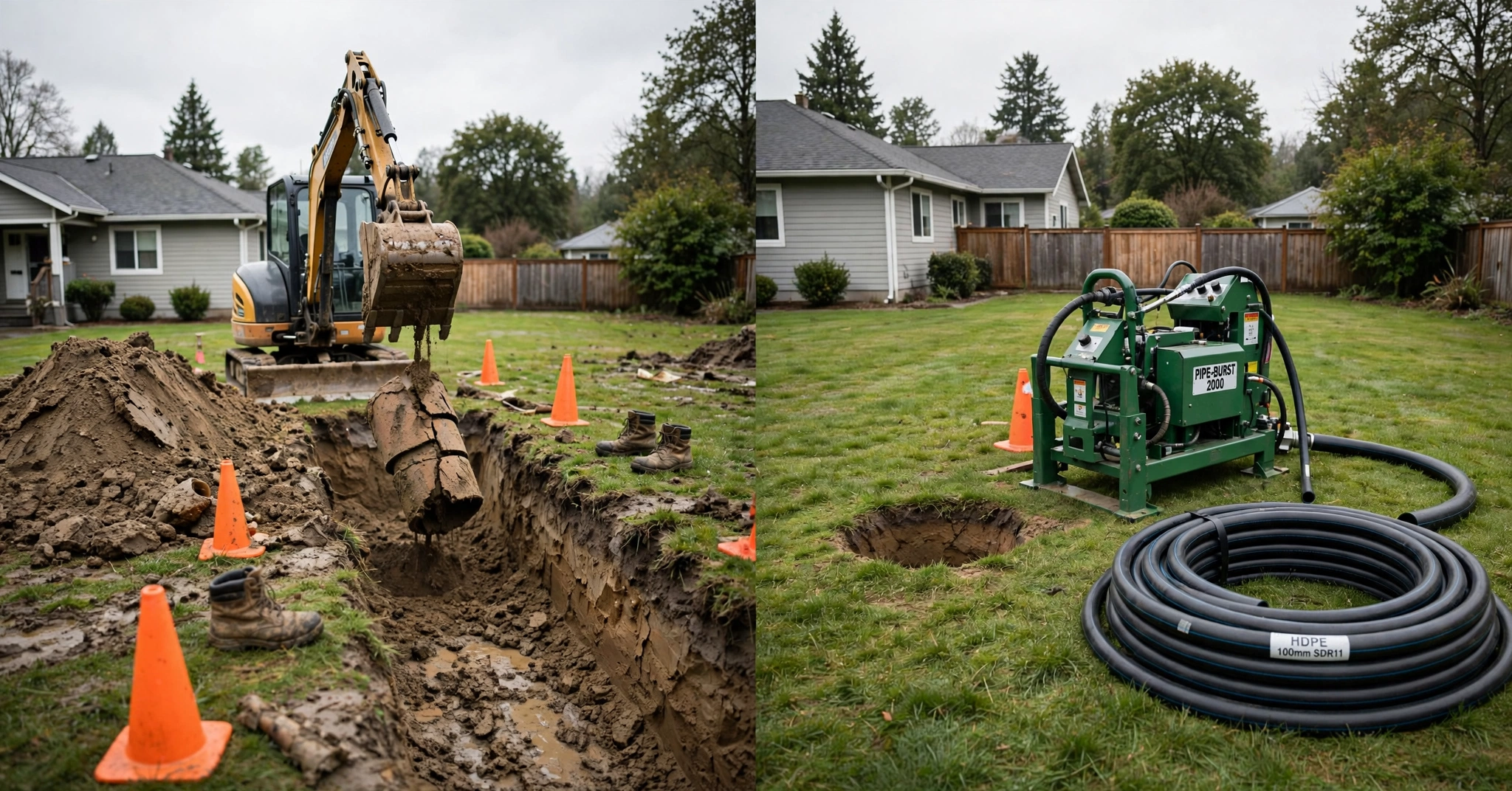
Pipe lining works well for pipes with cracks or minor root intrusion that are otherwise structurally intact. Pipe bursting is a better fit when the line needs a larger diameter or has more extensive damage. A camera inspection will determine which applies to your situation.
Step-by-Step Sewer Line Replacement Process
Initial Sewer Camera Inspection
A camera confirms the exact location, extent, and cause of the damage before any work begins.
Obtaining Required Permits
Most municipalities require a permit for sewer line work. Your contractor typically handles this step and coordinates inspections with the local building department.
Locating Underground Utilities
Before digging or pulling new pipe through the ground, utility lines (gas, electric, water) are marked to avoid accidental damage.
Excavation or Trenchless Preparation
Depending on the method chosen, crews either dig access points along the pipe’s path or prepare small entry and exit pits for trenchless equipment.
Removing the Old Sewer Pipe
For traditional replacement, the damaged pipe is fully removed. In trenchless methods, the pipe is either lined or burst apart as the new pipe is pulled through.
Installing the New Sewer Line
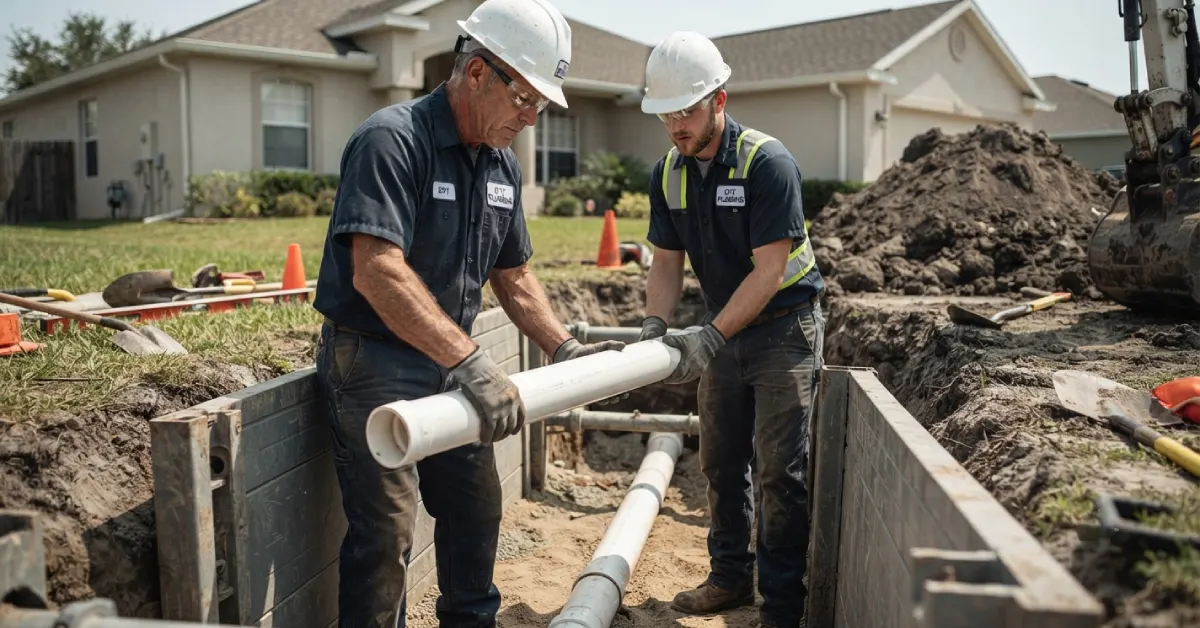
The new pipe is set at the correct slope and connected to the home’s plumbing system and the municipal line or septic tank.
Pressure Testing and Inspection
The new line is tested for leaks and proper flow, and in most areas, a city inspector verifies the work meets code before it’s covered.
Backfilling and Landscape Restoration
Trenches are filled back in, and the surface is restored as closely as possible to its original condition.
Final Cleanup
Crews remove equipment, debris, and excess soil, leaving the property in usable condition.
How Long Does It Take to Replace a Sewer Line?
Average Replacement Timeline
Most sewer line replacements take one to five days, depending on the method and the scope of the damage. Trenchless methods are often on the shorter end, while traditional excavation on a longer or harder-to-access line can take longer.
Factors That Affect Replacement Time
Sewer Line Depth
Deeper lines require more excavation and time to reach safely.
Pipe Length
Longer runs naturally take more time to remove or reline.
Accessibility
Lines running under driveways, patios, or mature landscaping take longer to access than an open yard.
Soil Conditions
Rocky or unstable soil slows excavation and may require extra support work.
Weather Delays
Heavy rain or freezing conditions can pause outdoor work entirely.
Permit Approvals
Delays in permit processing or inspection scheduling can extend the overall project timeline, even if the physical work is quick.
Replacement Method
Trenchless methods generally finish faster than full excavation because they involve less digging and restoration.
How Much Does It Cost to Replace a Sewer Line?
Average Sewer Line Replacement Cost
Sewer line replacement typically costs between $3,000 and $25,000, with most homeowners landing somewhere in the middle of that range depending on pipe length, method, and local labour rates. Get a written estimate from a licensed local plumber for an accurate number, since prices vary significantly by region.
Cost by Replacement Method
Trenchless methods often cost less overall once you factor in landscape restoration, even though the per-foot pipe cost can be similar to traditional excavation. Traditional excavation tends to cost more when restoring driveways, patios, or established landscaping.
Cost by Pipe Material
Material costs vary: PVC and HDPE tend to be more budget-friendly than cast iron, while material choice also affects long-term durability and maintenance costs.
Cost by Pipe Length
Cost typically scales with the length of pipe being replaced, since labour and material both increase with distance.
Labour Cost: Labour makes up a significant portion of the total cost and varies based on regional rates, project complexity, and how accessible the pipe is.
Permit and Inspection Fees
Most municipalities charge a permit fee, and some require separate inspection fees at different project stages.
Landscape Restoration Costs
Restoring lawns, driveways, or patios after excavation can add a meaningful amount to the total project cost, which is one reason trenchless methods appeal to homeowners with mature landscaping.
Factors That Influence Total Cost
Pipe depth, soil type, distance to the sewer main, local permit requirements, and the extent of existing damage all play a role in the final price.
Best Pipe Materials for Sewer Line Replacement
PVC Pipes
PVC is lightweight, resistant to root intrusion and corrosion, and widely used in modern sewer line installations. It’s a common choice for both trenchless and traditional replacements.
HDPE Pipes
High-density polyethene is flexible, joint-free in long runs, and well suited to trenchless installation methods like pipe bursting.
Cast Iron Pipes
Durable and long-lasting when properly maintained, cast iron is heavier and more expensive to install than plastic alternatives, and it’s more prone to corrosion over many decades of use.
Clay Pipes
Common in older homes, clay is durable against chemical corrosion but brittle and highly susceptible to root intrusion and cracking.
Which Sewer Pipe Material Lasts the Longest?
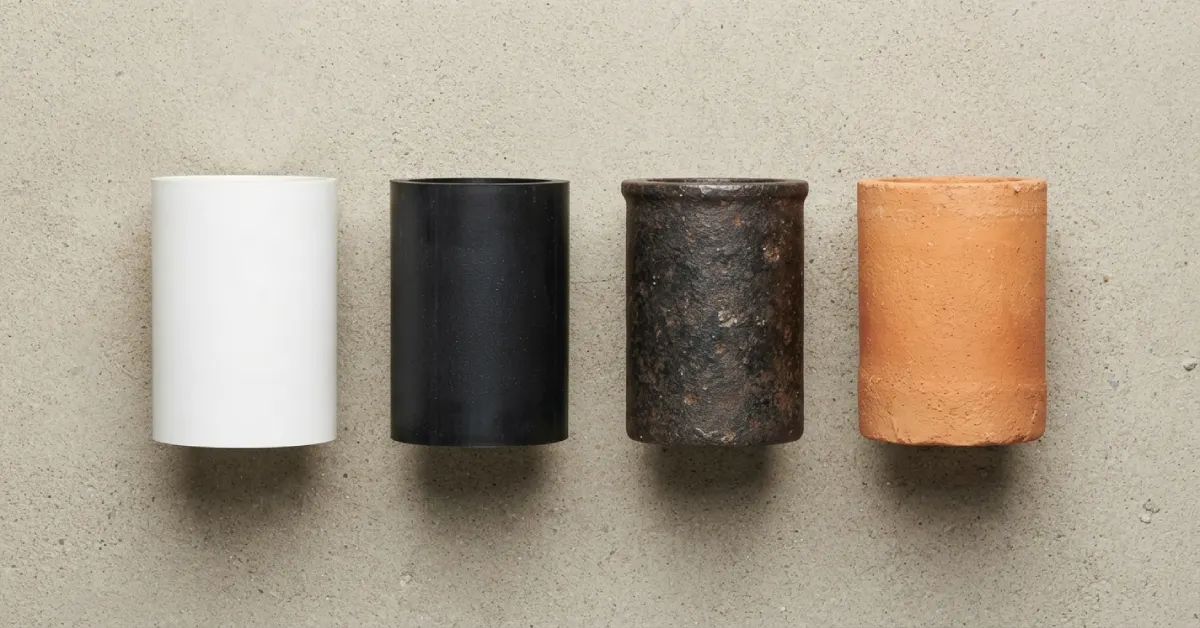
PVC and HDPE generally offer the longest practical lifespan with the least maintenance, largely because they resist root intrusion and corrosion better than older materials like clay or cast iron.
What to Expect During Sewer Line Replacement
Will Water Service Be Interrupted?
Yes, typically. Since the sewer line needs to be disconnected during replacement, plumbing fixtures usually can’t be used for part or all of the project day.
Property and Landscape Impact
Traditional excavation disturbs the ground along the pipe’s path. Trenchless methods limit disruption mostly to small access points at either end of the line.
Noise, Dust, and Excavation
Expect equipment noise and some dust during active excavation or drilling. Reputable contractors take steps to minimise disruption to neighbours and the property.
Safety Precautions During the Project
Work areas are typically fenced or marked off, and contractors follow safety protocols for trench work, proximity to utilities, and equipment operation.
How to Prepare for Sewer Line Replacement
Questions to Ask Your Contractor
- Which replacement method do you recommend, and why?
- What’s the expected timeline and cost breakdown?
- Will permits and inspections be handled by your team?
- How will you restore the yard or driveway afterwards?
- What warranty do you offer on materials and labour?
Preparing Your Home
Plan around limited or no water use during the project, and clear indoor access points near cleanouts if needed.
Protecting Your Landscaping
Discuss which plants, trees, or hardscaping features may be affected, and ask whether the contractor can work around anything you want preserved.
Planning for Temporary Disruptions
Arrange alternative bathroom or water access if the project is expected to take more than a day, especially for larger excavation projects.
Can You Replace a Sewer Line Yourself?
DIY Challenges and Risks
Sewer line work involves permits, code compliance, precise slope requirements, and connection to municipal systems, none of which are forgiving of mistakes. Incorrect installation can lead to new leaks, code violations, or a line that fails again within a few years.
Why Hiring a Licensed Plumber Is Recommended
A licensed plumber carries the training, equipment, and permitting knowledge needed to do the job correctly and to code, along with a warranty that DIY work simply can’t offer.
How to Prevent Future Sewer Line Problems
Schedule Regular Sewer Camera Inspections
Periodic inspections catch small issues, like early root intrusion or minor cracks, before they become full failures.
Avoid Flushing Problematic Items
Wipes, grease, and other non-flushable materials are common contributors to blockages and buildup over time.
Prevent Tree Root Intrusion
Consider root barriers or careful tree placement if you’re landscaping near a known sewer line path.
Maintain Proper Drain Usage
Simple habits, like not pouring grease down drains, go a long way toward extending the life of your line.
Know the Warning Signs Early
Slow drains, odd odours, or recurring clogs are worth investigating right away rather than waiting for a full backup.
Conclusion
A failing sewer line rarely fixes itself, and waiting usually means a bigger repair bill later. Understanding the warning signs, knowing your replacement options, and choosing the right pipe material can save you significant money and disruption down the road.
If you’re seeing any of the signs covered in this guide, don’t wait for a full backup to act. Schedule a professional inspection and get a written estimate from a licensed plumber to understand exactly what your property needs.
Frequently Asked Questions
How much does it cost to replace a sewer line?
Most sewer line replacements cost between $3,000 and $25,000, depending on pipe length, method, and local labour rates. A licensed plumber can give you an accurate quote based on your property.
How long does sewer line replacement take?
Most projects take one to five days, with trenchless methods typically finishing faster than traditional excavation.
Can a sewer line be repaired instead of replaced?
Yes, if the damage is localised, such as a single crack or minor root intrusion, a spot repair or partial lining may be enough. Widespread damage usually calls for full replacement.
Does homeowners insurance cover sewer line replacement?
Coverage varies by policy and cause of damage. Many standard policies exclude gradual wear or root intrusion but may cover sudden, accidental damage. Check with your insurer directly.
Can a sewer line be replaced without digging?
Yes, trenchless methods like pipe lining and pipe bursting can replace a sewer line with minimal digging, usually limited to small access points.
Which sewer pipe material is best?
PVC and HDPE are generally considered the most durable, cost-effective, and root-resistant options for modern sewer line replacement.
What are the first signs of sewer line failure?
Slow drains, recurring clogs, gurgling toilets, and sewer odours are usually the earliest noticeable signs.
Who is responsible for the sewer line from the house to the street?
In most areas, homeowners are responsible for the lateral line running from the house to the property line or street connection, while the city maintains the main line under the street.
Will replacing a sewer line damage my yard?
Traditional excavation disturbs the ground along the pipe’s path, though contractors restore the area afterwards. Trenchless methods limit damage to small access points.
How long do new sewer lines last?
Modern materials like PVC and HDPE can last 50 to 100 years with proper maintenance, while older materials like clay or cast iron have shorter practical lifespans.