

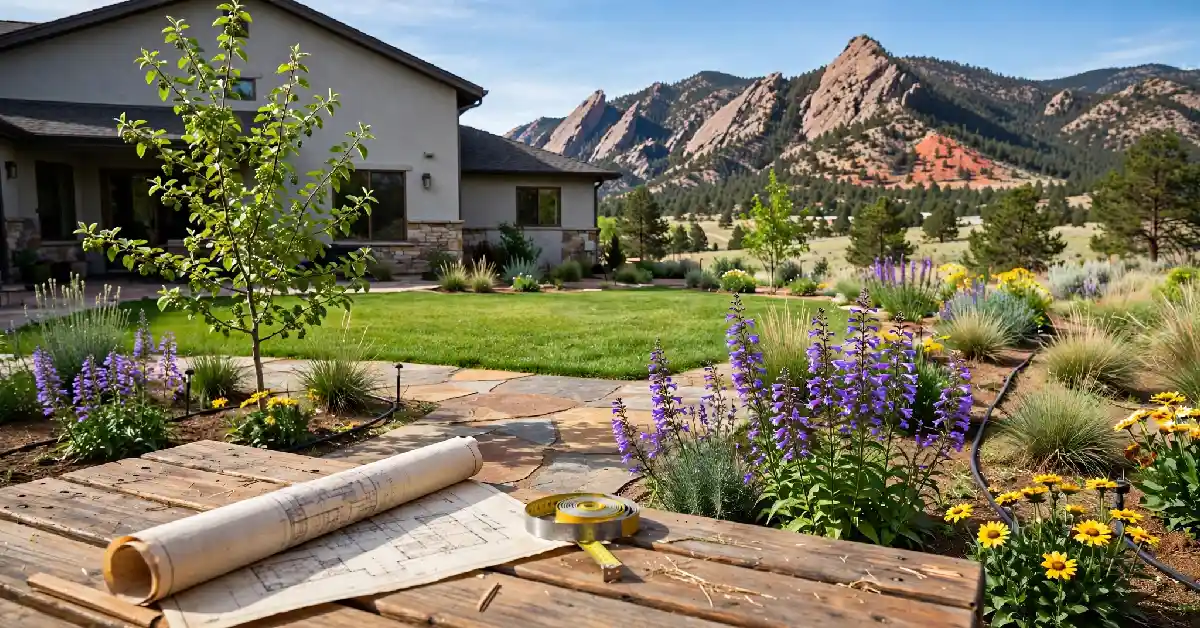
Planning your Colorado landscape installation starts with climate, soil, and water limits. Set a budget, map sun and wind zones, test soil, and group plants by water needs. Install irrigation before planting, follow local rules for wildfire and drainage, and schedule work for spring or fall. Careful planning saves money and prevents plant loss.
Planning a Colorado yard sounds simple until the first winter ends. Nursery plants die. Sprinklers waste water. A slope washes out every spring. The plants are rarely the problem. The plan is.
Colorado combines cold, dry air, strong sun, alkaline clay, and sudden hail. Landscapes that ignore those conditions cost more every year. A clear plan keeps the cost down and keeps plants alive.
This guide covers planning your Colorado landscape installation from the first sketch to the final layer of mulch. You will learn how to read your site, group plants by water needs, size irrigation, time the work, and avoid the errors that waste money.
Planning Your Colorado Landscape Installation
A project goes wrong when the steps run in the wrong order. Homeowners buy plants first and fix drainage later. That order costs money twice. Treat installation as a sequence of decisions where each one supports the next.
Most Colorado projects follow these seven steps:
- Define how you will use the yard. Note spots for dining, play, gardening, pets, and storage.
- Set a budget and decide what you will build now versus later.
- Test soil, measure sun and wind, and mark every slope.
- Draw a base map with zones for turf, planting beds, and hardscape.
- Choose plants and group them by water needs.
- Design and install irrigation, drainage, and grading.
- Plant, mulch, and set a maintenance schedule.
Skip a step, and you pay for it twice. Homeowners who grade after planting move new trees. People who plant before irrigation tear out drip lines. Work in order,r and each stage protects the one before it.
Colorado Climate Shapes Every Decision
Denver sits 5,280 feet above sea level and receives about 15 inches of precipitation in an average year. Summers are hot and dry. Winters swing from deep freezes to 60-degree thaws within a single day. Hail is common from May through August.
The Front Range falls mostly in USDA hardiness zones 5b and 6a. Mountain valleys can sit in zone 4. A plant rated for zone 6 may survive a normal winter and still die in a late freeze after a warm March. Thin air at altitude also means stronger sun and faster drying. Evergreens lose moisture through their needles on windy February days, so they still need winter watering.
Water supply matters as well. The Colorado Water Conservation Board’s 2023 Colorado Water Plan warns that demand could outpace supply in dry years as the state nears 6 million residents. The U.S. Drought Monitor covered large parts of Colorado in drought or abnormal dryness through 2024 and 2025. Plan for restrictions before they arrive.
Denver Water already limits summer watering hours and bans watering during rain or high winds. Designs that assume unlimited water will fail the first season rules tighten.
Set Goals and Budget First
Write down how you will use the yard before you price anything. A family with two dogs and a trampoline needs a different layout than a retiree who wants flower beds and a fire pit. Use decides size, and size decides cost.
Price the work in layers. In Colorado markets, basic paver patios often run $15 to $30 per square foot installed. Full-sod lawns cost more per square foot than seed. Drip irrigation for planting beds typically runs $1 to $3 per square foot. Retaining walls, boulder work, and heavy grading carry the highest cost per hour because equipment and hauling drive the price. Local ranges vary with access, slope, and soil.
Hold back 10 percent to 15 percent of the budget for surprises. Contractors hit buried rock, old sprinkler lines, and compacted fill on many Front Range lots. Hail can also damage young plantings in week one.
If you are budgeting indoor upgrades in the same season, plan those rooms before the yard so the two budgets do not compete. See how to design a home theatre room for the room-by-room sizing questions that change cost estimates.
Test Soil and Map Sun
Front Range soil is often clay-heavy, alkaline, and low in organic matter. pH between 7.5 and 8.4 is common. Colorado State University Extension soil tests cost little and tell you exactly what to add. Test before you buy any amendments.
Walk the site at three times of day. Mark full sun, part shade, and deep shade on your map. Note hot spots against south and west walls where reflected heat cooks shallow-rooted plants. Note wind tunnels between houses that dry out new plantings in hours.
Watch where water goes during a storm. Puddles near the foundation point to grading problems. Saturated areas at the low end of a lot point to poor percolation in clay. If water sits under the surface after irrigation, check subsurface drainage systems before you plant anything.
Group Plants by Water Needs
Grouping plants by water use, called hydrozoning, is the single biggest water saver in a Colorado yard. Turf needs far more water than native beds. Mixing them in one zone forces you to overwater one or underwater the other.
Kentucky bluegrass lawns need about 1 to 1.5 inches of water per week at peak summer heat. Buffalo grass and blue grama lawns thrive on roughly half that once established. Shaded turf needs less again.
A starter list of low-water plants that handle Front Range conditions:
- Buffalograss and blue grama for lawn alternatives
- Penstemon, columbine, yarrow, and blanket flower for perennial colour
- Russian sage, salvia, and sedum for hot, dry borders
- Rabbitbrush, four-wing saltbush, and big sagebrush for larger natural areas
- Rocky Mountain juniper, ponderosa pine, and curlleaf mountain mahogany for structure
- Serviceberry, Rocky Mountain maple, and Gambel oak for shade and fall colour
Check mature size before you buy. A serviceberry planted three feet from a fence will push that fence in five years. Colorado State University Extension and regional plant introduction programs publish tested plant lists each year that match local soils and winters.
Design Irrigation Before Planting
Irrigation is the part of a landscape you cannot see once it is finished. Design it first. Beds do best with drip lines under mulch, where water goes to roots and not to the air. Turf needs spray or rotor heads with head-to-head coverage.
Build separate zones for turf, low-water beds, and trees. Trees need deep, infrequent watering on their own schedule. Put a rain sensor or soil moisture sensor on the controller. Watering after a storm wastes water and can trigger a fine under local rules.
Set the controller for early morning. Denver Water prohibits watering between 10 a.m. and 6 p.m. because midday water is lost to evaporation. New plantings need frequent, shallow watering for the first two to four weeks, then deeper and less often as roots spread. Plan the change in schedule before the crew leaves the site.
Manage Slopes, Drainage, and Wildfire
Slopes are common along the Front Range foothills. Water running down an unmanaged slope carries mulch and topsoil into the street. Terracing, shallow swales, and groundcover plants slow that water and hold soil in place. Erosion blankets protect bare soil on steeper cuts until plants fill in.
Retaining walls change how a lot drains. Water behind a wall needs an outlet and gravel backfill. A wall without drainage builds pressure and fails within a few seasons. Walls above four feet usually require an engineered design and a permit.
Wildfire adds another layer of planning. The Home Ignition Zone guidance from the Colorado State Forest Service calls for noncombustible material within 0 to 5 feet of the structure. The state’s landscaping guidance at planningforhazards.colorado.gov outlines how local ordinances treat vegetation in wildfire hazard areas. Many foothill communities now require wildfire-resistant plant spacing, and insurance reviews look at the same details.
Follow Local Rules and Permits
Rules change by city, county, and water provider. Check all three before you finalise drawings. Common requirements include permits for grading, permits for retaining walls, stormwater controls on disturbed soil, and street tree rules in some subdivisions.
Homeowner associations often cap turf percentage, restrict artificial turf, or limit front yard designs. Get approvals in writing before the crew arrives. Fines and rebuilds cost more than a review.
Call 811 before any digging. Colorado 811 marks utility lines, and hitting a gas or fibre line stops work on the spot. Marked lines also show where irrigation cannot run. Keep the ticket number on site during the install.
Schedule Installation for Spring or Fall
The best planting windows on the Front Range run from mid-April to early June and from September to mid-October. Fall planting works well because roots grow in cool soil while the top of the plant rests. Spring planting gives a full season of root growth before winter.
Avoid planting during July and August heat. Trees installed in a heat wave spend their energy surviving instead of rooting. Watering costs rise at the same time.
Order materials early. Pavers, boulders, and speciality perennials can carry lead times of four to eight weeks in peak season. Contractors book out even further. A plan finished in February beats a plan finished in May, because the crew can work in cool weather and the plants have time to settle.
Avoid These Costly Mistakes
Most failures trace back to a short list of errors:
- Planting trees too deep. The root flare should sit at or slightly above grade.
- Piling mulch against trunks. Keep mulch 3 inches away from the bark.
- Choosing plants for looks without checking mature size.
- Placing turf in deep shade where it thins and invites pests.
- Installing plants before irrigation, then cutting lines through roots.
- Skipping soil tests and buying amendments by guesswork.
- Underestimating grading needs on sloped lots.
- Running every zone on one watering schedule.
Each of these is cheap to prevent and expensive to fix.
Sources
Colorado State University Extension, Garden and Landscape Design resources, extension.colostate.edu, updated 2024.
Colorado Water Conservation Board, Colorado Water Plan, December 2023.
Denver Water, summer watering rules and xeriscape guidance, denverwater.org, 2024.
U.S. Drought Monitor, Colorado conditions, droughtmonitor.university, 2024 to 2025.
Colorado State Forest Service, Home Ignition Zone and wildfire mitigation guidance, csfs.colostate.edu, 2024.
Colorado Department of Natural Resources, planningforhazards.colorado.gov, landscaping ordinance guidance, 2023.
U.S. Environmental Protection Agency, WaterSense outdoor water use estimates, epa.gov, 2024.
NOAA National Centres for Environmental Information, Colorado climate summaries, 2024.
FAQs
How much does landscape installation cost in Colorado?
Basic projects with seed, drip lines, and a few beds can land near $5,000 to $15,000. Full front and back yard builds with pavers, sod, walls, and mature trees often run $30,000 to $80,000 or more. Access, slope, and soil condition move the number most. Ask for line-item bids rather than one lump price.
When is the best time to plant in Colorado?
Late April through early June and September through mid-October give plants the best start. Roots grow in cool soil during those windows. Summer planting can work with careful watering, but survival rates drop, and water use climbs.
What is the best low-water lawn for the Front Range?
Buffalograss and blue grama handle heat and use about half the water of Kentucky bluegrass after they establish. They go dormant and brown in winter, which some owners dislike. A mix of the two holds colour longer through summer.
Do I need a permit for a backyard landscape?
Grading, retaining walls, and electrical work usually need permits. Planting beds, mulch, and small patios often do not. Rules vary by city, so call your building department early. Your HOA approval runs in a separate lane from city permits.
How long does a full installation take?
A small yard can take one to two weeks once work starts. Larger lots with walls, irrigation, and sod often run four to eight weeks. Design, permitting, and material lead time usually add four to eight weeks before the crew arrives. Plan the calendar backwards from the planting window you want.