

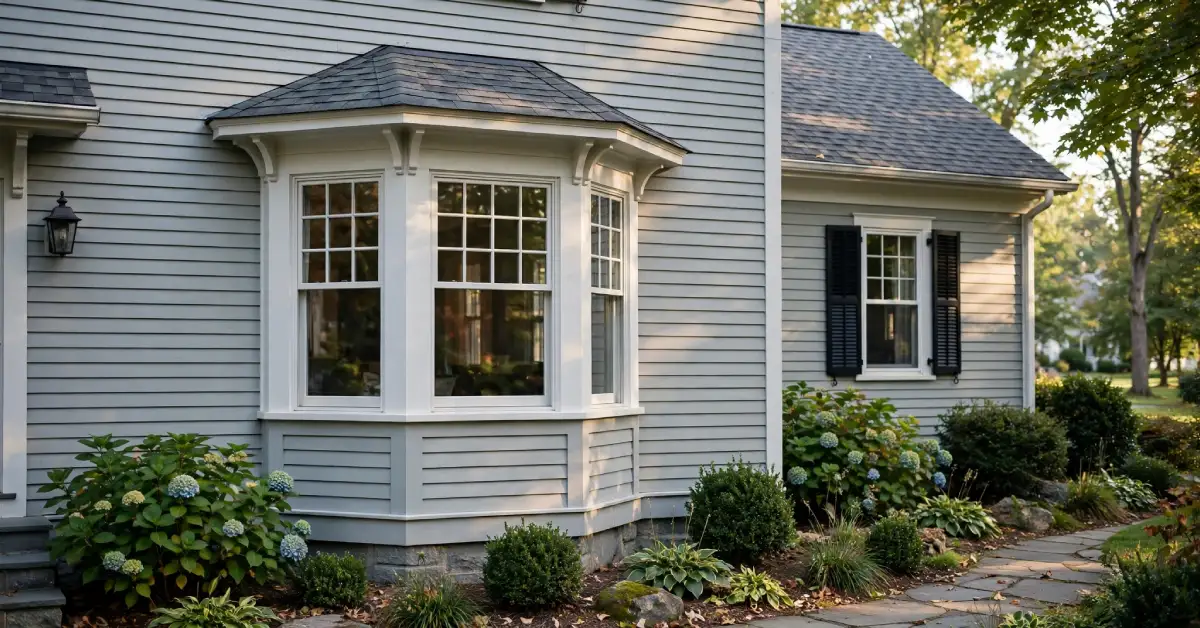
A bay window is a set of windows that projects outward from a home’s exterior wall, usually made up of three panels angled to form a shallow alcove. Instead of sitting flush with the wall like a standard window, it pushes out a foot or two, adding both light and usable space to a room.
Homeowners choose bay windows for a mix of practical and visual reasons. They let in more natural light than a single flat window, open up wider views of the yard or street, and create a bit of extra floor space inside — often just enough for a seat, a plant shelf, or a reading spot. On the outside, they give a house more depth and character than a plain window opening.
This guide covers what a bay window is, how it’s built, the different types available, how it compares to a bow window, what it costs, which materials hold up best, and how to decide whether one is worth adding to your home.
What Is a Bay Window?
A bay window is a combination of three (sometimes more) windows set at angles to each other, forming a shape that bows outward from the house. The centre panel is usually the largest and sits parallel to the wall, while the two side panels angle back toward the house at 30, 45, or 90 degrees.
Because the whole unit projects past the exterior wall, it creates a small pocket of extra space inside the room — enough for a window seat, a shelf, or just a wider sill for plants. Bay windows are most common in living rooms, dining rooms, bedrooms, and kitchens, where the extra light and space get the most use.
How Does a Bay Window Work?
The outward projection comes from the way the three panels are joined at angles rather than installed flat. The centre window faces straight out, while the two side windows angle back to meet the exterior wall, forming a small enclosed bump-out.
Because this bump-out extends beyond the wall line, it needs something to hold it up. Depending on the design, that support comes from either brackets fixed to the exterior wall or a small extension of the home’s foundation underneath the window. The angle and support method you choose affects both the look and the cost.
What Are the Different Types of Bay Windows?
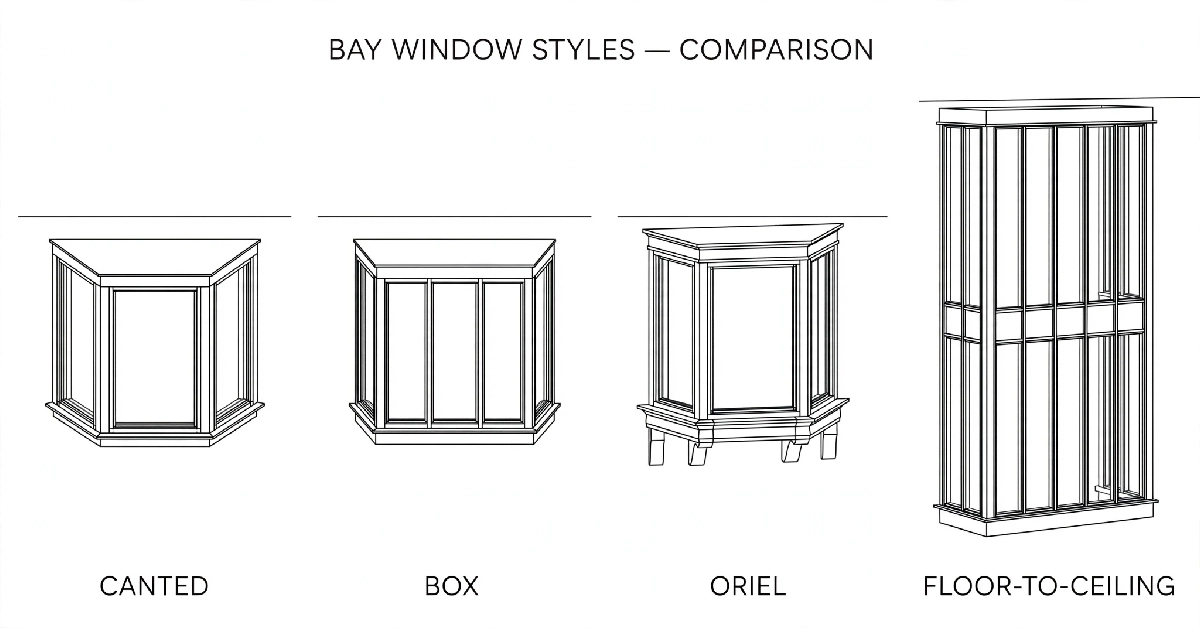
Angled or Canted Bay Windows
This is the traditional bay window shape, with side panels set at 30 or 45 degrees. A 30-degree angle creates a narrower, shallower projection with a more traditional look, while 45 degrees pushes further out and lets in more light. Canted bay windows work well on older or classic-style homes.
Box Bay Windows
Box bay windows use 90-degree side panels, giving the unit a squared-off shape instead of an angled one. Because the sides sit perpendicular to the house, this style tends to create more usable interior space, making it a common choice when the goal is a bigger window seat or shelf area rather than just extra light.
Oriel Bay Windows
An oriel window is a bay window that doesn’t reach the ground — it’s supported by brackets or corbels instead of a foundation extension. This makes it a common option for upper floors, where builders can’t easily extend the foundation. Oriel windows often appear on older or traditionally styled homes.
Floor-to-Ceiling Bay Windows
This version extends all the way to the floor and needs foundation support underneath rather than brackets. It creates a larger interior footprint than a standard bay window, which makes sense in rooms where you want the extra space to double as a sitting area or a small extension of the room itself.
Bay Window vs. Bow Window: What’s the Difference?
Bay and bow windows are often confused, but they’re built differently. A bay window typically uses three panels set at sharper angles, while a bow window uses four or more panels set at gentler angles, creating a smoother, more rounded curve.
| Feature | Bay Window | Bow Window |
|---|---|---|
| Number of panels | Usually 3 | Usually 4–6 |
| Angle | Sharper (30°–90°) | Gentler, more curved |
| Projection | Moderate | Often deeper |
| Interior space | Good | Generally more |
| Appearance | Angular, defined | Rounded, softer |
| Best for | Traditional to modern homes | Homes wanting a curved, panoramic look |
| Typical cost | Lower | Higher, due to more panels and glass |
Both styles add light and space, but a bow window generally costs more because it involves more glass, more panels, and a more involved installation.
What Are the Benefits of Bay Windows?
More Natural Light
Because a bay window has panels facing multiple directions, it catches light throughout more of the day than a single flat window would. The larger total glass area also means more daylight reaches the room overall.
Wider Outdoor Views
The angled panels widen your field of view compared to a standard window, giving you a more panoramic look at the yard, street, or garden instead of a single fixed frame.
Additional Interior Space
The projection creates a small pocket of extra floor space that can become a window seat, a reading nook, built-in storage, or simply room for a chair or plant stand that wouldn’t fit against a flat wall.
Improved Curb Appeal
On the outside, a bay window breaks up a flat wall and adds dimension to the house’s exterior, which many homeowners find makes the home look more finished and considered.
Added Architectural Character
Bay windows work with a range of home styles, from traditional Victorian details to more contemporary designs, giving the exterior a distinct feature rather than a plain window opening.
Potential Property-Value Benefits
Some homeowners see a bump in perceived value from a well-built bay window, but the actual effect on resale depends on the property, the quality of the installation, the design, and what buyers in your local market are looking for. It’s not a guaranteed return, so it’s worth treating as a home-improvement choice first and a value play second.
What Are the Disadvantages of Bay Windows?
- Higher upfront cost than a standard flat window, due to the extra glass and construction involved.
- More complicated installation, especially compared to a simple window swap.
- Structural support requirements, since the projection needs brackets or foundation work to hold it in place.
- Potential heat-loss concerns if the glass, frame, or insulation isn’t well chosen, since more glass surface can mean more heat transfer.
- Trickier window treatments, because standard curtains or blinds don’t always fit an angled window cleanly.
- Ongoing maintenance, including more glass to clean and more seals and joints to check over time.
- Exterior space use, since the projection takes up some of the yard or setback area, which can matter on smaller lots.
How Much Does a Bay Window Cost?
What Affects Bay Window Cost?
Several factors influence the final price:
- Size — larger openings cost more in materials and labour.
- Number of panels — three-panel bay windows are typically cheaper than bow windows with more panels.
- Window material — uPVC tends to cost less than wood or composite.
- Glass type — double or triple glazing adds cost but improves efficiency.
- Customisation — non-standard sizes or shapes raise the price.
- Labour — installation complexity and local labour rates both play a role.
- Structural modifications — adding support brackets or foundation work adds to the total.
- New installation vs. replacement — cutting a new opening costs more than swapping an existing bay window.
Bay Window Replacement vs. New Installation
Replacing an existing bay window is usually simpler and cheaper, since the opening, structural support, and rough framing are already in place. Installing a bay window where one didn’t exist before requires cutting into the wall, adding structural support, and finishing both the interior and exterior — all of which add time and cost.
How to Budget for a Bay Window
Get quotes from more than one contractor so you can compare pricing and scope. Make sure each quote accounts for structural work and interior/exterior finishing, not just the window unit itself. It’s also worth factoring in long-term costs like energy bills and maintenance, since a cheaper window with poor insulation can cost more over time.
What Materials Are Best for Bay Windows?
uPVC Bay Windows
uPVC is a popular budget-friendly option. It resists moisture, doesn’t need painting, and holds up well with minimal upkeep. The trade-off is a more limited range of finishes compared to wood, and it may not suit homes that call for a more traditional look.
Wood Bay Windows
Wood offers a classic look and can be painted or stained to match almost any style. It requires more upkeep than other materials, including periodic painting or sealing to prevent moisture damage.
Aluminium Bay Windows: Aluminium frames are strong and slim, which suits a more modern appearance. They conduct heat more readily than other materials, so thermal breaks in the frame design matter for energy efficiency.
Composite Bay Windows
Composite materials combine elements like wood fibre and polymer to offer strength and weather resistance with less maintenance than solid wood, often at a higher price point than uPVC.
How to Choose the Right Material
Base the decision on your climate, budget, preferred style, how much upkeep you’re willing to do, and how much energy efficiency matters to you. A humid or coastal climate, for example, favours materials that resist moisture and don’t warp.
What Size Should a Bay Window Be?
Bay window sizing depends on the width and height of the wall opening, how far the unit projects outward, and how many panels it includes. Standard sizes are available from most manufacturers, but many homeowners choose custom sizing to fit an existing opening or achieve a specific look.
Room dimensions matter too — a bay window that’s too large for a small room can overwhelm the space, while one that’s too small may not deliver the light or seating area you’re after. Accurate measurements are essential before ordering, since even small errors can affect the fit, the structural support needed, and the final cost.
How Do Bay Window Angles Affect Design?
30-Degree Bay Windows
A 30-degree angle creates a shallower, more traditional projection. It’s a common choice for homes with a classic architectural style and works well where exterior space is limited.
45-Degree Bay Windows
This angle strikes a balance between exterior projection and interior space, offering more light and room than a 30-degree design without the bulk of a full box shape.
90-Degree Bay Windows
A 90-degree angle produces the box-style look, maximising interior space and creating flat side panels that work well for shelving or a wider seat.
How to Choose the Right Angle
Consider how much exterior space you have to work with, what furniture or features you want inside the bay, the architectural style of your home, and the overall look you’re going for.
What Structural Support Does a Bay Window Need?
Bracket-Supported Bay Windows
Metal or wood brackets anchor the window to the exterior wall, a common approach for oriel-style windows on upper floors.
Cable-Supported Bay Windows
Cables run from the top of the window to the roof structure, helping bear the load in certain designs.
Foundation-Supported Bay Windows
The window sits on an extension of the home’s foundation, typically used for floor-to-ceiling bay windows that reach the ground.
Knee-Wall Support
A short wall built beneath the window opening provides support without extending the full foundation, often used when a floor-level bay window isn’t practical.
Structural support matters because the window’s weight and projection put real stress on the wall it’s attached to. If you’re replacing an older bay window, it’s worth having a professional check the existing support before assuming it can handle a new, potentially heavier unit. Any structural change should go through a qualified contractor.
How Energy Efficient Are Bay Windows?
Choose Energy-Efficient Glass
Low-E coatings reduce heat transfer while still letting light through. Double glazing adds an insulating air gap between panes, and triple glazing goes a step further for colder climates.
Insulate Around the Bay Window
The header above the window, the seat board below it, and the surrounding wall structure all need proper insulation to prevent drafts and heat loss around the frame.
Reduce Condensation
Good ventilation and reasonable indoor humidity levels help prevent condensation from building up on the glass, especially in colder months when the temperature difference between inside and outside is greatest.
Choose Efficient Window Frames
Frame material affects heat transfer just as much as the glass does. When combined with proper sealing and correct installation, the right frame choice can meaningfully reduce drafts and energy loss.
What Are the Best Bay Window Design Ideas?
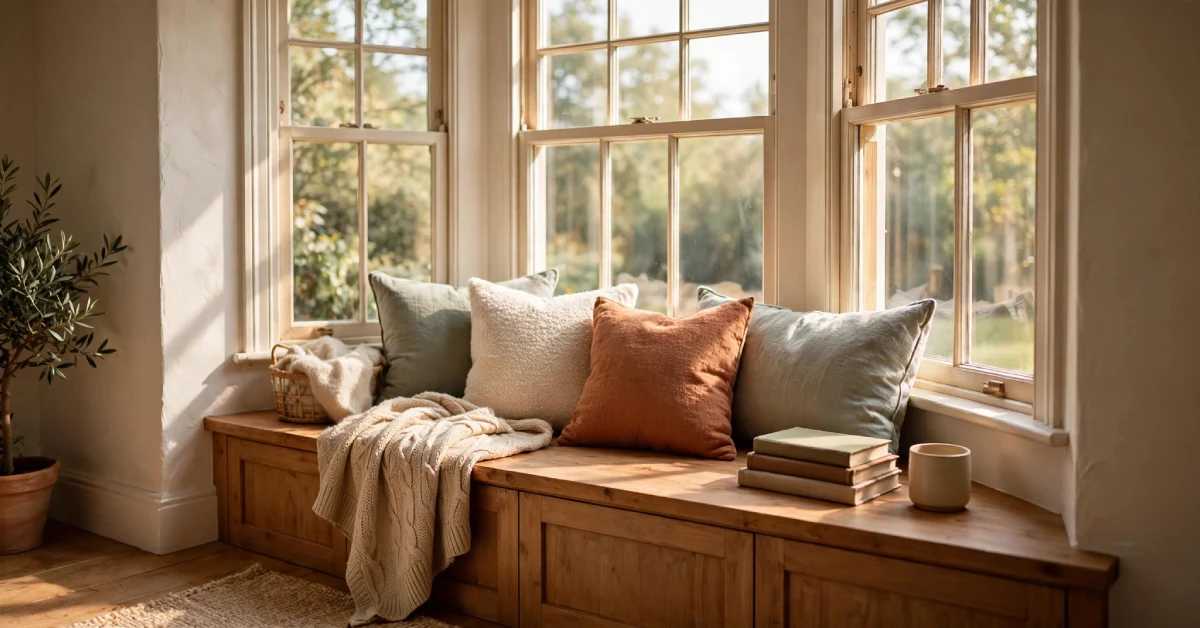
- Create a window seat — a built-in bench with cushions turns the bay into a dedicated spot to sit.
- Build a reading nook — add shelving and good lighting for a quiet corner.
- Add built-in storage — use the space under a window seat for drawers or cubbies.
- Create a breakfast nook — a small table and chairs can fit neatly in a kitchen bay window.
- Turn it into a plant area — the extra light makes bay windows a strong spot for houseplants.
- Create a bedroom seating area — a small chair or bench adds a quiet spot to unwind.
- Use it as a decorative feature — even without added furniture, a bay window can highlight artwork, plants, or seasonal décor.
How to Decorate a Bay Window
- Curtains — can be hung on a curved or angled track to follow the shape of the window.
- Blinds — fitted per panel for more precise light control.
- Shutters — offer a clean, structured look and work well with angled frames.
- Window seats and cushions — make the space both functional and comfortable.
- Plants and accessories — take advantage of the extra light and sill space.
The goal is to work with the window’s shape, not just cover the glass. Treatments that follow the angles tend to look more intentional than ones that ignore them.
How to Choose Window Treatments for a Bay Window
Standard single-track curtains or blinds often don’t fit a bay window well, since the angled panels need separate or specially shaped hardware. Measure each panel individually rather than treating the whole bay as one flat span.
Curtains offer a softer look and more flexible light control, while blinds give a cleaner, more tailored appearance and can be adjusted panel by panel for privacy. Think through how much privacy and light control you need in that specific room, and try to keep the treatments visually consistent across all three panels so the window reads as one cohesive feature.
How to Maximise Natural Light With a Bay Window
- Choose the right window size — bigger panels let in more light, within reason for the room.
- Consider window orientation — a south- or west-facing bay window (in the Northern Hemisphere) tends to get more direct sun.
- Use a large centre picture window — an unobstructed centre panel maximises the view and light.
- Choose slim frames — thinner frames leave more room for glass.
- Minimise obstructive grilles — fewer dividers mean less blocked light.
Can You Add a Bay Window to an Existing House?
Yes, in most cases, but it depends on the wall’s structure and what local building rules allow. Adding a bay window means cutting into the existing wall, which requires structural support to carry the load safely, along with matching interior and exterior finishing so it blends with the rest of the house.
Depending on where you live, the project may need a building permit or need to meet specific planning requirements, especially if it changes the home’s exterior footprint. Because of the structural work involved, it’s worth having a contractor assess the wall and confirm what’s realistic before committing to the project.
How Is a Bay Window Installed?
Measure and Assess the Opening
A contractor measures the wall opening and evaluates the structure to confirm what size and configuration will work.
Choose the Window Configuration
This includes the angle, number of panels, material, and glazing type based on your goals and budget.
Prepare the Wall
The existing wall section is opened up or modified to fit the new window unit.
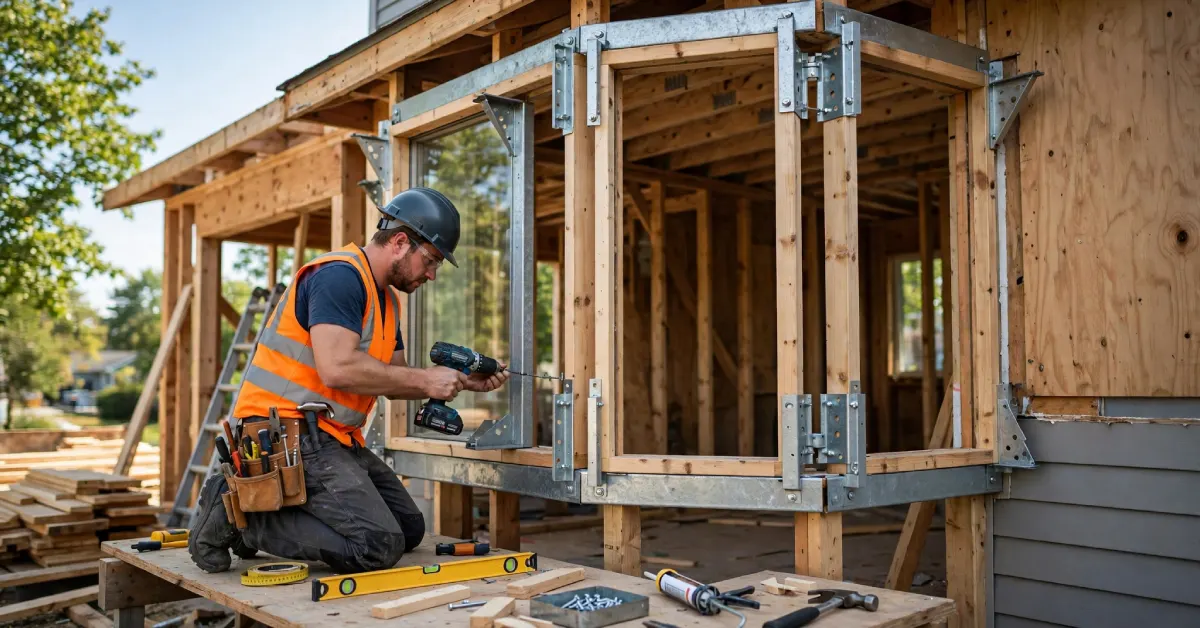
Install Structural Support
Brackets, cables, or foundation work are added depending on the chosen design.
Install the Window Unit
The window is set into place and secured to the structure.
Insulate and Seal
Proper insulation and sealing around the frame prevent drafts and moisture problems later on.
Complete Interior and Exterior Finishing
Trim, siding, and interior details are finished to match the rest of the room and exterior wall.
How to Maintain a Bay Window
- Clean the glass regularly to keep the extra panels looking their best.
- Inspect seals and frames periodically for gaps or wear.
- Check for drafts, especially around the header and seat board.
- Monitor for condensation buildup, which can signal a ventilation or insulation issue.
- Maintain wooden frames with painting or sealing as needed.
- Inspect exterior components and support brackets or foundation work for damage.
- Address leaks or damaged seals promptly to avoid water damage inside the wall.
Are Bay Windows Worth It?
Whether a bay window is worth it depends on what you’re trying to get out of it. If natural light, extra usable space, wider views, and curb appeal matter to you, a well-built bay window can deliver on all of those fronts. If your budget is tight or your wall isn’t well suited to the structural work involved, the cost and complexity might outweigh the benefit.
Energy efficiency, ongoing maintenance, and the specific needs of your property all factor into the decision too. There’s no single right answer — it’s a matter of weighing what the window adds against what it costs to install and maintain in your particular home.
Conclusion
A bay window can genuinely change how a room feels, adding light, views, and usable space that a standard window can’t match. But it’s also a bigger investment than a simple window swap, with real structural and cost considerations to weigh. If you’re thinking about adding or replacing one, start by getting a professional assessment of your wall and a few contractor quotes — that will give you a clearer sense of what’s realistic for your home and budget.
FAQs
What is the main purpose of a bay window?
A bay window adds natural light, wider views, and extra interior space by projecting outward from the exterior wall, while also giving the home’s exterior more architectural detail.
Are bay windows expensive?
Bay windows generally cost more than standard flat windows because of the extra glass, panels, and structural support they require. The exact price depends on size, material, and whether it’s a new installation or a replacement.
Do bay windows add value to a house?
They can, but the effect on resale value depends on the property, the quality of the installation, and local market preferences. It’s not a guaranteed return.
Can you add a bay window to an existing house?
Yes, in most cases, though it requires cutting into the wall, adding structural support, and matching interior and exterior finishing. A professional assessment is recommended first.
What is the difference between a bay and bow window?
A bay window typically has three panels at sharper angles, while a bow window has four or more panels at gentler angles, creating a more rounded curve.
Are bay windows energy efficient?
They can be, if fitted with Low-E glass, proper double or triple glazing, and well-insulated framing. Without these, the extra glass area can lead to more heat loss.
What is the best angle for a bay window?
It depends on your goals — 30 degrees suits a traditional, shallower look, 45 degrees balances light and space, and 90 degrees maximises interior room for seating or storage.
What rooms are best for bay windows?
Living rooms, dining rooms, bedrooms, and kitchens are the most common choices, since they benefit most from the added light and space.
How do you decorate a bay window?
Common options include curtains on curved tracks, panel-fitted blinds, shutters, window seats with cushions, and plants that take advantage of the extra light.
What window treatments work best for bay windows?
Treatments fitted to each panel — rather than one flat span — tend to work best, since they follow the angled shape of the window more naturally.