

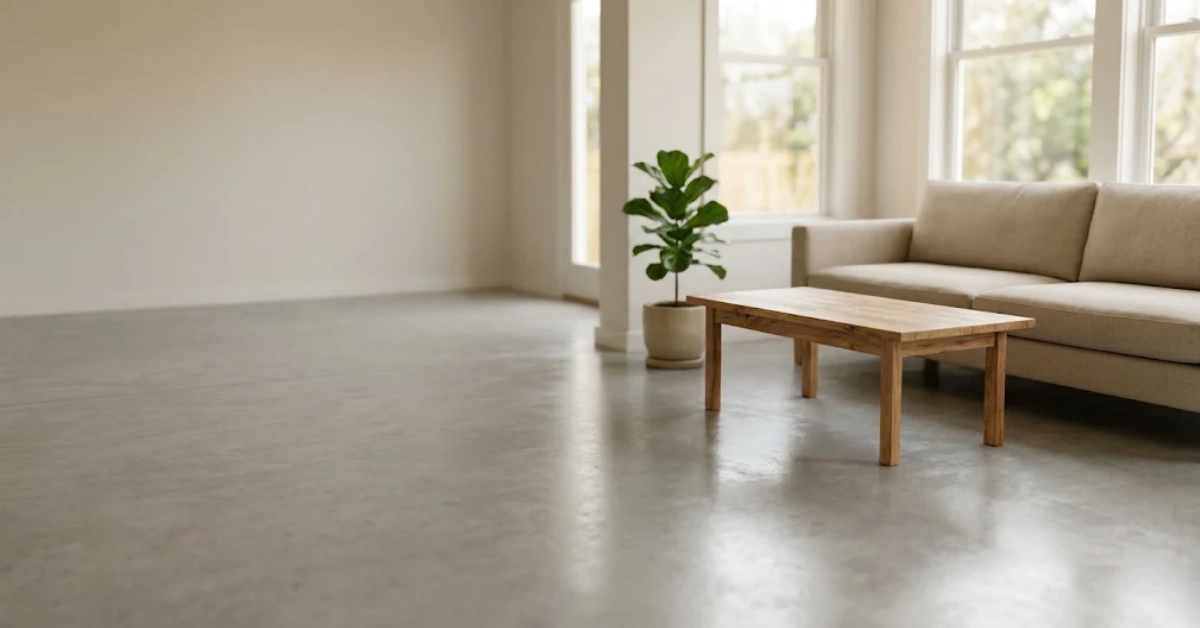
Polished concrete flooring is a durable, low-maintenance floor made by grinding and polishing an existing concrete slab until it shines. Homeowners choose it for its modern look, long lifespan, and lower upkeep compared to tile or hardwood.
Costs typically range from $1,000 to $8,000, depending on size, finish, and the condition of the slab.
What Is Polished Concrete Flooring?
Most people walk on concrete every day without giving it much thought. A garage slab or warehouse floor looks plain and grey. Polished concrete changes that. A contractor grinds the surface with progressively finer diamond abrasives, densifies it with a chemical hardener, and then polishes it to a sheen the homeowner selects. The finish can be matte, satin, or high gloss.
Because the floor is built from the slab already in place, many projects skip the cost and waste of tearing out old flooring. The method works in kitchens, living rooms, basements, retail stores, and offices. Designers also like it because the color can be left natural or tinted, and decorative aggregate colour can be exposed for extra texture.
This guide walks through the benefits and drawbacks, typical costs, the polishing process, daily and long-term upkeep, and the questions that help you decide whether this floor fits your home or building.
Pros and Cons of Polished Concrete Flooring
Polished concrete offers several advantages that make it attractive for both residential and commercial spaces.
- Durability: The surface handles heavy foot traffic, rolling chairs, and furniture without wearing through as softer materials do.
- Low maintenance: Regular dust mopping and an occasional damp mop with a pH-neutral cleaner keep the floor looking clean.
- Design flexibility: Sheen, color, and aggregate exposure can all be adjusted to match your room’s style.
- Long lifespan: A well-prepared slab can last for decades, which reduces the need for replacement.
- Heat compatibility: Concrete works well with radiant floor heating, which helps distribute warmth evenly.
The material also has real drawbacks that deserve attention before you commit.
- Hard surface: Standing on concrete for long periods can cause fatigue, and dropped dishes or glasses may break.
- Cold feel: Without radiant heat or area rugs, the floor can feel chilly, especially in winter.
- Noise: Sound bounces off hard surfaces, so rooms may echo unless you add rugs or acoustic treatments.
- Stain sensitivity: Acidic spills such as vinegar, citrus juice, or wine can etch the surface if left too long.
- Dust during installation: Grinding produces significant dust, so the work requires containment and proper ventilation.
How Much Does Polished Concrete Flooring Cost?
Costs vary with the size of the area, the condition of the existing slab, and the level of polish you want. Homeowners commonly pay between $1,000 and $8,000 for a typical project, according to 2025 pricing data from HomeAdvisor. The average job lands near $4,500. Highly polished finishes cost more than matte ones because they require additional grinding passes and more polishing steps.
Lifetime cost matters as much as the upfront price. In a commercial analysis published in Build-Construct and reprinted by For Construction Pros, flooring consultant David Stephenson compared polished concrete with VCT, a common vinyl composition tile used in commercial buildings. He found that polished concrete cost about $2.00 more per square foot to install during a remodel, but its annual maintenance ran roughly $1.00 per square foot compared with $2.00 for VCT. Over ten years, that gap can outweigh the higher installation cost.
The broader market is also expanding. GII Research valued the polished concrete market at about USD 3.30 billion in 2025, reflecting growing demand from property owners who want durable floors with predictable upkeep.
How to Polish Concrete Floors Step by Step
A professional crew follows a consistent sequence. Knowing the steps helps you ask better questions when you request quotes.
- Assess the slab. The installer checks for cracks, moisture problems, existing coatings, and uneven areas.
- Repair the surface. Cracks and holes are filled, and high spots are addressed so the finished floor looks even.
- Grind the floor. Coarse diamond pads remove the top layer, followed by finer grits that smooth the surface.
- Densify the concrete. A lithium or sodium silicate hardener penetrates the slab and tightens the surface, which improves hardness and dust control.
- Polish to the desired sheen. Progressively finer pads bring the floor to a matte, satin, or high-gloss finish.
- Apply a sealer. A penetrating or topical sealer adds stain resistance and protects the finish during daily use.
Each step affects the final result. Skipping crack repair or rushing the grinding stage often leaves visible flaws that cannot be fixed later without starting over.
Maintenance Tips for Polished Concrete Flooring
Good maintenance keeps the floor looking new and protects your investment. A simple routine goes a long way.
- Sweep or dust mop daily to remove grit, which can scratch the surface over time.
- Damp mop weekly with a pH-neutral cleaner made for polished concrete.
- Wipe up spills promptly, especially acidic liquids, to prevent etching.
- Use felt or rubber pads under furniture legs to avoid scuffs.
- Schedule professional maintenance such as burnishing or recoating based on traffic levels.
Stephenson points out that no flooring is truly maintenance-free. He notes that using too much cleaner can build up residue and shorten the floor’s life, so following the manufacturer’s dilution guidelines matters. A written maintenance plan helps property managers and homeowners stay on track.
Is Polished Concrete Flooring Right for You?
Polished concrete suits many homes, but it is not the right choice for every situation. Consider these questions before you decide.
- Does the slab have a solid base? Structural cracks or moisture issues need repair first, which adds cost.
- Do you prefer warm, soft flooring? Concrete feels harder and cooler than wood or carpet, so plan for rugs or radiant heat.
- Do you have young children or pets? Hard floors make falls more painful and can amplify noise, though they are easy to clean.
- How long do you plan to stay? Polished concrete adds appeal to a home, and its durability makes it attractive to future buyers.
- What is your budget for upkeep? Lower maintenance costs often offset the higher upfront investment over time.
A local flooring contractor can inspect your slab and recommend the best finish for your space. Ask for samples in the sheen and colour you prefer, and view them in both natural and artificial light.
If moisture is already affecting your space, review our guide to expert water damage restoration services before you plan a new floor.
Planning an outdoor project such as a patio or walkway? Our overview of Colorado landscape installation covers layout, materials, and drainage considerations.
Final Thoughts
Polished concrete flooring combines durability, style, and practical upkeep in one surface. It works well for homeowners who want a modern look without frequent repairs, and for businesses that need a floor able to handle heavy use. The upfront cost can be higher than some alternatives, but lower maintenance and a long lifespan often balance the numbers over time.
Before you start, have the slab inspected, compare quotes that spell out the grinding and polishing steps, and agree on a maintenance plan. With the right preparation and care, polished concrete can serve your space well for many years.
FAQs
How long does polished concrete flooring last?
With proper installation and routine care, a polished concrete floor can last for decades. The protective sealer usually needs replacement every two to five years, depending on how much foot traffic the floor handles. Recoating on schedule keeps the finish looking fresh.
Is polished concrete slippery?
Glossy finishes can feel slick when wet. A satin or matte sheen offers better grip than high gloss. Area rugs in entryways and kitchens, along with a slip-resistant sealer, add extra safety in areas that get wet often.
Do I need to remove existing flooring before polishing?
Usually, yes. Grinders work directly on the concrete slab, so tile, carpet, vinyl, or adhesive must be removed first. A contractor can confirm the slab’s condition once the old covering is gone.
Does polished concrete increase home value?
Many buyers find polished concrete appealing because it looks modern and needs little upkeep. Its effect on value depends on the local market and the overall condition of the property, so it works best as one part of a well-maintained home.