

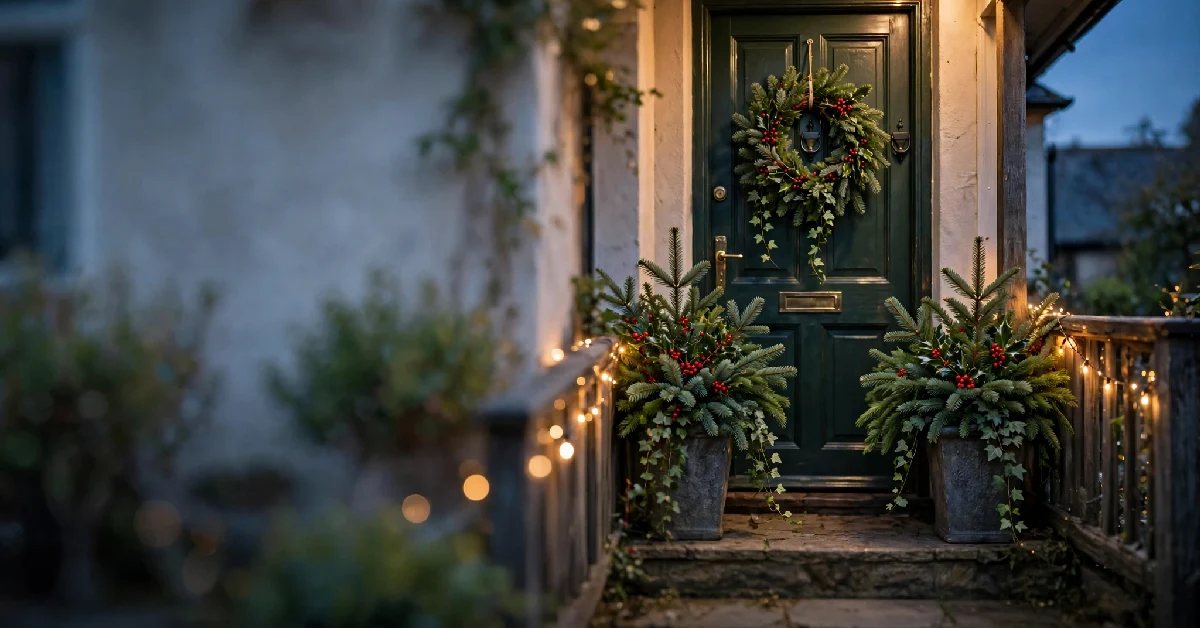
Many UK homeowners now treat the outside of their home as part of the festive display. Porches, window boxes, and garden planters often get the same attention as the living room tree. Outdoor greenery is an easy way to join in, and it can make a home look welcoming from the street.
Demand for natural festive materials remains strong. The Horticultural Trades Association (HTA) reported in its Independent Christmas Tree Survey for 2024 that 4.9 million UK households, or 16 Percent, bought at least one real Christmas tree. Total spending on real trees topped £194 million that year. Households that value natural scent and texture often carry that preference into their porch and garden.
Garden spending is also climbing. A 2026 UK outdoor living report projected that the average homeowner would invest £865 in outdoor projects, up from £798 in 2025. Thompson and Morgan’s 2025 survey of 1,362 gardeners found that 76.9 Percent had increased their garden budgets. Homeowners already investing in their outdoor space have a clear reason to extend that effort into the festive season. The HTA also noted in December 2025 that Christmas sales arrived early at UK garden centres, although cost pressures continued.
This guide covers how to choose greenery, which plants handle wet weather, how to build durable displays, and how to keep everything looking fresh into January.
Choose Between Real and Artificial Greenery
Real greenery brings a natural scent and an authentic look. It also breaks down in the compost bin after the season, which suits gardeners who prefer less waste. The trade-off is upkeep. Fresh cuts dry out, and exposed material can start to brown within a few weeks when it faces cold, wind, or heavy rain.
Artificial foliage needs far less care. Choose products labelled for outdoor use, because standard indoor decorations can fade or crack under UV light and repeated rain. A good outdoor set can last several seasons, which often offsets a higher upfront price. The downside is that synthetic pieces rarely produce any scent, and cheaper versions can look flat when viewed up close.
Many homeowners combine both options. A few fresh boughs beside the front door give a rich, aromatic welcome. Artificial trailing foliage in shadier planters or hanging baskets keeps the display full without constant replacement. This mixed approach lets you control both cost and effort while still getting a natural feel where it matters most.
Pick Plants That Handle Wet Weather
Not every festive green suits outdoor conditions. Choose species that stay firm through frost, wind, and rain, and ask your garden centre which options are in stock locally, since availability changes by region and season.
- Fir and spruce: Nordmann fir and Norway spruce hold their needles well and carry a strong, pleasant scent. Their branches work well as wreath bases and as the tall centre of a planter.
- Holly: Glossy leaves and red berries add colour through the darkest weeks of winter. Wear gloves when you handle it, because the leaf edges are sharp. Berries also attract birds, so position holly where that suits your garden.
- Ivy: Trailing ivy stays green through cold months and softens the edges of containers and window boxes. Trim it regularly in the garden, since it can spread faster than expected.
- Cedar: Cedar foliage is fragrant and tolerates cold and wind reasonably well. It works well for garlands and for wider displays by a front step.
- Skimmia: This compact evergreen shrub produces red berries and suits pots beside a doorway. Buying plants that are already in bud gives you winter colour sooner.
Mixing two or three of these plants in one display adds texture. Fir gives height, ivy adds trailing movement, and holly or skimmia adds colour.
Create Outdoor Christmas Greenery Displays
Planters are the simplest place to start. Choose a container with drainage holes, since waterlogged soil can rot stems and roots. Plastic and glazed ceramic handle frost better than thin terracotta, which can crack after repeated freezing and thawing.
Fill the container with peat-free compost or a mix of soil and grit. Insert the tallest stem first, usually a central piece of spruce or fir. Angle the next layer outward, then add trailing ivy around the rim so it spills over the edge. Finish with a few berry stems placed where they catch the light from the street.
Keep the arrangement tight. Loose stems catch wind and fall out of the container within days. Secure the base with a few loops of garden wire, or add a small stake if the planter sits in an exposed spot.
Water the compost lightly after planting. Fresh cuts stay healthier when the soil holds some moisture, but soggy compost works against them. Check the surface every few days during dry spells and water only when the top layer feels dry.
If you plan to add light, our guide to outdoor lit Christmas gifts suggests ideas that suit exposed spaces and pair well with evergreen displays.
Hang Wreaths and Garlands Safely
Wreaths and garlands need secure fixings. Use hooks or brackets rated for outdoor use, and check that they can carry the weight of wet greenery. A heavy wreath hung on a weak nail can fall during a storm and damage the door or the wreath itself. Place it on a sturdy surface where it will not block the path or the door swing.
Choose lights carefully. Look for outdoor-rated fittings and check the IP rating printed on the packaging. A higher IP number means better protection against water and dust, so a higher number is the safer choice for a wreath or garland that faces rain. Connect lights to an outdoor-rated socket or extension lead with appropriate protection, and avoid overloading a single circuit. Switch lights off when you leave home or go to bed.
For ground-level decoration, see our Santa and sleigh yard decorations guide for ideas that pair well with evergreen bases and planters. Keep decorations clear of walkways so visitors and delivery drivers can move safely.
Keep Greenery Fresh Through the Season
Good care keeps a display looking full from early December into January. Check arrangements once a week. Remove browned needles or leaves, since dead material looks untidy and can hold moisture against healthy stems. Mist real greenery on dry, windy days, and top up water in containers when the soil feels dry.
Protect displays from heavy frost where you can. Move small planters under an overhang during the coldest nights, or cover them with a fleece sheet if they cannot move. Keep fresh greenery away from radiators, heater vents, and direct sun behind a window, because heat dries needles quickly.
Plan a refresh partway through the season. The material that looks best on the first day may fade by mid-January, especially near a door that stays open often. Keep a few spare sprigs on hand so you can replace tired pieces without rebuilding the whole display.
FAQs
How early can I put up outdoor greenery?
Many people wait until the first or second week of December. Decorating earlier works well if you plan a refresh later in the season, since fresh material holds its appearance better when it is replaced before it starts to fade.
Is artificial greenery safe to leave outside all winter?
Yes, provided it carries an outdoor rating. Check the label for UV and weather resistance. Some manufacturers recommend bringing pieces indoors during the coldest or wettest weeks, so follow their guidance.
Which greenery lasts longest in cold weather?
Fir, spruce, and cedar generally keep their needles well in cold conditions. Holly and ivy also tolerate frost. Results depend on shelter, watering, and how recently the material was cut, so buy fresh stock and keep it protected from wind.
Can I reuse outdoor greenery after Christmas?
Real greenery can go into a garden compost heap once you remove wire, plastic, and decorative pieces. Artificial greenery can be stored in a dry place, ideally in its original packaging, and reused in later seasons.
Should I buy greenery from a garden centre or a supermarket?
Garden centres often stock a wider range of species and can advise on care. Supermarkets offer convenient bundles at accessible prices. Compare freshness, check the cut date where it is shown, and look for needles that bend rather than snap, since that usually signals better moisture content.