

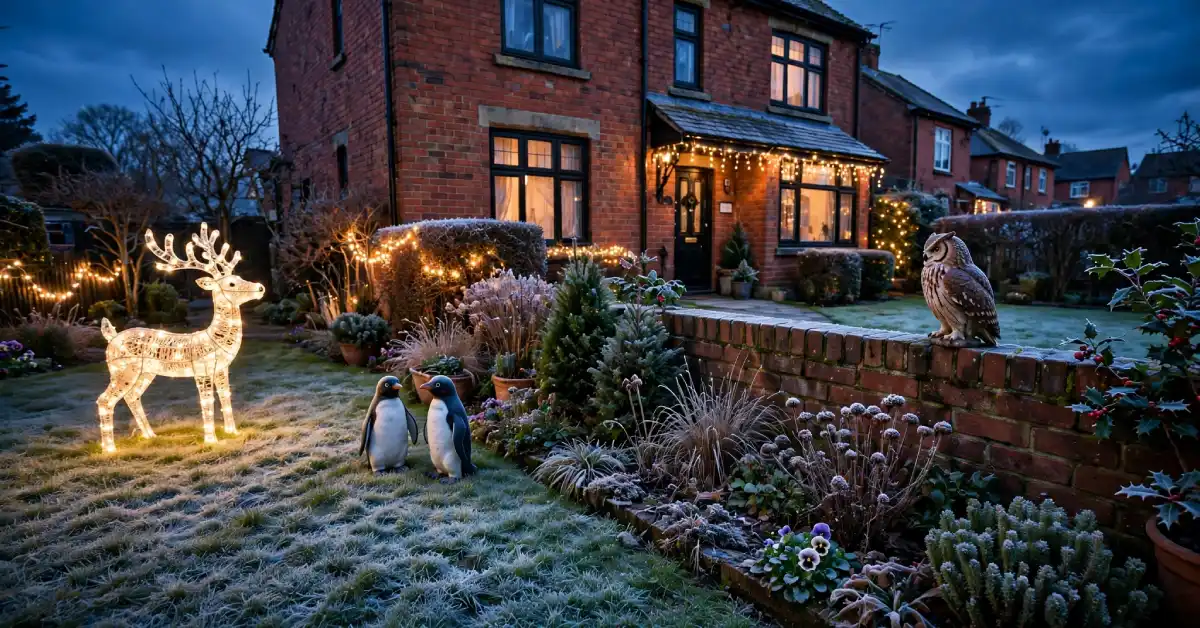
Few decorations make a front yard feel festive faster than a glowing reindeer or a line of penguins by the garden path. Animal figures have been a holiday favorite for years, and they still stop neighbors and passersby in their tracks. Interest in bigger outdoor displays is growing too. Uswitch reported in November 2025 that about one million UK households planned to go all out with their Christmas displays, many adding snow machines and inflatables.
This guide covers the main types of animal decorations, how to size and light them, the most important safety checks, and simple placement ideas that make a display look planned rather than crowded. Whether you have a small porch or a wide front lawn, you will find a setup that fits.
Why Animal Figures Suit Winter Yards
Animal figures work well in winter because their shapes read clearly from a distance. A reindeer silhouette is easy to recognise from the pavement, even in the dark. That clarity helps a display make an impact without requiring dozens of extra pieces.
Animals also appeal to a wide audience. Children tend to notice them first, and adults often enjoy the playful touch they add to a home. Figures suit many architectural styles, from brick terraces to modern detached houses, which makes them a flexible choice for most households.
Local councils show how much value people place on festive lighting. Freedom of Information requests sent by Uswitch found that councils spent about £30 million on Christmas lights and decorations between 2023 and 2025. Private households may spend far less, but the trend shows that bright, well-planned displays remain a priority across the country.
Types of Outdoor Animal Christmas Decorations
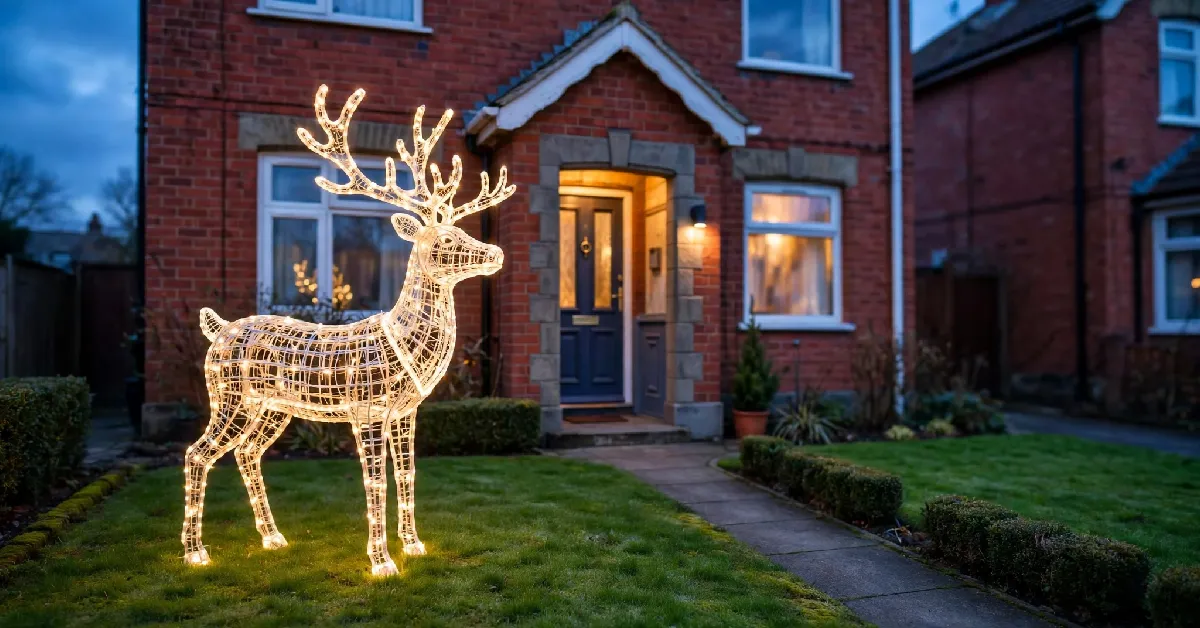
Animal figures come in several styles. Each one creates a different mood, so decide on the look you want before you shop.
- Reindeer and sleigh sets are the most common choice. Lit antler frames and full-body deer work well on lawns and along driveways.
- Penguins and polar bears suit a winter theme. Many come in pairs or family groups that fill a flower bed without crowding it.
- Owls and woodland animals fit a rustic or cottage style. Warm white lights on these models blend well with natural materials such as wood and stone.
- Inflatable animals are quick to set up and easy to spot from the street. They need a blower that runs for the whole display, so plug it into an outdoor-rated socket.
Traditional homes usually look best with realistic figures in warm tones. Modern homes often suit simpler shapes in cool white. Playful displays can mix colours and sizes, but keep the overall theme consistent so the yard reads as one display rather than several.
Consider how often you will handle the figures. Lightweight inflatables and plastic frames are easier to store and move, while heavier metal frames tend to last longer through repeated seasons. Choose the type that matches your storage space and how much you want to set up each year.
Choosing the Right Size for Your Space
Scale matters more than most shoppers expect. A small reindeer can disappear on a wide lawn, while a large figure can overwhelm a narrow porch. Measure the area before you buy, and compare those measurements with the product dimensions listed on the box or product page.
Keep a few practical points in mind when planning your layout:
- Leave room for mowing, raking, and snow clearing.
- Keep figures at least a metre from paths so visitors can pass safely.
- Use one large figure as the focal point, then add smaller animals around it.
Balanced spacing helps the display read clearly from the road. Grouping three or five smaller figures often looks more deliberate than scattering single pieces across the yard. Stand at the curb and look at the layout before you fix anything in place. This simple check shows gaps and crowded corners that are easy to miss up close.
Lighting Options for Animal Displays
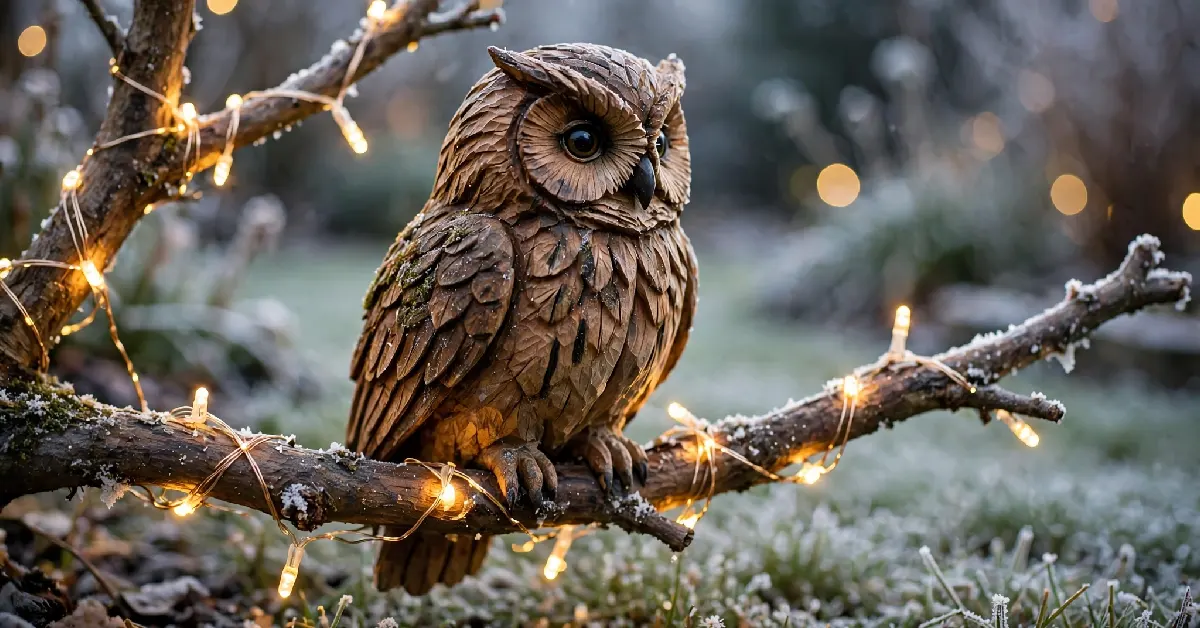
LED lights have become the standard for outdoor figures, and for good reason. Electrical Safety First has long recommended LED sets over traditional filament lights. LEDs run at extra-low voltage, which lowers the risk of electric shock, and they draw far less power.
Light colour sets the mood of the display. Warm white suits woodland animals and cottage-style homes. Cool white works well with polar bears and penguins. Multicolor sets suit playful displays with inflatables or bright figures. Mixing colours across many figures can look busy, so pick one main shade and add accents sparingly.
Timers are worth the small cost. A timer plug can switch lights on at dusk and off at a set time, which saves energy and reduces wear on the cables. Many people set their timers to run in the evening only, which keeps the display visible during the hours when most neighbours and passersby are out.
Check how many figures a single outlet can power before you connect them. Follow the manufacturer’s maximum for linked sets, and never join sets from different brands unless the packaging says they are compatible. Mixed sets can overload a circuit or cause uneven brightness across the display.
Safety Checks Before You Plug In
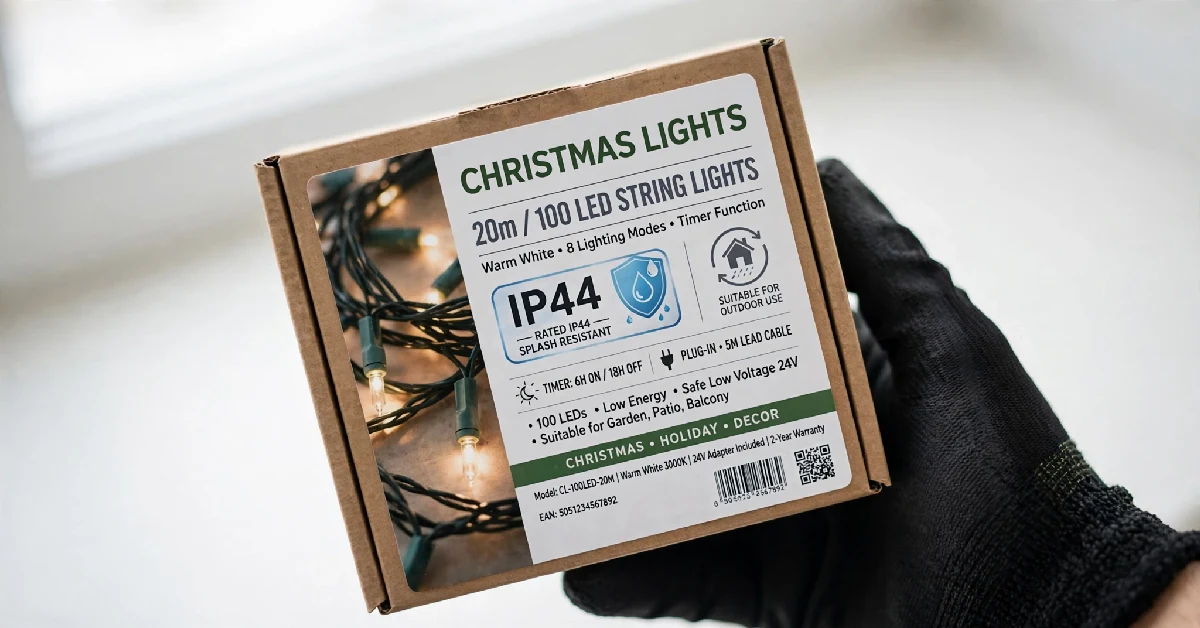
Electrical safety should come before style. Start by checking the packaging for an IP code, which shows how well a product resists water and dust. The second digit indicates water protection, so a higher number means stronger protection. Lighting experts quoted by Homes & Gardens also stress that the IP rating is the key measure of weatherproofing for outdoor lights.
Fixtures exposed to rain need a rating of at least IP44. Fully open lawns and areas that collect standing water often call for IP65. Indoor lights should never go outside, even for a short time, because they lack the sealing needed to handle moisture.
Inspect every set before you hang it. Look for frayed cables, cracked casings, and damaged plugs. Discard any set that shows these signs. Wrapping damaged wires in tape does not restore their protection and can create a fire risk.
Use outdoor sockets protected by a residual current device, and keep plugs raised off wet ground. Secure cables along the base of the figure so visitors do not trip over them. Good habits also make displays last longer. For a quick guide to routine checks, see our landscape lighting maintenance checklist.
Placement Ideas for Front Yards and Porches
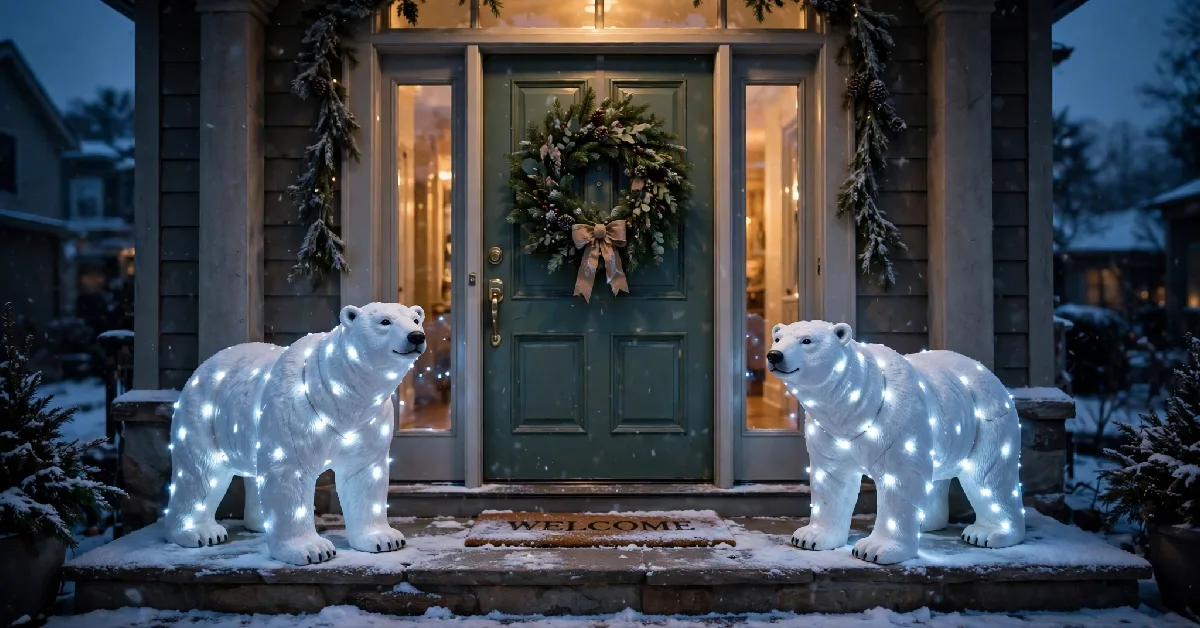
Placement turns a collection of figures into a display. Start with the entrance. A pair of animals on either side of the front door creates a welcoming focal point that guests see first.
Driveways and paths work well with smaller figures spaced evenly along the edges. This approach guides the eye toward the house and makes the whole yard feel connected. For a corner lot, place a larger figure where it can be seen from both streets.
For a themed look, match your animals with other decorations. If you already own sleigh pieces or Santa figures, our guide to Santa and sleigh yard decorations offers ideas for pairing them with animal figures so the display feels coordinated.
Keep figures and cables well clear of pools, ponds, and other wet areas. Secure lightweight figures with ground stakes or weighted bases so wind does not topple them. Check the stakes after each storm, since loose ground can shift over time.
Budget Tips for Buying Figures
A clear budget keeps a display from growing beyond what you planned. Decide how much you want to spend on each area, such as the entrance, the lawn, and the driveway. Buying in stages lets you test the look before committing to a full setup.
Compare products by size, lighting type, and warranty rather than price alone. A slightly more expensive figure with a longer warranty can cost less over several seasons. Read customer reviews that mention how the product held up in wet or windy weather, since those comments show real-world durability.
Buy from established retailers that list IP ratings and safety marks clearly. Products with missing information are harder to check and may not meet UK electrical standards. A reputable seller also makes returns and warranty claims simpler if a set fails early.
If you want lit gift ideas to pair with your display, our outdoor lit Christmas gifts guide suggests items that match the theme. Choosing coordinated pieces can lower costs because you can reuse the same colour scheme for both the figures and the accessories.
Storing and Maintaining Your Display
Good storage extends the life of every figure. Once the season ends, unplug all sets, let them dry fully, and wipe away dirt or moss. Store cables loosely coiled rather than tightly wound, since tight bends can damage the wiring over time.
Keep figures in a dry, cool place such as a garage or shed. Label each box with the animal name and the year it was used. Labels make setup faster the following year and help you spot any missing parts.
Test every set before you reinstall it. Check that all bulbs or LEDs light up and that the plug and controller work. Replace damaged parts rather than trying to repair them with household tape or sealant, since those fixes do not restore safety ratings.
Check stakes, weights, and ground anchors each year. Soil can soften and shift after a long wet period, and loose anchors increase the risk of a figure blowing over during winter storms.
FAQs
Can outdoor animal decorations stay up all winter?
Many are built for it, provided they carry a suitable IP rating and show no damage. Bring lights in during severe storms, and store figures and cables in a dry place once the season ends.
How do I stop lightweight figures from blowing over?
Use ground stakes, weighted bases, or tie-downs. Choose figures with wide bases, and move them to a sheltered spot if strong winds are forecast.
Are LED animal lights cheaper to run?
Yes. LEDs use far less power than traditional bulbs, which keeps running costs lower across a long display. Pairing them with a timer reduces use even further.
Can I use indoor lights on outdoor figures?
No. Indoor lights lack the weather sealing needed outside and can create a shock or fire risk. Always choose sets labelled for outdoor use.
Do I need an RCD for outdoor Christmas lights?
A residual current device adds an important layer of protection when lights run outdoors. Use an outdoor socket with an RCD, or a plug-in RCD if your existing socket does not have one.