

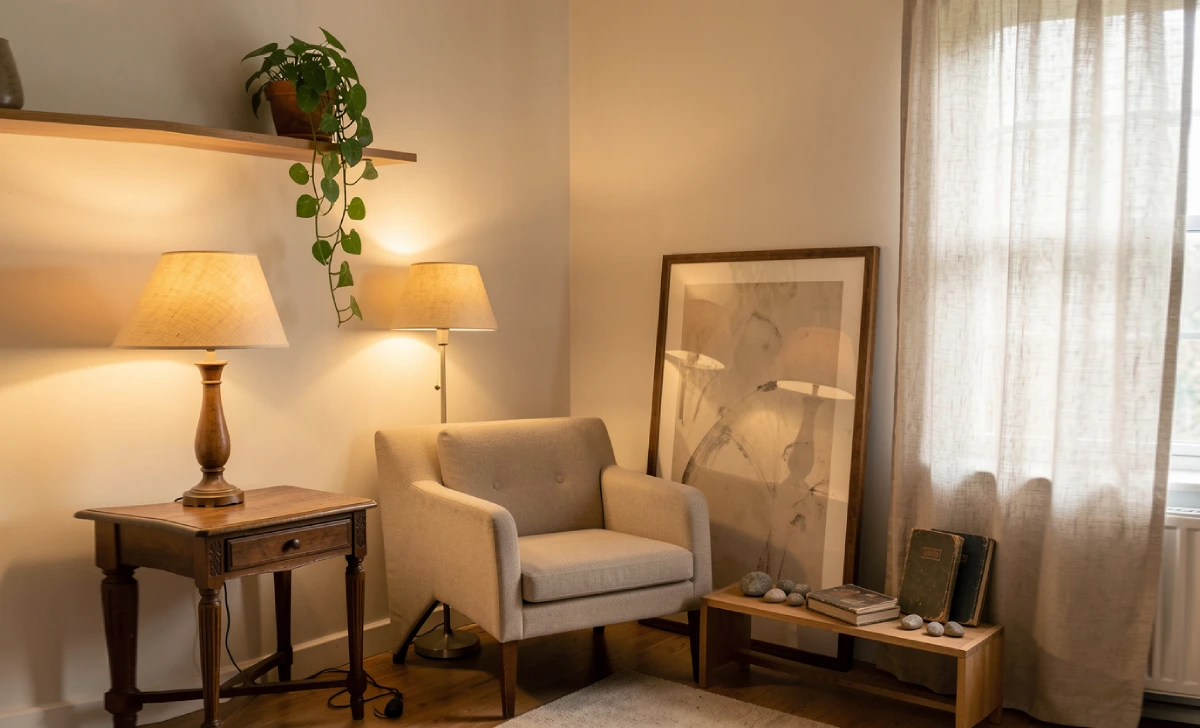
Alternative home décor is not a specific style. It is an approach to decorating based on how you actually live, what genuinely matters to you, and what has meaning in your life. It mixes old and new, expensive and cheap, polished and worn. The goal is a space that feels like yours, not a room pulled from a catalog.
Most people get stuck thinking they need to buy more to make a home feel personal. In practice, the opposite is usually true. Editing what you already own, adding objects with real history, and making small intentional changes over time will get you further than any shopping trip. Alternative home décor is about choices, not budgets.
What “Alternative Home Décor” Actually Means
Walk into some homes, and you can feel them. Others just look correct. The difference is rarely about money or square footage.
Alternative home décor means rejecting the idea that your space has to follow a catalog or trend. It is personal home décor, built around your life rather than a mood board. You mix styles, blend price points, keep things that have meaning, and let imperfection stay when it belongs.
It is not the same as eclectic interior design, though there is overlap. Eclectic is a style. Alternative is more of a mindset: your home should fit how you live, not the other way around.
If your space currently looks fine but does not feel like you, this article is for you.
Start by Removing, Not Adding
The fastest way to make your home feel more personal is to take things away. Most spaces feel generic because they are full of items that ended up there by default, not by choice.
Pick one surface, a shelf, a dresser, or a counter, and clear everything off. Put back only what you genuinely like or use. Leave the rest in a box for a week. You will likely find you do not miss most of it.
This is the foundation of unique home styling. Space around an object is what makes it visible. When everything competes for attention, nothing stands out.
Mix Old and New Without Overthinking It
One of the simplest ways to create a personal space is by mixing old and new décor. A vintage lamp next to a simple modern chair does not clash. It creates depth. It tells a small story about where things came from.
You do not need matching sets. Three chairs around a dining table that are all slightly different often feel warmer than a matched set straight out of a box. The trick is finding one thread that connects them, a shared color, a similar scale, or just the fact that you chose each one deliberately.
Do not overthink it. If two pieces share a room because you love both of them, that is reason enough.
Use Textiles to Shift the Feel of a Room Fast
Rugs, throws, curtains, and cushions change a room faster than almost anything else. They introduce texture, color, and warmth without requiring a renovation.
Swapping a throw and a couple of cushions takes ten minutes and can make a room feel like a different season entirely. A runner in a hallway softens sound and guides movement. A heavier curtain in winter and a lighter one in summer costs very little and makes a noticeable difference.
Textiles are also easy to store and reuse. A few quality pieces that you genuinely like will serve you for years and adapt to different arrangements over time.
Display Things That Actually Mean Something to You
Collections tell a story, but only when they are edited. A shelf crowded with objects from everywhere and nowhere feels busy. Five or six pieces you genuinely care about feel considered.
Keep travel finds, objects with family history, or things that simply remind you of a specific time or place. These are the things that make alternative home décor feel different from standard decorating. They carry weight that store-bought items rarely have.
The practical rule: limit groupings to around five to seven items. Group them by color, shape, or meaning. Photograph the full collection before you rotate items so you keep the memory without keeping the clutter.
Let Function Shape How the Room Is Arranged
A calm home is usually a practical one. When the layout fights how you actually use a space, the room never quite settles.
If you read in the same chair every night, that chair needs good light and somewhere to set a cup down. If you often work from the couch, a small side table solves more than a redesigned desk setup. Design that follows real use tends to stay tidy longer and feel more comfortable over time.
Create simple zones where you can: one for reading, one for rest, one for work. Even in a small apartment, a small shift in furniture placement can separate activities without walls.
Bring in One Strong Natural Element
A few well-placed natural pieces change a room more than a dozen small décor items. One healthy plant, a branch in a simple vase, or a small collection of stones on a windowsill adds texture and quiet without much effort.
Start with one easy-care plant if you are not confident with plants. Snake plants and pothos survive almost anything. Seasonal foliage in a vase costs almost nothing and changes the whole feeling of a surface.
The wabi-sabi home philosophy, which values the natural, the worn, and the imperfect, fits well here. You are not aiming for a perfectly styled corner. You are adding something that feels alive and real.
Use Layered Lighting Instead of One Overhead Light
Overhead lighting is useful but rarely flattering. The rooms that feel good to spend time in after dark are usually lit from multiple lower points.
A floor lamp, a table lamp, and a small light on a shelf give you options. You can adjust the mood without touching a dimmer. Low light near the floor feels intimate. Light bouncing off a wall feels soft. Multiple light sources at different heights make a room feel alive rather than examined.
If you change nothing else this week, add one lamp to a room that currently relies only on a ceiling fixture. The shift is immediate.
Let Surfaces Show Some Use
There is a quiet pressure to keep homes looking magazine-ready. The result is rooms that feel staged rather than lived in.
Wear and patina are not flaws. Scuffed wood, a leather chair with softened armrests, a well-used cutting board left on the counter, these things signal that the space is actually inhabited. Repair what matters structurally. Leave the rest.
This is not an excuse for a mess. The difference between clutter and character is intention. Clutter is random. A worn piece you love and chose to keep is something else entirely.
Treat Walls as Part of the Room, Not Background
Walls are the largest surfaces in most homes, but they often get the least thought. A single large frame, a leaned mirror, or a small shelf with one trailing plant uses vertical space without filling it.
Leaning a large mirror against a wall instead of hanging it reflects light differently and feels more casual. A gallery wall with mismatched frames looks warmer than a uniform grid. Even a single piece of art that genuinely moves you, placed alone, says more than a wall of coordinated prints.
At night, look at your walls in low light. What feels empty? What feels crowded? That will tell you more than any design rule.
Make One Small Change Each Month
The homes that feel most personal are rarely the result of one big overhaul. They grow slowly, one good decision at a time.
A monthly approach keeps your space evolving without the overwhelm of starting over. Swap the pillows one month. Edit a shelf next. Add a plant, change a lamp, move a piece of art. Over two or three years, these small steps add up to a home that genuinely reflects who you are.
This also gives you time to notice what is working and what is not. Unique home styling is not a project you finish. It is something you keep returning to.
Mistakes Worth Avoiding
A few common habits work against you when you are trying to make a space feel personal.
Buying everything at once is the most common one. When everything arrives together, nothing has its own story. Forcing a theme too hard has the same effect. And ignoring how you actually live, in favor of how you think a room should look, leads to spaces that feel correct but uncomfortable.
Buy less. Choose things you already love over things that seem to fit a plan. Let the room be honest about how it is used.
Where to Find Alternative Décor Pieces
Thrift stores are the obvious starting point, but there are better options if you know where to look. Estate sales often have higher-quality pieces at reasonable prices. Facebook Marketplace and local buy-nothing groups are worth checking weekly. Family attics hold things with real history. Flea markets reward patience.
Local artists and independent makers are also worth supporting, especially for one-of-a-kind pieces that will not appear in anyone else’s home. Curbside finds on bulk rubbish days have furnished entire rooms for people willing to look.
The sustainability benefit of these sources is real. Buying less new, reusing more, and choosing pieces that age well reduces waste and keeps your space from feeling disposable.
The Point Is Not Perfection
The homes worth remembering are never the ones that look perfect. They are the ones that felt like someone actually lived there.
Alternative home décor is not about following a different set of rules. It is about letting go of the idea that your home needs to impress anyone. Display things you love. Remove things you do not. Let surfaces show use. Add light from the floor, not just the ceiling. Make one small change and see how it feels.
Your space is already closer to being yours than you probably think. You just have to let it be.
FAQs
What is alternative home décor exactly?
It is an approach to decorating that prioritizes personal meaning over trends. It mixes styles, price points, and periods, and puts how you live above how a room is supposed to look.
Can alternative décor work in a rental?
Yes. Focus on what you can move or remove without damage: textiles, freestanding lighting, pieces that lean rather than hang. Removable wallpaper has improved significantly, and temporary adhesive hooks hold more than you might expect.
How do I avoid a cluttered look while displaying personal items?
Keep groupings small, around five to seven items. Leave space between groups. Rotate things out seasonally rather than adding more. Intention is what separates a curated display from clutter.
My partner and I have very different tastes. How do we handle that?
Look for overlap rather than compromise. If one of you prefers modern and the other prefers rustic, pieces that blend both, a live-edge table with metal legs, for example, can work for both. Give each person one wall or one room that is fully theirs. A home that reflects two people honestly is richer than one that reflects neither.
Where do I start if I have no budget?
Rearrange what you already own. Take things out of storage and put them on display. Move a lamp from one room to another. Clear a surface and leave it empty. These changes cost nothing and often reveal more about your space than a shopping trip would.