

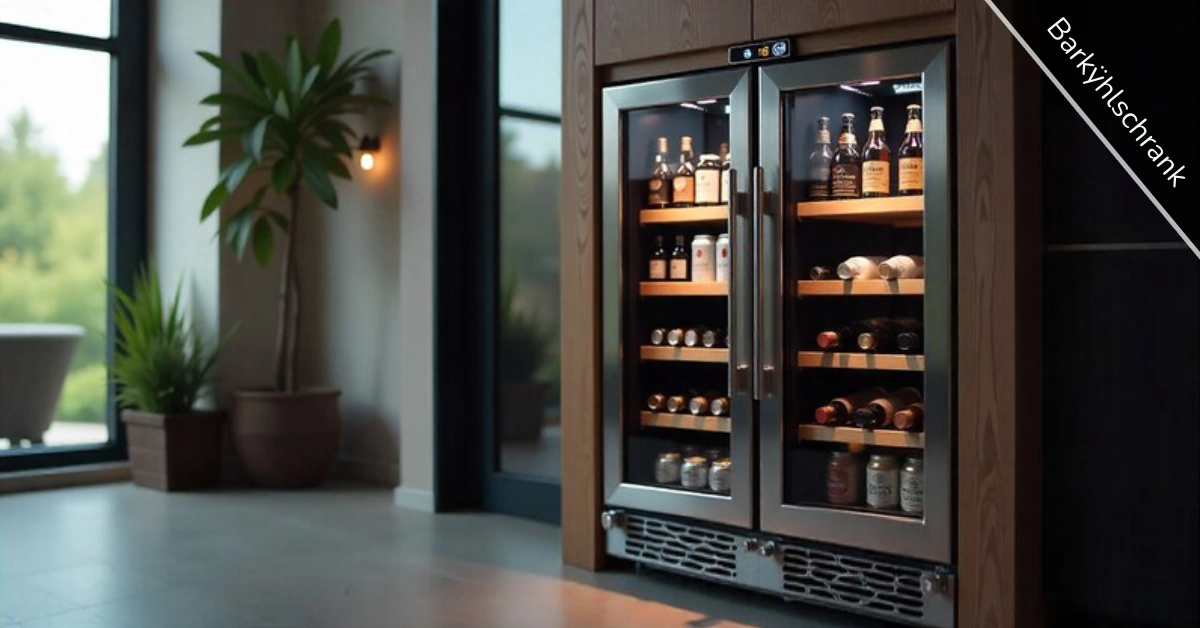
A barkÿhlschrank is a specialized beverage refrigerator designed to store drinks at optimal temperatures between 34°F and 65°F. These compact coolers feature adjustable shelving, glass doors, and precise temperature controls for bars, restaurants, and home entertainment spaces.
What Makes a Barkÿhlschrank Different from Regular Fridges
A barkÿhlschrank serves one purpose: keeping beverages at their ideal serving temperature. Unlike kitchen refrigerators that juggle food storage across varying temperature zones, these units focus exclusively on drinks.
The design prioritizes visibility and access. Glass doors let you see every bottle and can without opening the unit. This reduces temperature fluctuations and keeps your drinks consistently cold. Most models include adjustable shelving that accommodates everything from tall wine bottles to short energy drink cans.
The compact footprint fits under counters or in tight spaces where a full-size fridge won’t work. You get commercial-grade cooling power in a size that works for home bars, offices, or garages. The focused design means better performance for beverages compared to cramming drinks into your kitchen fridge.
Optimal Temperature Settings by Beverage Type
Temperature directly affects how your drinks taste. Set it too cold, and you numb the flavors. Too warm and carbonation escapes, leaving drinks flat.
Beer Storage and Serving Temperatures
Beer requires different temperatures based on style and alcohol content. Mainstream beers taste best between 33°F and 40°F, while craft styles like IPAs and stouts need warmer temps from 45°F to 55°F.
Pale lagers should sit at 40°F to 45°F. This range keeps them crisp without masking subtle hop flavors. Wheat beers and lambics work well at the same temperature range.
For storage, keeping beer at 34°F extends shelf life and prevents heat damage. If you’re serving immediately, adjust to the style-specific temperature about 30 minutes before pouring.
Wine and Other Beverages
White wines prefer 45°F to 50°F, while reds need 50°F to 60°F. Sparkling wines and champagne taste best when served colder, between 35°F and 45°F.
For mixed storage of reds and whites, set your barkÿhlschrank to 55°F. This middle ground works for both, though you may want to let reds warm slightly before serving.
Carbonated beverages need temperatures between 35°F and 45°F to maintain fizz and deliver that crisp, cold sensation. Spirits and liqueurs can be stored at 55°F to 60°F if you prefer them chilled but not ice-cold.
Compressor vs Thermoelectric Cooling Systems
Your barkÿhlschrank uses one of two cooling technologies. Each has distinct advantages depending on your needs.
Compressor systems work like traditional refrigerators. They push refrigerant through coils to remove heat. These units cool faster, handle higher ambient temperatures, and recover quickly after you open the door. They’re the better choice for commercial settings or warm climates.
Thermoelectric coolers use the Peltier effect to transfer heat. They run quieter, have fewer moving parts, and consume less energy. However, they struggle in hot environments and cool more slowly. They work best in climate-controlled homes where the ambient temperature stays below 75°F.
Compressor units typically cost more upfront but offer stronger, more reliable cooling. Thermoelectric models save on energy bills and operate almost silently. Your choice depends on where you’ll place the unit and how often you’ll access it.
Calculating the Right Capacity for Your Needs
Barkÿhlschrank capacity gets measured in cubic feet, but you need to think in bottles and cans.
A 1.6 cubic foot unit holds roughly 60 standard 12-ounce cans. A 3.2 cubic foot model stores about 120 cans or 30 wine bottles. Larger 4.5 cubic foot units can accommodate 180 cans or 45 wine bottles.
For home use, consider how many people you typically entertain. A couple hosting occasional game nights needs less capacity than someone throwing weekly parties. Calculate your peak usage, then add 20% buffer space to avoid overcrowding.
Commercial settings require more capacity. A busy bar might need multiple units or larger models that hold 220+ cans. Restaurant applications should account for service speed and menu variety.
Don’t buy more capacity than you need. Larger refrigerators consume more energy, and the most efficient models typically fall between 16 and 20 cubic feet. Oversized units waste electricity cooling space.
Energy Efficiency and Operating Costs
ENERGY STAR certified beverage coolers run 10% to 30% more efficiently than models meeting only federal minimum standards. Over a 12-year lifespan, this can save more than $220 in electricity costs.
A typical beverage cooler consumes 200 to 400 kWh annually. At the national average electricity rate of $0.14 per kWh, that’s $28 to $56 per year. Energy-efficient models with better insulation and advanced compressors can reduce this by 25%.
Commercial beverage coolers should maintain temperatures between 35°F and 38°F to comply with FDA guidelines while keeping drinks fresh. This standard ensures food safety in professional settings.
Look for units with R-600a or R-441A refrigerants. These low global warming potential options reduce environmental impact if refrigerant leaks occur. Digital temperature displays help you monitor settings and catch problems before they affect your drinks or energy bills.
Running an older, inefficient cooler can cost 35% more annually compared to a modern ENERGY STAR model. If your current unit is over 10 years old, replacement likely pays for itself through energy savings within five years.
Installation Requirements and Placement Tips
Proper installation extends your barkÿhlschrank’s lifespan and ensures efficient operation.
Built-in units require specific clearances for ventilation. Most need 2 to 3 inches of space on the sides and back for airflow. Freestanding models offer more flexibility but still need breathing room to prevent overheating.
Never place your beverage cooler in direct sunlight or next to heat sources like ovens or dishwashers. Heat forces the compressor to work harder, increasing energy consumption and shortening its life. Basements, climate-controlled garages, and interior rooms work best.
Level the unit carefully. An unlevel fridge causes door alignment problems and compressor strain. Use adjustable feet or shims to ensure it sits perfectly horizontal. Check door seals after leveling to confirm they close completely.
Electrical requirements typically call for a standard 110V outlet. Avoid extension cords, which can cause voltage drops and safety hazards. Place the unit close enough to a dedicated outlet for direct connection.
Allow 24 hours after installation before loading beverages. This lets the refrigerant settle and temperatures stabilize. Starting with an empty, properly cooled unit prevents temperature spikes that stress the compressor.
Key Features to Compare When Buying
Not all barkÿhlschrank models offer the same capabilities. Focus on features that match your usage patterns.
Adjustable shelving matters more than you might think. Removing or repositioning shelves lets you accommodate tall bottles, mix different beverage types, or maximize can storage. Look for shelves that slide out for easy cleaning.
LED interior lighting enhances visibility and uses minimal energy. It creates an appealing display while helping you quickly locate specific drinks without leaving the door open.
Digital temperature displays provide precision control. Basic dial controls work, but don’t tell you the exact internal temperature. Digital panels let you set and monitor temperatures within one degree.
Dual zone models separate the interior into two temperature-controlled sections. This lets you store beer at 38°F in one zone while keeping wine at 55°F in another. Single-zone units work fine if you’re storing only one beverage type.
Lock mechanisms protect valuable inventory in commercial settings or shared spaces. Some models include child locks, while others use keyed locks for security.
Glass doors range from clear to tinted. Clear glass maximizes visibility but may let in more light. Tinted or UV-protected glass shields beverages from light damage while still displaying contents.
Common Mistakes and How to Avoid Them
Overcrowding blocks airflow and creates warm spots. Leave space between bottles and cans for cold air circulation. If you can’t close the door easily or items touch the back wall, you’ve packed too much inside.
Setting temperatures below 34°F can freeze beverages, dulling flavors and altering carbonation. Temperatures above 40°F speed oxidation and spoilage. Use a refrigerator thermometer to verify your display matches the actual internal temperature.
Placing units near heat sources forces the compressor to run constantly. This wastes energy and shortens equipment life. Keep your barkÿhlschrank at least 3 feet away from ovens, dishwashers, and direct sunlight.
Opening the door frequently or leaving it open too long causes temperature fluctuations. Each opening loses cold air and forces the system to work harder. Train users to grab what they need quickly and close the door completely.
Ignoring the door seal condition leads to air leaks. Check seals monthly for cracks, gaps, or worn spots. Clean them with mild soap and water. Replace damaged seals immediately to maintain efficiency.
Maintenance Guidelines for Long-Term Performance
Dirty condenser coils force refrigerators to work harder, increasing energy costs by up to 35% and shortening appliance life. Clean coils every three months using a vacuum or coil brush. This simple task prevents most performance problems.
Wipe interior shelves and walls monthly with a mild cleaner. Remove any spills immediately to prevent sticky buildup. Don’t use harsh chemicals that could leave odors or damage surfaces.
Defrost manual models when frost buildup exceeds one-quarter inch. Automatic defrost systems handle this, but you should still monitor for ice accumulation around seals or in drain tubes.
Check door seals monthly. Close the door on a dollar bill. If you can pull it out easily, the seal isn’t tight enough. Clean seals first, then replace them if cleaning doesn’t restore proper tension.
If your unit has a water filter for ice makers or dispensers, replace it every six months. Old filters reduce water flow and may harbor bacteria.
Monitor temperature daily in commercial settings. Home users should check weekly to catch problems early. Sudden temperature changes signal potential compressor issues or refrigerant leaks requiring professional service.
Keep the area around your barkÿhlschrank clean and clear. Dust and debris can block ventilation and reduce efficiency. A quick monthly cleaning of the surrounding area prevents these problems.