

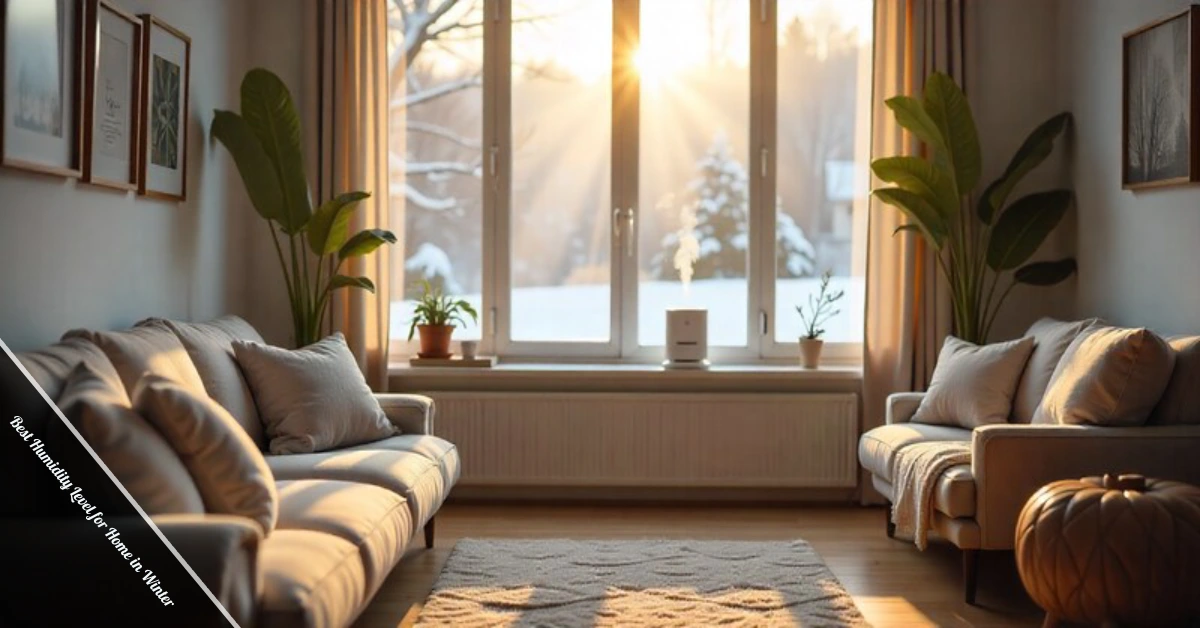
The best humidity level for your home in winter ranges from 30% to 40%. This range prevents dry air health issues while avoiding condensation and mold growth. During extreme cold (below 10°F), maintain humidity at 25-30% to prevent window condensation and structural damage.
Winter brings more than just cold temperatures. Your heated home becomes a battleground between comfort and hidden moisture problems. Most homeowners face a choice: suffer through dry, cracked skin and static shocks, or risk mold growth and window damage from excess moisture.
You’ll learn exactly what humidity levels work best for winter, why these numbers matter, and how to maintain them without turning your home into a sauna or desert.
Why Winter Humidity Drops Below 30%
Cold air holds less moisture than warm air. When outdoor temperatures drop, the air entering your home through cracks, doors, and ventilation systems contains minimal water vapor. Your furnace heats this already-dry air, making it even drier relative to its capacity.
Health experts agree that indoor humidity between 35% and 40% provides comfort for people and pets. Most homes naturally drop to 15-25% humidity during winter without intervention.
Your heating system doesn’t remove moisture from the air. The perception that furnaces “dry out” your home stems from the physics of cold air infiltration and heating.
The 30-40% Winter Sweet Spot
The EPA recommends maintaining indoor humidity between 30% and 50%. During winter months, aim for the lower end of this range: 30-40%.
This specific range balances three factors:
- Prevents respiratory irritation and dry skin
- Stops condensation on windows and cold surfaces
- Blocks mold and dust mite proliferation
When outdoor temperatures fall below 20°F, you may need to lower your target to 25-35%. When the outside temperature is 10-20 degrees Fahrenheit, indoor humidity should generally not exceed 35%. Colder outdoor air creates a bigger temperature difference between your warm indoor air and cold window glass, increasing condensation risk.
Health Costs of Dry Winter Air
Low humidity below 30% causes immediate and long-term health problems:
Respiratory System Damage
Your nasal passages need moisture to trap viruses and bacteria. Dried-out nasal passages have a reduced ability to trap viruses and other harmful substances. Dry air leaves you vulnerable to colds, flu, and sinus infections.
Skin and Eye Irritation
Moisture evaporates faster from your skin in dry environments. You’ll notice cracked lips, flaky skin, itchy eyes, and increased wrinkles. Children and elderly people experience more severe symptoms.
Sleep Disruption
For optimal sleep, humidity should be right around 40-45%. Dry air irritates your throat overnight, causing snoring, coughing, and poor sleep quality.
Static Electricity Buildup
Below 30% humidity, static charges accumulate on surfaces and your body. Those annoying shocks damage electronics and make fabrics cling uncomfortably.
Property Damage From Wrong Humidity
Dry air can damage drywall, wooden trim, and hardwood floors. Wood shrinks as it loses moisture, creating gaps between floorboards and cracks in furniture.
Musical instruments suffer permanent damage. Guitar necks warp, piano soundboards crack, and string tension changes affect tuning stability. A $2,000 guitar can become unplayable in one dry winter.
Too much humidity causes different problems. Above 50% humidity in winter, moisture collects on windows, walls, and other cool surfaces. This condensation runs down walls, soaks into drywall, and feeds mold colonies inside wall cavities.
Testing Your Home’s Humidity
You need a hygrometer to measure indoor humidity accurately. Digital hygrometers cost $10-30 at hardware stores and provide instant readings.
Place hygrometers in key locations:
- Main living areas (away from humidifiers and heaters)
- Bedrooms (especially children’s rooms)
- Basements (prone to excess moisture)
- Near problematic windows (to check for condensation risk)
Check readings twice daily. Morning readings show overnight humidity accumulation. Evening readings reveal how daily activities affect moisture levels.
Look for physical signs without a meter:
- Condensation on windows indicates humidity above 40-45%
- Static electricity when touching metal suggests humidity below 30%
- Dry, cracked lips and bloody noses signal humidity under 25%
- Musty odors point to hidden moisture problems above 50%
Raising Winter Humidity Safely
Whole-Home Humidifiers
These connect directly to your furnace and distribute moisture through existing ductwork. They maintain consistent humidity throughout your home automatically. Professional installation costs $400-1,200 but provides the most reliable solution.
Portable Room Humidifiers
Place these units in bedrooms and main living spaces. Cool mist humidifiers use a fan to evaporate water into the air, while warm mist humidifiers heat water before releasing it as steam. Cool mist models consume less energy and pose no burn risk for children.
Ultrasonic humidifiers create fine mist through high-frequency vibrations. They run quietly but require distilled water to prevent mineral dust.
Natural Humidity Boosters
- Place water bowls near heat registers (warm air accelerates evaporation)
- Hang wet laundry indoors on drying racks
- Leave bathroom doors open after showers
- Boil water while cooking (with kitchen ventilation off)
- Add houseplants (they release moisture through transpiration)
These methods work best as supplements to mechanical humidifiers, not replacements.
Preventing Excess Moisture Problems
Too much humidity causes worse problems than too little. Above 50% humidity, mold spores activate and multiply rapidly. Indoor relative humidity should be kept below 60% to prevent mold growth.
Watch for warning signs:
- Foggy windows that don’t clear
- Water droplets on walls or ceilings
- Peeling paint or wallpaper
- Musty basement smells
- Black spots around window frames
Run bathroom exhaust fans during showers and for 20 minutes after. Vent your kitchen range hood outside when cooking. These simple habits prevent humidity spikes that lead to mold.
Check your humidifier settings weekly. Outdoor temperature changes mean you need different indoor humidity levels. Set humidity lower when temperatures drop, higher during brief warm spells.
Humidity Adjustment by Temperature
Your target indoor humidity changes with outdoor temperature. Use this guide:
- Above 40°F outdoors: Maintain 40-45% humidity
- 20-40°F outdoors: Maintain 35-40% humidity
- 10-20°F outdoors: Maintain 30-35% humidity
- Below 10°F outdoors: Maintain 25-30% humidity
These ranges prevent condensation while keeping the air comfortable. Lower outdoor temperatures require lower indoor humidity levels to avoid moisture issues.
Monitor window condensation as your primary indicator. If you see water droplets forming, reduce humidity by 5% regardless of current settings.
Whole-Home vs. Room Humidifiers
Whole-Home Systems: Best for
- Houses larger than 1,500 square feet
- Multiple floors requiring consistent humidity
- Homeowners wanting automated control
- Long-term humidity management
Initial costs run higher, but maintenance stays simple. Replace the water panel once yearly and check settings seasonally.
Portable Units: Best for
- Apartments and rentals
- Targeted humidity in bedrooms
- Budget-conscious homeowners
- Testing humidity needs before committing
Clean portable units every three days. Stagnant water breeds bacteria that spread through your air. Empty the tank, scrub with vinegar solution, and refill with fresh water.
Seasonal Maintenance Schedule
Early November
Install or restart humidifiers. Check that whole-home units connect properly to water lines. Test portable units for leaks and proper misting.
December-February
Monitor humidity weekly. Adjust settings as outdoor temperatures fluctuate. Clean portable humidifier tanks twice weekly during peak use.
March
Gradually reduce humidity as outdoor temperatures rise. Prevent spring condensation by lowering settings before warm weather arrives.
April
Shut down and clean all humidification equipment. Drain whole-home systems completely. Store portable units in dry locations.
Common Mistakes to Avoid
Over-Humidifying Based on Comfort
Your skin might feel dry at 35% humidity, but pushing levels to 50% in winter causes structural damage. Use lotion instead of excess humidity.
Ignoring Basement Humidity
Basements naturally accumulate moisture. High humidity down there spreads throughout your home through air circulation. Keep basement humidity at 30-35% maximum.
Placing Humidifiers Near Thermostats
Excess moisture near your thermostat tricks it into thinking your home is warmer than the actual temperature. This causes uneven heating and wastes energy.
Using Tap Water in Ultrasonic Humidifiers
Minerals in tap water become airborne white dust that coats furniture and electronics. Always use distilled water in ultrasonic models.
Energy Efficiency and Comfort
Proper humidity helps you feel warmer at lower thermostat settings. With the right humidity in your home, you could feel warmer without raising your thermostat. Humid air transfers heat more efficiently than dry air.
You can maintain comfort at 68°F with 40% humidity instead of heating to 72°F with 25% humidity. This saves 10-15% on heating costs over an entire winter.
Seal air leaks before adding humidity. Gaps around windows and doors let dry outdoor air constantly infiltrate. Caulk and weatherstripping cost less than running humidifiers over time to compensate for leaks.
FAQs
Can I keep the humidity at 50% all winter?
No. When outdoor temperatures drop below 40°F, maintaining 50% humidity causes condensation on windows and inside wall cavities. This leads to mold growth and wood rot. Stick to 30-40% during cold months.
How often should I clean my humidifier?
Clean portable units every 3 days of use. Stagnant water breeds bacteria and mold that spread through your home. Whole-home humidifiers need annual cleaning when you replace the water panel.
Does running my furnace fan help distribute humidity?
Yes. Set your furnace fan to “on” instead of “auto” to circulate humidified air throughout your home. This prevents humidity from concentrating near the humidifier and creates more even distribution.
What humidity level is best for babies?
People with health issues like asthma or COPD need special consideration, as dry air can irritate lung tissue. Maintain 40-45% humidity in nurseries unless your pediatrician recommends otherwise. Monitor for condensation on windows and adjust accordingly.
Can low humidity damage electronics?
Yes. Static electricity from humidity below 30% can damage computer components, TVs, and sensitive electronics. Maintain at least 30% humidity to prevent static discharge and extend device lifespans.


