

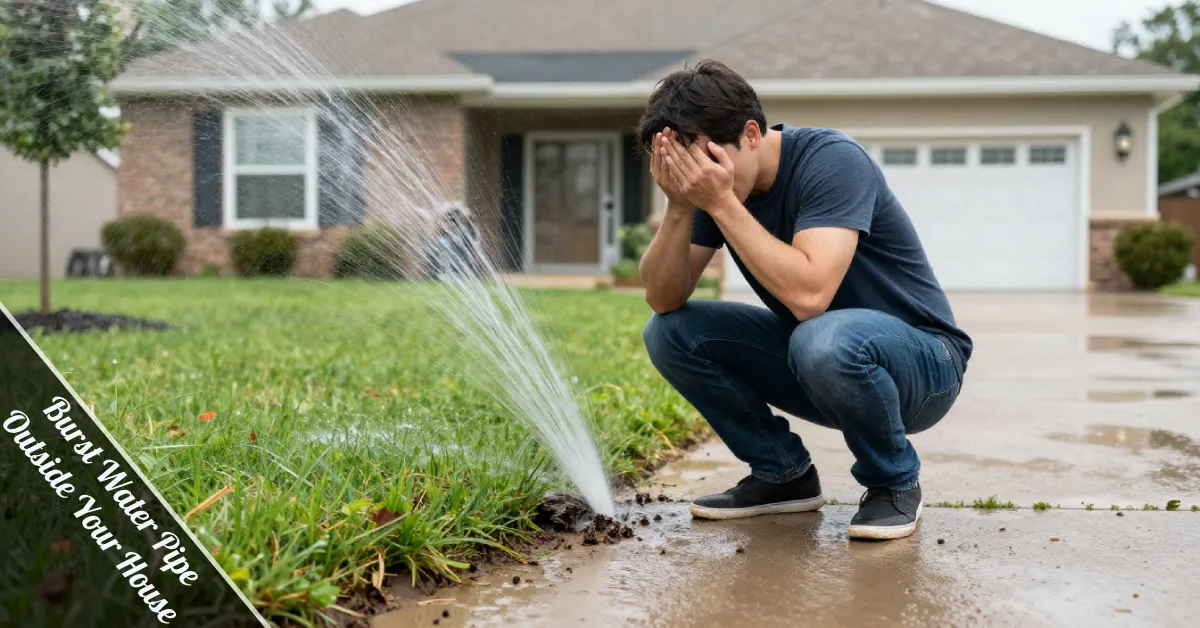
A burst water pipe outside your house is one of those emergencies that can spiral quickly. Every minute counts when water is escaping underground or flooding your garden.
But here’s the thing — staying calm and knowing exactly what to do makes all the difference. This guide gives you a clear, no-fluff action plan: stop the damage, get the right help, and protect your home for good.
How to Spot the Signs of a Burst Outdoor Pipe
Most outdoor pipe bursts don’t announce themselves with a dramatic geyser. They’re sneaky. Knowing the subtle clues can save you thousands in damage.
Watch for soggy, waterlogged patches in your yard that stay wet even without recent rain. That’s your ground telling you something is leaking below the surface — and it’s not going to fix itself.
A sudden drop in water pressure is another major red flag. If your shower feels weak or taps lack their usual force, water is likely escaping before it reaches your fixtures.
Your water bill doesn’t lie either. An unexplained spike — with no obvious cause like a new lawn or pool — usually means water is running somewhere it shouldn’t be. Check for running toilets first, and if you find nothing inside, the problem is probably underground.
Other signs include hissing or gurgling sounds from pipes, discolored or murky water from your taps, and, in winter, frost forming in unusual outdoor spots. Catch these early, and you’ve already won half the battle.
Quick Reference: Signs vs. Severity
| Sign | What It Means | Urgency |
| Soggy yard patches | Underground leak | High |
| Low water pressure | Pipe burst or break | High |
| Spike in water bill | Hidden continuous leak | Medium–High |
| Hissing / gurgling pipes | Air entering at the break point | Medium |
| Murky or brown water | Contamination at break | Immediate |
| Frost in unusual spots | Frozen pipe cracking | High (winter) |
A Burst Water Pipe Outside Your House? Do This First
Don’t freeze up. The moment you suspect a broken outdoor pipe, your first move is the main water shut-off valve.
Turning it off clockwise stops the flood instantly. Most valves are in the basement, crawl space, or near the street under a utility box. Find yours before you ever need it — that five-minute task is worth its weight in gold during an emergency.
Once the water’s off, open your outdoor spigots and the cold taps on the lowest floor indoors. This drains the remaining water in your system and relieves pressure on the damaged section, reducing how much more water escapes into the ground.
Before anything gets cleaned up or repaired, grab your phone and document everything. Photos and videos of the burst pipe, soggy areas, and any visible damage to your foundation or landscaping are essential for your homeowners’ insurance claim. Multiple angles, different distances — make it comprehensive.
Then call a licensed emergency plumber right away. A burst exterior pipe is not a DIY situation. The stakes — your foundation, your water supply, your property value — are too high to gamble on a patch job.
Why Did Your Outdoor Pipe Burst? The Real Culprits
Understanding what caused the break helps you prevent the next one. There are usually a few familiar suspects.
Freezing temperatures are the number one offender. When water inside a pipe freezes, it expands with enormous force, creating an ice plug. The pressure behind that plug has to go somewhere — and it splits the pipe wall. Uninsulated hose bibs and sprinkler lines are especially vulnerable to even a short cold snap.
Age and corrosion quietly do their damage over the years. Galvanized steel and cast iron pipes gradually thin from the inside, becoming brittle. Eventually, normal water pressure is enough to cause a rupture. Older homes with original plumbing are at real risk, and regular inspections can catch this before it becomes a crisis.
High water pressure is another silent threat. Anything consistently above 80 PSI puts stress on every joint and pipe wall in your system. Meanwhile, tree roots — drawn to moisture — work their way into tiny cracks and act like a wedge, slowly prying pipes apart. Ground shifting from freeze-thaw cycles or nearby construction adds yet another layer of physical stress on buried lines.
Poor installation can also be the root cause. Cheap materials, improperly bedded pipe trenches, or unsecured lines create stress points that fail prematurely. A qualified plumber using proper methods is always worth the upfront cost.
Who’s Responsible for Fixing It — You or the Water Company?
This is where a lot of homeowners get confused, and the answer matters for both your wallet and your next steps.
If the burst is on a public main or comes from your external stop tap or water meter, report it directly to your local water company. They own and maintain those lines — the repair is on them, not you.
However, if the pipe is within the boundary of your private property, that’s your responsibility. This includes your private supply pipe running from the boundary to your home. As plumbing expert Harry Davis advises, you’ll need to shut off the water supply and bring in a professional to excavate and replace the damaged section correctly and to current standards.
If you’re unsure where the break is or who owns that section of pipe, your water company can help determine responsibility and point you toward approved contractors in your area. Don’t guess — just ask them directly.
Does Homeowners Insurance Cover a Burst Pipe Outside?
One of the first questions that hits you in an emergency: Am I covered for this?
Most standard homeowners’ insurance policies cover damage from what insurers call a ‘sudden and accidental discharge’ of water. So if your outdoor pipe freezes and bursts unexpectedly, the resulting damage — to your foundation, yard, or landscaping — is likely covered.
Here’s the catch, though: the policy typically covers the damage caused by the burst, not the pipe repair itself. If the break was due to old age, corrosion, or neglected maintenance, your insurer may deny the claim for the actual plumbing fix. Read your policy or call your agent now, before you need it — not during the emergency.
When you’re ready to file, be organized. Call your agent immediately, document everything before repairs begin, keep receipts for emergency costs, and log every conversation with your insurer. That paper trail is your best tool for getting the full compensation you’re entitled to.
How to Prevent a Burst Water Pipe Outside Your House
Prevention is genuinely the smartest play here. A little effort now versus a flooded yard and a four-figure repair bill later — not a hard choice.
Insulate all exposed external pipework with weatherproof lagging, paying extra attention to stop taps, joints, and bends. These are the weak points where cold air attacks first. For outdoor spigots, add insulated faucet covers before winter — they’re cheap, quick to install, and highly effective.
Before the first deep freeze, disconnect all garden hoses from outdoor spigots. A hose left attached traps water in the faucet and the connecting pipe. When that water freezes and expands, it can crack the fitting and the pipe behind it. It’s a five-minute task that prevents a major headache.
Check your water pressure with an inexpensive gauge on any hose spigot. If it’s consistently above 80 PSI, have a plumber install a pressure regulator on your main line. This single fix protects your entire plumbing system from ongoing stress-related wear.
Schedule routine plumbing inspections at least once a year. A professional can spot early corrosion, joint weakness, or root intrusion before they become emergencies. It’s the plumbing equivalent of a car service — you wouldn’t skip that, so don’t skip this either.
Fix small drips and leaks early. Even a minor drip can freeze in winter, creating a blockage that escalates into a full burst. Staying proactive with maintenance is far cheaper than reactive repairs.
Should You DIY or Call a Pro?
We get it — there’s an appeal to fixing things yourself. But a burst water pipe outside your house is firmly in the ‘call a professional’ category.
For small, accessible leaks on private property, a temporary repair clamp or self-amalgamating tape can limit water loss while you wait for a plumber. These are short-term measures only. Most outdoor or underground burst pipes require a licensed plumber to excavate the site, replace the damaged section, and bring everything up to current standards.
Consumer-grade patches rarely hold against municipal water pressure. A failed DIY fix means a second, more aggressive flood — plus you’re on the hook for the extra damage. Wrong materials can accelerate corrosion. And if you accidentally worsen the break, repair costs climb fast.
A licensed plumber brings diagnostic equipment to pinpoint the exact break location, quality materials rated for your system, and the expertise to do it right the first time. When your home’s foundation and water supply are at stake, that’s not a corner worth cutting.
Cost of Repairing a Burst Pipe Outside Your Home
Repair costs vary widely depending on where the pipe is and how bad the damage is.
A straightforward, accessible break that a plumber can reach without digging might cost a few hundred dollars in labor and materials. But if the pipe is buried deep, runs under a driveway or patio, or has caused foundation damage, you’re looking at a more complex job with excavation — and costs that can climb into the thousands.
| Repair Type | Estimated Cost Range |
| Accessible pipe repair (surface level) | $200 – $600 |
| Underground pipe excavation & repair | $500 – $3,000+ |
| Repair under the driveway or patio | $1,000 – $5,000+ |
| Foundation water damage remediation | $2,000 – $10,000+ |
| Emergency call-out fee (after hours) | $150 – $400 additional |
These are estimates — always get a quote before work begins. And remember, your insurance may cover the damage costs even if the pipe repair itself falls on you.
The Bottom Line
A burst water pipe outside your house is stressful, but it’s manageable when you know what to do.
Spot the signs early, shut off your water fast, document the damage, and call a licensed plumber. Don’t rely on DIY patches for serious outdoor pipe failures — the risk to your foundation and property isn’t worth it.
Prevention is your real power move. Insulate pipes before winter, maintain safe water pressure, schedule regular inspections, and disconnect garden hoses every autumn. These simple habits are the difference between a minor inconvenience and a major emergency.
Got questions about your specific situation? Drop them below — or share this with a neighbor who might need it. Plumbing emergencies don’t warn you in advance, but now you’re ready for one.