

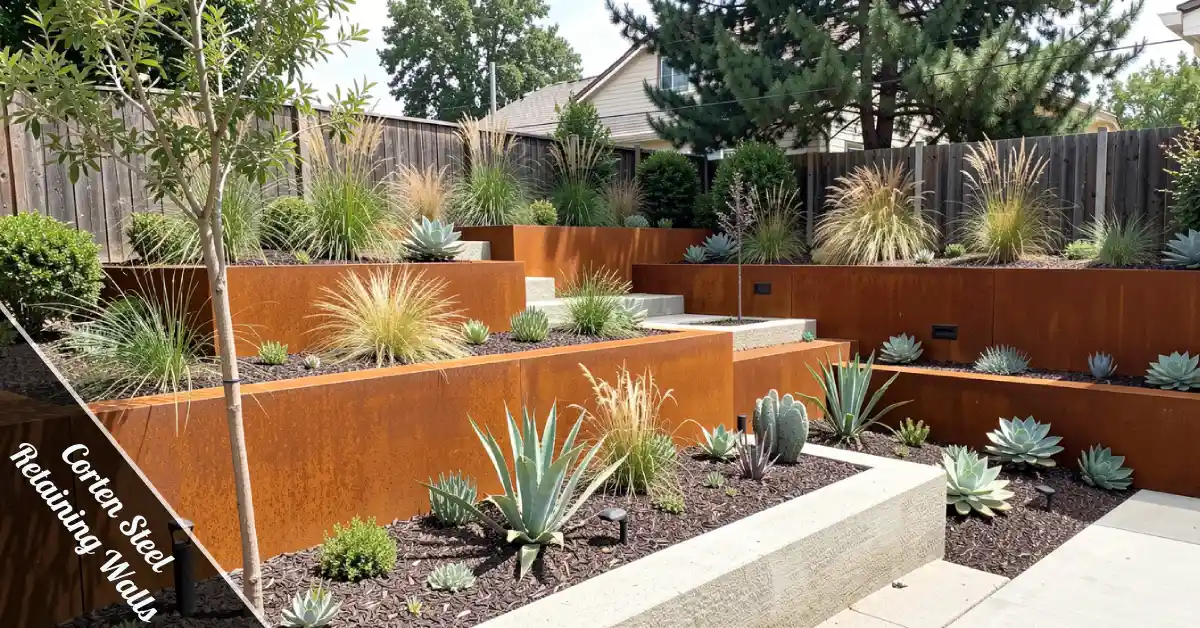
You know that warm, orange-brown rust finish you see on modern buildings and sleek garden designs? That’s corten steel doing its thing. It’s not damaged—it’s designed that way. And when it comes to retaining walls, this weathering steel might just be the cheat code for homeowners who want something tough, low-maintenance, and seriously stylish.
Unlike traditional timber that rots or concrete that cracks, corten steel retaining walls develop a protective rust layer that actually shields the material from further corrosion. Think of it as nature’s armor. The result? A wall that gets better with age, holds back soil like a champ, and turns your sloped yard into usable space without the headache of constant upkeep.
Whether you’re terracing a hillside, building raised garden beds, or just want clean lines between your lawn and plantings, corten steel brings structural strength and visual heat. Let’s break down what makes these walls worth the investment.
What Makes Corten Steel Different From Regular Steel
Regular steel rusts and weakens over time. Corten steel rusts once, then stops. The secret is in the alloy composition—elements like copper, chromium, and nickel create a stable oxide layer that acts like a shield. This patina forms naturally within six to twelve months, depending on your climate and weather exposure patterns.
The finish shifts from bright orange to deep reddish-brown as it matures. Rain accelerates the process, while dry climates slow it down slightly. Either way, you’re getting a material that looks intentional, not neglected. No peeling paint, no splintering wood, no crumbling mortar—just a consistent, earthy tone that complements greenery and hardscaping alike.
Architects originally used this stuff for bridges and industrial structures in the mid-twentieth century. Now it’s everywhere—sculpture, facades, fire pits, and yes, retaining walls. The durability that worked for infrastructure translates perfectly to landscape projects where you need something that won’t quit after a few seasons.
Benefits That Go Beyond the Aesthetic Appeal
Durability is the headliner here. Corten steel retaining walls last forty to eighty years with zero maintenance. You’re not resealing, repainting, or replacing boards every few years like you would with timber. Install it once, and it’s done. The patina self-heals if scratched, reforming the protective layer naturally.
Strength-to-thickness ratio is another win. Steel walls are slim but insanely strong, so you can hold back serious soil loads without the bulk of stone or poured concrete. That matters in tight yards where every inch counts. You get clean lines and maximum usable space without sacrificing structural integrity or long-term performance.
Eco-friendly credentials? Corten is fully recyclable, requires no chemical treatments, and outlasts materials that end up in landfills after a decade. Compared to pressure-treated lumber—which needs toxic preservatives—or short-lived alternatives, it’s the sustainable play. Plus, the raw, industrial vibe pairs beautifully with native grasses, succulents, or modern paving for a landscape that feels intentional.
The visual payoff is real. That rust finish adds warmth and texture without screaming for attention. It’s the perfect backdrop for plantings, and it reads as high-end without being precious. Over time, the patina evolves subtly, giving your outdoor space a living, dynamic quality that static materials just can’t match.
Design Ideas That Actually Work in Real Yards
Terraced slopes are where corten steel retaining walls shine brightest. Break steep terrain into flat, usable sections for seating, planting, or walkways. The bold, modern lines look sharp against ornamental grasses or low-growing groundcovers. Stack multiple tiers for dramatic elevation changes, and you’ve got a landscape that feels curated, not chaotic or overly complex.
Raised garden beds are a natural fit, especially in urban or compact yards. Corten planters double as mini retaining walls, giving you depth for root vegetables or perennials while defining zones. The steel heats up in the sun, which some plants love, and the drainage is easy to manage with proper backfill. Plus, they age into the landscape instead of looking like new plastic forever.
Path and patio edging with low corten walls—think twelve to twenty-four inches high—creates crisp transitions between hardscape and softscape. Frame a gravel walkway, separate a deck from planting beds, or define an outdoor dining area. The material’s slim profile keeps sightlines open while adding just enough structure to feel deliberate and polished without overwhelming the space.
Feature walls in courtyards or as backdrops for outdoor seating areas bring architectural weight. Add integrated LED strip lighting along the top edge, and the rust tones glow at night. Mix corten with wood decking, concrete steps, or bluestone paving for contrast. The weathered steel ties it all together, acting as the warm accent that makes everything else pop.
Cost Breakdown: What You’re Actually Paying For
Material costs for corten steel sheets or panels run three to ten dollars per pound. Pre-fabricated wall systems—where everything’s cut and ready to install—cost forty to one hundred dollars per square foot for materials alone. That’s before labor, excavation, backfill, or drainage components, which are non-negotiable for structural integrity and long-term performance.
Professional installation typically runs seventy to one hundred fifty dollars per square foot, all in. That includes site prep, grading, backfill, drainage pipes, and assembly. Tall walls—anything over three feet—usually require engineering to handle soil pressure safely. DIY raised beds or modular kits start around two hundred to five hundred dollars for small projects.
Compared to pressure-treated timber at fifteen to forty dollars per square foot, Corten is pricier upfront. But timber rots, warps, and needs replacement in ten to fifteen years. Concrete block runs forty to eighty dollars per square foot and cracks over time. Natural stone can cost eighty to two hundred dollars per square foot with a labor-intensive install.
Corten falls mid-to-high range, but the payoff is decades of zero maintenance. No staining, no sealing, no replacing rotted boards. Factor in longevity, and the cost per year drops significantly. You’re paying once for something that outlasts cheaper alternatives by a generation. That’s the real value proposition here.
Installation Considerations You Can’t Skip
Drainage is non-negotiable. Water pressure behind any retaining wall will cause failure if not managed properly. Plan for gravel backfill, perforated drain pipes, and weep holes if you’re going above two feet. Without it, soil saturation builds pressure, pushing the wall out. This isn’t a corner you cut—it’s the foundation of long-term stability.
Thickness matters. Small raised beds can get by with three to four millimeter steel. Walls up to three feet should use six to eight-millimeter material. Anything taller needs ten millimeters or more, often with reinforcement. Skimping here means bowing, buckling, or worse. Match the steel gauge to the load it’s holding, and you’ll avoid regret.
Managing patina runoff is a first-year reality. Rain washes rust particles onto nearby paving or concrete, leaving orange stains. Direct water away from light-colored surfaces, or seal adjacent areas before the patina fully forms. Most stains fade with weathering, but prevention beats cleanup. Plan your site layout with runoff in mind.
Professional versus DIY depends on scale. Modular kits and short edging are doable for handy homeowners. Large or load-bearing walls? Hire a pro. Engineering, excavation, and structural integrity aren’t areas to wing it. A failed retaining wall is expensive and dangerous. Know your limits, and bring in expertise when the project demands it.
Maintenance and Longevity: What to Expect
Lifespan sits at forty to eighty years, depending on the climate. Dry environments accelerate patina development and maximize longevity. Humid or marine climates may require thicker steel to resist deeper oxidation. Either way, you’re looking at multiple decades of reliable performance without lifting a finger. That’s the entire point of this material.
Cleaning is optional. Most homeowners embrace the natural patina and never touch it. If you want, a quick hose-down removes surface debris, but there’s no staining, sealing, or chemical treatment needed. The rust finish is the protective layer, so you’re not fighting nature—you’re letting it do its job.
Repairs are rare. If damaged, welding or patching is possible, but structural failure from material breakdown is uncommon. Failures typically come from poor drainage or undersized steel, not the corten itself. Install it right, and you’ll forget it’s there. That’s the kind of low-drama landscaping feature that pays dividends.
Final Thoughts: Is Corten Steel Worth It?
Corten steel retaining walls deliver durability, strength, and style without the maintenance circus. They cost more upfront than timber or basic concrete, but you’re buying decades of performance and a look that improves with age. For homeowners who want a modern, low-maintenance solution that handles real structural work, this is the material.
If you’re planning a retaining wall project, corten steel balances engineering strength with design impact. It’s not the cheapest option, but it’s the smartest one for anyone tired of replacing, repairing, or babysitting their landscape features. Install it once, and it’s done.