

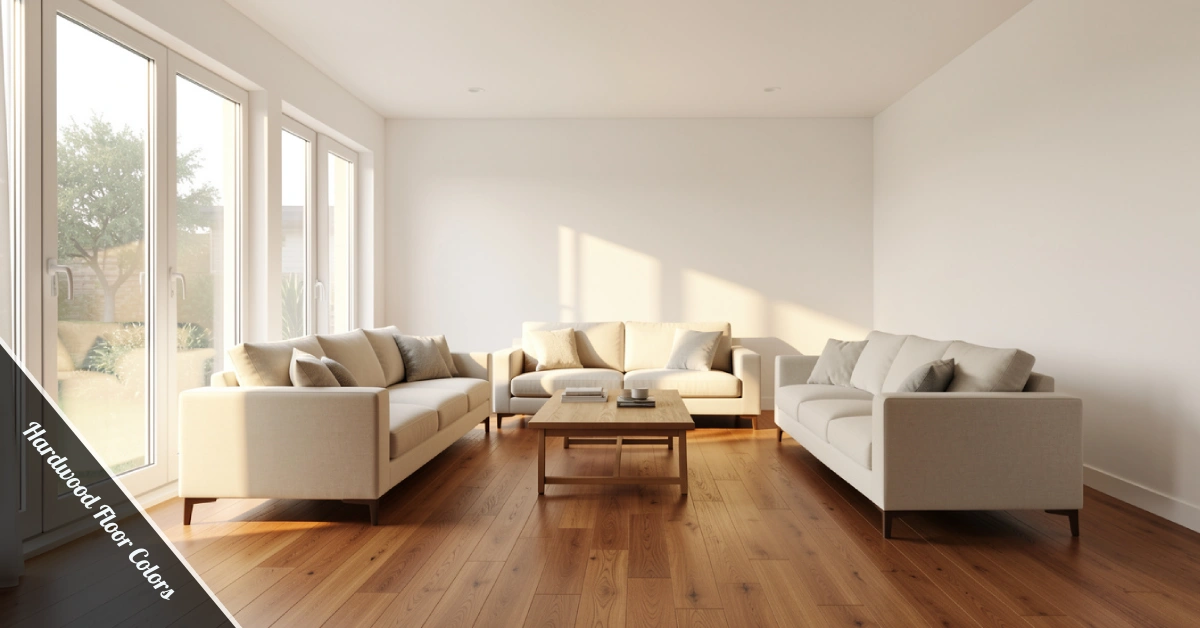
Hardwood floor colors do more than cover the ground—they set how a room feels the moment you walk in. Light floors push walls outward visually, dark ones pull a large room together, and mid-tones forgive the wear of daily life better than either extreme. The right choice depends on your room’s natural light, your lifestyle, and how long you plan to stay. Testing large samples in your actual space, across different times of day, is the single step most people skip and later regret.
In 2026, the shift is clear: warm naturals are leading. Light to medium oaks, honey tones, and greige have replaced the cool gray wave that dominated for years. If you’re unsure where to start, a medium-toned oak with a matte finish suits the widest range of rooms, decor styles, and resale scenarios—without locking you into something that dates quickly.
Why Floor Color Shapes the Whole Room
Your floors cover more square footage than any wall in your home. That color affects how bright the room feels at 7 a.m., how much pet hair you notice by afternoon, and whether a future buyer feels pulled in or turned off at the door.
Color also reacts to ceiling height, natural light, furniture tones, and wall color in ways a small showroom chip simply won’t reveal. Choosing hardwood floor colors is one of those decisions worth slowing down for, not just checking off a list.
Light Hardwood Floors: Bright, Forgiving, but Not Perfect
Light floors—blonde oaks, natural maples, whitewashed finishes—have stayed popular well past trend status. In a small or north-facing room, a light floor genuinely opens things up. Light surfaces bounce light back into the room and create a sense of space that darker options can’t replicate.
In my experience, light floors almost always get the strongest reaction in the showroom. The issue is what happens at home. Light-colored pet hair disappears into them, but dark spills are immediately visible. A finish that’s too soft will also start showing wear near entryways and kitchens faster than you’d expect.
Where light floors shine: paired against dark furniture. The contrast gives every piece room without making the room feel heavy.
Dark Hardwood Floors: The Trade-Off Is Real
A deep walnut or espresso floor can transform a large room—adding weight, warmth, and a sense of luxury that lighter options don’t offer. In a space with high ceilings and strong natural light, dark hardwood floor colors make everything feel grounded and intentional.
The part nobody loves saying: dark floors show everything. Every light-colored hair, every footprint after rain, every fine scratch from a chair leg. This is not a dealbreaker, but you need to know it before you fall in love with the look. A matte finish hides scratches far better than high-gloss. Felt pads on every piece of furniture are non-negotiable.
Dark floors in small, low-light rooms are a different problem entirely. They close the space in fast. Save them for larger, well-lit areas where they actually have room to work.
Medium Tones: The Most Forgiving Floor You Can Buy
Medium-toned hardwood floor colors—classic oak, hickory, warm chestnut—earn their popularity honestly. They hide the daily grind: shoe scuffs, boot dirt, and the general chaos of kids and pets. The natural grain variation in these woods does a lot of visual work on your behalf, breaking up the surface so individual marks don’t register the way they do on a flat, dark floor.
Mid-tones also flex across design styles. Whether your home leans farmhouse, mid-century, or transitional, a warm medium oak fits without a fight. If you’re selling in the next few years, this range typically appeals to the broadest group of buyers—which matters more than most people expect when the time comes.
What’s Trending in 2026 (And What’s Fading)
Cool gray hardwood floors peaked a few years back and are starting to feel their age. The 2026 direction is warmer and more natural. Light oaks with an unfussy finish, warm honey mid-tones, and greige tones are leading the conversation.
Greige earns its staying power. It reads neutral without going cold, shifts slightly with morning versus evening light, and pairs with both warm and cool decor without a fight. Wire-brushed and matte textures are also popular right now because they let the actual wood grain show instead of burying it under a thick gloss.
The color is worth approaching carefully: strong yellow or orange undertones. Golden oak can look right in a rustic or cabin-style home, but in most standard living rooms, those warm-yellow hues clash with cool-toned walls and date your furniture. Always test your sample directly against your wall color in natural light before committing.
Room-by-Room Color Matching
Not every room needs the same floor—or the same logic.
Living areas and open-plan spaces carry the most visual weight, so light to medium oaks work best. They flow between furniture groupings without competing.
Bedrooms can go warmer. A honey or soft brown tone makes a bedroom feel like a retreat rather than an extension of a workspace.
Kitchens benefit from lighter tones, especially when cabinets run dark. The contrast keeps the kitchen from feeling closed.
Hallways and entryways take the most abuse. Mid-tones with strong grain patterns hide footprints and scuffs far better than either end of the spectrum.
How to Test Colors Before You Commit
This is where most people go wrong: they pick from a small sample under fluorescent showroom lighting. That tells you almost nothing useful.
Ask for the largest samples the store carries—full-length planks if possible. Take them home and place them flat on your floor. Move them to different corners of the room. Look at them in the morning, in direct afternoon sun, and at night with your lamps on. A floor that looks warm and honey-toned in daylight can go flat and gray under evening light. That gap alone has caused more floor regrets than anything else.
Hold your sample next to a sheet of white printer paper. That contrast immediately reveals the undertone—whether it’s pulling green, yellow, or red. Then hold it against your cabinets or couch. If the tones fight in the sample, they’ll fight across your entire floor.
Live with the samples for two or three days. Notice how you feel walking past them. If you keep second-guessing it, that’s your answer.
Long-Term Reality: Maintenance and Resale
Every hardwood floor will need refinishing at some point—typically every 10 to 15 years, depending on traffic. Lighter and mid-toned floors refinish more predictably than very dark stains, which can be harder to match if only a section needs work.
For resale, warm naturals and neutral mid-tones appeal to the widest range of buyers. Very dark floors or strong, trendy tones narrow your pool. That’s not always a reason to avoid them—if you’re staying 15 years, pick what makes you happy. If you’re selling in three to five years, err toward versatile.
UV exposure plays a role, too. Direct sunlight fades floors over time, and lighter finishes show that change less dramatically than dark stains, which can develop visible variation between sun-hit and shaded sections.
FAQs
What hardwood floor color makes a room look bigger?
Light hardwood floors do the most work here. Consistent flooring that runs from room to room without a color break also stretches the eye across a larger, uninterrupted space.
Are dark hardwood floors a good choice for homes with pets?
It depends on your pet’s coloring. Dark floors show light-colored fur immediately and require frequent sweeping. A matte finish helps hide claw scratches better than glossy alternatives, but the hair still shows.
How does lighting affect hardwood floor color choices?
More than most people expect. A floor that looks warm in a showroom can read cold and gray in a north-facing room at home. Always test samples in your actual space across morning, afternoon, and evening light before making a final call.
What are the most popular hardwood floor colors right now?
In 2026, warm naturals lead. Light to medium oaks with a matte finish, greige tones, and honey mid-tones are the most requested. Gray hardwood floors have faded significantly from their peak a few years ago.
Disclaimer: Hardwood floor color trends and product availability vary by region and retailer. Consult a flooring professional before your final decision—conditions specific to your home, including humidity levels, subfloor type, and existing finishes, can affect your options.