

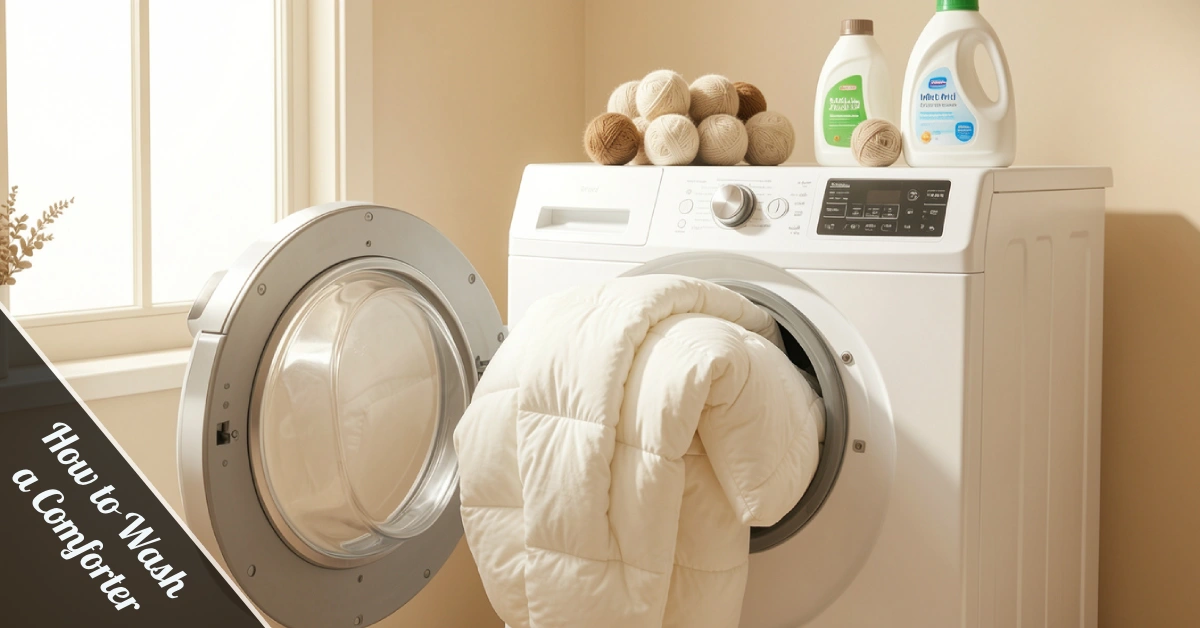
Your comforter collects dust, body oils, sweat, and allergens over time. Ignoring it means poor sleep, bad smells, and a shorter lifespan for your bedding.
Most people wash their sheets weekly, but forget about the comforter sitting right underneath. That bulky blanket needs attention too — just a few times a year is enough to keep things fresh and clean.
Don’t stress about the size or bulk. With the right steps, you’ll handle this like a pro.
How Often Should You Wash Your Comforter?
If your comforter has a duvet cover on it, washing it two to three times a year is totally fine. No cover? Bump that up to once every one to two months. Either way, regular washing removes dust mites, sweat, and built-up grime that you definitely don’t want sleeping with you.
Allergy sufferers should wash more often. Dust mites love comforters, so staying on top of cleaning is your first line of defense.
Check the care tag. It’s your comforter’s personal manual — always start there first.
What You’ll Need Before Getting Started
Round up your supplies before you begin. Having everything ready saves you from scrambling mid-wash and makes the whole process quicker and smoother.
- Mild, fragrance-free laundry detergent
- Stain remover (OxiClean works great)
- Large-capacity washing machine (5.0 cu. ft. minimum)
- Large-capacity dryer (7.0 cu. ft. minimum)
- Two to three wool dryer balls (or clean tennis balls)
- Damp cloth or soft toothbrush for spot cleaning
If your home washer isn’t big enough, no worries — your local laundromat has commercial-sized machines built for exactly this job. A cramped machine won’t clean your comforter properly, so size really does matter here.
How to Wash a Comforter in a Washing Machine
Machine washing is the easiest method when you have the right equipment. Follow these steps, and you’re good.
Step 1: Remove the Duvet Cover
Always take off the duvet cover before washing your comforter. The cover needs separate washing — ideally once a week — since it’s what touches your skin directly every night.
Step 2: Spot Clean Stains First
Got a stain? Don’t just toss it in and hope for the best. Move the filling away from the stain, wet it, apply mild detergent, and let it sit for 20 minutes. Gently rub with a damp cloth, rinse, and repeat if needed.
Step 3: Load Into a Large Capacity Washer
Load your comforter loosely into the machine — never crammed or folded tight. It needs room to move around so water and detergent can reach every part. If you have a top-loader with an agitator in the middle, wrap the comforter loosely around the tub and keep it balanced to avoid damage.
Step 4: Choose the Right Settings
Use a bulky, bedding, or delicate wash cycle. Cold or warm water works best for most comforters — hot water can shrink or damage the filling inside.
Add a mild, fragrance-free detergent and skip the fabric softener. An extra rinse cycle is a smart move to clear out all residue.
Step 5: Check It After the Cycle
Once the wash is done, check if your comforter still looks soaked through.
If so, run a spin-only cycle to remove excess water before moving it to the dryer.
Quick Reference: Washing by Comforter Fill Type
| Fill Type | Wash Cycle | Water Temp | Special Notes |
| Down | Delicate | Cold/Warm | Extra rinse; avoid hot water |
| Down Alternative | Gentle/Normal | Cold/Warm | Can handle regular spin |
| Cotton | Gentle | Warm | Preserves fabric quality |
| Synthetic | Normal | Warm | More durable; standard cycle OK |
| Wool | Spot-clean/Dry clean | Cold only | Avoid machine washing if possible |
How to Dry a Comforter the Right Way
Drying is where most people go wrong. A comforter that’s still damp inside can grow mold or mildew fast. Take your time here and don’t rush the process — it’s worth the extra hour or two.
- Empty the lint filter before you start.
- Load the comforter loosely into the dryer drum.
- Toss in two to three wool dryer balls to prevent clumping and keep the fill fluffy.
- Set the dryer to low heat or no-heat. Never high heat — it damages the filling.
- Every 30 minutes, pull it out and fluff it by hand to redistribute the fill evenly.
- Keep running cycles until it is completely, thoroughly dry inside and out.
Still a little damp? Hang it on a drying rack in a well-ventilated room for a few hours. Never store or use your comforter unless it is fully dry.
How to Wash a Comforter by Hand (Bathtub Method)
No big washer? No problem. Your bathtub is a solid backup plan for getting your comforter clean without leaving home.
- Clean your tub first — you don’t want to transfer grime onto your bedding.
- Fill it halfway with cold or warm water and mix in a capful of mild detergent.
- Fully submerge your comforter and gently swirl it around in the water.
- Let it soak for 10 to 30 minutes, then gently press it down to release the soap.
- Drain the tub and rinse thoroughly with clean water. Repeat if it’s still sudsy.
- Gently press out excess water — never wring it out, as wringing damages the filling.
- Hang it to dry in a well-ventilated space or outside in indirect sunlight.
Hand washing takes more effort, but it gets the job done when needed.
Keeping Your Comforter Fresh Between Washes
You don’t need to wash your comforter every week to keep it feeling great. A few simple habits between washes can significantly extend its life, keep it smelling clean, and keep it fluffy and comfortable for longer without constant laundering.
- Use a duvet cover — it acts like a shield and is way easier to wash weekly.
- Air it out monthly by hanging it in indirect sunlight to freshen it up naturally.
- Spot clean small stains immediately before they set in and become harder to remove.
- Toss it in the dryer on a no-heat cycle with dryer balls occasionally to fluff it back up.
These small habits make a real difference. They protect your investment, keep allergens under control, and mean you won’t have to wash it as often throughout the year.
Common Mistakes to Avoid When Washing a Comforter
Even with the best intentions, a few common slip-ups can ruin your comforter or cut its lifespan short. Knowing what not to do is just as important as following the right steps.
| Mistake | Why It’s a Problem | What to Do Instead |
| Using hot water | Shrinks or damages filling | Stick to cold or warm water |
| Overloading the washer | Comforter won’t get clean | Use a large-capacity or commercial washer |
| Skipping the extra rinse | Detergent residue stays in fabric | Always add an extra rinse cycle |
| Drying on high heat | Destroys filling and stitching | Always use a low or no-heat setting |
| Wringing it out by hand | Breaks apart the fill clusters | Gently press — never wring |
| Storing it damp | Mold and mildew grow fast | Make sure it’s 100% dry before folding |
When It’s Time to Replace Your Comforter
No matter how well you wash and care for your comforter, there comes a point when it just needs to go. Here are the clear signs that your comforter has reached the end of its useful life, and it’s time for a fresh one.
- Visible stains that won’t wash out after multiple attempts
- A lingering odor that persists even after washing
- Filling those clumps together won’t redistribute evenly
- You wake up sneezing, with dry eyes, or a sore throat
- The comforter looks flat, limp, and can’t fluff back up
Final Thoughts
Knowing how to wash a comforter properly means you protect your sleep, your health, and your investment.
It doesn’t need to happen every week — just a few times a year, done right, keeps things hygienic, fluffy, and comfortable for the long haul.
Stick to the steps, use the right settings, dry it completely, and your comforter will thank you for years.