

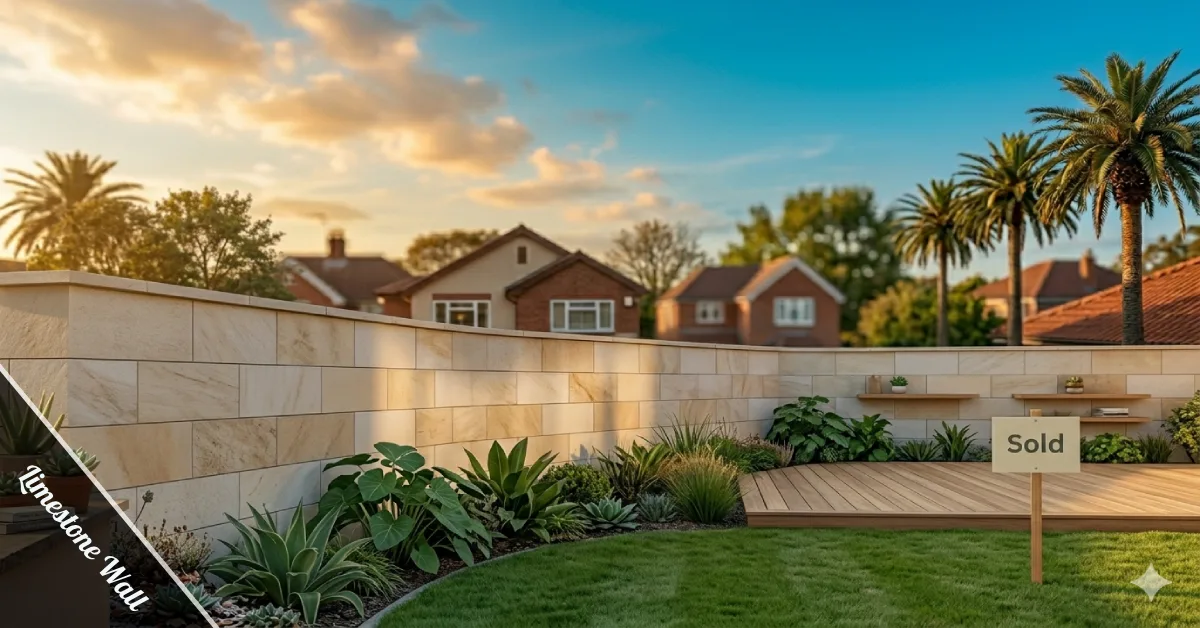
A limestone wall is a structure built from natural or reconstituted limestone blocks, panels, or veneers. It can serve as a retaining wall, garden boundary, interior feature wall, or exterior cladding. Limestone walls are prized for their durability, natural appearance, and long service life. Installed costs range from $25 to $70 per square foot, depending on wall type and complexity.
Think limestone is only for old churches and government buildings? Think again. From backyard retaining walls to spa-like bathroom feature walls, limestone is one of the most versatile building materials available today. It has been used in construction for more than 3,000 years and shows no signs of fading from popularity. In 2025, designers are finding fresh ways to use it across both residential and commercial projects.
This guide covers everything you need to know: the types of limestone walls, what they cost, where to use them, and how to care for them once they’re built.
What Is a Limestone Wall?
A limestone wall is any wall structure built primarily from limestone, a sedimentary rock made almost entirely of calcium carbonate (CaCO3). The stone forms over millions of years from the accumulated remains of marine organisms such as corals and shells.
Limestone comes in a range of colours beyond the typical off-white. Mineral additives can produce reddish, greenish, yellow-brown, and even dark grey tones. This natural variation gives each wall a unique character that manufactured materials cannot replicate.
There are two main categories of limestone used in wall construction:
- Natural limestone: Cut directly from a quarry into blocks, slabs, tiles, or veneer panels. This is the traditional format, valued for its character and strength.
- Reconstituted limestone: Made from crushed limestone combined with concrete aggregate. It uses material that would otherwise go to waste, making it a practical and more eco-friendly choice. Both options are structurally strong and visually appealing.
The Most Common Limestone Wall Types
Understanding the different wall formats helps you pick the right one for your project. Here is a breakdown of the main types:
Limestone block walls use large, solid blocks, typically quarried and cut to specific dimensions. These work well for load-bearing garden walls, retaining walls, and boundary fences. Rough-hewn blocks suit rustic settings, while smoothed blocks fit more contemporary designs.
Thin veneer limestone walls apply a thin layer of limestone (usually 1 to 2 inches thick) over an existing wall structure. This format is popular for interior feature walls, exterior cladding, and fireplace surrounds. It adds the visual weight of stone without the structural demands of full masonry.
Limestone panel walls use prefabricated panels engineered for exterior cladding. Some systems include built-in mechanical anchors, allowing safe installation on walls taller than two meters. These panels offer a consistent, clean finish and faster installation than individual stone pieces.
Stacked or dry-stacked limestone walls are built without mortar, relying on the weight and interlocking shape of the stones for stability. These are popular for garden walls, raised beds, and low retaining walls up to two to three feet high.
Limestone retaining walls hold back soil on sloped properties. They are one of the most common applications and can be built from natural limestone blocks or large precast concrete blocks with a split limestone texture.
Where You Can Use a Limestone Wall
Limestone adapts to nearly any setting, indoors or outdoors.
Exterior uses:
- Retaining walls on sloped or terraced yards
- Garden boundary walls and edging along driveways
- Pool surrounds and coping
- Exterior building facades and cladding
- Foundation walls and steps
Interior uses:
- Feature walls in living rooms and hallways
- Bathroom and spa walls
- Fireplace surrounds and mantels
- Kitchen backsplashes
- Decorative columns, balustrades, and archways
One growing trend in 2025 is using the same limestone material both inside and outside the home to create a continuous visual flow. Extending an interior limestone tile out onto a patio or pool deck creates a unified look that makes outdoor spaces feel like a natural extension of the interior.
For interior link reference: See also our guide to [limestone floor tiles] for pairing options that complement a limestone wall.
Limestone Wall Costs: What to Expect
Cost is one of the first questions homeowners ask. Here is what the numbers look like in 2025 and 2026.
Limestone retaining wall installed cost: $25 to $70 per square foot, depending on wall height, complexity, and local labour rates.
Natural limestone blocks: $65 to $90 per block (most blocks cover 2 to 3 square feet), or $20 to $45 per square foot for materials alone, before delivery and labour.
Standard limestone (material only): $10 to $20 per square foot. Premium limestone runs $15 to $30 per square foot.
Labour: Contractors typically charge $50 to $75 per hour, or $15 to $50 per square foot, depending on project complexity and location.
Key cost factors include:
- Wall height: Every additional foot of height raises costs by roughly 15 to 25 per cent. Walls over four feet tall often require footings, drainage systems, and sometimes engineered drawings.
- Site conditions: Sloped or difficult-to-access sites can push labour costs up by 50 per cent or more.
- Drainage: Proper drainage behind a retaining wall adds $10 to $15 per linear foot but prevents costly failures later.
- Permits: Check local codes. Permits for walls over a certain height typically cost $100 to $500.
- Extras: Budget 10 to 20 per cent above your initial estimate for cuts, waste, and unforeseen conditions. Purchasing 10 to 15 per cent extra material is standard practice.
A practical comparison: A 50-foot limestone retaining wall standing two to four feet high runs roughly $4,000 to $14,000 in total installed cost, depending on the material grade and site complexity.
Why Choose a Limestone Wall Over Other Materials
Limestone has real, measurable advantages over competing materials. Here is where it stands out:
Durability: Natural stone retaining walls can last 50 to 200 years. Timber walls, by contrast, typically last 5 to 20 years before requiring replacement.
Sound insulation: Limestone’s density makes it an effective sound barrier. Its solid structure absorbs and contains exterior noise, which is why it is a popular choice for walls adjacent to busy roads.
Thermal performance: Limestone conducts and stores heat effectively, helping to keep interiors cooler in warm climates. This can reduce energy consumption over time.
Property value: Investing in quality natural stone materials has been associated with property value increases of 15 to 20 per cent, according to data cited by the National Association of Home Builders.
Sustainability: Limestone is one of the most abundant materials on earth. It can be recycled and reused at the end of life. Reconstituted limestone goes further by incorporating waste material from quarrying operations, reducing overall material waste.
Low maintenance: Unlike timber or steel, limestone does not rot, rust, or require regular sealing in most climates. Surface corrosion occurs naturally over time but does not compromise structural integrity.
“Limestone’s natural resistance to compression and its ability to withstand heavy loads make it ideal for constructing strong and long-lasting structures.” — Stone Centre, Columbus, Ohio
“Using a material that is in plentiful supply and that lasts a lifetime or more is also eco-friendly.” — Healthy Housing Foundation, October 2024
Limestone Wall Finishes and Styles for 2025
The finish you choose changes the entire character of a limestone wall. These are the most common options:
- Rough-hewn / split-face: A natural, textured surface that results from splitting the stone rather than sawing it. Ideal for rustic, outdoor applications and retaining walls.
- Honed: A smooth, matte surface achieved by grinding. This is one of the most popular finishes in 2025, especially for interior feature walls and fireplaces.
- Brushed: Slightly textured with a soft, worn appearance. Brushed limestone adds warmth and depth to accent walls.
- Polished: A reflective, mirror-like surface. Less common for walls than for floors, but used in high-end interior applications.
- Mushroom/pineapple finish: Hand-finished using masonry tools. Creates distinct texture and shadow lines that interact with light in interesting ways.
In 2025, brushed and honed limestone finishes are particularly popular for residential feature walls and fireplace surrounds. Reclaimed and upcycled limestone is also drawing attention from homeowners who want character and a nod to sustainability in their projects.
How to Build a Limestone Retaining Wall: Key Steps
If you are planning a limestone retaining wall, knowing the basic process helps you ask better questions of a contractor and spot potential problems early.
- Assess the site. Determine the slope, soil type, and drainage conditions. Sandy soils drain well; clay soils retain water and may need additional reinforcement.
- Check local codes. Walls over four feet typically require permits and engineered drawings in most jurisdictions.
- Prepare the foundation. Excavate and lay a compacted gravel base. A stable base prevents settling and wall failure.
- Install drainage. Place perforated pipe or gravel backfill behind the wall to manage water pressure. This step is critical for walls retaining soil.
- Lay the first course. Set the base row of blocks below grade, level and well-compacted.
- Stack subsequent courses. Offset joints between rows for structural strength. For taller walls, use geogrid reinforcement fabric in the backfill.
- Finish the top. Install wall caps to protect the top surface from water infiltration and to provide a finished appearance.
For retaining walls taller than four feet, always hire a licensed contractor. Poor construction on taller walls can lead to failure that is expensive and potentially dangerous to correct.
For interior link reference: See also our guide to [limestone retaining wall drainage] for a detailed look at preventing water damage.
Limestone Wall Maintenance: What It Actually Takes
Limestone is low-maintenance, but not zero-maintenance. Here is what to expect:
Cleaning: Use a pH-neutral cleaner and a soft brush for routine cleaning. Avoid acidic cleaners (vinegar, lemon-based products) as they can etch the surface of limestone.
Sealing: Interior limestone walls in wet areas like bathrooms benefit from a penetrating sealer applied every two to three years. Exterior limestone walls in dry climates may not need sealing at all.
Repointing mortar: For mortared limestone walls, inspect the joints every few years. Crumbling mortar should be repointed before water gets behind the face of the wall.
Staining: Limestone is porous and can absorb stains. Address spills on interior surfaces promptly. For outdoor walls, staining from iron in water runoff can be removed with appropriate stone cleaners.
Efflorescence: White, chalky deposits may appear on the surface as mineral salts migrate through the stone. This is cosmetic and can be brushed away or treated with a purpose-made efflorescence remover.
FAQs
How long does a limestone wall last?
A well-built limestone wall can last 50 to over 200 years, depending on the application, installation quality, and climate. Exterior limestone weathers naturally over time but retains its structural integrity for generations. For comparison, timber retaining walls typically need replacement within 5 to 20 years.
Is limestone stronger than concrete for retaining walls?
Concrete block walls and natural limestone walls are both durable choices, but they perform differently. Concrete offers consistent compressive strength and can be reinforced with rebar for taller walls. Natural limestone offers similar or greater durability in many conditions, with the added benefit of visual character. For walls over four feet, both options typically require engineering regardless of the material.
Can I build a limestone wall myself?
Short, dry-stacked garden walls of two feet or less are feasible DIY projects with proper planning and physical effort. Taller retaining walls, any wall requiring drainage systems, or walls that need structural reinforcement should be handled by a professional. Incorrect installation of a tall retaining wall can result in failure that costs far more to repair than professional installation would have cost.
Does limestone work in all climates?
Limestone performs well in most climates. In regions with frequent freeze-thaw cycles, it is important to use dense, low-absorption limestone grades and to ensure proper drainage behind retaining walls. Water that gets into cracks and freezes can cause spalling over time. Using a good sealer on exterior surfaces in cold climates adds a useful layer of protection.
What is the difference between natural and reconstituted limestone?
Natural limestone is cut directly from a quarry. Each piece is unique in texture and colour variation. Reconstituted limestone is manufactured from crushed limestone and concrete aggregate. It is more consistent in appearance, often slightly less expensive, and uses quarry waste material. Both are strong, durable, and suitable for wall applications.