

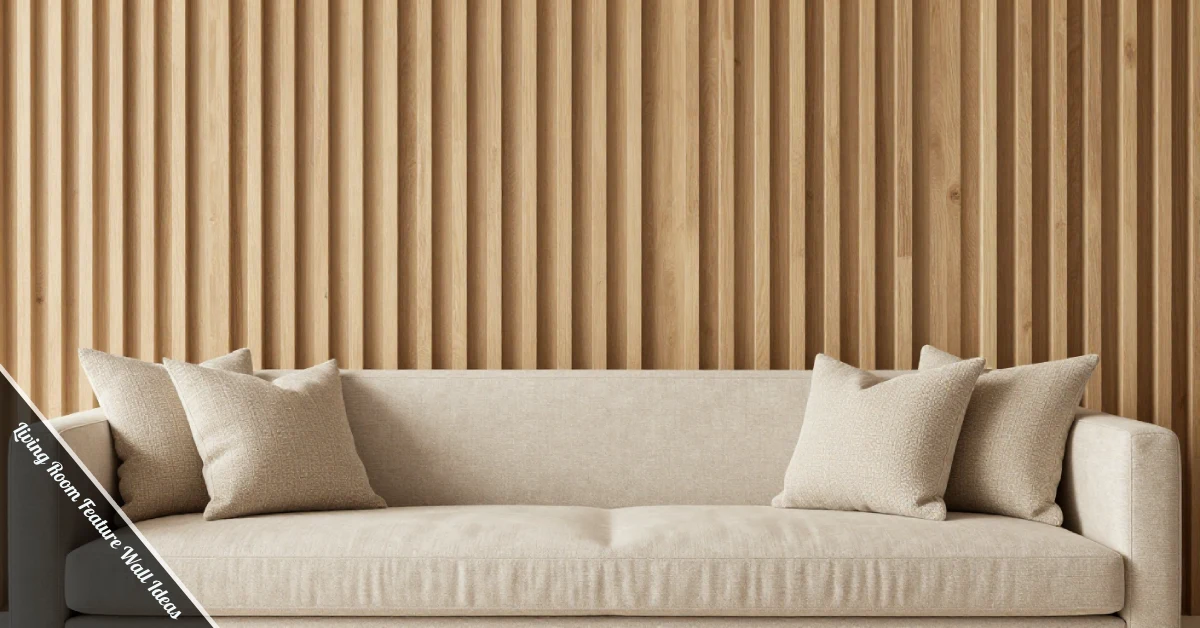
A living room feature wall is a single wall treated differently from the rest of the room to create a focal point. Popular approaches in 2026 include textured wall panels, bold paint colors, peel-and-stick wallpaper, wood slat installations, and stone or plaster finishes. The right choice depends on your budget, room size, and how much commitment you want to make to the design.
Choosing a wall treatment is easier than most people think. You don’t need a full renovation to make a big visual impact. One well-executed feature wall can change the entire feel of your living room, making it look intentional, polished, and personalized. This guide walks you through the best living room feature wall ideas for 2026, what each approach costs, and how to avoid common mistakes.
Why One Wall Can Change Everything
Most living rooms look flat because every surface gets the same treatment. When you single out one wall and give it something different, your eye goes there first. That creates a sense of depth and structure that the room wouldn’t otherwise have.
A feature wall also gives you a low-risk way to try bold design. You’re committing to one surface, not the whole room. If it doesn’t work, the fix is manageable.
The key is choosing the right wall. In most living rooms, that’s the wall behind the main sofa or the one that faces you when you walk in. Walls with fireplaces or built-ins already have visual weight, so they’re natural candidates.
Living Room Feature Wall Ideas by Material
Bold Paint and Color Blocking
Paint is the most affordable starting point. A single can of paint on one wall costs between $30 and $60, and the results can be dramatic when you choose the right color.
In 2026, deep earthy tones are leading the trend: terracotta, warm clay, forest green, and muted burgundy. These colors add warmth without making the room feel dark. For a more graphic look, color blocking, where two contrasting colors meet in a clean horizontal or vertical line, is gaining traction in modern and minimalist spaces.
You don’t have to go dark. A tone-on-tone approach works well, too. Paint one wall in a slightly deeper shade of the same color used on the adjacent walls. The result is subtle but adds real dimension.
Wallpaper: Permanent or Peel-and-Stick
Wallpaper has come a long way. Peel-and-stick options make it possible to try a pattern without the long-term commitment. You can apply and remove them without damaging the wall, which makes them a practical choice for renters or anyone who likes to switch things up.
For a permanent installation, traditional paste wallpaper still delivers the richest look. Botanical prints, abstract geometric patterns, and textured grasscloth all perform well as feature walls. A single roll typically covers about 28 square feet and costs between $40 and $200, depending on quality and brand.
One tip: avoid very small, busy patterns on large walls. They can feel overwhelming. Larger-scale prints or soft, tonal textures work better in living rooms.
Wood Slat and Panel Walls
Wood slat walls, sometimes called fluted or ribbed panels, have become one of the most recognizable design trends of the mid-2020s. They add texture, warmth, and a sense of craftsmanship without requiring custom woodwork.
Pre-made slat panels are widely available at home improvement stores and online. A standard 4×8-foot panel runs between $80 and $150. For an average living room feature wall of around 80 to 100 square feet, the material cost typically falls between $400 and $700. Labor adds to this if you’re not doing it yourself.
Natural wood tones work well with warm, earthy interiors. Painted slat panels in white, black, or deep green suit more contemporary spaces.
Stone, Brick, and Plaster Finishes
If you want a wall with real visual weight, stone or brick veneer delivers it. These materials work especially well around fireplaces or as a media wall backdrop.
Real stone is expensive and labor-intensive. Veneer panels, which use thin slices of genuine stone bonded to a backing, are a practical alternative. They weigh significantly less and can be installed without structural changes to the wall.
Limewash paint is another option worth considering. It creates a soft, uneven, aged plaster effect that looks hand-applied. A single coat gives a muted, organic texture. Layering two or three tones deepens the effect. Application takes about three to four hours for an average wall and costs around $50 to $100 in materials.
Wallboard Molding and Paneling
Traditional molding panels, also known as wainscoting or picture rail framing, give a room a classic, architectural feel. You can create the grid pattern using MDF trim pieces, wood adhesive, and a few tools. The materials for an average wall run between $100 and $250.
Paint the molding the same color as the wall for a subtle, tone-on-tone effect. Use a contrasting color for something bolder. Navy with white trim, forest green with cream molding, or charcoal with sage all work well.
This approach suits traditional, transitional, and even some modern spaces. The key is keeping the scale of the grid proportional to the wall size. Larger rooms call for larger panel spacing.
How to Pick the Right Feature Wall
Not every wall in your living room is a good candidate. Here’s how to choose:
- Pick the wall that faces the main seating area or the one you see first when entering the room.
- Avoid walls broken up by too many windows or doors. Clean, uninterrupted surfaces work best.
- If your room has a fireplace, that wall already has a focal point. Work with it, not against it.
- Consider scale. Small rooms benefit from lighter textures and softer colors. Larger rooms can handle darker tones and heavier materials.
- Think about what sits in front of the wall. A sofa, a media unit, or a console table will anchor the design. Plan the wall treatment with that furniture in mind.
Feature Wall Ideas by Budget
You don’t need a large budget to make a real impact. Here’s a rough guide to what you can expect at different price points:
- Under $100: Limewash paint, peel-and-stick wallpaper, or a bold paint color with a quality finish.
- $100 to $400: Traditional wallpaper, DIY molding panels, or painted wood panel installations.
- $400 to $1,000: Pre-made wood slat panels, stone veneer tiles, or professionally applied plaster textures.
- $1,000 and up: Custom built-ins, natural stone, designer wallpaper, or professionally designed and installed media walls.
Common Mistakes to Avoid
Feature walls fail when the execution is inconsistent with the rest of the room. Here are the mistakes most people make:
- Choosing a treatment that clashes with existing flooring or furniture rather than complementing it.
- Using a wall treatment that’s too busy for a small room, which makes the space feel tight.
- Ignoring lighting. A dark material on a poorly lit wall will disappear. Add a floor lamp, picture light, or wall sconce to highlight the finish.
- Painting just one wall in a color that has no connection to anything else in the room. The feature wall should feel like part of a considered scheme, not an afterthought.
- Skipping surface prep. Textured finishes and wallpaper show every bump and crack. Always sand and prime before applying.
Lighting Makes or Breaks the Finish
This is the step most people skip. A feature wall that isn’t properly lit loses most of its impact. Good lighting reveals texture, adds depth, and makes colors appear richer.
For wood slats or stone walls, a floor lamp angled toward the surface creates dramatic shadows that highlight the texture. Picture lights work well above art or framed molding panels. LED strip lighting installed along the top or base of the wall gives a modern, ambient glow that suits media walls and slat panel installations.
Interior designers consistently point to lighting as the factor that separates a well-designed feature wall from one that looks flat. The material is only half the story.
FAQs
What is a feature wall in a living room?
A feature wall is one wall in a room that’s treated differently from the others. It’s used to create a focal point, add visual interest, and give the room a more intentional, designed feel. Common treatments include bold paint, wallpaper, wood paneling, stone veneer, and plaster finishes.
Which wall should be the feature wall?
In most living rooms, the best choice is the wall behind the main sofa or the wall directly facing the entrance. It should be as uninterrupted as possible, with few or no windows and doors breaking up the surface.
How much does a feature wall cost?
Costs range from under $100 for paint or peel-and-stick wallpaper to over $1,000 for stone veneer or custom built-ins. Most mid-range projects, such as wood slat panels or traditional wallpaper, fall between $300 and $700, including materials.
Can you do a feature wall in a small living room?
Yes. Stick to lighter colors, softer textures, and simpler patterns in smaller spaces. A limewash paint effect, tone-on-tone wallpaper, or a simple molding panel grid can add character without making the room feel smaller.
Is a feature wall still on-trend in 2026?
Yes. The approach has evolved beyond the single painted accent wall of a decade ago. Today’s feature walls use textured materials, layered finishes, and integrated lighting to create more sophisticated results. The trend shows no signs of slowing down.