

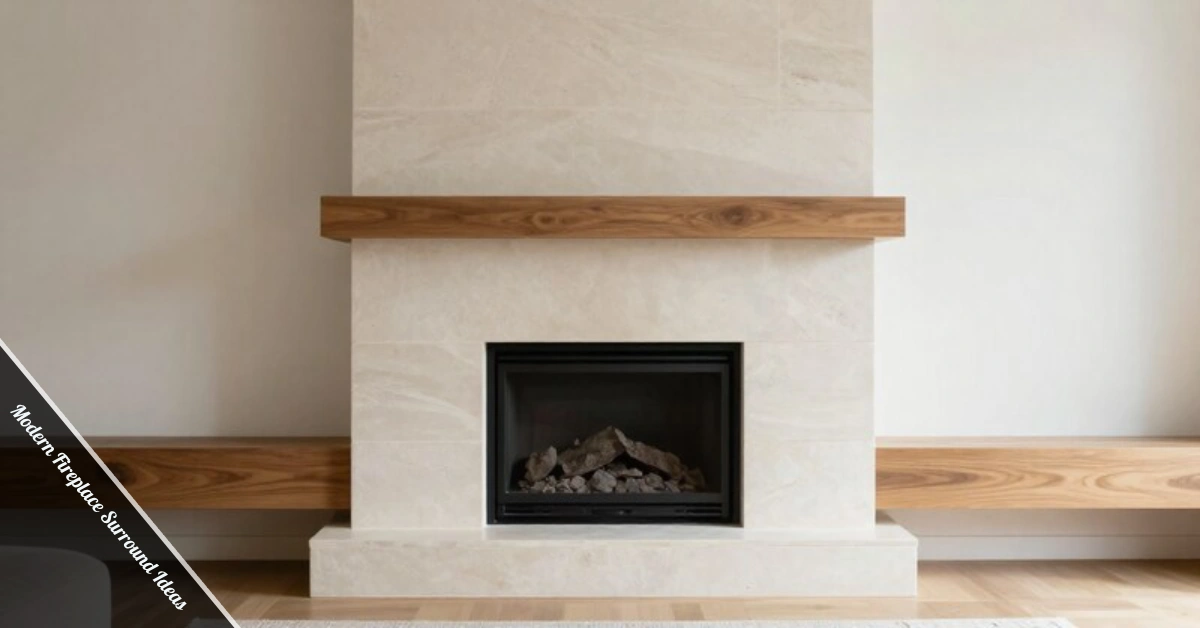
Modern fireplace surrounds combine clean lines, natural materials like marble and concrete, and statement designs that transform living spaces. From floor-to-ceiling slabs to fluted textures, these contemporary options add value while creating stunning focal points. Popular choices include linear gas fireplaces, stone feature walls, and minimalist concrete surrounds.
Your fireplace deserves better than outdated brick or tired tile. According to the 2024 NAHB survey, 78% of homeowners consider fireplaces essential or highly desirable, and the right surround can turn this feature into your home’s most striking element. Modern fireplace surrounds blend style with function, using materials and designs that feel fresh for decades to come.
Whether you’re updating an existing fireplace or planning a new installation, the surround you choose sets the tone for your entire room. The best part? You have more options than ever, from sleek stone slabs to textured concrete finishes that make your fireplace impossible to ignore.
Why Modern Fireplace Surround Ideas Matter
The days of cookie-cutter brick fireplaces are behind us. Today’s designs prioritize clean aesthetics, quality materials, and versatility. A well-chosen surround doesn’t just frame the flames. It anchors your room’s design and creates a gathering spot that draws people in.
Modern surrounds work with multiple interior styles. You can pair them with traditional furniture, contemporary decor, or somewhere in between. This flexibility makes them smart investments for your home.
Fireplace upgrades can increase your home value by up to 12%, making them one of the better returns you’ll find in home improvement projects. Beyond the numbers, you get a space that feels more complete and intentional.
Natural Stone Slabs for Maximum Impact
Nothing beats the drama of a full-height stone slab. Marble, granite, quartzite, and soapstone create seamless surfaces that stretch from floor to ceiling without grout lines or interruptions. Each piece brings unique veining and character that you won’t find anywhere else.
Stone slabs suit both modern and traditional spaces. A white Carrara marble surround adds elegance to a contemporary living room. Dark soapstone creates moody sophistication in a more rustic setting. The stone you choose shapes the entire room’s atmosphere.
Installation requires precision. The slab must align perfectly with your firebox and any mantels or shelving you plan to add. Work with experienced fabricators who understand fireplace requirements and heat resistance. They’ll help you select stone that performs as well as it looks.
Maintenance stays simple with natural stone. Wipe it down with a pH-neutral cleaner and reseal it occasionally based on the material. Unlike tile, you won’t scrub grout lines or replace cracked pieces. The stone improves with age, developing a patina that adds to its appeal.
Linear Fireplaces with Clean Lines
Linear fireplaces are among the most popular modern fireplace designs, and for good reason. These horizontal installations create streamlined looks that feel instantly current. They work beautifully in open-concept homes where you want visual flow without heavy traditional elements.
The long, low profile draws your eye across the room rather than up. This makes spaces feel wider and more connected. You can mount them at floor level, raise them to furniture height, or even install them at eye level for a floating effect.
Linear fireplaces come in gas, electric, and bioethanol options. Gas models offer real flames with easy operation. Electric versions provide flame effects without venting requirements. Bioethanol creates real fire without chimneys or gas lines. Pick the one that fits your home’s setup and your preferences.
Frame your linear fireplace with minimal materials. Concrete surrounds emphasize the horizontal lines. Thin metal trim keeps things industrial. Or skip the surround entirely and let the firebox speak for itself against a simple wall.
Concrete and Plaster Surrounds
Concrete brings industrial edge to fireplace design. You can finish it smooth and polished for a refined look, or leave it textured for more character. The neutral gray tones pair well with almost any color scheme, and the material handles heat without issue.
Concrete fireplace surrounds trap heat, which helps with heating your home for longer on less fuel. This practical benefit makes them more than just a style choice. They improve your fireplace’s efficiency while looking fantastic.
Plaster offers similar benefits with a softer appearance. You can shape it into curved profiles, add texture, or keep it perfectly smooth. The material adapts to your vision, whether you want something sculptural or understated.
Both materials work well for floor-to-ceiling treatments. A full concrete wall behind your fireplace creates a strong architectural statement. It emphasizes ceiling height and makes the entire wall a focal point. This approach works especially well in rooms with high ceilings, where you want to balance vertical space.
Custom fabricators can create built-in shelving, floating mantels, or asymmetric designs within these materials. The possibilities extend well beyond basic rectangles.
Fluted and Textured Finishes
Fluting is set to dominate the 2025 fireplace design scene, adding depth without overwhelming the space. These vertical grooves create shadow lines that change throughout the day as natural light shifts. The effect feels both classic and fresh.
You can apply fluting to wood panels, concrete, or even tile. The key is keeping the grooves consistent and well-proportioned to your fireplace size. Too narrow looks busy. Too wide loses the effect. Work with designers who understand scale and rhythm.
Other textured finishes include ribbed concrete, 3D tile patterns, and mixed materials that add dimension. The goal stays the same: create visual interest while maintaining clean overall lines. Texture should enhance, not distract from, your fireplace’s impact.
Pair textured surrounds with simple mantels or skip the mantel entirely. The texture provides enough interest on its own. Adding too many elements competes for attention and muddies the design.
Black and Dark Fireplace Surrounds
Stone surrounds are a staple in 2025 fireplace trends, especially those using charcoal, slate, or black marble. These dark materials create a striking contrast against light walls and bring sophisticated drama to any room.
Black fireplaces work particularly well in minimalist spaces. They provide a bold anchor point without requiring ornate details or busy patterns. The color itself makes the statement.
You can use black granite, slate, soapstone, or even painted materials. Each brings different textures and finishes. Polished black granite reflects light for a luxurious feel. Matte black slate absorbs light for something more understated. Choose based on the mood you want to create.
High-contrast combinations stand out. Black fireboxes with white or light stone surrounds create sharp, modern looks. The contrast emphasizes both elements and makes your fireplace unmissable. This approach works especially well in contemporary homes with other black accents like window frames or light fixtures.
Floor-to-Ceiling Fireplace Walls
High ceilings are all the rage lately, and tall rooms need matching decor, which has brought floor-to-ceiling fireplaces back into the limelight. These dramatic installations command attention and make your room feel more grand.
The uninterrupted vertical line draws eyes upward and emphasizes your ceiling height. This makes even modest-sized rooms feel more spacious. The effect works best with simple materials and minimal horizontal breaks.
You can use a single stone slab, arrange multiple tiles, or create a concrete wall. Keep the design cohesive from bottom to top. Avoid changing materials midway unless you’re deliberately creating zones within the wall.
Position your firebox where it makes sense for your room’s layout. Low placement works well for casual gathering areas. Eye-level installation creates a more formal feel. Raised placement leaves room for built-in storage below.
Consider what you’ll mount above the fireplace, if anything. TVs remain popular choices, but make sure you account for heat distribution. Your installer can build in proper clearances and heat shields to protect electronics.
Double-Sided and See-Through Designs
Double-sided fireplaces connect two spaces while providing warmth to both. They work beautifully between living and dining areas, master bedrooms and bathrooms, or indoor and outdoor spaces. You get two focal points from one installation.
These designs require careful planning. The firebox needs proper support and clearances on both sides. Ventilation becomes more complex with two openings. Work with experienced installers who’ve handled double-sided units before.
The surround treatment can match on both sides or differ based on each room’s style. Uniform materials create cohesion. Different finishes let each space maintain its own character. Both approaches work when executed thoughtfully.
Glass on both sides lets you see through the fireplace completely. This transparency feels open and modern. It also means both rooms share the flame’s ambiance, making spaces feel more connected even when physically separated.
Mixed Materials and Layered Looks
We’re seeing a rise of mixed-material fireplaces that celebrate architectural variety. Combining stone with wood, metal with concrete, or tile with natural materials adds depth and personality to your fireplace.
The key is balancing elements so nothing overwhelms. Pick one material as your primary focus and use others as accents. A stone surround with a wood mantel and metal trim creates layers without chaos.
Different textures work together when colors stay cohesive. Rough stone pairs well with smooth wood if tones complement each other. Mixing warm and cool tones requires more careful planning to avoid clash.
Consider how materials meet each other. Clean transitions look intentional. Awkward joints or visible gaps undermine the whole design. Quality installation matters as much as material selection with mixed approaches.
This style lets you incorporate meaningful materials. Reclaimed wood from an old barn, stone from a family property, or metal with personal significance can become part of your fireplace story.
Corner Fireplaces for Tight Spaces
Corner installations maximize smaller rooms without sacrificing impact. They tuck into unused space while still creating focal points. This smart solution works well in condos, apartments, or homes where wall space is limited.
Modern corner fireplaces have shed the bulky, dated looks of decades past. Today’s units feature clean lines, quality materials, and proper scale. They blend into contemporary spaces rather than sticking out awkwardly.
The surrounding walls become part of the design. You can wrap stone or tile around both walls to create a cohesive corner feature. Or treat one wall as the primary surface and keep the adjacent wall simpler. The angle itself creates visual interest.
Corner placement works especially well for zone heating. The fireplace radiates warmth into the room’s center rather than toward exterior walls. This improves heat distribution and efficiency.
Minimalist Mantels and No-Mantel Designs
Many clients don’t want traditional mantels anymore, opting for a flatter profile with nothing distracting from the hearth and surround. This lets the fire become the focus without competition from decorative elements.
When you do include a mantel, keep it simple. A floating wood beam, thin metal shelf, or subtle stone ledge provides display space without dominating. The mantel should feel like a natural extension of your surround, not an afterthought.
No-mantel designs create the cleanest look. The surround runs uninterrupted from floor to ceiling or ends just above the firebox opening. This approach suits minimalist aesthetics and emphasizes your chosen materials.
If you need display space, consider built-in shelving beside the fireplace instead of above it. This keeps the vertical line clean while giving you practical storage. Asymmetric arrangements with shelving on one side create interesting, modern compositions.
Outdoor Modern Fireplace Ideas
In 2025, the great outdoors gets the fireplace treatment. Covered patios, decks, and outdoor living rooms benefit from the warmth and ambiance fireplaces provide. Modern designs use weather-resistant materials that stand up to the elements.
Sealed stone, rust-proof metals, and specialized concrete hold up to rain, snow, and temperature changes. Your outdoor fireplace needs materials rated for exterior use. Indoor-only products will deteriorate quickly outside.
Outdoor fireplaces can be built-in or freestanding. Built-in units become permanent features of your outdoor kitchen or seating area. Portable fire pits offer flexibility if you rent or like changing your layout.
Linear outdoor fireplaces create sophisticated gathering spaces. They provide warmth without blocking views or conversation. This makes them ideal for entertainment areas where you want people to interact comfortably.
Consider local regulations before building. Many areas have restrictions on outdoor fires, required clearances, and permit requirements. Check these details early in your planning process.
Smart Features and Modern Technology
We’re in the era of smart fireplaces, with voice commands and mobile app controls letting homeowners ignite and control flames with ease. These high-tech options offer customization of flame color, heat output, and even sound.
Modern electric fireplaces have evolved dramatically. Today’s models produce realistic flames that mimic natural fire movement. Some include crackling sound effects for added ambiance. You get the experience without the maintenance of wood or gas.
Remote controls come standard on most gas and electric fireplaces now. You can adjust settings from your couch without getting up. Some integrate with home automation systems for voice control through Alexa or Google Home.
Timer functions let you schedule your fireplace to turn on before you get home or off after you fall asleep. This convenience improves safety and energy efficiency while maximizing your enjoyment.
Material Selection and Heat Resistance
Not all beautiful materials belong near fireplaces. Heat resistance matters as much as aesthetics when choosing your surround. Some materials crack, discolor, or even melt when exposed to high temperatures.
Natural stones like granite, marble, quartzite, and soapstone handle heat well. They’ve formed under extreme temperatures and remain stable near fire. Concrete and tile also work when properly installed.
Avoid quartz for fireplaces. While popular in kitchens, manufacturers create quartz using resins that don’t withstand high heat. These resins can change color or crack near flames. They’re not safe to use near the firebox.
Wood mantels and trim need proper clearances from the firebox opening. Building codes specify minimum distances based on material combustibility. Your installer should know these requirements and follow them precisely.
Ask your fabricator about heat ratings for any material you’re considering. They can tell you what’s safe and what’s not. This conversation happens before you fall in love with something that won’t work practically.
Installation and Professional Requirements
Fireplace surrounds require skilled installation. Unlike decorative elements, these involve structural considerations, heat management, and often ventilation. Hiring experienced professionals prevents problems and ensures safety.
Retrofitting existing fireplaces presents unique challenges. You’re working around established fireboxes, possibly uneven walls, and sometimes floors that aren’t level. Measure carefully and plan for adjustments during installation.
Retrofitting a fireplace surround can be more involved than clients expect. The key is to communicate early, measure carefully, and be flexible if things change when the job starts. Hidden issues like old brick, unusual framing, or settled foundations appear once work begins.
New construction simplifies things. Builders can frame everything correctly from the start. They integrate fireplace requirements into the initial plans. This produces cleaner results with fewer compromises.
Get multiple quotes before committing. Prices vary significantly based on materials, complexity, and installer experience. The cheapest option isn’t always the best when quality and safety matter.
Budget-Friendly Modern Options
You don’t need unlimited funds for a modern fireplace surround. Several approaches deliver contemporary style without breaking the bank.
Large-format tiles create the look of stone slabs at a lower cost. These oversized pieces minimize grout lines and installation time. You get clean, modern results for less than natural stone.
Painted finishes over existing materials can transform outdated fireplaces. A fresh coat of paint on brick or stone creates instant updates. Matte black, white, or concrete-gray paint brings modern appeal quickly and affordably.
Prefabricated concrete surrounds offer custom looks without custom prices. Manufacturers produce mantels and surrounds in standard sizes that fit most fireplaces. You get quality materials and professional finishes at reasonable costs.
Electric fireplace inserts update old wood-burning fireplaces without major construction. Simply insert the unit, finish the surround as desired, and plug it in. This approach works well for rental properties or homes where you want flexibility.
Maintenance and Long-Term Care
Modern fireplace surrounds generally require less maintenance than traditional options. The materials you choose determine your ongoing care requirements.
Stone and concrete need occasional sealing to resist staining. How often depends on the specific material and its porosity. Some stones need annual sealing, while others go several years between treatments. Your fabricator can provide guidance.
Wipe the surroundings regularly with appropriate cleaners. Avoid acidic products on natural stone. They can etch marble and limestone. Stick with pH-neutral options designed for your specific material.
Check grout lines if you have tile. These need resealing periodically to prevent moisture infiltration. Loose or cracked grout should be repaired promptly to avoid bigger problems.