

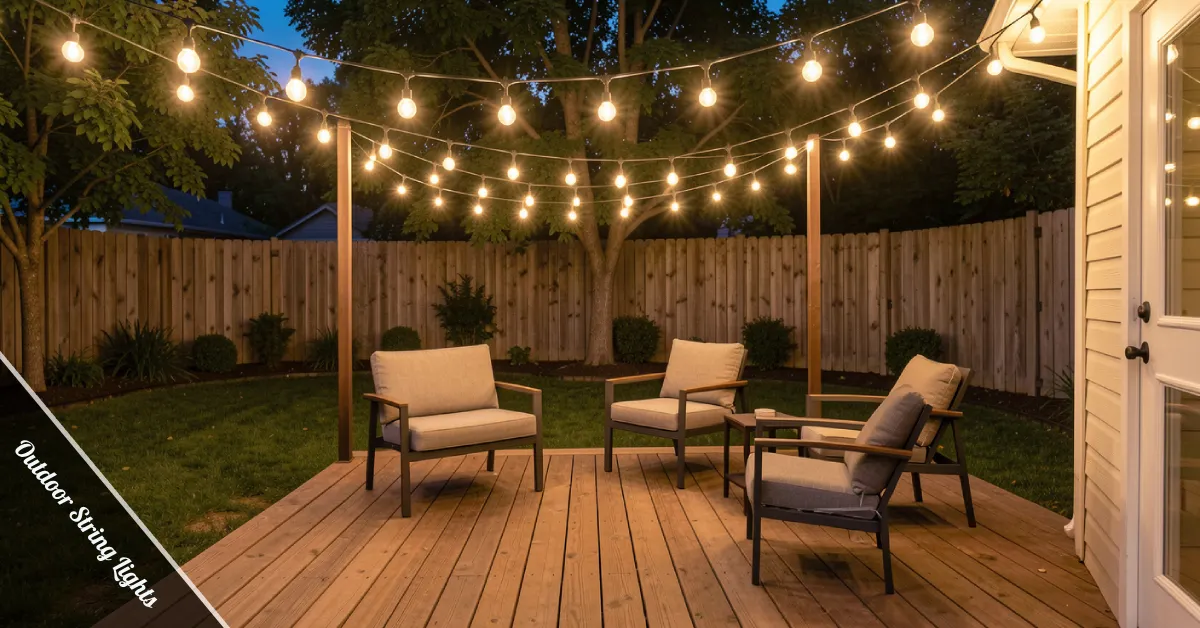
Outdoor string lights are LED or incandescent bulbs strung along a flexible cord, designed to add warm, ambient light to patios, pergolas, and backyards. To choose the right set, look for an IP44 or higher weather rating, LED bulbs for energy savings, and a cord length that fits your space. For permanent installs, plug-in lights work best. For flexibility, go solar or battery-powered.
Did you know that homeowners who add outdoor lighting use their patios up to 40% more often? A well-placed set of outdoor string lights can turn a plain backyard into a space you actually want to spend time in. No major renovation required.
This guide covers everything you need to pick the right lights, hang them properly, and keep them working all season. Whether you’re lighting a small balcony or a wide backyard, you’ll find clear, practical advice here.
What Makes Outdoor String Lights Different
Not all string lights are built for outdoor use. The key difference is weather resistance, measured by an IP (Ingress Protection) rating. This two-digit number tells you how well a product resists dust and water.
For outdoor use, look for a minimum IP44 rating. IP44 means the lights can handle splashing water from any direction. If you live somewhere with heavy rain or plan to leave lights up year-round, IP65 is a better choice. IP65-rated lights can resist direct water jets and most weather conditions.
Cheap, unrated lights may work for a few dry evenings. But they tend to fail quickly when exposed to morning dew, wind, and seasonal rain.
The Main Bulb Types Worth Knowing
Bulb type affects how your lights look, how much they cost to run, and how long they last.
LED bulbs are the standard choice in 2025. They use roughly 75% less energy than incandescent bulbs and last significantly longer. Most LED string lights now use plastic bulbs, which resist breakage better than glass. The tradeoff is that the light can look slightly different between brands, so stick to one brand if you’re covering a large area.
Incandescent bulbs give off a warmer, more traditional glow. They’re still available, especially in Edison-style designs. However, they cost at least twice as much to operate and generate more heat. Glass bulbs also break more easily outdoors.
Fairy lights use tiny LED bulbs on a thin wire. They work well wrapped around trees, bushes, or railings, but they produce less light per foot than globe or Edison styles.
For most patios and dining areas, globe or Edison-style LED bulbs in warm white (2700K to 3000K) are the best fit. They produce a soft, flattering glow that works well for both relaxing and entertaining.
Solar vs. Plug-In vs. Battery: Which Power Source Fits Your Setup
Your power source changes how and where you can use outdoor string lights.
Plug-in lights are the most reliable option for permanent or frequent use. They stay on as long as you need them, with no charging downtime. The main limitation is that you need a nearby outdoor outlet. Most sets come on 48-foot cords, which cover a standard patio or deck.
Solar lights work well for areas far from outlets. Most solar string light batteries charge in 6 to 8 hours and provide 8 to 12 hours of light on a full charge. The solar panel needs direct sunlight to charge fully. On overcast days, output drops. Some newer models include USB backup charging, which solves that problem.
Battery-powered lights offer the most placement flexibility. They’re good for short-term use or spaces where running a cord isn’t practical. The downside is ongoing battery costs and lower overall brightness compared to plug-in sets.
A practical rule: for regular use, choose a plug-in. For occasional or portable setups, solar or battery-powered lights make more sense.
How to Hang Outdoor String Lights Correctly
Getting the installation right makes a big difference in how your lights look and how long they hold up.
Plan your layout first. Measure the area you want to cover. Mark where your anchor points will be, such as fence posts, walls, pergola beams, or poles. Aim to space anchor points no more than 10 feet apart to prevent sagging.
Use the right hardware. Stainless steel screw hooks resist rust and hold up in wind far better than standard nails or picture hooks. Avoid common steel nails on siding; they stain over time and don’t grip well enough for light movement in the wind.
For spans without natural anchor points, install wooden or metal light posts. Set them in ground stakes or weighted bases. This lets you hang lights across open yards or above a dining table without needing a structure to attach to.
Don’t skip the drip loop. Where your cord enters a socket or junction, make sure there’s a slight downward curve before it connects. This stops water from running along the cord into the outlet.
Here are the most common hanging patterns for different spaces:
- Patio or deck: Straight lines from house to fence post, or crisscross overhead for a canopy effect
- Pergola: Run lights along each beam for a defined structure
- Backyard tree: Wrap loosely around branches, securing loosely so the tree can grow
- Fence line: Drape along the top rail with clips spaced every 12 to 18 inches
Choosing the Right Length and Bulb Spacing
String light sets vary widely in length and bulb density, and those differences matter.
A 48-foot set covers most standard patios well. For larger areas, look for connectable sets that allow you to link multiple strands end to end. Always check the maximum connectable length in the product specs; exceeding it can cause overheating.
Bulb spacing affects brightness and look. Sets with bulbs every 12 to 18 inches give a dense, well-lit feel. Some budget sets space bulbs 36 inches or more apart on a 50-foot cord, resulting in fewer than 20 bulbs total. That may not give you enough light for dining or socializing.
For a dining area, aim for at least one bulb every 18 inches. For decorative accent lighting around a garden path or fence, wider spacing can work well.
Smart Outdoor String Lights: Are They Worth It
Smart string lights connect to an app or voice assistant and let you adjust brightness, color temperature, and on/off schedules from your phone. A few models also offer color-changing modes.
They cost more upfront, typically 1.5 to 2 times the price of standard LED sets. But the added control can be useful. You can set them to turn on at sunset automatically, dim them when you head inside, or adjust the warmth for different occasions.
If you use your outdoor space regularly and want to avoid fiddling with switches or timers, smart lights are worth considering. If you use your patio only occasionally, a basic plug-in set with a mechanical timer works just as well at a lower cost.
Common Mistakes to Avoid
Most string light problems come down to a few repeated errors.
Using lights not rated for outdoor use is the most common. Indoor string lights fail quickly when exposed to moisture and temperature swings. Always check for an IP rating before buying.
Mixing brands creates uneven light color. LED color temperature varies by manufacturer. If you need multiple strands, buy them all at once from the same product line.
Overloading a circuit is a real risk with long, connected runs. Each plug-in set has a maximum wattage. Stay within it and never daisy-chain more strands than the manufacturer recommends.
Skipping weather-resistant clips and hooks causes lights to fall or pull away from surfaces, especially in wind. Use hardware rated for outdoor use.
FAQs
What IP rating do I need for outdoor string lights?
For most outdoor use, IP44 is the minimum. If you’re in a wet climate or plan to leave lights up year-round, choose IP65 or higher.
How long do LED outdoor string lights last?
Quality LED string lights can last 25,000 to 50,000 hours. At 6 hours of use per night, that’s over 20 years of regular use before the LEDs start to fade.
Can I leave outdoor string lights up in winter?
Lights with an IP65 rating and UV-resistant cords can stay up through most winters. In areas with heavy snow or ice, it’s safer to take them down and store them to avoid damage.
How many string lights do I need for a 10×12 patio?
A single 48-foot plug-in set is usually enough for a 10×12 space, especially if you run the lights in a zigzag or crisscross pattern overhead. For denser coverage, add a second strand.
Are solar string lights bright enough for outdoor dining?
Most solar string lights are designed for ambient light, not task lighting. They work well for atmosphere but may not provide enough brightness for a dinner table. For dining areas, plug-in LED sets with bulbs rated at 50 or more lumens each are a better choice.